
Introduction
A few simple changes in your daily routine can make a difference to your overall well-being. Following healthy lifestyle tips can help you build better eating habits, stay physically active, improve sleep quality and support mental health. A healthy life is not about following strict rules or making sudden changes. It is about creating a balanced routine that fits your everyday needs.
From eating nutritious meals to managing stress and staying hydrated, small daily habits can support long-term wellness. Whether you have a busy work schedule, study regularly or manage household responsibilities, you can adopt practical habits to make healthy living easier.
In this article, you will discover 14 simple daily habits, their benefits and practical ways to include them in your routine.
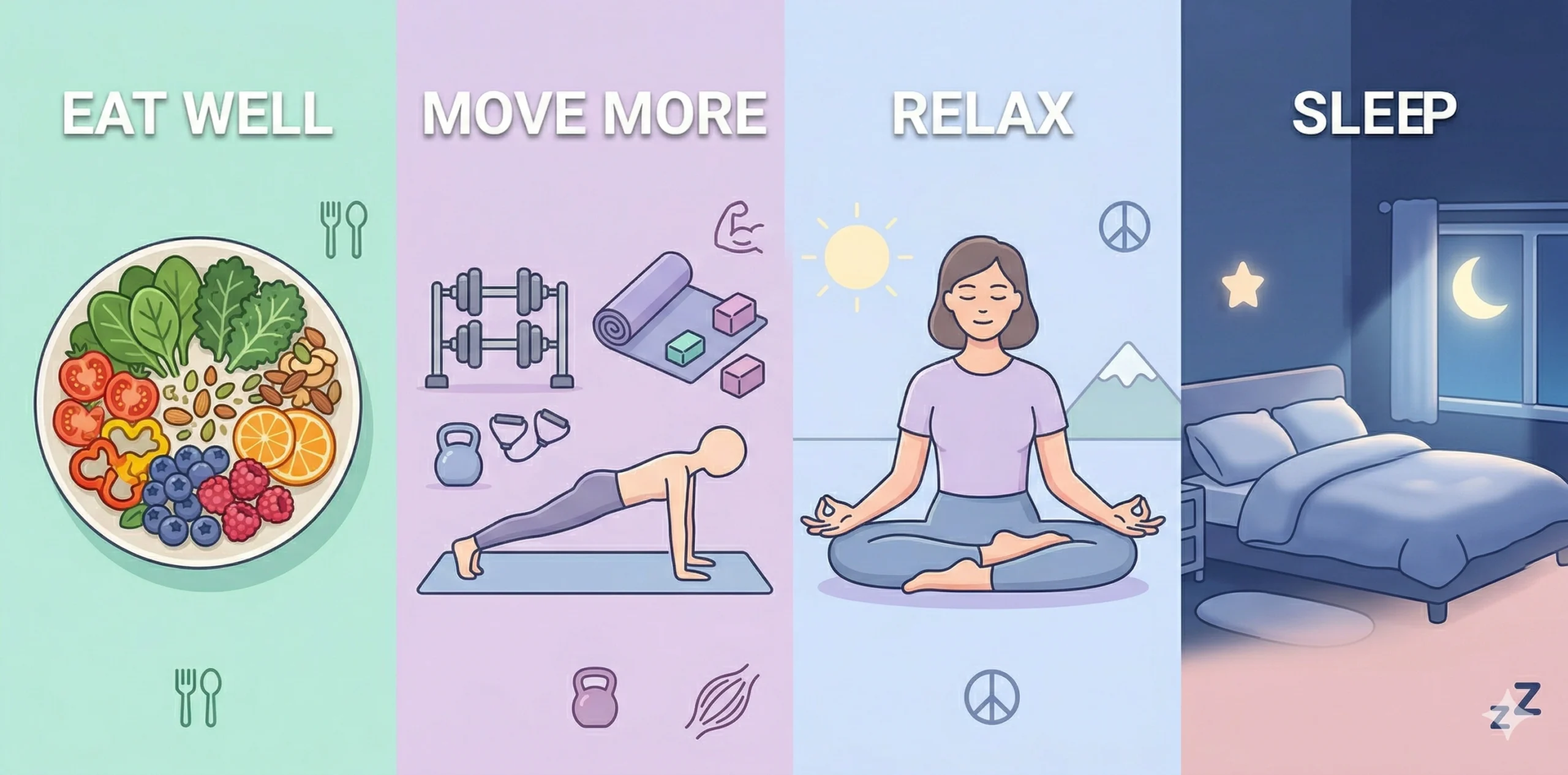
Healthy Lifestyle Tips: 14 Daily Habits for a Better Life
Building a healthy routine starts with understanding what your body and mind need. The following habits cover different aspects of daily wellness, including nutrition, exercise, sleep, hygiene and emotional well-being.
1. Start Your Day with a Healthy Morning Routine
A consistent morning routine can help you organise your day and develop positive habits. Instead of rushing through the morning, take a few minutes to prepare yourself for daily activities.
Here are some simple morning habits:
- Wake up at a consistent time.
- Open the windows or curtains to let in natural light.
- Drink water when you feel thirsty.
- Do some gentle stretching or take a short walk.
- Plan your important tasks for the day.
You can also practise deep breathing or spend a few quiet minutes without your phone. Choose activities that make your morning feel comfortable and manageable.
A good morning routine does not have to be complicated. Even a few small changes can help you start the day with more structure.
2. Eat a Balanced and Nutritious Diet
A balanced diet provides the nutrients your body needs for energy, growth and normal functioning. Eating a variety of foods is more useful than depending on a single food group or following restrictive food trends.
Include these foods in your daily meals:
- Whole grains such as roti, oats, brown rice and millets.
- Protein-rich foods such as dal, beans, paneer, eggs and fish.
- Fresh fruits and seasonal vegetables.
- Nuts and seeds in suitable portions.
- Milk, curd or fortified alternatives, depending on your dietary needs.
For example, a typical Indian lunch can include roti, dal, seasonal sabzi, curd and salad. This combination offers variety and can be adjusted to personal preferences.
Try to eat meals at regular times when possible and pay attention to hunger and fullness cues.
For more practical food ideas, read our related article on Healthy Food Tips for Better Digestion and Gut Health. Replace this placeholder with the exact published article URL before publishing.
3. Stay Hydrated Throughout the Day
Water plays an important role in temperature regulation, digestion and other normal body functions. Staying hydrated is an essential part of everyday wellness.
Your fluid needs depend on factors such as physical activity, climate, diet and individual health conditions. Hot weather and exercise may increase your need for fluids.
Try these hydration habits:
- Keep a water bottle nearby.
- Drink water regularly throughout the day.
- Include water-rich foods such as cucumber, watermelon and oranges.
- Drink fluids after activities that make you sweat.
- Pay attention to thirst and signs of dehydration.
Water is usually a suitable everyday drink. Avoid forcing yourself to drink excessive amounts, as too much water can also be harmful.
4. Make Physical Activity Part of Your Daily Routine
Regular physical activity supports cardiovascular health, muscle strength, flexibility and overall fitness. It can also support better sleep and emotional well-being.
You do not need a gym membership to stay active. Simple activities can be included in your daily routine.
Consider these options:
- Walk in the morning or evening.
- Practise yoga or stretching.
- Take the stairs when suitable.
- Cycle for short journeys.
- Dance or play an outdoor sport.
- Take movement breaks during long periods of sitting.
The
World Health Organization’s physical activity recommendations
advise adults to aim for at least 150 minutes of moderate-intensity physical activity each week, along with muscle-strengthening activities on two or more days.
Start with an activity you enjoy and gradually increase the duration or intensity according to your ability.
You can also explore our related article on Daily Fitness Routine: Simple Fitness Tips for Every Day for additional exercise ideas.
5. Get Enough Quality Sleep
Sleep is essential for physical recovery, concentration, mood and daily functioning. An inconsistent sleep schedule or insufficient rest may affect your energy and ability to manage everyday tasks.
Most adults need at least seven hours of sleep per night, although sleep requirements vary.
Follow these simple habits for better sleep:
- Maintain regular sleeping and waking times.
- Keep your bedroom quiet, dark and comfortable.
- Reduce screen use before bedtime.
- Avoid caffeine late in the day if it affects your sleep.
- Develop a relaxing bedtime routine.
- Avoid heavy meals close to bedtime if they disturb your rest.
You can read a book, listen to calming music or practise gentle breathing before bed.
If sleep problems continue or interfere with daily activities, consult a qualified healthcare professional.
6. Manage Daily Stress in Healthy Ways
Stress can arise from work, studies, relationships and daily responsibilities. Although some stress is a normal part of life, ongoing stress may affect your physical and emotional well-being.
Developing healthy coping strategies can help you manage everyday pressure.
Try these simple techniques:
- Take short breaks between demanding tasks.
- Practise comfortable breathing exercises.
- Spend time on hobbies.
- Go for a walk outdoors.
- Talk to someone you trust.
- Break large tasks into smaller steps.
You can also try mindfulness, which involves paying attention to the present moment without judging your thoughts and feelings.
Different techniques work for different people. If stress becomes overwhelming or persistent, consider seeking professional support.
7. Make Time for Your Mental Well-Being
Mental well-being is an important part of a balanced and healthy life. Your thoughts, emotions and ability to manage daily challenges can influence your overall quality of life.
Taking care of your mental health does not mean avoiding every difficult situation. It means developing healthy ways to respond to challenges and recognising when you need support.
Try these daily practices:
- Spend a few minutes practising mindfulness.
- Write down your thoughts or daily achievements.
- Take breaks when you feel mentally tired.
- Make time for activities you enjoy.
- Talk to trusted friends or family members.
- Set realistic goals and avoid unnecessary pressure.
For additional guidance, explore our related article on Daily Mental Health Routine: 8 Steps for Balance .
If emotional difficulties persist or affect daily functioning, consider seeking help from a qualified mental health professional.
8. Spend More Time Outdoors
Spending time outdoors can help you include more movement and natural light in your daily routine. It also offers an opportunity to take a break from indoor work and digital devices.
Here are a few ways to enjoy outdoor activities:
- Take a morning or evening walk.
- Spend time gardening.
- Visit a nearby park.
- Walk with friends or family.
- Enjoy outdoor hobbies such as cycling.
- Take short breaks outside during your workday.
For Indian weather conditions, choose comfortable hours during hot days and use suitable sun protection. Staying safe and comfortable outdoors is more important than following a fixed schedule.
9. Maintain Good Personal Hygiene
Personal hygiene is one of the basic healthy lifestyle tips that supports cleanliness and helps reduce the spread of common infections.
Simple hygiene practices can easily become part of your everyday routine.
Follow these habits:
- Wash your hands with soap and water before eating and after using the toilet.
- Brush your teeth twice daily with fluoride toothpaste.
- Bathe regularly according to your personal needs.
- Keep your nails clean and trimmed.
- Wear clean clothes.
- Maintain a clean kitchen and living space.
Good hygiene is particularly important when preparing meals, caring for children or spending time in crowded places.
10. Reduce Excess Sugar and Highly Processed Foods
Packaged snacks, sugary drinks and convenience foods can be part of modern eating habits. However, frequently consuming foods high in added sugar, salt and unhealthy fats can make balanced eating more difficult.
Make gradual changes instead of trying to eliminate every favourite food.
For example:
- Replace sugary drinks with water more often.
- Choose fresh fruits for everyday snacks.
- Prepare homemade meals when convenient.
- Read nutrition labels when buying packaged foods.
- Include nuts, seeds and roasted chana as snack options.
- Reduce excess salt and added sugar in cooking.
According to the
WHO’s healthy diet guidance
, a varied diet based on nutritious foods, with limited free sugars, salt and unhealthy fats, supports overall health.
World Health Organization
+1
The goal is to develop a balanced eating pattern that you can maintain without unnecessary restrictions.
11. Develop Healthy Screen-Time Habits
Phones, laptops and televisions are part of everyday life. However, spending long periods on screens without breaks may reduce physical activity and interfere with sleep.
Developing healthy screen habits can help you maintain a better balance.
Try these practical ideas:
- Take regular breaks during computer work.
- Avoid unnecessary phone use during meals.
- Turn off non-essential notifications.
- Reduce screen exposure before bedtime.
- Spend some leisure time on offline hobbies.
- Stand up and stretch between long sitting periods.
If you work on a computer for several hours, adjust your workstation and take short movement breaks throughout the day.
12. Build Strong Social Connections
Healthy relationships can support emotional well-being and provide a sense of belonging. Spending time with family, friends and supportive communities can be a valuable part of a healthy routine.
Make social connections part of your everyday life by:
- Sharing meals with family.
- Calling friends regularly.
- Participating in community activities.
- Spending time on shared hobbies.
- Listening carefully during conversations.
- Offering support when someone needs help.
Meaningful relationships do not depend on how many people you know. Supportive connections and healthy personal boundaries matter more than maintaining a large social circle.
13. Follow Preventive Health Practices
Preventive health practices help you stay informed about your health and identify concerns that may need professional attention.
Include these practices in your long-term wellness routine:
- Keep recommended vaccinations up to date.
- Attend appropriate health check-ups.
- Follow regular dental care practices.
- Discuss age-appropriate screening with a healthcare professional.
- Seek professional advice about persistent or unusual symptoms.
- Avoid tobacco and exposure to second-hand smoke.
Your preventive care needs depend on factors such as age, family history and existing health conditions. A qualified healthcare professional can help determine which services are appropriate.
14. Stay Consistent with Small, Healthy Changes
One of the most practical healthy lifestyle tips is to focus on consistency rather than perfection. Making too many changes at once can feel overwhelming, especially when you have a busy schedule.
Start with manageable goals that fit naturally into your daily routine.
For example:
- Walk for 15 minutes after dinner.
- Add one serving of vegetables to your lunch.
- Set a regular bedtime.
- Take a short break after long periods of sitting.
- Prepare a simple breakfast the night before.
You can also track your habits using a calendar or a notebook. Reviewing your progress can help you understand which changes are working and which ones need adjustment.
Remember that occasional interruptions are normal. Return to your routine when you can instead of abandoning your goals because of one difficult day.
How to Build Healthy Lifestyle Habits That Last?
Knowing which habits support health is only the first step. Making them a regular part of your life requires planning, flexibility and patience.
A sustainable routine should fit your schedule, budget, food preferences and activity level.
Here are some practical ways to make healthy living easier:
- Start small: Choose one habit you can realistically practise every day.
- Plan your meals: Keep simple ingredients available to prepare balanced meals.
- Schedule movement: Find a convenient time for walking, exercise or stretching.
- Create a sleep routine: Aim for consistent sleeping and waking times.
- Make time for yourself: Include activities that support relaxation and mental well-being.
- Review your progress: Notice what works and adjust habits that feel difficult to maintain.
The World Health Organization’s self-care guidance also identifies healthy eating, physical activity, sufficient sleep and social connection as important everyday self-care practices.
For example, a simple daily routine might include a balanced breakfast, regular water breaks, walking during the day, a nutritious lunch, a relaxing evening activity and a consistent bedtime.
You do not need to follow a rigid timetable. The purpose is to develop routines that support your overall well-being over time.
Frequently Asked Questions About Healthy Lifestyle Tips
What are the 10 most important healthy lifestyle tips?
Ten useful habits include eating balanced meals, drinking enough water, exercising regularly, sleeping well, managing stress, maintaining personal hygiene, limiting excess sugar, caring for mental health, building social connections and following preventive health practices.
How can I start a healthy lifestyle?
Start with two or three simple changes, such as walking daily, eating more vegetables and following a consistent sleep schedule. Gradually introduce more habits as your routine becomes comfortable.
What is a good daily routine for a healthy life?
A balanced routine can include:
- Waking up at a regular time.
- Eating a nutritious breakfast.
- Staying hydrated throughout the day.
- Including regular physical activity.
- Taking breaks and managing stress.
- Spending time with family or enjoying hobbies.
- Getting enough sleep.
Your routine should suit your personal needs and daily responsibilities.
Why are healthy lifestyle habits important?
Healthy habits support different aspects of physical and mental well-being. Balanced nutrition provides essential nutrients, regular activity supports fitness, adequate sleep helps with everyday functioning, and social connections contribute to emotional health.
How long does it take to develop healthy habits?
There is no fixed timeline for developing healthy habits. Some routines may become easier within a few weeks, while others take longer. Regular practice, realistic goals and flexibility can help you maintain positive changes.
Conclusion
Following healthy lifestyle tips is about making simple, consistent choices that support your physical health, mental well-being and everyday energy. From eating balanced meals and staying active to managing stress and getting enough sleep, each habit can contribute to a more balanced life.
Start with small changes, focus on consistency and adjust your routine as your needs evolve. Healthy living is not about perfection but about creating practical habits that support long-term wellness. GoHealthyPro aims to make reliable health information easier to understand so readers can make informed everyday choices.
Disclaimer: This article is intended for general health awareness and educational purposes only. It does not provide medical advice, diagnosis or treatment. Consult a qualified healthcare professional for personalised medical guidance.