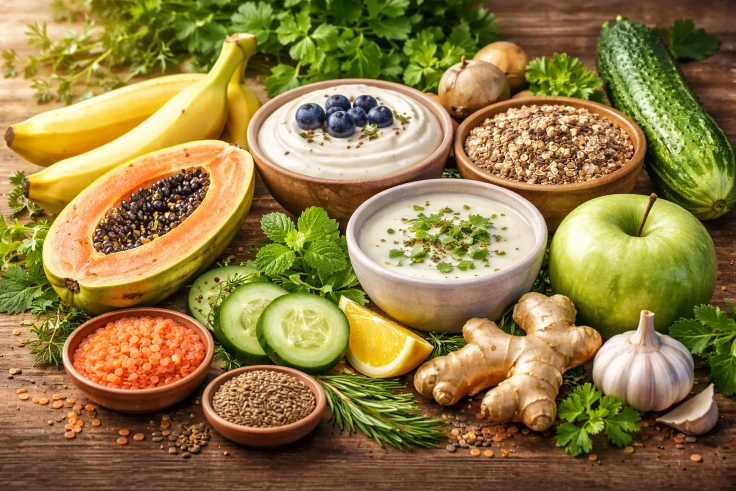
Good digestion is an important part of everyday wellness, and simple healthy food tips can help you build better eating habits over time. The foods you choose, how much fibre and fluid you consume, and the variety in your meals can all contribute to digestive health. A balanced eating pattern that includes vegetables, fruits, whole grains, pulses, nuts, seeds and other nutritious foods can support overall health while helping you develop practical habits for better gut health.
The World Health Organization (WHO) recommends a varied diet based on foods such as whole grains, vegetables, fruits and pulses, while limiting foods high in unhealthy fats, free sugars and salt.
This guide explains 10 simple healthy food tips that can be incorporated into everyday meals. It also covers hydration, fibre, probiotics, prebiotics, healthy eating habits and lifestyle choices that can complement a balanced diet.
Why Healthy Food Tips Matter for Digestion and Gut Health?
Your digestive system processes the food and drinks you consume and helps your body absorb nutrients. Everyday food choices can therefore play an important role in maintaining digestive wellness.
A varied diet can provide fibre, vitamins, minerals and other nutrients needed for normal body functions. WHO describes adequacy, balance, moderation and diversity as key principles of a healthy diet.
Good nutrition does not require complicated meals or expensive ingredients. Common foods such as dal, chickpeas, beans, oats, brown rice, vegetables, fruits, curd and nuts can form part of nutritious meals.
For people in India, traditional foods can also provide plenty of options. Dal with vegetables, vegetable poha, oats, whole-grain roti, brown rice, fruit, curd and lightly cooked vegetables are examples of everyday foods that can fit into a balanced eating pattern.
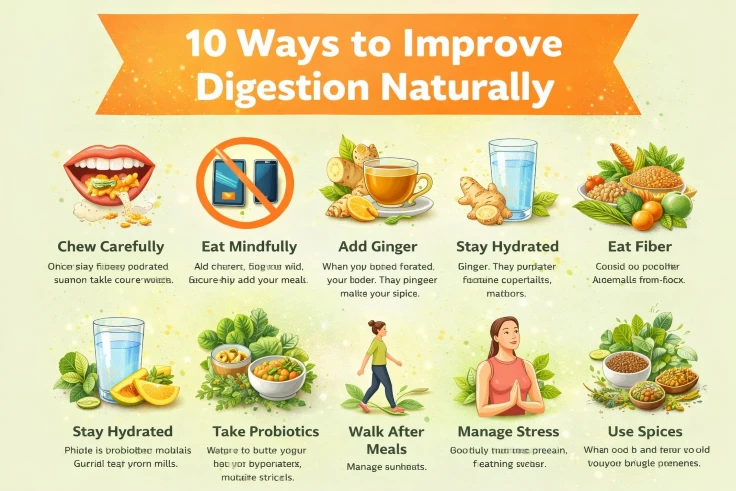
10 Healthy Food Tips for Better Digestion and Gut Health
1. Eat More Fibre-Rich Foods
One of the most useful healthy food tips for digestive wellness is to include a variety of fibre-rich foods in your meals.
Fibre is found naturally in plant foods and can help support normal bowel function. The NHS notes that fibre can support digestion and help prevent constipation.
Good sources include:
- Oats
- Brown rice
- Whole-wheat roti
- Barley
- Lentils and dal
- Chickpeas
- Beans
- Fruits
- Vegetables
- Nuts and seeds
WHO recommends that people aged over 10 years aim for at least 25 grams of naturally occurring dietary fibre each day, while individual requirements can vary.
If your current diet is low in fibre, increase it gradually rather than making a sudden large change. This can make it easier for your digestive system to adjust.
2. Include More Fruits and Vegetables
Fruits and vegetables provide fibre, vitamins, minerals and a variety of plant compounds. Eating different types also adds variety to your diet.
WHO recommends at least 400 grams of fruits and vegetables each day for people older than 10 years as part of a healthy dietary pattern.
Try adding different colours to your meals, such as:
- Carrots
- Spinach
- Pumpkin
- Tomatoes
- Beans
- Cucumber
- Apples
- Guava
- Papaya
- Oranges
- Bananas
You do not need to eat every type every day. Instead, focus on variety across the week.
A simple approach is to include vegetables with lunch and dinner and choose whole fruit as a snack when convenient.
3. Stay Hydrated
Hydration is another important part of digestive wellness. Water helps maintain normal body functions, and adequate fluid intake works alongside fibre.
The NHS explains that fluids help fibre work properly and support the movement of waste through the digestive system.
Simple hydration habits include:
- Keep a water bottle nearby.
- Drink water regularly throughout the day.
- Have water with meals.
- Increase fluid intake when you are more active or exposed to hot weather.
- Include water-rich foods such as fruits and vegetables.
There is no single amount of water that suits everyone. Fluid needs can vary depending on age, activity level, climate and other individual factors.
4. Choose Whole Grains
Whole grains can be useful additions to a balanced diet because they generally provide more fibre than refined grain products.
Examples include:
- Whole-wheat atta
- Oats
- Brown rice
- Barley
- Millet
- Whole-grain bread
- Whole-grain cereals
WHO recommends getting carbohydrates primarily from whole grains, vegetables, fruits and pulses.
You can make gradual swaps instead of changing everything at once. For example, try replacing some refined rice with brown rice or adding oats to breakfast.
Whole grains are also useful when creating best foods for healthy nutrition lists because they can provide fibre and other nutrients as part of a varied diet.
5. Add Probiotic Foods
Probiotics are live microorganisms found in some fermented foods and products. Certain fermented foods can be included as part of a varied diet.
Common examples include:
- Curd or yoghurt containing live cultures
- Some fermented vegetable foods
- Traditional fermented foods
However, not every fermented food contains probiotics with demonstrated health effects. Product labels and preparation methods can differ.
If you enjoy curd, it can be included with meals such as rice, roti or vegetable dishes. Choose options that fit your overall dietary needs and avoid assuming that a single food can solve digestive problems.
For general information about microorganisms that live in the digestive system, you can also explore the Wikipedia overview of the human microbiome.
6. Include Prebiotic Foods
Prebiotics are types of dietary components that can be used by certain microorganisms in the gut. Some plant foods naturally contain prebiotic fibres.
Examples can include:
- Onions
- Garlic
- Bananas
- Oats
- Legumes
- Asparagus
- Some whole grains
Adding a variety of plant foods to your diet is a practical way to increase dietary diversity.
If certain foods cause discomfort for you, there is no need to force them into your meals. Food tolerance varies between individuals, and persistent digestive symptoms should be discussed with a qualified healthcare professional.
7. Eat Mindfully and Slowly
Healthy eating is not only about what you eat. How you eat can also influence your daily routine.
Eating quickly can make it easier to overlook fullness cues and may make meals feel less comfortable for some people. Slowing down can help you pay more attention to the food and your body’s signals.
Try these simple habits:
- Sit down while eating.
- Avoid rushing through meals.
- Chew food thoroughly.
- Reduce distractions when possible.
- Pay attention to hunger and fullness.
- Give yourself enough time to finish your meal comfortably.
These habits can make healthy eating feel more sustainable instead of turning meals into another task to complete quickly.
8. Choose Balanced Meals
A balanced meal can combine different food groups rather than relying heavily on one type of food.
For example, a simple Indian meal could include:
Option 1: Dal + roti + mixed vegetables + curd
Option 2: Brown rice + rajma + salad + vegetables
Option 3: Vegetable poha + fruit + curd
Option 4: Millet roti + dal + cooked vegetables
The exact foods and portions can vary according to individual needs, preferences and dietary practices.
WHO states that healthy diets should be diverse and include a range of nutritious foods from different food groups.
9. Limit Highly Processed Foods
Highly processed foods can sometimes be high in free sugars, unhealthy fats or sodium. Eating them frequently can make it harder to maintain a balanced dietary pattern.
Examples may include:
- Sugary drinks
- Packaged sweets
- Fried snacks
- Some bakery products
- Highly processed ready-to-eat foods
- Foods high in added sugar or salt
This does not mean every packaged food needs to be avoided. Instead, check food labels when appropriate and focus on a varied diet built mainly around nutritious foods.
WHO recommends limiting foods high in unhealthy fats, free sugars and sodium and emphasises minimally processed and unprocessed foods as the foundation of healthy diets.
10. Maintain Consistent Eating Habits
Regular eating habits can make it easier to build a balanced routine.
Instead of frequently skipping meals and then eating very large meals, try to create an eating pattern that works with your daily schedule.
A simple routine could include:
- A nutritious breakfast
- A balanced lunch
- A light snack when needed
- A balanced dinner
- Regular water intake throughout the day
Consistency does not mean every meal has to be perfect. The overall pattern of your diet matters more than one meal or one day.
Foods That Can Support Healthy Digestion
Many common foods can contribute fibre and other nutrients to a balanced diet.
Fibre-Rich Foods
Consider including:
- Dal
- Chickpeas
- Rajma
- Oats
- Whole-wheat flour
- Brown rice
- Barley
- Vegetables
- Fruits
- Nuts and seeds
Fibre from a variety of sources can support normal digestion.
Fruits and Vegetables
Fresh fruits and vegetables can provide fibre and important micronutrients. WHO recommends regular consumption of a variety of fruits and vegetables as part of a healthy diet.
Choose seasonal produce where practical. This can make healthy eating more affordable and enjoyable.
Fermented Foods
Curd and other traditionally fermented foods can add variety to meals. However, fermented foods should be viewed as one part of an overall balanced diet rather than a single solution for gut health.
Foods and Eating Habits to Limit
There is no need to create an overly restrictive diet. Instead, focus on moderation and overall dietary quality.
You may consider limiting frequent intake of:
- Sugary beverages
- Excessively fried foods
- Foods high in added sugars
- Highly processed snacks
- Foods very high in salt
- Very large meals
Some people may also notice that particular foods cause bloating, heartburn or other discomfort. Individual responses vary, so keeping a simple food and symptom record may help you discuss patterns with a healthcare professional if needed.
The NHS notes that fatty or fried foods can be harder for some people to digest and that spicy foods may trigger symptoms in some individuals.
The Connection Between Hydration and Gut Health
Hydration deserves special attention because fluids work together with dietary fibre.
When fibre absorbs water, it can help support softer and easier-to-pass stools. Without enough fluid, increasing fibre suddenly may not provide the expected benefit.
Rather than waiting until you feel very thirsty, make water part of your daily routine.
Helpful habits include:
- Drinking water throughout the day
- Carrying a reusable bottle
- Having water with meals
- Choosing water instead of sugary drinks more often
- Eating water-rich fruits and vegetables
During hot Indian summers or periods of increased physical activity, fluid needs may increase.
Other Lifestyle Habits That Support Digestion
Food is important, but digestive wellness also fits into a broader healthy lifestyle.
Regular Physical Activity
Regular movement can complement healthy eating habits. Walking, cycling, yoga and other suitable forms of physical activity can help you stay active throughout the day.
You do not always need a complicated workout. A regular walk after a meal or short movement breaks during long periods of sitting can be practical additions to an active lifestyle.
Adequate Sleep
Sleep is another important part of general wellbeing. Aim for a consistent sleep routine and create a comfortable environment that supports restful sleep.
Healthy eating, regular activity and adequate sleep can work together as part of a balanced lifestyle.
Stress Management
Daily stress can affect how you feel physically, including how comfortable your digestive system feels.
Simple relaxation habits may include:
- Deep breathing
- Meditation
- Gentle stretching
- Reading
- Spending time outdoors
- Maintaining social connections
If ongoing stress or digestive symptoms are affecting your daily life, consider speaking with a qualified healthcare professional.
How to Build a Simple Gut-Friendly Daily Meal Routine?
You do not need to completely change your diet overnight. Start with small and realistic changes.
Morning
Begin the day with a nutritious breakfast such as:
- Oats with fruit and nuts
- Vegetable poha
- Whole-wheat toast with eggs and vegetables
- Idli with vegetables and a suitable accompaniment
Drink water according to your usual needs.
Lunch
Build a balanced lunch using a combination of:
- Dal or another protein-rich food
- Whole grains or another staple
- Two or more vegetables
- Curd if suitable for you
- A serving of fruit
Evening
Choose a simple snack such as:
- Fruit
- Roasted chickpeas
- Nuts and seeds
- Unsweetened curd
- A homemade snack containing whole grains
Dinner
Keep dinner balanced and choose foods that suit your routine.
For example:
Dal + roti + vegetables + salad
or
Vegetable khichdi + curd + cooked vegetables
The goal is not to follow one fixed menu. Instead, create a varied pattern that includes different nutritious foods.
Healthy Food Tips for Different Everyday Needs
Healthy eating can look different for different people. Age, activity level, food preferences, cultural practices and health circumstances can all affect dietary needs.
For example, someone who exercises regularly may need a different meal pattern from someone with a mostly sedentary routine. Similarly, vegetarian and non-vegetarian diets can both provide balanced nutrition when they include a suitable variety of foods.
For general nutrition information, the World Health Organization’s healthy diet guidance provides evidence-based information about dietary variety, fruits, vegetables, whole grains, pulses, fats, sugars and sodium.
You can also explore GoHealthyPro’s related guide, 7 Foods for Healthy Hair and Skin: A Complete Guide, for more general information about nutritious food choices and everyday wellness.
How to Make Healthy Eating Easier
Healthy eating becomes more manageable when you prepare for it.
Try these practical habits:
- Plan a few meals before grocery shopping.
- Keep seasonal fruits at home.
- Add vegetables to familiar dishes.
- Keep pulses and whole grains available.
- Carry water when travelling.
- Prepare simple snacks in advance.
- Read food labels when buying packaged products.
- Make gradual changes instead of following extreme diets.
The aim is to build habits that you can continue over time.
Frequently Asked Questions
Q1: How can I improve digestion naturally?
You can improve digestion naturally by eating slowly, chewing food properly, staying hydrated, and including fiber-rich foods like fruits and vegetables. Regular exercise, managing stress, and maintaining a consistent meal routine also help support a healthy digestive system.
Q2: What are the best foods for digestion?
The best foods include fiber-rich whole grains, leafy greens, and fruits like papaya and bananas. Probiotics like yogurt and buttermilk replenish good bacteria, while ginger, cumin, and fennel act as natural catalysts to speed up the breakdown of food and prevent bloating.
Q3: Can poor digestion cause weight gain?
Yes, poor digestion can lead to weight gain by slowing your metabolism, causing nutrient deficiencies that trigger cravings, and increasing inflammation or water retention within the body.
Q4: Is it good to drink water immediately after a meal?
No, it is best to wait 30 minutes after eating before drinking a full glass of water. Drinking too much water during or immediately after a meal can dilute your stomach’s natural digestive enzymes, slowing down the process. Small sips are fine if needed.
Q5: What is the best time to eat fruit for gut health?
For the best results, eat fruits in the morning or as a mid-morning snack on an empty stomach. Eating fruits immediately after a heavy meal can cause them to ferment in the gut, leading to gas and acidity.
Disclaimer:
“This article is only for general health awareness and tips. It is not medically suggested advice. Please consult a qualified healthcare professional for medical guidance.”
Final Thoughts on Healthy Food Tips
Following practical healthy food tips does not mean following a strict or complicated diet. A better approach is to focus on variety, balance, moderation and consistency. GoHealthyPro shares general health and wellness information to help readers understand simple nutrition and healthy lifestyle habits.
Include more fibre-rich foods, fruits, vegetables, whole grains and pulses. Stay hydrated, choose balanced meals, eat mindfully and limit frequent intake of highly processed foods. Regular physical activity, adequate sleep and stress management can also complement healthy eating habits.
The WHO highlights diversity, balance, moderation and adequacy as core principles of a healthy diet.
Start with one or two realistic changes and build from there. Over time, small improvements can become part of your normal routine. For more practical healthy food tips, nutrition information and everyday wellness guidance, explore GoHealthyPro.
Disclaimer: This article is provided for general health and wellness information only. It is not a substitute for professional medical or dietary advice. If you have persistent digestive symptoms, a medical condition, food intolerance, or specific nutritional concerns, consult a qualified healthcare professional for personalised advice.
Explore more practical nutrition, healthy eating and everyday wellness information on GoHealthyPro.