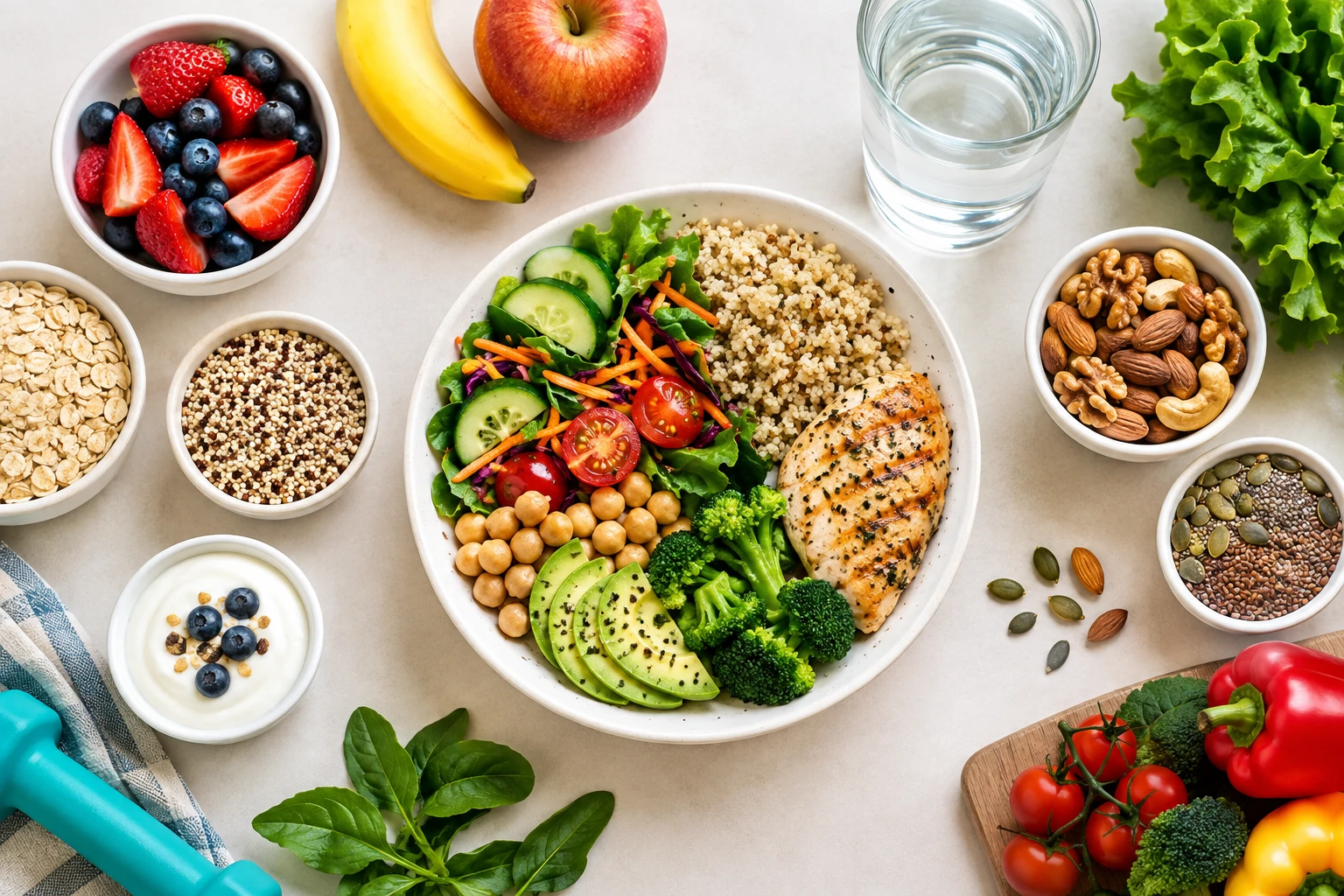
A daily nutrition guide can help you make better food choices and build healthy eating habits over time. Eating a balanced diet does not have to be complicated. Simple changes, such as eating more vegetables, choosing whole grains, including protein-rich foods and drinking enough water, can help support overall health and well-being.
The World Health Organization (WHO) healthy diet guidance highlights adequacy, balance, moderation and diversity as key principles of a healthy diet.
The goal is not to follow a perfect diet every day. Instead, focus on a balanced eating pattern that provides a variety of nutrients and fits your everyday lifestyle.
Healthy Nutrition Foods to Include in Your Daily Diet?
Choosing healthy nutrition foods is an important part of maintaining a balanced diet. Different foods provide different nutrients that support energy, digestion, muscle health and normal body functions. Including a variety of nutritious foods in your daily meals can help you meet your body’s nutritional needs.
Here are some healthy food options to include in your everyday diet.
1. Whole Grains for Daily Energy
Whole grains provide carbohydrates, fibre and other essential nutrients. They can help make meals more filling and add variety to your diet.
Examples include:
- Oats
- Brown rice
- Whole wheat roti
- Millets
- Whole grain bread
Choose whole grains more often instead of refined grain products.
2. Fruits and Vegetables for Vitamins and Fibre
Fruits and vegetables provide vitamins, minerals, fibre and beneficial plant compounds. Eating different types and colours helps increase the variety of nutrients in your diet.
Include foods such as:
- Apples
- Bananas
- Oranges
- Spinach
- Carrots
- Tomatoes
- Broccoli
Try adding seasonal fruits to breakfast and vegetables to lunch and dinner.
3. Protein-Rich Foods for Muscle Health
Protein helps maintain muscles and supports the growth and repair of body tissues. Both plant-based and animal-based foods can provide protein.
Some nutritious options include:
- Lentils and dals
- Chickpeas
- Kidney beans
- Eggs
- Milk and curd
- Paneer
- Tofu
- Fish
Include different protein sources in your meals according to your food preferences.
4. Nuts and Seeds for Healthy Fats
Nuts and seeds provide unsaturated fats, fibre, protein and several vitamins and minerals. They can be added to meals and snacks in moderate portions.
Good choices include:
- Almonds
- Walnuts
- Peanuts
- Chia seeds
- Flaxseeds
- Pumpkin seeds
Add a small handful of nuts to your snacks or sprinkle seeds over oats, curd or salads.
5. Dairy and Fortified Alternatives for Calcium
Milk, curd and other dairy products can provide calcium and protein. Fortified plant-based alternatives may also provide calcium and other nutrients.
Options include:
- Milk
- Plain curd
- Paneer
- Calcium-fortified soy milk
- Fortified plant-based yoghurt
Choose options that suit your dietary needs and preferences.
6. Water and Hydrating Foods
Water supports digestion, temperature regulation and other essential body functions. Fruits and vegetables with high water content can also contribute to daily fluid intake.
Hydrating options include:
- Water
- Watermelon
- Cucumber
- Oranges
- Soups
Drink fluids regularly throughout the day, adjusting your intake to your activity level, weather and individual needs.
How to Include These Foods in Your Daily Meals
You do not need to eat every nutritious food in one meal. Instead, combine different food groups throughout the day.
For example:
- Breakfast: Vegetable poha with curd or oats with fruit and nuts.
- Lunch: Whole wheat roti, dal, seasonal vegetables and salad.
- Evening snack: Fresh fruit, roasted chickpeas or a handful of nuts.
- Dinner: Vegetable khichdi with curd or paneer with vegetables and roti.
A varied eating pattern can make healthy food choices easier to maintain. Focus on balance, variety and suitable portions rather than relying on a single food for better health.
What Is a Balanced Diet?
A balanced diet includes a variety of foods from different food groups in suitable amounts. These foods provide nutrients such as carbohydrates, protein, healthy fats, vitamins, minerals and fibre.
According to the WHO, a healthy diet should include a variety of nutritious foods while limiting foods high in unhealthy fats, free sugars and sodium.
A balanced diet may include:
- Whole grains such as oats, brown rice and whole wheat
- Protein-rich foods such as pulses, beans, eggs, fish and tofu
- Fruits and vegetables for vitamins, minerals and fibre
- Healthy fats from nuts, seeds, fish and plant oils
- Water and other suitable fluids for hydration
The right balance can vary from person to person depending on age, activity level, dietary preferences and individual health needs.
Why Daily Nutrition Matters for Your Health?
The foods you eat regularly provide the energy and nutrients your body needs for everyday functions. A varied and balanced eating pattern can support normal body functions and contribute to overall health.
Good daily nutrition can help you:
- Meet your body’s nutrient needs
- Maintain energy for daily activities
- Support normal immune function
- Support healthy digestion
- Maintain a healthy body weight
- Build sustainable healthy eating habits
You do not need to change everything at once. Small and consistent improvements can make healthy eating easier to maintain.
10 Essential Nutrition Tips for a Balanced Diet
These practical nutrition tips can help you develop healthier eating habits.
1. Eat More Whole Foods
Choose foods that are minimally processed more often. Fruits, vegetables, whole grains, pulses, beans, nuts and seeds can provide important nutrients and fibre.
For example, you can choose whole wheat roti instead of refined bread or add fresh fruit and nuts to your breakfast.
2. Stay Hydrated Throughout the Day
Water is essential for many functions in the body. Your fluid needs can vary depending on factors such as weather, activity level and individual needs.
Keep water available throughout the day and drink regularly. You can also get fluids from foods such as fruits, vegetables and soups.
Rather than following a fixed number of glasses, pay attention to your body’s fluid needs and local conditions.
3. Pay Attention to Portion Sizes
Eating a variety of nutritious foods is important, but portion size also matters. Try serving reasonable portions and eating slowly.
Using a smaller plate can be a simple way to become more aware of how much food you are serving. Avoid eating directly from large packets, as this can make portion control more difficult.
4. Include Protein-Rich Foods
Protein supports important functions in the body and helps maintain muscles and other tissues.
Good food sources include:
- Eggs
- Milk and curd
- Lentils and dals
- Beans and chickpeas
- Tofu and soy products
- Fish
- Nuts and seeds
Include suitable protein sources throughout your meals according to your dietary preferences.
5. Eat a Variety of Fruits and Vegetables
Fruits and vegetables provide vitamins, minerals, fibre and other beneficial plant compounds.
Try to include different colours and types throughout the week. You can add vegetables to curries, dal, soups, salads, sandwiches and other meals.
Choose whole fruits more often than fruit drinks or juices because whole fruits provide fibre.
The WHO healthy diet recommendations encourage a varied diet with plenty of fruits, vegetables, pulses and whole grains.
6. Choose Healthy Sources of Fat
Fat is an important part of a balanced diet. Instead of avoiding all fats, focus on healthier sources and use them in suitable amounts.
Good options include:
- Nuts
- Seeds
- Avocado
- Fatty fish
- Plant-based oils such as olive or mustard oil
Limit foods high in trans fats and avoid making fried and highly processed foods a regular part of your diet.
7. Limit Added Sugars and Highly Processed Foods
Many packaged foods and drinks can contain added sugars. Regularly consuming large amounts of added sugar can make it harder to maintain a balanced diet.
Check food labels when buying packaged products and compare their sugar content. Choose whole or minimally processed foods more often and keep sugary drinks and highly processed snacks as occasional choices.
WHO recommends limiting free sugar intake and reducing foods high in unhealthy fats and sodium as part of a healthy dietary pattern.
8. Choose a Nutritious Breakfast When It Suits You
Breakfast can be part of a healthy eating routine, but people have different eating patterns and needs. If you eat breakfast, choose a balanced meal instead of relying mainly on sugary foods.
For example:
- Oats with fruit and nuts
- Vegetable poha with curd
- Moong dal chilla with vegetables
- Eggs with whole wheat toast
- Vegetable upma with fruit
The aim is to include nutritious foods rather than simply focusing on having a large breakfast.
9. Plan and Prepare Your Meals
Meal planning can make healthy choices easier when you have a busy schedule.
You can prepare some ingredients in advance, such as:
- Chopping vegetables
- Cooking dal or beans
- Preparing whole grains
- Washing and portioning fruits
- Keeping healthy snacks ready
Planning a few meals ahead can also help reduce dependence on convenient foods when you are very hungry.
10. Read Nutrition Labels
Nutrition labels can help you compare packaged foods and understand what you are eating.
When checking a label, look at:
- Serving size
- Energy or calories
- Protein
- Fibre
- Added or total sugars
- Sodium
- Ingredients
Do not judge a food only by one number. Consider the overall nutritional value and how the food fits into your diet.
Simple Nutrition Tips for Busy People
A busy schedule does not mean you have to ignore healthy eating. A little preparation can make nutritious choices more convenient.
Batch Cook When Possible
Prepare larger portions of foods such as dal, vegetables, rice, quinoa or beans. Store them safely and use them for different meals during the week.
Keep Healthy Snacks Ready
Keep convenient options such as:
- Fresh fruit
- Unsalted nuts
- Roasted chickpeas
- Curd
- Seeds
- Cut vegetables
This can make it easier to choose nutritious snacks when you are hungry.
Make Simple Meal Plans
Plan a few meals before the week begins. You do not need a complicated schedule. Even deciding what you will eat for breakfast and lunch can make daily food choices easier.
Frequently Asked Questions
Q1. What is the most important nutrient in a balanced diet?
No single nutrient is most important—they all work together. However, protein, fiber, and water are three fundamentals most people don’t get enough of.
Q2. How many meals should I eat per day?
Most people do well with 3 main meals and 1–2 healthy snacks. What matters more than meal frequency is the overall quality and quantity of what you eat.
Q3. Can I eat carbs and still lose weight?
Absolutely. Carbohydrates are not the enemy. Focus on complex carbs like oats, sweet potatoes, and whole grains, and moderate your portions.
Q4. What are the best foods for energy?
Oats, bananas, eggs, almonds, and leafy greens are all great natural energy boosters. Avoid relying on caffeine or energy drinks.
Q5. How much water should I drink daily?
A general guideline is 8 glasses (about 2 liters) per day. Active people or those in hot climates may need more.
Final Thoughts
A daily nutrition guide can help you understand the basics of balanced eating and make practical food choices. Focus on variety, suitable portions and nutritious foods rather than trying to follow a perfect diet.
Healthy eating is a long-term habit. Start with small changes that fit your routine and gradually build a more balanced approach to food. GoHealthyPro provides general health and wellness information to support readers in learning about healthy lifestyle habits.
Disclaimer: This article is intended for general health awareness and educational purposes only. It does not provide medical advice, diagnosis or treatment. If you have specific health concerns or dietary needs, consult a qualified healthcare professional or registered dietitian for personalised guidance.