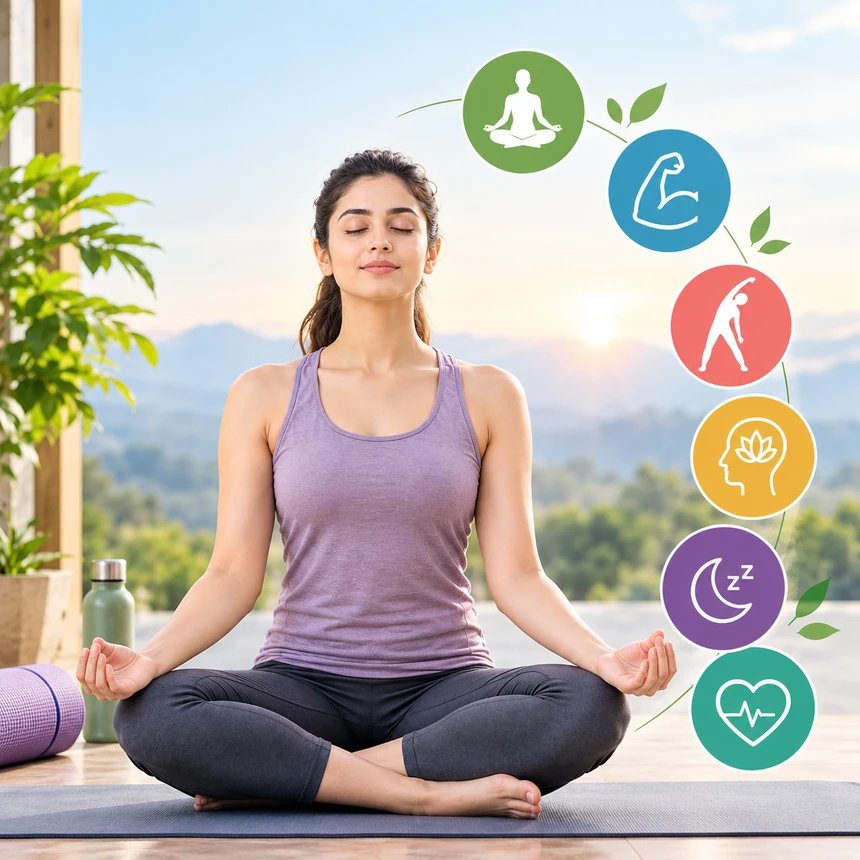
Yoga is a simple and adaptable form of physical activity that combines movement, breathing, and mindfulness. A daily yoga practice can support flexibility, strength, balance, relaxation, and overall wellbeing when included as part of a healthy lifestyle. You do not need to spend hours on the mat. Even a short and consistent routine can help you stay active and build healthier habits.
Whether you are a beginner or already familiar with yoga, choosing suitable yoga asanas and practising them regularly can make your routine more enjoyable and sustainable.
Daily Yoga Practice for Better Health
A daily yoga practice can offer several physical and mental wellness benefits. Yoga commonly combines physical postures, breathing techniques, and meditation, which can help create a balanced approach to wellbeing.
According to the World Health Organization, regular physical activity can provide benefits for physical and mental health. Yoga can be one way to include movement and mindful activity in your routine.
1. Supports Flexibility
Regular yoga movements gently stretch different muscle groups and may help improve flexibility over time. Beginners can start with simple postures and gradually work towards more challenging movements.
Practising consistently is generally more useful than pushing the body too hard during a single session.
2. Helps Build Strength
Many yoga postures require you to support and control your body weight. Poses such as Plank, Chair Pose, and Warrior variations can engage different muscle groups.
Practising appropriate yoga asanas regularly may help develop muscular endurance and body control.
3. Promotes Better Balance
Balance can become an important part of physical fitness, particularly as people get older. Standing poses such as Tree Pose encourage you to develop stability, concentration, and body awareness.
You can practise balance poses near a wall or another stable support when needed.
4. Supports Stress Management
Yoga often combines controlled movement, breathing, and mindfulness. These practices can encourage relaxation and help you create a calming routine.
The National Center for Complementary and Integrative Health notes that research suggests yoga may help with stress management and general wellbeing, although the evidence varies depending on the health outcome studied.
5. Encourages Mindful Breathing
Breathing exercises are an important part of many yoga traditions. Paying attention to your breathing can help you remain focused during your practice.
If you want to explore yoga postures that focus on breathing and chest-opening movements, read our guide: [10 Best Yoga Asanas for Breathing Problems].
6. May Support Better Sleep
A relaxing yoga routine may be useful as part of a healthy bedtime routine. Gentle stretching, breathing exercises, and relaxation can help you wind down before sleeping.
However, persistent sleep problems should be discussed with a qualified healthcare professional rather than relying only on yoga.
7. Supports Mental Wellbeing
A regular yoga routine gives you time to slow down, focus on your breathing, and become more aware of your body. This combination can support relaxation and mindful living.
You can also learn more about this topic in [Meditation Benefits and Yoga Poses for Wellness], which explores how meditation and yoga can complement a healthy lifestyle.
How Yoga Meditation Complements Your Routine?
Yoga meditation can add a mindful element to your daily routine. Instead of focusing only on physical postures, meditation encourages you to pay attention to your breathing, thoughts, and present moment.
You can finish your yoga session with five minutes of quiet breathing or meditation. Start with a comfortable seated position and focus gently on each breath without trying to force your thoughts away.
Consistency is more important than making the session long. A few mindful minutes each day can become a practical part of your wellness routine.
Simple Yoga Asanas for Beginners
If you are new to yoga, begin with comfortable movements and learn proper alignment before progressing to advanced poses. Some commonly practised beginner-friendly postures include:
- Mountain Pose: Helps develop body awareness and posture.
- Child’s Pose: Provides a gentle resting position.
- Cat-Cow Pose: Moves the spine through gentle flexion and extension.
- Tree Pose: Helps practise balance and concentration.
- Warrior II: Engages the legs while encouraging stable posture.
- Cobra Pose: Provides a gentle back extension when performed correctly.
Your ability, flexibility, and health needs may differ from those of another person, so avoid forcing any movement that causes pain.
How to Start a Daily Yoga Practice?
Starting with a realistic routine can make it easier to stay consistent. You do not need an advanced routine or a long session. Begin with simple movements and gradually build your practice as you become more comfortable.
Begin With 10 to 15 Minutes
You do not need a long workout when starting. A short session can include gentle stretching, a few basic postures, breathing exercises, and relaxation. Starting with a manageable duration can make it easier to develop a regular habit.
The National Center for Complementary and Integrative Health (NCCIH) explains that yoga combines physical postures, breathing techniques, and meditation and may support general wellness, including stress management, sleep, balance, and mental and emotional wellbeing.
For more detailed information about yoga, its potential benefits, and safety considerations, read the NCCIH guide to yoga.
Choose a Convenient Time
Practise at a time that fits naturally into your schedule. Morning yoga may help you begin the day with movement, while an evening routine may provide an opportunity to relax.
Focus on Consistency
Try to make yoga a regular habit rather than aiming for difficult poses immediately. Gradually increase the duration or variety of your routine as you become more comfortable.
Listen to Your Body
Yoga should not be a competition. If a posture causes sharp pain, stop and seek appropriate guidance. People with existing health conditions, injuries, or specific concerns should consider speaking with a qualified healthcare professional before starting a new exercise routine.
Tips to Make Yoga a Regular Habit
A few simple strategies can help you maintain your routine:
- Keep your yoga mat somewhere easy to access.
- Start with short sessions.
- Follow a beginner-friendly sequence.
- Combine movement with mindful breathing.
- Avoid comparing your progress with others.
- Increase difficulty gradually.
- Take rest days when your body needs them.
At GoHealthyPro, we encourage readers to approach yoga as one part of a balanced lifestyle that also includes regular physical activity, nutritious food, adequate sleep, and healthy daily habits.
Frequently Asked Questions
Is daily yoga practice good for beginners?
Yes, beginners can practise yoga regularly by starting with simple poses and short sessions. Focus on comfortable movements and proper technique rather than advanced postures.
How long should I practise yoga every day?
There is no single required duration. Beginners can start with around 10 to 15 minutes and gradually increase their practice based on comfort and schedule.
Can yoga improve flexibility?
Regular stretching and yoga postures may help improve flexibility over time. Progress differs between individuals, so avoid forcing your body into uncomfortable positions.
What are yoga asanas?
Yoga asanas are physical postures practised as part of yoga. They can involve stretching, strengthening, balance, and body awareness.
Can yoga help with stress?
Yoga combines physical movement, breathing, and mindfulness, and research suggests it may support stress management and relaxation. It should complement, rather than replace, professional care when someone has a significant mental or physical health concern.
Conclusion
A daily yoga practice can be a practical way to add movement, stretching, balance, breathing, and mindfulness to your lifestyle. Starting with simple yoga asanas and gradually building consistency can make the practice easier to maintain. Combining yoga with yoga meditation may also create a more mindful approach to everyday wellness.
For more educational information about healthy living, GoHealthyPro provides articles covering fitness, nutrition, wellness, and lifestyle topics.