

Introduction
Foods for bone health plays a vital role in maintaining strong bones, preventing fractures, and supporting mobility throughout life. While many people focus on exercise for building strength, nutrition is equally important when it comes to preserving bone density and reducing the risk of bone-related conditions.
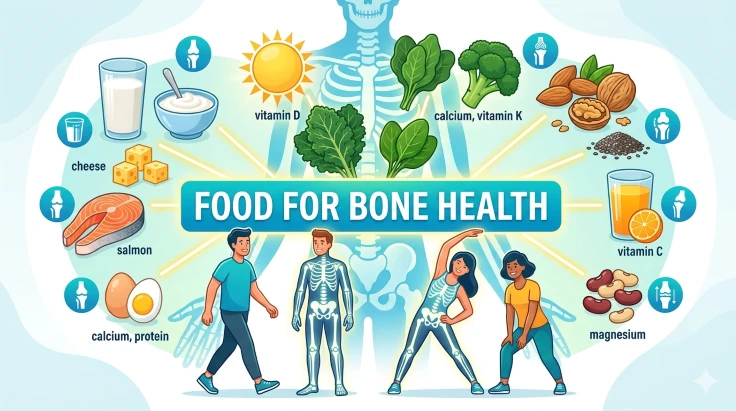
Bones are living tissues that constantly undergo a process of breakdown and rebuilding. To support this process, your body requires essential nutrients such as calcium, vitamin D, magnesium, phosphorus, protein, and vitamin K. Without adequate nutrition, bones can gradually become weak and brittle over time.
Whether you are a growing child, an active adult, or a senior aiming to maintain independence, consuming the right food for bone health can help support a stronger skeletal system. This guide explores the best foods that nourish your bones, the nutrients they provide, and practical tips for creating a bone-friendly diet.
Why Foods for Bone Health Matters
Many people associate bone health only with aging, but bone development and maintenance occur throughout life. Peak bone mass is usually reached in early adulthood, and afterward, preserving bone strength becomes a priority.
A balanced diet rich in nutrients can help:
- Increase bone density
- Support bone growth and repair
- Reduce the risk of osteoporosis
- Improve joint function
- Lower fracture risk
- Enhance overall mobility
The foundation of healthy bones starts with consistently choosing nutrient-dense food for bone health every day.
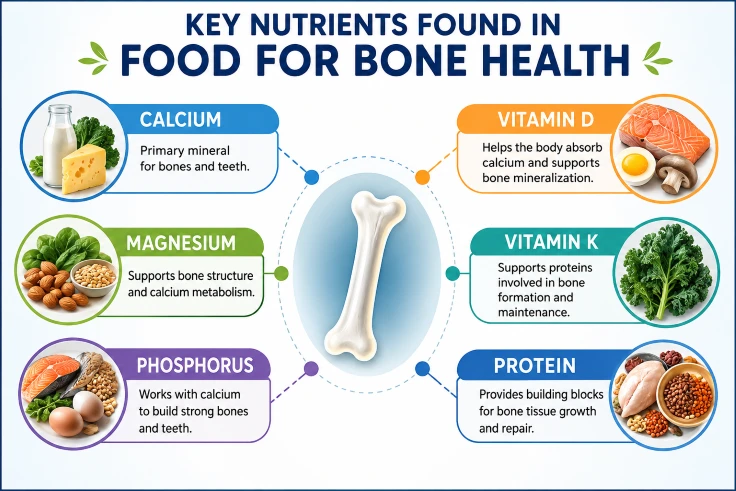
Key Nutrients Found in Foods for Bone Health
Before discussing specific foods, it is important to understand the nutrients that contribute to stronger bones.
Calcium
Calcium is the primary mineral found in bones and teeth. Approximately 99% of the body’s calcium is stored in the skeletal system.
Vitamin D
Vitamin D helps the body absorb calcium effectively and supports proper bone mineralization.
Magnesium
Magnesium contributes to bone structure and assists in calcium metabolism.
Vitamin K
Vitamin K supports proteins involved in bone formation and maintenance.
Phosphorus
This mineral works alongside calcium to build strong bones and teeth.
Protein
Protein provides the building blocks necessary for bone tissue growth and repair.
A well-rounded diet should include all these nutrients through a variety of food for bone health choices.
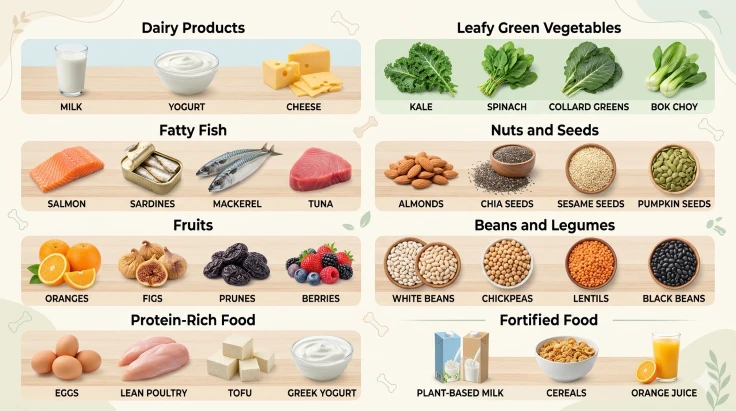
Dairy Products: Classic Foods for Bone Health
Dairy products remain among the most recognized sources of bone-supporting nutrients.
Milk
Milk provides calcium, protein, phosphorus, and often vitamin D when fortified.
Benefits include:
- Supports bone density
- Easy source of daily calcium
- Suitable for most age groups
Yogurt
Yogurt contains calcium, protein, probiotics, and several vitamins that support overall health.
Benefits include:
- Supports digestion
- Provides high calcium content
- Helps maintain bone strength
Cheese
Cheese offers calcium and protein, though moderation is recommended due to its sodium content.
Including dairy regularly can significantly contribute to daily nutrient requirements for healthy bones.
Leafy Green Vegetables as Foods for Bone Health
Green vegetables are packed with vitamins and minerals that support skeletal health.
Kale
Kale is rich in calcium, vitamin K, and antioxidants.
Spinach
Spinach contains magnesium, potassium, and other nutrients beneficial for bones.
Collard Greens
Collard greens are an excellent source of calcium and vitamin K.
Bok Choy
This nutrient-rich vegetable provides calcium while remaining low in calories.
Adding leafy greens to salads, smoothies, soups, and stir-fries is a simple way to increase your intake of food for bone health.
Fatty Fish: Nutrient-Dense Foods for Bone Health
Certain fish varieties are among the best dietary sources of vitamin D.
Salmon
Salmon provides:
- Vitamin D
- Protein
- Omega-3 fatty acids
Sardines
Sardines contain edible bones, making them exceptionally rich in calcium.
Mackerel
Mackerel offers healthy fats and vitamin D that support bone mineralization.
Tuna
Tuna contributes vitamin D and protein, helping maintain skeletal strength.
Consuming fatty fish two to three times weekly can support both bone and heart health.
Nuts and Seeds for Stronger Bones
Nuts and seeds are rich in magnesium, healthy fats, and minerals that support bone formation.
Almonds
Almonds provide:
- Calcium
- Magnesium
- Protein
Chia Seeds
Chia seeds are loaded with calcium and phosphorus.
Sesame Seeds
Sesame seeds contain important minerals that help maintain bone density.
Pumpkin Seeds
Pumpkin seeds offer magnesium and zinc, both essential for bone metabolism.
These foods make excellent snacks and can be added to smoothies, yogurt, and oatmeal
Fruits That Support Bone Health
Although fruits are not typically known for calcium, many contain nutrients that contribute to stronger bones.
Oranges
Oranges provide vitamin C, which supports collagen production within bone tissue.
Figs
Dried figs contain calcium, potassium, and magnesium.
Prunes
Research suggests prunes may help support bone density, especially in older adults.
Berries
Berries contain antioxidants that help combat oxidative stress affecting bones.
Including a variety of fruits in your diet can complement other food for bone health choices.
Beans and Legumes: Affordable Foods for Bone Health
Beans and legumes offer an excellent combination of minerals, fiber, and plant protein.
White Beans
White beans contain calcium and magnesium.
Chickpeas
Chickpeas provide phosphorus and protein.
Lentils
Lentils support bone health through their magnesium and mineral content.
Black Beans
Black beans offer nutrients involved in bone maintenance and repair.
These foods are affordable, versatile, and ideal for vegetarian diets.
Protein-Rich Foods for Bone Health
Protein is essential because bones contain a significant amount of protein matrix.
Eggs
Eggs provide high-quality protein and small amounts of vitamin D.
Lean Poultry
Chicken and turkey support bone maintenance through protein intake.
Tofu
Calcium-set tofu is an excellent vegetarian source of calcium and protein.
Greek Yogurt
Greek yogurt combines protein and calcium in one convenient food.
Maintaining adequate protein intake supports both muscle and bone health.
Fortified Foods for Bone Health
Some foods are fortified to provide additional nutrients that support skeletal strength.
Fortified Plant-Based Milk
Options include:
- Soy milk
- Almond milk
- Oat milk
Many varieties contain added calcium and vitamin D.
Fortified Cereals
Certain breakfast cereals can help increase nutrient intake.
Fortified Orange Juice
Some products contain added calcium and vitamin D.
Fortified foods can be particularly helpful for individuals who avoid dairy products.
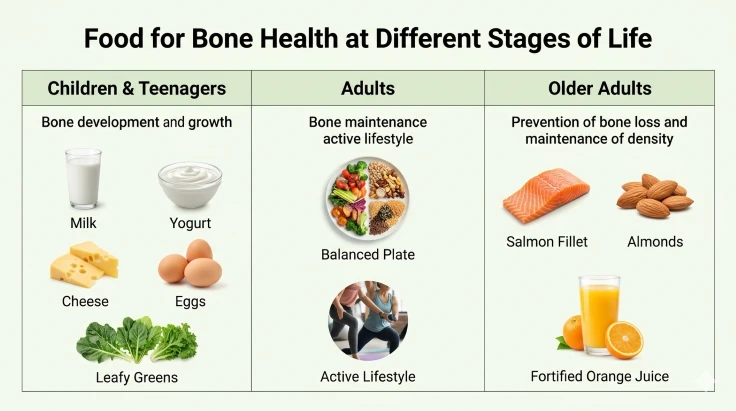
Foods for Bone Health at Different Stages of Life
Children and Teenagers
Young people require sufficient calcium and vitamin D to build peak bone mass.
Recommended foods include:
- Milk
- Yogurt
- Cheese
- Eggs
- Leafy greens
Adults
Adults should focus on maintaining bone density through balanced nutrition and physical activity.
Older Adults
Seniors may experience age-related bone loss and should prioritize:
- Calcium-rich foods
- Vitamin D sources
- Protein-rich meals
- Magnesium-containing foods
Tailoring food for bone health according to age can help maintain skeletal strength throughout life.
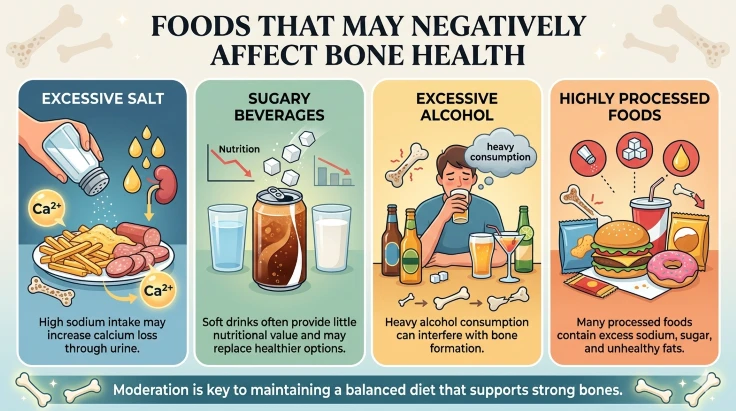
Foods That May Negatively Affect Bone Health
While focusing on beneficial foods, it is also important to limit certain dietary habits.
Excessive Salt
High sodium intake may increase calcium loss through urine.
Sugary Beverages
Soft drinks often provide little nutritional value and may replace healthier options.
Excessive Alcohol
Heavy alcohol consumption can interfere with bone formation.
Highly Processed Foods
Many processed foods contain excess sodium, sugar, and unhealthy fats.
Moderation is key to maintaining a balanced diet that supports strong bones.
Lifestyle Habits That Enhance the Benefits of Foods for Bone Health
Nutrition works best when combined with healthy lifestyle practices.
Engage in Weight-Bearing Exercise
Activities such as walking, jogging, dancing, and strength training stimulate bone growth.
Get Adequate Sunlight
Sun exposure helps the body produce vitamin D naturally.
Maintain a Healthy Weight
Both underweight and obesity can negatively affect bone health.
Stay Physically Active
Regular movement supports overall musculoskeletal function.
Combining exercise with proper food for bone health creates a strong foundation for lifelong wellness.
Sample One-Day Bone-Healthy Meal Plan
Breakfast
- Fortified oatmeal
- Greek yogurt
- Orange slices
- Chia seeds
Mid-Morning Snack
- Almonds
- Dried figs
Lunch
- Grilled salmon
- Kale salad
- Whole grains
Afternoon Snack
- Yogurt with berries
Dinner
- Lentil soup
- Steamed broccoli
- Tofu stir-fry
Evening Snack
- Warm fortified milk
This meal plan incorporates several nutrient-rich foods that support bone density and strength.
Conclusion
Choosing the right foods for bone health is one of the most effective ways to build and maintain stronger bones throughout life. A nutrient-rich diet that includes dairy products, leafy greens, fatty fish, nuts, seeds, legumes, fruits, and fortified foods provides the essential vitamins and minerals needed for bone formation and maintenance.
When combined with regular exercise, adequate sunlight exposure, and healthy lifestyle habits, these foods can help reduce the risk of osteoporosis, fractures, and age-related bone loss. By making bone-friendly nutrition a daily priority, you can support mobility, strength, and overall well-being for years to come.
FAQs
1. How much calcium do adults need daily for healthy bones?
Most adults require approximately 1,000 to 1,200 milligrams of calcium daily. The exact amount varies depending on age and gender. Consuming calcium-rich foods regularly helps maintain bone density and supports the continuous process of bone remodeling and repair.
2. Can vitamin D improve bone health?
Yes, vitamin D plays a critical role in helping the body absorb calcium efficiently. Without adequate vitamin D, calcium absorption decreases significantly, potentially leading to weaker bones and a higher risk of fractures, osteoporosis, and other skeletal health concerns.
3. Are plant-based foods good for bone health?
Absolutely. Many plant-based foods support bone health, including kale, broccoli, tofu, almonds, chia seeds, sesame seeds, lentils, and fortified plant milks. These foods provide calcium, magnesium, phosphorus, and other nutrients that contribute to maintaining strong bones.
4. Which fruits are beneficial for stronger bones?
Fruits such as oranges, prunes, berries, and figs can support bone health. They contain vitamins, antioxidants, potassium, and minerals that contribute to bone maintenance, collagen formation, and protection against age-related declines in bone density and strength.
5. What foods should be limited for better bone health?
Limiting excessive salt, sugary drinks, highly processed foods, and heavy alcohol consumption can help protect bone health. These dietary habits may interfere with calcium balance, reduce nutrient intake, or contribute to long-term bone weakening when consumed excessively.
Disclaimer
“This article is only for general health awareness and tips. It is not medically suggested advice. Please consult a qualified healthcare professional for medical guidance.”