

Introduction
Low calorie foods are among the best options to achieve weight loss without getting hungry and feeling low throughout the day. You don’t need to go on extremes when you choose the right foods; you can create a calorie deficit without being hungry all day.
Low calorie foods tend to be high in fibre, water and protein, all of which help to keep the appetite at bay and are good for overall health. Eating healthier foods can help you build up your energy levels or help you avoid cravings if you find yourself feeling fatigued frequently.
If you’re feeling low energy or battling cravings, the first step to getting to your goals is changing to lower calorie, higher volume foods: you can find more thorough strategies and tips in our Complete Weight Loss Guide.
What Makes Low Calorie Foods Effective?
Low calorie healthy foods are effective depending on the effect that they have on hunger, digestion and energy levels.
1. Low Calorie Density
Eating more food and fewer calories per gram, such as vegetables and fruits, can help preserve your weight.
2. High Fiber Content
Fiber helps to slow down digestion and create a sense of fullness.
Practice: What foods are rich in fiber?
3. Water-Rich Composition
High water foods expand, but do not contain a high amount of calories.
Example: cucumber, watermelon
4. Protein Content
Protein is satiating and promotes fat burning.
“Protein makes you feel fuller and promotes fat burning.”
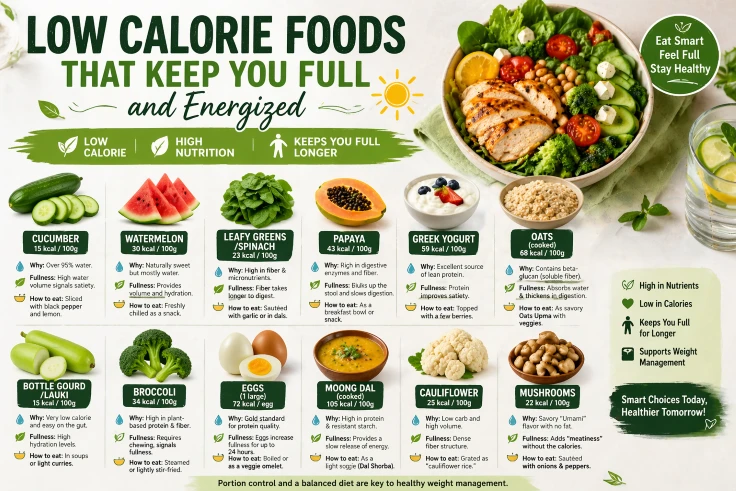
12 Low Calorie Foods That Will Make You Feel Full and Energized
In order to do a low calorie diet, you’re going to require a list of “MVP” foods. These are the top low calorie foods that help with weight loss:
1. Cucumber (15 kcal per 100g)
Why: Over 95% water.
Fullness: The fullness is due to the high amount of water in the stomach, which stretches the lining, thus indicating satiety.
How to eat: Cut into slices, sprinkle with black pepper and lemon.
2. Watermelon (30 kcal per 100g)
Why: Naturally sweet but mostly water.
Fullness: Fills and hydrates.
How to prepare: Chill in the fridge until served as a mid-morning snack.
3. Leafy Greens/Spinach (23 kcal per 100g)
Why: Very high in fibre and micronutrients.
Fullness: Fiber takes longer to digest, keeping you full for longer.
Preparation: Sautee with garlic or can be added to dals.
4. Papaya (43 kcal per 100g)
Why: Contains abundant amounts of digestive enzymes and fiber.
Relaxation: Relieves constipation.
Ideal application: As a breakfast bowl, or evening snack.
5. Greek Yogurt (59 kcal per 100g)
Why: It’s a great source of lean protein.
Fullness: Protein will make you feel fuller than fats or carbs.
How to eat: Topped with a few berries.
6. Oats (68 kcal per 100g cooked)
Why: Gives it soluble fibre called beta-glucan.
Fullness: It absorbs water and gets thick in the digestive track.
How to consume: Consuming as savory Oats Upma along with a number of greens.
7. Bottle Gourd/Lauki (15 kcal per 100g)
Why: Low calorie and gentle on the digestive system.
Fullness: High level of hydration.
The best way to eat: In soups or light curries.
8. Broccoli (34 kcal per 100g)
Why: It has a high amount of plant-based protein and fiber.
Fullness: Needs plenty of chewing – this helps to signal to the brain.
Eating methods: Steamed or lightly stir fried.
9. Eggs (72 calories per large egg)
Why: The “gold standard” for protein quality.
Fullness: Research has shown that having an egg for breakfast leads to a 24-hour feeling of fullness.
Serving suggestions: Boiled or in a “veggie” omelet.
10. Moong Dal (105 calories per 100g cooked)
Why: High in protein and resistant starch.
Fullness: Provides a slow release of energy.
It is used as a light soup (Dal Shorba) and is used for that purpose.
11. Cauliflower (25 kcal per 100g)
Why: Low carb and high volume.
Fullness: Dense fiber structure.
Eating directions: Grate as ‘cauliflower rice’.
12. Mushrooms (22 kcal per 100g)
Why: It’s savory “Umami” flavored and very low in fat.
Fullness: Enhances the “meatiness” of food without the calories.
Serving suggestions: Saute with onions and bell peppers.
If you want to mix these high volume ingredients and structured regimen for faster weight loss, visit our guide about 10 Powerful Weight Loss Diets That Actually Work Fast.
Why Low Calorie Foods Are the Smartest Choice for Weight Loss
Low calorie foods are the smartest because they allow you to eat more, and consume fewer calories. Making the diet easier, and more sustainable. These foods tend to be high in fiber, water, and nutrients, making them filling and helping to curb cravings. They naturally reduce your total calorie consumption, which leads to a calorie deficit, but not too extreme. They do not cause energy crashes; unlike crash diets. Unlike crash diets, they will help maintain a steady level of energy and aid in digestion. This will help you achieve sustainable weight loss and keep you on track and from being tempted to overeat.
Finding healthy foods low in calories in an Indian kitchen isn’t as difficult as it sounds. Here are some of the smart swaps to keep in mind:
Meal-Friendly: Use tomato and onion based “Massala” based gravies instead of heavy cream-based gravies. Use Makhana (Fox Nuts) instead of fried namkeen; one cup of dry-roasted makhana is super low in calorie yet super crunchy!
Snack Options: Have Roasted Chana (chickpeas) or Sprouted Moong Salad. They are packed with nutrients and will help keep you full through the night so you don’t experience late-night food cravings.
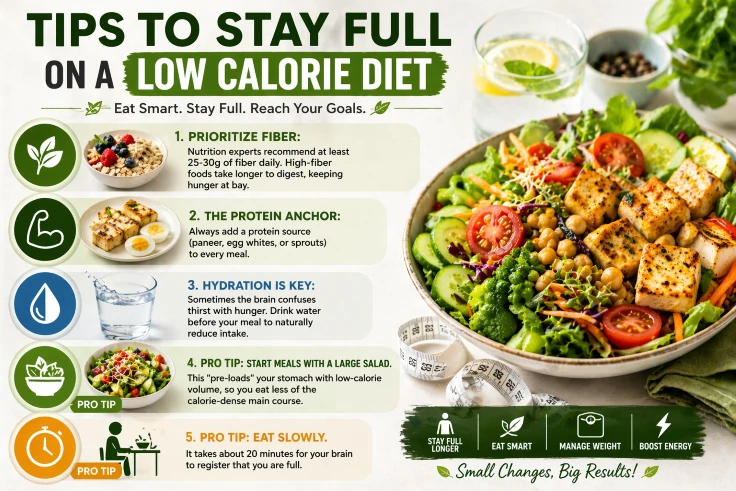
Tips to Stay Full on a Low Calorie Diet
Managing your energy balance doesn’t have to be a struggle. Follow these Pro Tips:
- Prioritize Fiber: Nutrition experts recommend at least 25-30g of fiber daily. High-fiber foods take longer to digest, keeping hunger at bay.
- The Protein Anchor: Always add a protein source (paneer, egg whites, or sprouts) to every meal.
- Hydration is Key: Sometimes the brain confuses thirst with hunger. Drink water before your meal to naturally reduce intake.
- Pro Tip: Start meals with a large salad. This “pre-loads” your stomach with low-calorie volume, so you eat less of the calorie-dense main course.
- Pro Tip: Eat slowly. It takes about 20 minutes for your brain to register that you are full.
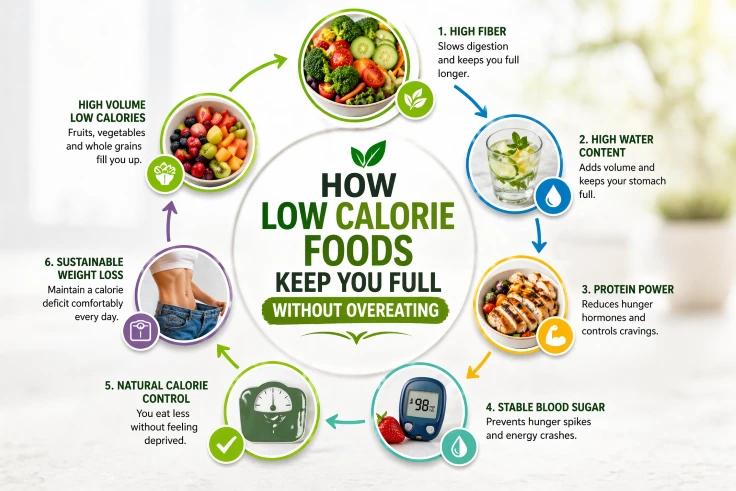
How Low Calorie Foods Fill You Up But Do Not Overfill You
Foods that are low in calories are full-filling because they contain a lot of fiber, water and protein, which slow the digestion of food and make you feel fuller. Nutritious food, such as vegetables, fruits, and whole grains, fill up your stomach and can help you feel full without all the calories. Low calorie foods that are rich in protein also inhibit hunger hormones and help to regulate cravings. In addition, they help regulate blood sugar levels, so there are no sudden spikes when it comes to hunger. This means your appetite will always be suppressed, leading to less hunger without the feeling of deprivation. This equilibrium helps you to ensure a calorie deficit without feeling deprived, which can lead to more sustainable weight loss and help prevent overeating during the day.
Common Mistakes While Following a Low Calorie Diet
Too Few Calories: Too few calories → low energy → binge eating. This “starve and binge” approach negatively affects metabolism.
Not eating protein: When you’re trying to lose weight, you aren’t necessarily losing fat, you’re also losing muscle.
Trusting “Diet” Junk: “Low fat” cookies tend to be high in sugar to keep their taste.
Skipping meals: This increases hunger and can increase the likelihood of eating more later of high calorie, processed foods.
Simple Daily Meal Plan (Indian-Style)
| Meal | Suggestion |
|---|---|
| Breakfast | Vegetable Oats Upma or 2 Egg White Omelet with Spinach |
| Lunch | 1 Small Bowl Dal, 1 cup Sautéed Veggies, Large Cucumber Salad, 1 Multigrain Roti |
| Evening Snack | 1 Cup Green Tea + Small bowl of Roasted Makhana |
| Dinner | Grilled paneer/chicken and steamed broccoli and cauliflower rice. |
Conclusion
Adding low calorie foods to your meals will keep you full, energized and on course to your weight loss objectives. Don’t reduce calories, but eat smart with filling, nutrient-rich foods.
Low calorie foods for weight loss can be beneficial in keeping weight loss in check and help maintain a calorie deficit which in turn helps maintain energy levels and overall health.
FAQs
Q1:- What are low calorie foods?
Low calorie foods are items that provide a low amount of energy (calories) relative to their weight. They are typically high in water and fiber, such as green vegetables and citrus fruits.
Q2:- Can low calorie foods help in weight loss?
Yes. By replacing high-calorie items with low-calorie alternatives, you create a calorie deficit, which is the primary driver of fat loss.
Q3:- Which low calorie foods keep you full the longest?
Foods high in fiber and protein, such as boiled eggs, lentils, oats, and cruciferous vegetables (broccoli/cauliflower), are the most effective for long-term satiety.
Q4:- Are low calorie diets safe?
They are safe as long as you focus on nutrient density. Avoid “crash diets” and ensure you are still getting essential vitamins, minerals, and enough protein.
Q5:- How many calories should I eat daily?
This depends on your age, sex, and activity level. Generally, a deficit of 300-500 calories below your maintenance level is recommended for sustainable weight loss.
⚠️ Disclaimer
This content is for informational purposes only and not medical advice. Please consult a healthcare professional before making dietary changes.