

Introduction
Yoga Asanas can be included as part of a healthy routine that supports breathing awareness, flexibility, relaxation, and overall physical wellness. Controlled breathing and yoga practice may support respiratory function in healthy adults, although they should not replace medical care for breathing disorders. Research suggests that yoga and yogic breathing may have positive effects on some measures of respiratory function, although results can vary depending on the individual and the type of practice.
Breathing difficulties can occur for many reasons, including allergies, asthma, respiratory conditions, stress, environmental pollution, and lifestyle factors. Yoga combines physical postures, controlled breathing, relaxation, and mindfulness, which may encourage slower and more mindful breathing.
In this guide, we explore the 10 best yoga asanas for breathing problems, their general benefits, and simple ways to practise them safely at home.
Why Yoga Asanas May Support Better Breathing?
Yoga Asanas involve controlled body movements, stretching, posture awareness, and, in some practices, coordinated breathing. Some studies suggest that yoga and breathing exercises may support certain aspects of respiratory function, particularly when practised consistently.
Yoga may also encourage better posture and relaxation. Sitting or standing with better posture can make it easier to maintain a natural breathing pattern. Combining physical yoga with yoga meditation can also support relaxation and mindfulness as part of a balanced wellness routine.
Potential Benefits of Yoga Asanas
- Encourages mindful breathing
- Supports better posture
- Promotes relaxation
- Improves flexibility
- Supports respiratory muscle activity
- Encourages chest and upper-body mobility
- May support general respiratory fitness
- Develops body and breath awareness
- Helps create a regular wellness routine
Regular practice can be part of a balanced lifestyle, but it should not replace professional medical care.
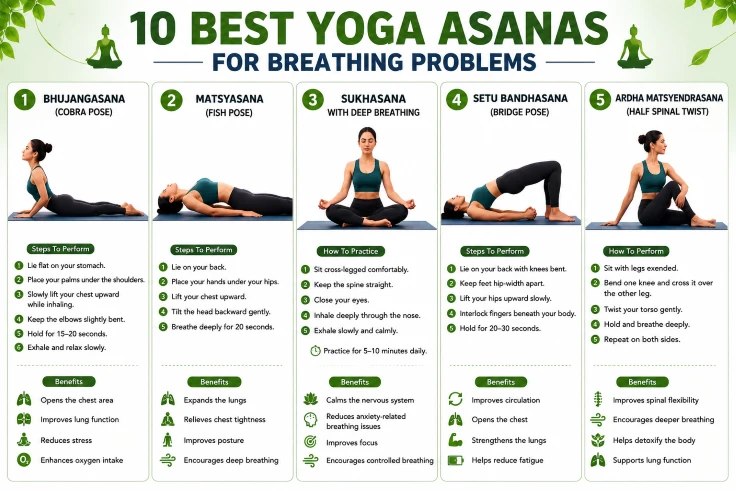
10 Best Yoga Asanas for Breathing Problems
1. Bhujangasana (Cobra Pose)
Bhujangasana is a gentle backbend that stretches the front of the body and encourages chest opening. It can be included in a yoga routine focused on posture, flexibility, and mindful breathing.
How to Practise Bhujangasana
- Lie on your stomach.
- Place your palms near your shoulders.
- Keep your legs comfortably extended.
- Slowly raise your chest while keeping your pelvis grounded.
- Keep your shoulders relaxed.
- Breathe normally.
- Slowly return to the starting position.
General Benefits
- Stretches the chest and abdomen
- Supports spinal flexibility
- Encourages upright posture
- Promotes body awareness
- Supports controlled movement
Avoid forcing the backbend or holding the pose if it causes pain or discomfort.
2. Matsyasana (Fish Pose)
Matsyasana is a backbend that stretches the chest, shoulders, and upper body. When performed correctly, it can be included in routines focused on flexibility and posture.
How to Practise Matsyasana
- Lie comfortably on your back.
- Keep your legs relaxed and extended.
- Place your hands beneath your hips if appropriate.
- Gently lift your chest.
- Avoid putting excessive pressure on your neck.
- Breathe comfortably.
- Slowly return to a relaxed position.
General Benefits
- Stretches the chest
- Encourages shoulder mobility
- Supports posture
- Promotes breathing awareness
- Improves flexibility
Beginners should learn deeper variations with appropriate guidance.
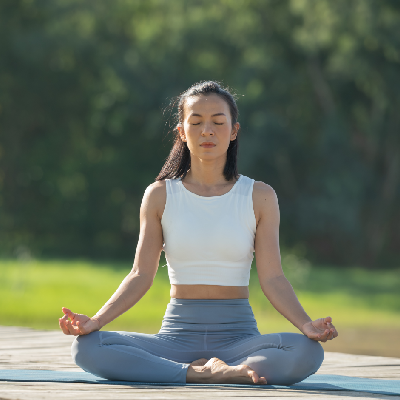
3. Sukhasana With Deep Breathing
Sukhasana is a simple seated posture that can be combined with slow, comfortable breathing. It is particularly useful for people starting yoga asanas for beginners.
How to Practise Sukhasana
- Sit comfortably with your legs crossed.
- Keep your spine naturally upright.
- Relax your shoulders.
- Place your hands comfortably on your knees.
- Breathe slowly through the nose if comfortable.
- Exhale gently without forcing the breath.
- Continue for a few minutes.
General Benefits
- Encourages relaxation
- Supports breathing awareness
- Promotes better posture
- Helps develop concentration
- Creates a calm practice routine
This simple posture can also be combined with meditation for a more mindful practice.
4. Setu Bandhasana (Bridge Pose)
Setu Bandhasana involves lifting the hips while lying on the back. It works several muscle groups and can be included in a balanced yoga routine.
How to Practise Setu Bandhasana
- Lie on your back.
- Bend your knees and place your feet comfortably on the floor.
- Keep your feet approximately hip-width apart.
- Place your arms beside your body.
- Slowly lift your hips.
- Keep your neck relaxed.
- Breathe normally.
- Slowly lower your hips.
General Benefits
- Strengthens the lower body
- Stretches the front of the body
- Supports posture
- Encourages controlled movement
- Improves body awareness
Do not force the movement or place unnecessary pressure on the neck.
5. Ardha Matsyendrasana (Half Spinal Twist)
Ardha Matsyendrasana is a seated twisting posture that focuses on spinal mobility and posture. Maintaining comfortable breathing during the movement can help develop breath awareness.
How to Practise
- Sit with your legs extended.
- Bend one knee and place the foot outside the opposite leg.
- Keep your spine comfortably upright.
- Turn your upper body gently towards the bent knee.
- Place your hand in a comfortable position for support.
- Breathe steadily.
- Return to the starting position.
- Repeat on the other side.
General Benefits
- Supports spinal flexibility
- Encourages upright posture
- Promotes controlled breathing
- Improves mobility
- Supports mindful movement
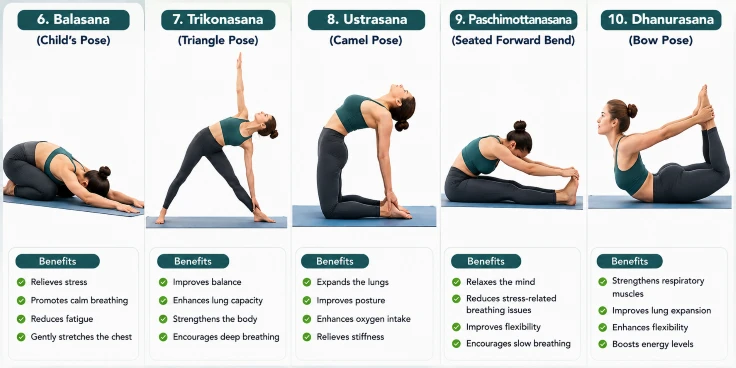
6. Balasana (Child’s Pose)
Balasana is a resting posture that can help create a calm transition between more active poses. It is also a simple option for people who are beginning yoga.
How to Practise Balasana
- Kneel comfortably.
- Sit back towards your heels.
- Lean your upper body forward.
- Extend your arms or keep them beside your body.
- Relax your shoulders.
- Rest comfortably.
- Breathe naturally.
General Benefits
- Encourages relaxation
- Provides a gentle back stretch
- Supports breathing awareness
- Can be used as a resting posture
- Helps reduce physical tension
If the position feels uncomfortable, adjust it or use a comfortable alternative.
7. Trikonasana (Triangle Pose)
Trikonasana works on balance, flexibility, and side-body mobility. It can be included in a routine that combines movement with controlled breathing.
How to Practise Trikonasana
- Stand with your feet comfortably apart.
- Extend your arms to the sides.
- Turn one foot outward.
- Lean towards that side while keeping your torso controlled.
- Place your hand on your shin or another comfortable position.
- Extend the opposite arm upwards if comfortable.
- Breathe steadily.
- Return to standing and repeat on the other side.
General Benefits
- Improves flexibility
- Supports balance
- Encourages posture awareness
- Promotes controlled movement
- Supports full-body mobility
Avoid stretching beyond your comfortable range.
8. Ustrasana (Camel Pose)
Ustrasana is a deeper backbend that stretches the front of the body. It can be challenging for beginners, so it is better to learn the posture under suitable guidance.
How to Practise Ustrasana
- Kneel with your knees comfortably apart.
- Place your hands on your lower back.
- Gently lift your chest.
- Lean backwards only as far as comfortable.
- Keep your breathing steady.
- Hold the position briefly if comfortable.
- Return slowly to the starting position.
General Benefits
- Stretches the front of the body
- Supports spinal flexibility
- Encourages chest mobility
- Improves posture awareness
- Supports controlled movement
Do not force the neck or lower back while performing this pose.
9. Paschimottanasana (Seated Forward Bend)
Paschimottanasana is a seated forward bend that can encourage relaxation and mindful breathing when performed without forcing the body.
How to Practise
- Sit with your legs extended.
- Keep your spine comfortably long.
- Inhale and prepare for the movement.
- Exhale while gently leaning forward.
- Hold your legs, ankles, or feet only as far as comfortable.
- Breathe slowly.
- Return to an upright position.
General Benefits
- Stretches the back of the body
- Encourages relaxation
- Supports flexibility
- Promotes mindful breathing
- Supports body awareness
Beginners should focus on maintaining a comfortable posture rather than reaching the feet.
10. Dhanurasana (Bow Pose)
Dhanurasana is a more demanding backbend that stretches the front of the body. It may not be suitable for everyone, so beginners should learn it with appropriate guidance.
How to Practise Dhanurasana
- Lie on your stomach.
- Bend your knees.
- Reach back towards your ankles.
- Hold them gently if comfortable.
- Lift your chest and thighs gradually.
- Maintain comfortable breathing.
- Hold briefly if suitable.
- Slowly release the pose.
General Benefits
- Stretches the chest and abdomen
- Supports flexibility
- Encourages posture awareness
- Engages several muscle groups
- Promotes mindful movement
Avoid this pose if it causes pain or if a healthcare professional has advised against similar movements.
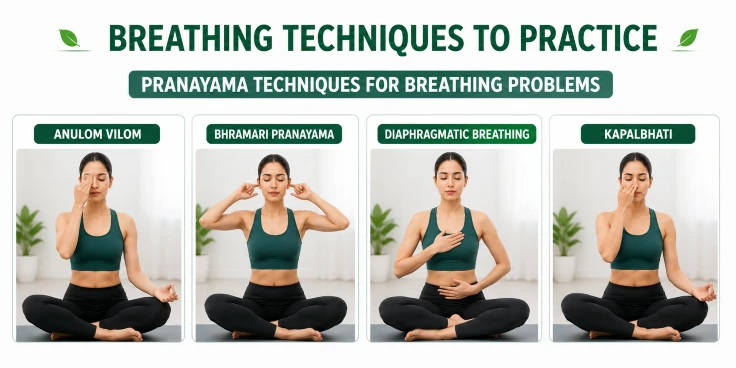
Breathing Techniques to Practise With Yoga Asanas
Yoga postures can be combined with simple breathing practices to encourage breath awareness. Research has explored yogic breathing and its possible effects on respiratory function, although more evidence is needed to understand its long-term benefits for different health conditions.
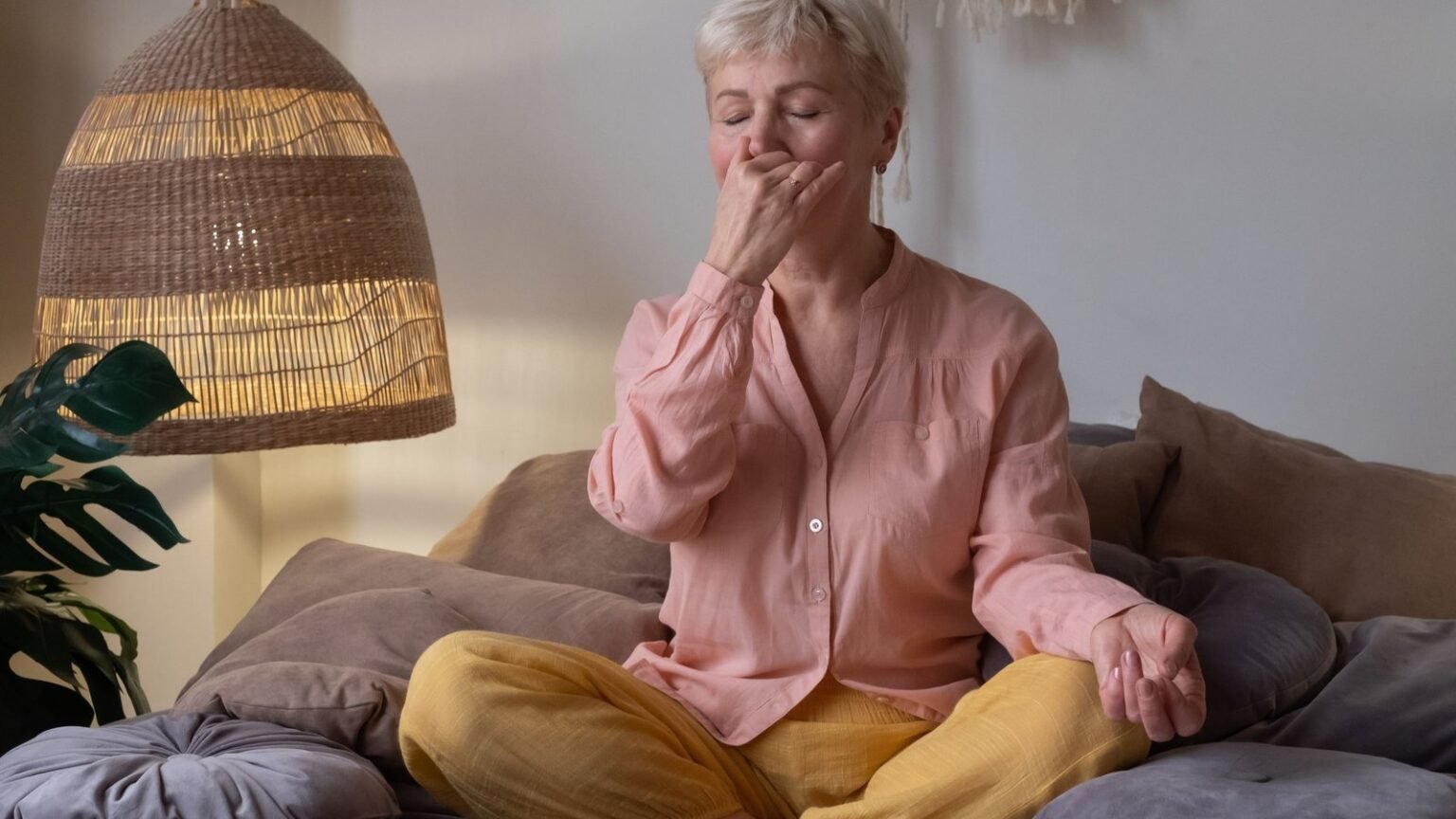
Anulom Vilom
Anulom Vilom is commonly practised as alternate nostril breathing. The technique focuses on slow and controlled breathing and may be used as part of a relaxation routine.
Beginners should avoid forcing the breath or holding it for extended periods.
Bhramari Pranayama
Bhramari involves producing a gentle humming sound while exhaling. It is commonly used as a relaxation-focused breathing exercise.
Practise it gently and stop if you experience discomfort.
Diaphragmatic Breathing
Diaphragmatic breathing focuses on allowing the abdomen to move naturally during breathing. It can help develop awareness of the diaphragm and breathing pattern.
A comfortable and relaxed approach is more important than taking excessively deep breaths.
Kapalbhati
Kapalbhati involves active exhalations and should not be treated as a general remedy for breathing problems. Beginners should learn the technique from a qualified instructor.
People with certain health conditions may need to avoid forceful breathing exercises. If you have a medical condition, consult a healthcare professional before adding this practice to your routine.
Lifestyle Habits That Support Respiratory Wellness
Yoga is only one part of a healthy lifestyle. Other everyday habits can also support general wellness and respiratory health.
Stay Hydrated
Drink enough water according to your individual needs, activity level, and environment.
Avoid Smoking
Avoiding tobacco smoke is an important part of supporting lung health. The World Health Organization provides information about the health effects of tobacco use.
Eat a Balanced Diet
Include a variety of fruits, vegetables, whole grains, pulses, nuts, and other nutritious foods as part of a balanced diet.
Maintain Good Posture
Sitting and standing with comfortable alignment can support natural breathing mechanics and reduce unnecessary tension.
Stay Physically Active
Walking, stretching, yoga, and other suitable physical activities can support overall fitness and wellbeing.
Common Mistakes to Avoid During Yoga Asanas
Beginners may sometimes focus on achieving a particular pose instead of maintaining comfortable movement and breathing.
Holding Your Breath
Do not deliberately hold your breath unless a qualified instructor has specifically guided you to do so.
Overstretching
A pose should not cause sharp pain. Move gradually and stay within a comfortable range.
Skipping Warm-Up
Gentle movements can prepare the body before more demanding postures.
Practising After a Heavy Meal
Allow sufficient time after eating before doing a physical yoga session.
Ignoring Warning Signs
Stop the practice if you experience dizziness, chest pain, severe breathlessness, or unusual discomfort and seek appropriate medical advice.
Best Time to Practise Yoga Asanas
Many people prefer morning yoga because it can fit easily into a daily routine. However, there is no single required time for everyone.
You can choose a time when you have enough space, feel comfortable, and can practise without rushing. Consistency and safe practice are more important than following a specific time of day.
Tips for Yoga Asanas for Beginners
If you are new to yoga, start with simple postures and gradually build your routine.
- Start with gentle postures.
- Focus on comfortable breathing.
- Practise on a stable surface.
- Wear comfortable clothing.
- Avoid forcing difficult poses.
- Learn advanced techniques from a qualified instructor.
- Increase practice gradually.
- Stop if you experience pain or significant discomfort.
- Give your body enough time to rest.
Short, regular sessions may be easier to maintain than occasional long sessions.
Common Mistakes to Avoid During Yoga Asanas
Beginners may sometimes focus on achieving a particular pose instead of maintaining comfortable movement and breathing.
Holding Your Breath
Do not deliberately hold your breath unless a qualified instructor has specifically guided you to do so.
Overstretching
A pose should not cause sharp pain. Move gradually and stay within a comfortable range.
Skipping Warm-Up
Gentle movements can prepare the body before more demanding postures.
Practising After a Heavy Meal
Allow sufficient time after eating before doing a physical yoga session.
Ignoring Warning Signs
Stop the practice if you experience dizziness, chest pain, severe breathlessness, or unusual discomfort and seek appropriate medical advice.
Best Time to Practise Yoga Asanas
Many people prefer morning yoga because it can fit easily into a daily routine. However, there is no single required time for everyone.
You can choose a time when you have enough space, feel comfortable, and can practise without rushing. Consistency and safe practice are more important than following a specific time of day.
Tips for Yoga Asanas for Beginners
If you are new to yoga, start with simple postures and gradually build your routine.
- Start with gentle postures.
- Focus on comfortable breathing.
- Practise on a stable surface.
- Wear comfortable clothing.
- Avoid forcing difficult poses.
- Learn advanced techniques from a qualified instructor.
- Increase practice gradually.
- Stop if you experience pain or significant discomfort.
- Give your body enough time to rest.
Short, regular sessions may be easier to maintain than occasional long sessions.
Who Should Take Care While Practising Yoga?
Yoga is generally considered safe when practised appropriately, but injuries can occur, particularly with incorrect technique or advanced poses. The National Center for Complementary and Integrative Health recommends appropriate instruction and advises beginners to avoid extreme practices and forceful breathing.
People with existing medical conditions, recent surgery, significant back or joint problems, or ongoing breathing difficulties should speak with a qualified healthcare professional before starting a new exercise routine.
Seek urgent medical care for severe or sudden breathing difficulty, chest pain, blue or grey lips or skin, confusion, or other serious symptoms.
Yoga Asanas and Yoga Meditation for Overall Wellness
Yoga can include physical postures, breathing practices, relaxation, and meditation. Combining movement with mindfulness may help create a more balanced wellness routine.
For more information about the connection between meditation, yoga, and general wellbeing, explore Meditation Benefits and Yoga Poses for Wellness on GoHealthyPro.
Conclusion
The 10 best yoga asanas for breathing problems described in this guide can be included in a general wellness routine to support flexibility, posture, relaxation, and breathing awareness. At GoHealthyPro, we focus on sharing simple, educational health and wellness information to support informed lifestyle choices. Research suggests that yoga and yogic breathing may influence certain measures of respiratory function, but these practices should not be considered a replacement for medical diagnosis or treatment.
Start with comfortable movements, practise consistently, and avoid forcing your breath or body into difficult positions. If you have asthma, chronic lung disease, persistent breathlessness, or another medical condition, discuss your exercise routine with a qualified healthcare professional.
FAQs
1. Which Yoga Asanas are best for breathing problems?
Bhujangasana, Matsyasana, Balasana, Ustrasana, and Setu Bandhasana are considered highly effective Yoga Asanas for improving breathing and lung function naturally.
2. Can Yoga Asanas help improve lung capacity?
Yes, regular practice of Yoga Asanas helps expand the chest, strengthen respiratory muscles, and improve oxygen circulation, which may increase lung capacity over time.
3. How often should I practice Yoga Asanas for breathing problems?
Practicing yoga for 20–30 minutes daily can help improve breathing quality. Consistency is important for experiencing long-term respiratory benefits.
4. Are Yoga Asanas safe for asthma patients?
Many gentle Yoga Asanas may help asthma patients by promoting relaxation and better breathing control. However, people with severe asthma should consult a healthcare professional before starting yoga.
5. Can beginners practice these Yoga Asanas at home?
Yes, beginners can safely practice simple Yoga Asanas at home. Starting with easy poses and focusing on proper breathing techniques is recommended.
Disclaimer: This article is intended for general health awareness and educational purposes only. It does not provide medical advice, diagnosis, or treatment. Please consult a qualified healthcare professional for personalised medical guidance.