

Introduction
Yoga asanas can play an important role in supporting a healthy lifestyle and may help people looking for natural ways to manage diabetes alongside medical guidance. Diabetes has become one of the most common health concerns today due to changing lifestyles, stress, poor eating habits, and reduced physical activity. While medication, a balanced diet, and regular exercise remain essential, adding yoga to your routine may support overall wellness.
Yoga combines controlled breathing, body movement, and relaxation techniques that may help improve flexibility, reduce stress, support circulation, and encourage better metabolic health. Certain yoga poses are often practiced to promote relaxation and support overall body function.
In this blog, we will explore 5 yoga asanas you should know to control diabetes effectively, along with benefits, precautions, and helpful lifestyle tips.
Understanding the Connection Between Yoga Asanas for Diabetes Management
Diabetes occurs when the body struggles to regulate blood sugar levels properly. Long-term management usually includes healthy eating habits, exercise, stress management, and following medical recommendations.
Practicing yoga regularly may support wellness by:
- Encouraging physical activity
- Supporting flexibility and posture
- Helping manage daily stress
- Promoting relaxation and mindful breathing
- Supporting overall health routines
Yoga is not a replacement for medical treatment but can complement an overall diabetes management plan.
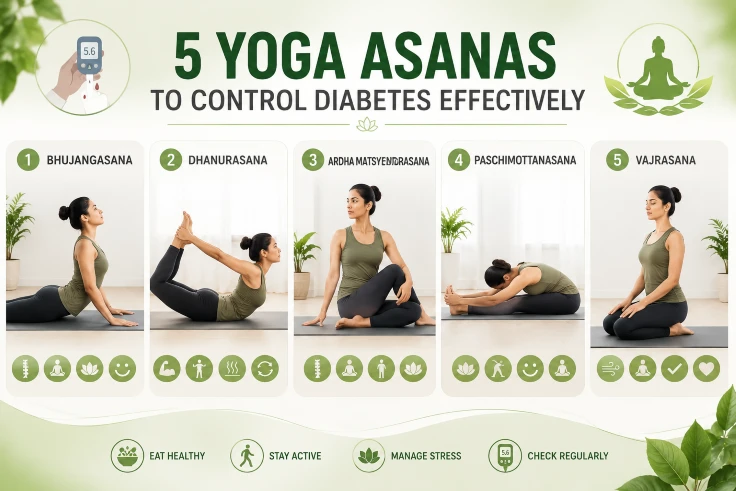
5 Yoga Asanas to Control Diabetes Effectively
1. Bhujangasana (Cobra Pose)
Bhujangasana is one of the most popular yoga asanas for improving body flexibility and opening the chest area. This pose gently stretches the spine and promotes relaxation.
How to Perform Bhujangasana
- Lie flat on your stomach.
- Keep palms beside the shoulders.
- Slowly raise your upper body.
- Keep elbows slightly bent.
- Hold for 15–30 seconds.
- Return slowly.
Benefits
- Supports flexibility
- Encourages better posture
- Helps reduce stress
- Supports relaxation
Precautions
- Avoid overextending the back.
- People with severe back pain should consult a professional.
2. Dhanurasana (Bow Pose)
Dhanurasana stretches the front body while strengthening multiple muscle groups. It is commonly included in wellness-focused yoga routines.
How to Perform Dhanurasana
- Lie on your stomach.
- Bend both knees.
- Hold your ankles.
- Lift chest and legs simultaneously.
- Maintain normal breathing.
- Hold briefly and relax.
Benefits
- Improves body flexibility
- Supports physical activity
- May help reduce stiffness
- Encourages full-body movement
Precautions
- Avoid forcing the pose.
- Stop if discomfort occurs.
3. Ardha Matsyendrasana (Half Spinal Twist)
This seated twisting pose is widely practiced for maintaining spinal mobility and encouraging mindful movement.
How to Perform Ardha Matsyendrasana
- Sit with legs extended.
- Bend one leg and cross it.
- Twist your torso gently.
- Hold and breathe normally.
- Repeat on the opposite side.
Benefits
- Supports flexibility
- Encourages body awareness
- May help improve posture
- Promotes relaxation
Precautions
- Avoid strong twisting movements.
- Practice gently if you are a beginner.
4. Paschimottanasana (Seated Forward Bend)
Paschimottanasana is a calming pose often included in yoga routines designed for relaxation and stretching.
How to Perform Paschimottanasana
- Sit with legs extended.
- Inhale deeply.
- Slowly bend forward.
- Reach toward your feet.
- Hold comfortably.
Benefits
- Encourages relaxation
- Supports flexibility
- May help reduce stress
- Improves body awareness
Precautions
- Avoid bouncing movements.
- Bend only as far as comfortable.
5. Vajrasana (Thunderbolt Pose)
Among all yoga asanas, Vajrasana is considered beginner-friendly and simple to include in a daily routine.
How to Perform Vajrasana
- Kneel on the floor.
- Sit back on your heels.
- Keep your spine straight.
- Rest hands on thighs.
- Breathe slowly.
Benefits
- Supports mindful breathing
- Encourages relaxation
- Easy to practice daily
- Suitable for beginners
Precautions
- Avoid prolonged practice if you experience knee discomfort.
- Along with these yoga poses, practicing breathing-focused yoga can further enhance your routine—read our article on Yoga Asanas For Breathing Problems.
Yoga Meditation and Diabetes Management
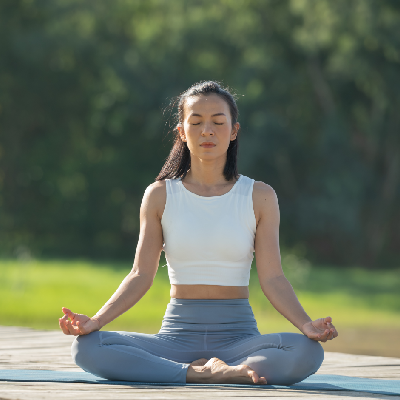
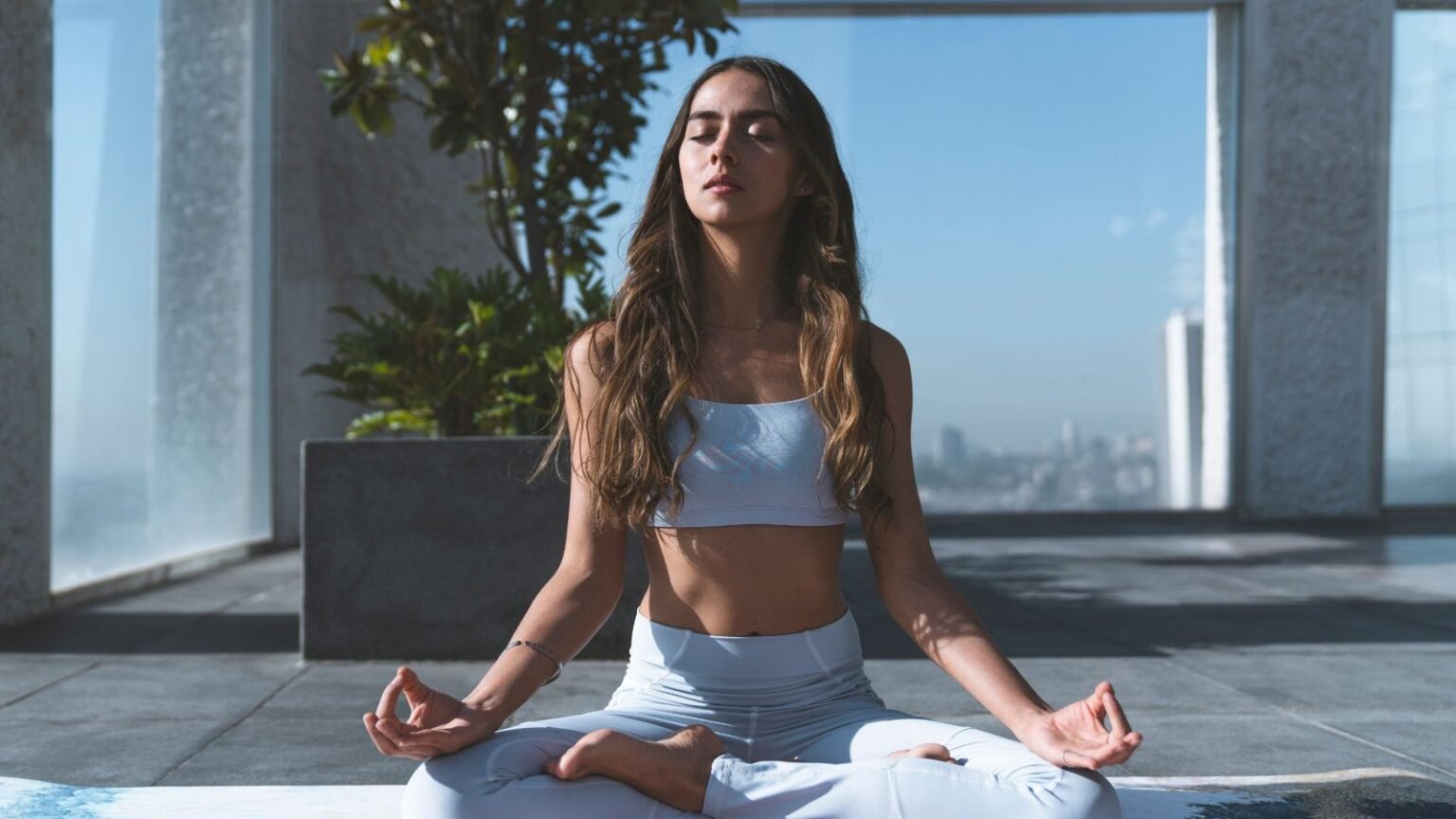
Practising yoga meditation along with regular yoga asanas can support relaxation, mindfulness, and stress management. A calm and consistent routine may help you stay focused on healthy lifestyle habits and regular physical activity.
Yoga meditation may also encourage mindful breathing and greater awareness of how your body feels during exercise. This can make your yoga routine more comfortable and enjoyable. However, yoga and meditation should be considered supportive wellness practices rather than a replacement for diabetes medication or medical care.
Benefits of Yoga Meditation
Regular yoga meditation may help:
- Promote relaxation and reduce everyday stress
- Improve mindfulness and body awareness
- Support better breathing habits
- Encourage consistency in a healthy routine
- Complement regular physical activity
- Support overall mental and physical wellness
How to Include Yoga Meditation in Your Routine?
You can begin with a few minutes of quiet breathing before or after your yoga session. Sit comfortably, keep your breathing natural, and focus your attention on the present moment. Avoid forcing your breathing or remaining in an uncomfortable position.
For a balanced routine, combine yoga meditation with nutritious meals, adequate sleep, hydration, regular movement, and appropriate medical guidance. If you have diabetes or any other health condition, discuss new exercise routines with a qualified healthcare professional.
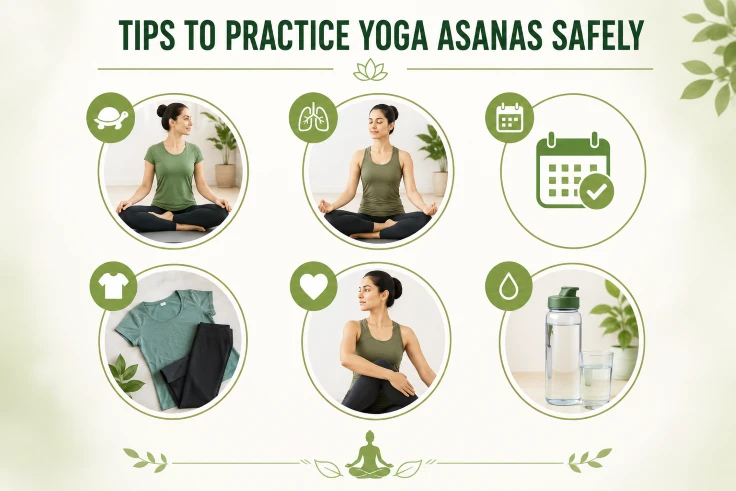
Tips to Practice Yoga Asanas Safely
To get the most out of your routine:
Start Slowly
Avoid trying advanced poses immediately.
Focus on Breathing
Controlled breathing supports comfort and relaxation.
Stay Consistent
Short daily sessions are often easier to maintain.
Wear Comfortable Clothing
Loose and flexible clothing allows easy movement.
Listen to Your Body
Avoid pushing beyond comfortable limits.
Stay Hydrated
Drink water throughout the day.

Can yoga meditation help improve sleep quality?
Yoga meditation may support relaxation and sleep quality for some people, but results can vary. Research suggests potential benefits, while evidence for treating insomnia specifically remains limited.
Is yoga suitable for beginners before bedtime?
Beginners can start with gentle movements, comfortable yoga asanas, and simple breathing or meditation. Avoid advanced poses until you understand proper technique and feel comfortable with the movement.
How long should yoga meditation last at night?
There is no single duration that works for everyone. Start with a short session that feels manageable and gradually adjust it according to your routine. Consistency can be more practical than occasional long sessions.
What are the best yoga asanas for relaxation?
Gentle poses such as Child’s Pose, Cat Cow, Savasana, and supported restorative positions may fit into a relaxing routine. Choose positions that feel comfortable and avoid forcing flexibility.
Can meditation for beginners be practised in bed?
Yes, a simple meditation practice can be performed in a comfortable seated or lying position. Focus on natural breathing and gently return your attention whenever your mind becomes distracted.
Lifestyle Habits That Work Well Alongside Yoga
Yoga works best when combined with healthy habits.
Eat Balanced Meals
Include vegetables, protein, fiber, and whole foods.
Maintain Healthy Sleep
Consistent sleep supports overall health.
Manage Stress
Daily relaxation practices may help maintain routines.
Stay Active
Walking, stretching, and regular movement complement yoga.
Monitor Health Regularly
Follow healthcare guidance and routine checkups.
Lorem ipsum dolor sit amet, consectetur adipiscing elit. Ut elit tellus, luctus nec ullamcorper mattis, pulvinar dapibus leo.
Common Mistakes to Avoid While Practicing Yoga Asanas
Many beginners unknowingly make errors that reduce effectiveness.
Practicing Immediately After Eating
Wait before starting yoga.
Holding Breath
Breathing should remain steady.
Rushing Through Poses
Move slowly and mindfully.
Ignoring Warm-Up
Prepare your muscles before practice.
Being Inconsistent
Regular practice matters more than intensity.
Who Should Be Careful Before Starting Yoga?
Yoga can be a useful addition to a healthy routine, but some people should seek professional guidance before starting. The American Diabetes Association’s guidance on starting physical activity safely recommends starting slowly and consulting a healthcare provider if you have concerns about your health or diabetes complications.
Consult a healthcare professional before beginning if you:
- Are newly diagnosed with diabetes
- Have severe back or joint concerns
- Are recovering from surgery
- Experience dizziness during exercise
- Have mobility limitations
Yoga routines can often be adjusted based on individual needs.
Conclusion
Including yoga asanas in your daily routine may support flexibility, relaxation, and overall wellness. These five poses can complement healthy eating, regular physical activity, stress management, and appropriate medical care.
At GoHealthyPro, we provide general health and wellness information to help you make informed lifestyle choices. Consistency and comfort are more important than intensity.
FAQs
Can yoga asanas cure diabetes?
No. Yoga does not cure diabetes. It may support overall wellness and healthy habits when combined with medical treatment, nutrition, and exercise.
How long should I practice yoga daily for diabetes support?
Many people begin with 20–30 minutes daily. Consistency and comfort are generally more important than long sessions.
Which yoga asana is easiest for beginners?
Vajrasana is often considered beginner-friendly because it is simple, gentle, and easy to include in a daily routine.
Is morning the best time to practice yoga?
Morning is commonly preferred, but the best time is the one you can maintain consistently and comfortably.
Can older adults practice these yoga asanas?
Many older adults practice yoga safely with modifications. It is helpful to choose comfortable poses and seek professional guidance when needed.
Should I stop medication if I start yoga?
No. Continue following your healthcare provider’s recommendations. Yoga should complement—not replace—prescribed treatment.