



Introduction
Cardio workouts for heart health are among the most effective ways to strengthen the cardiovascular system, improve circulation, and reduce the risk of chronic diseases. Whether you prefer brisk walking, running, cycling, swimming, or dancing, regular cardiovascular exercise helps keep your heart strong and efficient.
Heart disease remains one of the leading health concerns worldwide, but adopting an active lifestyle can significantly lower the risk. Cardio exercises not only enhance physical fitness but also support healthy blood pressure, cholesterol levels, and overall well-being.
In this comprehensive guide, we’ll explore the major benefits of cardio workouts for heart health, understand how they impact the body, and learn practical ways to incorporate them into your daily routine.
Why Cardio Workouts for Heart Health Matter
Your heart is a muscle that becomes stronger when exercised regularly. Cardio workouts increase your heart rate, forcing the heart to pump blood more efficiently throughout the body.
Over time, consistent cardiovascular exercise helps:
- Improve heart function
- Enhance oxygen delivery
- Boost circulation
- Reduce cardiovascular disease risk
- Support long-term wellness
Unlike sedentary lifestyles, which can contribute to heart-related issues, regular cardio activity helps maintain optimal cardiovascular performance.
How Cardio Workouts for Heart Health Strengthen the Heart Muscle
Just as strength training builds skeletal muscles, aerobic exercise strengthens the heart muscle.
Improved Pumping Efficiency
When you engage in cardio exercises regularly, the heart becomes more efficient at pumping blood. A stronger heart can move more blood with each beat, reducing the workload required during daily activities.
Better Blood Flow
Enhanced circulation ensures that oxygen and nutrients reach tissues more effectively. This contributes to improved energy levels and overall physical performance.
Lower Resting Heart Rate
Individuals who perform cardio workouts consistently often experience a lower resting heart rate, which indicates improved cardiovascular fitness.
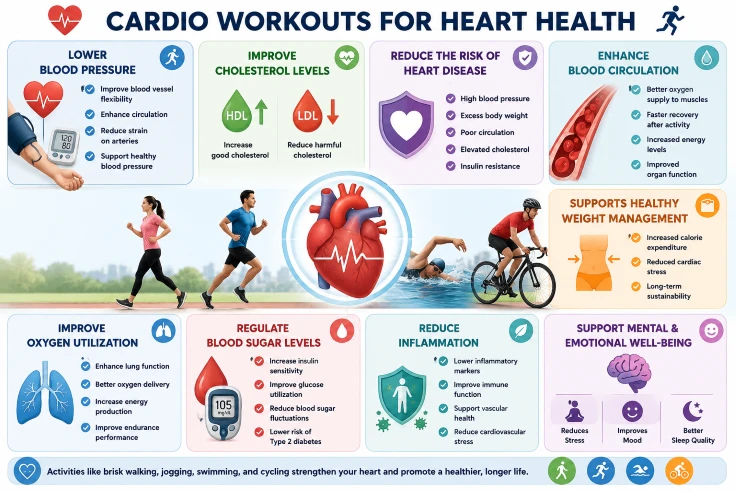
Cardio Workouts for Heart Health Help Lower Blood Pressure
High blood pressure is a major risk factor for heart disease and stroke.
Regular cardio exercise helps:
- Improve blood vessel flexibility
- Enhance circulation
- Reduce strain on arteries
- Support healthy blood pressure levels
Activities such as brisk walking, jogging, swimming, and cycling encourage blood vessels to expand and contract efficiently, reducing resistance to blood flow.
Many healthcare professionals recommend aerobic exercise as part of a comprehensive strategy for managing blood pressure naturally.
Cardio Workouts for Heart Health Improve Cholesterol Levels
Maintaining healthy cholesterol levels is essential for cardiovascular wellness.
Increases Good Cholesterol
Cardio exercise can increase HDL (high-density lipoprotein), often called “good cholesterol.”
HDL helps remove excess cholesterol from the bloodstream, reducing plaque buildup in arteries.
Reduces Harmful Cholesterol
Regular aerobic activity may also help lower LDL (low-density lipoprotein) and triglyceride levels when combined with a healthy diet.
Balanced cholesterol levels contribute to better arterial health and lower cardiovascular risk.
Reduces the Risk of Heart Disease
One of the most important benefits of cardio workouts for heart health is their ability to reduce the likelihood of heart disease.
Regular exercise addresses multiple risk factors simultaneously, including:
- High blood pressure
- Excess body weight
- Poor circulation
- Elevated cholesterol
- Insulin resistance
By improving these factors, cardio workouts help protect the heart and support longevity.
Cardio Workouts for Heart Health Enhance Blood Circulation
Healthy circulation is crucial for delivering oxygen and nutrients throughout the body.
Improved circulation offers benefits such as:
- Better oxygen supply to muscles
- Faster recovery after activity
- Increased energy levels
- Improved organ function
As circulation improves, the heart doesn’t need to work as hard to meet the body’s demands.
Supports Healthy Weight Management
Excess body weight places additional strain on the cardiovascular system.
Increased Calorie Expenditure
Cardio activities help burn calories, contributing to weight management and fat loss. For effective exercise ideas, explore our guide on Best Cardio Workouts for Weight Loss.
Reduced Cardiac Stress
Maintaining a healthy weight decreases the workload placed on the heart and blood vessels.
Long-Term Sustainability
Many forms of cardio are accessible and easy to incorporate into daily life, making them sustainable options for long-term health.
For individuals focused on fat loss, combining cardio exercise with healthy nutrition can produce significant improvements in cardiovascular wellness.
Cardio Workouts for Heart Health Improve Oxygen Utilization
The body’s ability to use oxygen efficiently is known as aerobic capacity.
Cardio exercise enhances:
- Lung function
- Oxygen delivery
- Energy production
- Endurance performance
As aerobic fitness improves, everyday tasks become easier and less physically demanding.
Improved oxygen utilization also allows individuals to exercise longer without experiencing excessive fatigue.
Helps Regulate Blood Sugar Levels
Blood sugar management plays an important role in heart health.
Regular cardio exercise helps:
- Increase insulin sensitivity
- Improve glucose utilization
- Reduce blood sugar fluctuations
- Lower the risk of Type 2 diabetes
Since diabetes is closely linked to cardiovascular disease, maintaining healthy blood sugar levels supports overall heart wellness.
Cardio Workouts for Heart Health Reduce Inflammation
Chronic inflammation is associated with numerous cardiovascular conditions.
Research suggests that regular aerobic activity can help:
- Lower inflammatory markers
- Improve immune function
- Support vascular health
- Reduce cardiovascular stress
Reduced inflammation contributes to healthier arteries and better overall heart function.
Supports Mental and Emotional Well-Being
Heart health is closely connected to mental wellness.
Reduces Stress
Stress can increase blood pressure and place strain on the cardiovascular system.
Cardio workouts help lower stress hormones and promote relaxation.
Improves Mood
Physical activity stimulates the release of endorphins, often referred to as “feel-good” hormones.
Better Sleep Quality
Regular exercise can improve sleep patterns, which further supports cardiovascular recovery and overall wellness.

Best Types of Cardio Workouts for Heart Health
Not all cardio workouts need to be intense. The best exercise is often the one you enjoy and can perform consistently.
Walking
Walking is beginner-friendly, low-impact, and highly effective for cardiovascular fitness.
Running
Running increases heart rate significantly and improves endurance.
Cycling
Cycling provides excellent cardiovascular benefits while being gentle on the joints.
Swimming
Swimming engages multiple muscle groups and supports heart health with minimal impact.
Dancing
Dance-based workouts combine physical activity with enjoyment, making them easier to maintain.
Jump Rope
Jumping rope is an efficient cardio exercise that improves endurance and coordination.
How Much Cardio Is Recommended for Heart Health?
Health experts generally recommend:
- At least 150 minutes of moderate-intensity cardio weekly
or
- 75 minutes of vigorous-intensity cardio weekly
You can spread this throughout the week based on your schedule.
Examples include:
- 30 minutes of brisk walking five days per week
- 25 minutes of running three days per week
- Combination of moderate and vigorous activities
Consistency matters more than perfection.

Common Mistakes to Avoid During Cardio Training
Doing Too Much Too Soon
Gradually increase intensity and duration to prevent burnout and injury.
Skipping Warm-Ups
Prepare your muscles and cardiovascular system before intense activity.
Ignoring Recovery
Adequate rest allows the body and heart to adapt positively to exercise.
Poor Hydration
Staying hydrated supports circulation and exercise performance.
Inconsistent Exercise Habits
Regular activity produces better cardiovascular results than occasional intense workouts.
Combining Cardio with Other Healthy Habits
Cardio exercise works best when combined with supportive lifestyle choices.
These include:
- Eating nutrient-dense foods
- Staying hydrated
- Managing stress
- Getting adequate sleep
- Avoiding smoking
- Limiting excessive alcohol consumption
Together, these habits create a strong foundation for cardiovascular health.
Conclusion
The benefits of cardio workouts for heart health extend far beyond improving fitness levels. Regular aerobic exercise strengthens the heart muscle, lowers blood pressure, improves cholesterol profiles, enhances circulation, supports healthy weight management, and reduces the risk of cardiovascular disease.
Whether you choose walking, running, swimming, cycling, or another enjoyable activity, consistency is the key to long-term success. By making cardio exercise a regular part of your lifestyle, you can support a healthier heart, greater energy levels, and improved overall well-being for years to come.
FAQs
1. What are the best cardio workouts for heart health?
Walking, running, cycling, swimming, and dancing are among the best cardio workouts for heart health. These activities increase heart rate, improve circulation, and strengthen the cardiovascular system when performed consistently as part of a regular fitness routine.
2. How often should I do cardio for heart health?
Most adults should aim for at least 150 minutes of moderate-intensity cardio or 75 minutes of vigorous exercise each week. Spreading workouts across several days helps improve cardiovascular fitness while allowing sufficient recovery time.
3. Can cardio workouts help lower blood pressure?
Yes. Regular cardio exercise improves blood vessel flexibility and circulation, which can help reduce blood pressure over time. Consistent aerobic activity is often recommended as part of a heart-healthy lifestyle and blood pressure management plan.
4. Is walking enough to improve heart health?
Absolutely. Brisk walking is an effective cardiovascular exercise that supports heart function, improves circulation, and reduces the risk of heart disease. Consistency and maintaining a moderate pace are key factors for achieving results.
5. Can cardio workouts reduce the risk of heart disease?
Regular cardio workouts address several risk factors associated with heart disease, including high blood pressure, elevated cholesterol, obesity, and poor circulation. Maintaining an active lifestyle can significantly lower long-term cardiovascular risk.
Disclaimer
“This article is only for general health awareness and tips. It is not medically suggested advice. Please consult a qualified healthcare professional for medical guidance.”