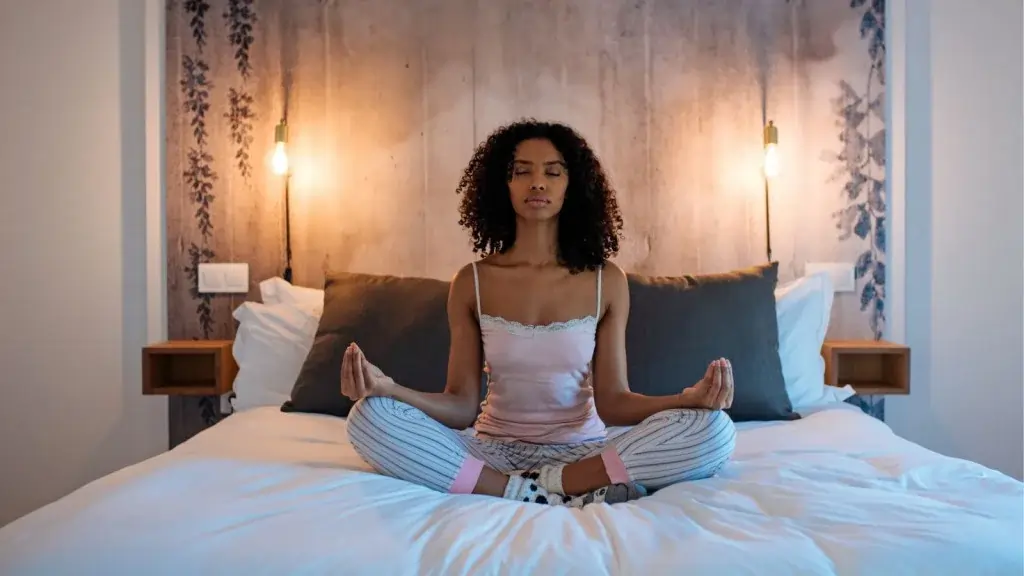
Meditation can be a simple way to create a calm start or end to your day. Yoga meditation combines mindful breathing, focused attention, and relaxation techniques that can be practised from the comfort of your bed. For beginners, this approach can be easy to include in a daily routine without special equipment.
Why Practise Yoga Meditation in Bed?
Practising meditation in bed can be convenient, especially for beginners who prefer a quiet and comfortable environment. You can practise it in the morning after waking up or at night before going to sleep.
Meditation and mindfulness are commonly used to promote relaxation and overall well-being. Research from the National Center for Complementary and Integrative Health (NCCIH) suggests that mindfulness practices may help with stress and may support better sleep in some people.
Convenience and Comfort
You do not need special equipment or a large space. Your bed can provide a comfortable setting where you can focus on your breathing and thoughts.
Suitable for Morning and Evening
Morning meditation may help you begin the day with a calm mindset, while evening practice can help you create a relaxing bedtime routine.
Easy to Add to Your Routine
Starting with just a few minutes can make meditation easier to maintain consistently.
How to Meditate in Bed: A Step-by-Step Guide?
1. Create a Calm Environment
Reduce distractions before starting. Put your phone on silent, lower the lights, and make yourself comfortable.
You can lie on your back with your arms relaxed by your sides. If lying down makes you sleepy, sit upright with your back supported by pillows.
2. Focus on Your Breathing
Close your eyes and take a few comfortable breaths. Notice the movement of your chest or abdomen as you breathe.
Allow your breathing to return to its natural rhythm and gently bring your attention back whenever your mind wanders.
3. Try a Body Scan
A body scan can help you notice areas of tension.
Start by focusing on your head and gradually move your attention through your neck, shoulders, arms, chest, abdomen, legs, and feet. Notice how each area feels without judging it.
4. Practise Guided Visualisation
Imagine a peaceful place such as a quiet garden, beach, or forest. Focus on simple details such as sounds, surroundings, and sensations.
Guided imagery is one type of relaxation technique described by NCCIH.
5. Practise Mindfulness
Mindfulness involves paying attention to the present moment without judging your thoughts.
When thoughts appear, acknowledge them and gently return your attention to your breathing.
6. Try Loving-Kindness Meditation
Think of positive and kind intentions for yourself and others. You can silently repeat simple phrases such as, “May I be peaceful and well.”
Keep the practice comfortable and avoid forcing yourself to concentrate.
7. End Your Session Slowly
When you finish, gradually bring your attention back to your surroundings. Move your fingers and toes gently and take a few normal breaths.
If you are practising before sleep, you can simply allow yourself to rest.
Benefits of Practising Yoga Meditation in Bed
A regular meditation routine may support relaxation, mindfulness, and stress management. Some research also suggests that mindfulness practices may support sleep quality, although results can vary between individuals.
Potential benefits include:
- Encouraging relaxation
- Supporting stress management
- Improving present-moment awareness
- Promoting a consistent bedtime routine
- Supporting overall emotional well-being
- Encouraging mindful breathing
For more information, explore our guide on Yoga Meditation for Better Sleep and Relaxation.
Tips for a Successful Meditation Practice
Start Small
Begin with 5 to 10 minutes and gradually increase your practice if it feels comfortable.
Practise Consistently
Try to meditate around the same time each day to build a routine.
Focus on Your Breathing
If your thoughts become distracting, gently return your attention to your breath.
Stay Comfortable
Choose a comfortable position and avoid forcing your body into any position.
Be Patient
It is normal for beginners to lose focus. Meditation is a practice, so allow yourself time to develop consistency.
Yoga Meditation and Healthy Daily Habits
Meditation can be combined with other healthy lifestyle habits. Regular physical activity, balanced nutrition, sufficient sleep, and time for relaxation can all contribute to overall wellness.
You can also explore Meditation Benefits and Yoga Poses for Wellness for more information about meditation and yoga practices.
Conclusion
Learning how to meditate in bed can be a simple way for beginners to introduce mindfulness and relaxation into their daily routine. Yoga meditation can be combined with gentle yoga asanas to support flexibility, body awareness, and relaxation.
At GoHealthyPro, we share general health and wellness information to support healthy lifestyle choices. Start with a few comfortable minutes and focus on consistency rather than perfection. Meditation and yoga should complement, not replace, appropriate medical care or professional advice.
Disclaimer: This article is intended for general health awareness and educational purposes only. It does not provide medical advice, diagnosis, or treatment. Consult a qualified healthcare professional for personalised medical guidance.