


Introduction
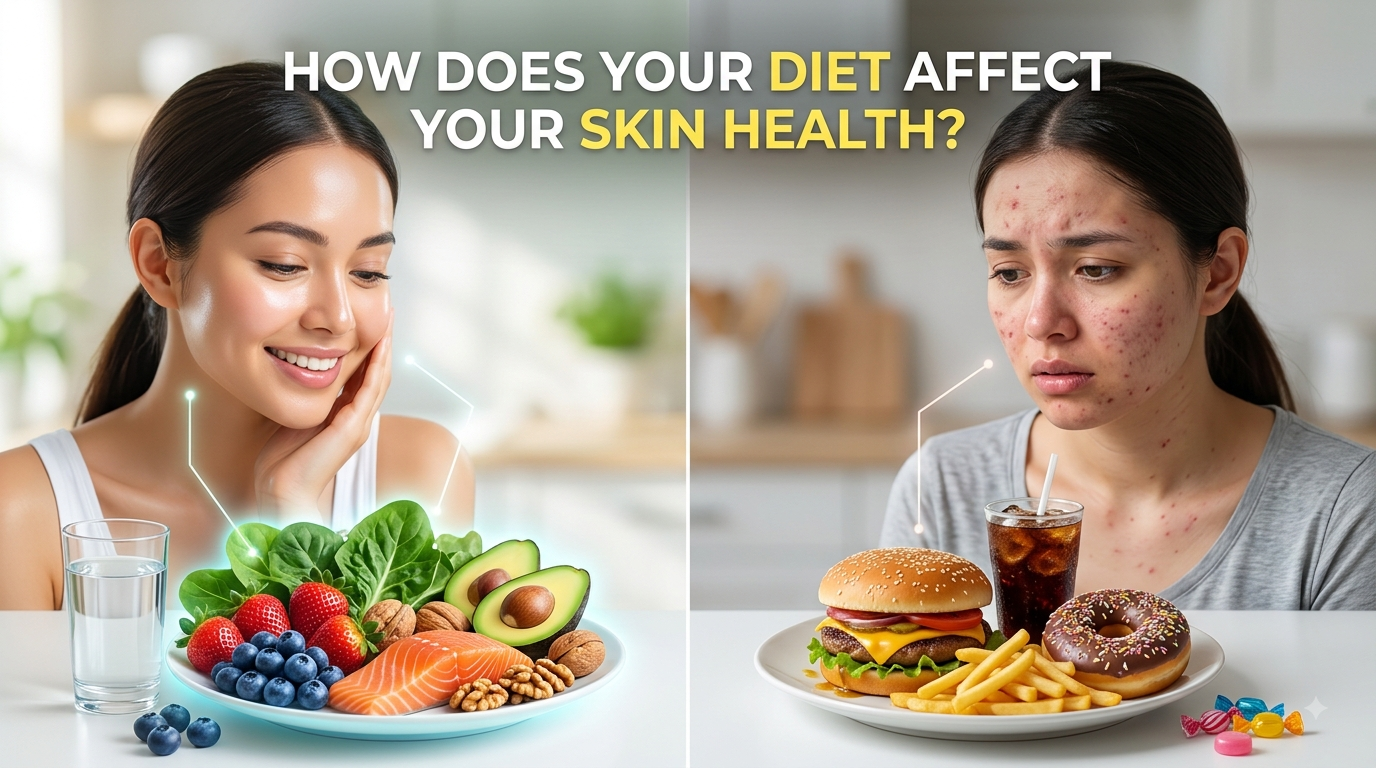
Diet and skin health are closely connected, because the foods you eat provide nutrients that support normal skin structure and function. Understanding how your diet affects your skin health can help readers make more informed everyday food choices. A balanced eating pattern can provide vitamins, minerals, healthy fats, protein, fibre, and water that the body uses for many normal processes. Healthy diet plans can help readers explore different approaches to balanced eating. However, food is only one part of overall skin health. Genetics, age, sleep, stress, sun exposure, skincare habits, and other lifestyle factors can also influence how skin looks and feels. GoHealthyPro provides general health information to help readers understand everyday nutrition topics.
Why Nutrition Matters for Healthy-Looking Skin Every Day?
The human skin is the body’s largest organ and needs a steady supply of nutrients to maintain its normal barrier and renewal processes. Protein provides amino acids used throughout the body, while vitamins and minerals support normal cellular functions. Healthy fats can be part of a balanced eating pattern, and fibre-rich foods can add variety and nutritional value to meals. Instead of focusing on one “perfect” food, it is more useful to look at the overall quality and variety of the diet.
A varied diet can also make it easier to get different nutrients from natural food sources. Colourful vegetables, fruits, whole grains, pulses, nuts, seeds, dairy or suitable alternatives, and other protein-rich foods can all contribute to a balanced plate. This approach is generally more practical than relying on a single food or restrictive diet for better-looking skin.
Which Nutrients Can Support Normal Skin Function?
Several nutrients are commonly discussed in relation to normal skin function. Vitamin C is found in foods such as citrus fruits, guava, tomatoes, capsicum, and broccoli. It contributes to normal collagen formation and also has antioxidant functions. Vitamin A is present in foods such as carrots, pumpkin, leafy vegetables, eggs, and dairy products. Vitamin E can be found in nuts, seeds, and some plant oils.
Zinc is another mineral involved in normal body functions and is available from foods such as pulses, dairy products, seeds, nuts, and whole grains. Protein also matters because it supplies amino acids needed for tissues throughout the body. The goal is not to count every nutrient individually, but to regularly include a broad selection of nutritious foods.
How Fruits for Skin Add Variety to Everyday Meals?
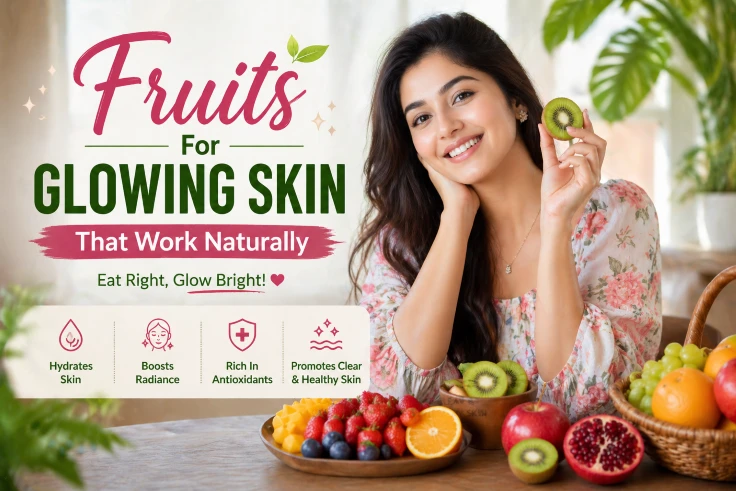
Fruits for skin are often included in discussions about skin-friendly eating because many fruits provide water, fibre, vitamins, minerals, and naturally occurring plant compounds. Citrus fruits, berries, guava, papaya, watermelon, apples, and pomegranate are examples of fruits that can add variety to everyday meals. Each fruit has a different nutritional profile, so eating a range of fruits can be more useful than concentrating on one option.
Fresh fruit can be included at breakfast, as a snack, or alongside a balanced meal. Whole fruit also provides fibre, which is generally lower when fruit is consumed only as juice. This does not mean juice must always be avoided, but whole fruit can be a convenient way to add both nutrients and fibre to the diet.
Can Vegetables Support Better-Looking Skin Every Day?
Vegetables provide many nutrients and plant compounds that can complement a balanced diet. Leafy greens, carrots, tomatoes, bell peppers, sweet potatoes, beans, peas, and cruciferous vegetables can bring different colours and nutrients to meals. Eating vegetables regularly can therefore support overall nutritional variety.
A simple way to include more vegetables is to add at least one vegetable to common meals. For example, vegetables can be mixed into poha, upma, dal, rice, roti meals, soups, salads, or sandwiches. Small, consistent choices may be easier to maintain than sudden restrictive changes.

How Hydrating Foods Support Normal Skin Appearance?
Hydrating foods such as cucumber, watermelon, oranges, tomatoes, strawberries, and soups can contribute water along with other nutrients. Water is important for normal body function, and hydration is part of a healthy lifestyle. However, foods are only one source of fluids, and plain water can also be a simple choice throughout the day.
Skin appearance can vary for many reasons, so hydration should not be viewed as a guaranteed solution for dryness or other skin concerns. Drinking fluids according to thirst and maintaining a varied diet can support general wellbeing. People with specific medical or dietary requirements may have different fluid needs and should seek appropriate professional guidance.
What Role Do Healthy Fats Play in Skin Health?
Healthy fats can be part of a balanced eating pattern and are found in foods such as nuts, seeds, avocados, and some vegetable oils. Some people also include fatty fish as a source of omega-3 fatty acids. These foods provide energy and other nutrients, making them useful additions to a varied diet.
Rather than removing all fats, it can be helpful to understand that different foods contain different types of fat. A balanced eating pattern can include moderate amounts of nutrient-rich fat sources while limiting excessive intake of foods high in saturated fat and added ingredients.
How Does a Clear Skin Diet Fit Into Balanced Eating?
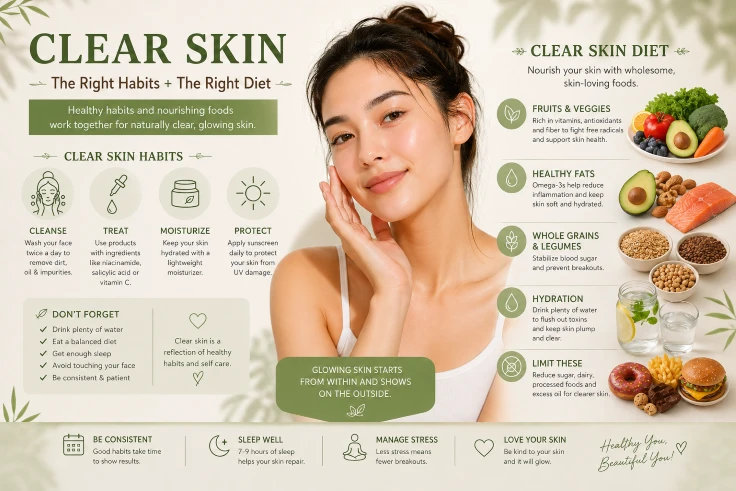
The phrase clear skin diet is commonly used online, but there is no single diet that guarantees clear skin for everyone. Skin can respond differently from person to person, and visible changes may have many possible influences. A sensible approach is to focus on a balanced pattern that includes vegetables, fruits, whole grains, pulses, protein sources, healthy fats, and adequate fluids.
Some people may notice that certain eating habits appear to coincide with changes in their skin, but personal observations do not always establish a direct cause. Keeping the overall diet balanced is generally more useful than eliminating large groups of foods without a clear reason. If someone has ongoing or concerning skin changes, a qualified healthcare professional can provide appropriate individual guidance.
Can Highly Processed Foods Affect Everyday Skin Health?
Highly processed foods can vary greatly in their nutritional content, so they should not all be treated as identical. Some packaged foods can be part of a balanced diet, while diets that frequently rely on foods high in added sugar, salt, or saturated fat may provide less nutritional variety when they replace whole and minimally processed foods.
The focus should be on overall dietary patterns rather than fear of individual foods. Enjoying a favourite snack occasionally is different from depending on it for most meals. Adding more vegetables, fruits, pulses, whole grains, nuts, seeds, and other nutritious choices can improve dietary variety without requiring an extreme approach.
Why Balanced Meals Matter More Than One Specific Skin Food?
It is easy to see claims online about one fruit, drink, supplement, or ingredient that supposedly transforms skin. Such claims can oversimplify nutrition. No single food provides every nutrient the body needs, and a varied diet is more realistic for supporting general health.
A balanced meal can combine different food groups. For example, a meal may include dal or another protein source, vegetables, whole grains such as roti or brown rice, and a serving of fruit. Another meal might include curd, vegetables, whole grains, nuts, and seeds. These combinations can provide a broader range of nutrients than relying on one “superfood.”
Everyday Eating Habits That Can Support Skin Health
Building simple habits can make balanced eating easier. Include different coloured vegetables and fruits across the week, choose whole grains regularly, add pulses or other protein sources to meals, and include nuts or seeds in suitable portions. Keep meals varied rather than repeating the same limited foods every day.
It can also help to pay attention to meal timing, portion balance, and overall food quality without becoming overly focused on numbers. Home-cooked meals can make it easier to understand what goes into food, while practical choices such as carrying fruit or drinking water can support consistency during busy days.
What Should You Know About Supplements for Skin Nutrition?
Supplements are often promoted for skin, hair, and beauty, but more is not necessarily better. Nutrients are ideally obtained from a varied diet when possible. Taking high doses of certain vitamins or minerals without professional guidance can be inappropriate and may carry risks.
Anyone considering supplements because of a specific concern should discuss the choice with a qualified healthcare professional. This is especially important when a person has an existing health condition, takes medicines, is pregnant, or has a known nutrient deficiency. General nutrition information cannot replace individual assessment.
Other Lifestyle Factors Also Influence Skin Health
Food is only one part of the bigger picture. Sun exposure, sleep, stress, physical activity, skincare routines, environmental conditions, age, and genetics can all affect skin appearance. This is why changing the diet alone may not explain every change a person notices.
A healthy lifestyle does not need to be perfect. Regular meals, varied foods, adequate fluids, sufficient sleep, and sensible sun protection can all form part of everyday wellbeing. For people with persistent, painful, rapidly changing, or worrying skin symptoms, professional medical evaluation is more appropriate than trying to solve the issue through diet alone.
Simple Ways to Build a Skin-Friendly Eating Pattern
Start with small improvements instead of following strict food rules. Add a fruit to breakfast, include vegetables with lunch and dinner, choose whole grains more often, and add pulses, nuts, seeds, or other suitable protein sources. Keep water available during the day and vary food choices across the week.
The Indian diet already offers many nutritious options. Dal, rajma, chana, curd, vegetables, seasonal fruits, roti, millets, rice, nuts, and seeds can all be part of balanced meals. The best approach is one that offers variety and can be maintained as part of normal daily life.
Can Diet Alone Improve the Appearance of Your Skin?
Diet can contribute to overall nutrition, but skin appearance is influenced by many factors. There is no guaranteed food or diet that produces the same result for everyone. A varied, balanced eating pattern can support general health and normal body functions.
Which Fruits Are Commonly Included in a Skin-Friendly Diet?
Many fruits can fit into a balanced diet, including guava, citrus fruits, papaya, berries, watermelon, apples, and pomegranate. The important point is variety rather than relying on one fruit for a specific skin benefit.
Is Drinking More Water Enough for Healthy Skin?
Water is important for normal body function, but hydration alone does not guarantee a particular skin result. Overall diet, lifestyle, environment, skincare habits, and individual factors can also influence how skin looks and feels.
Should You Follow a Strict Clear Skin Diet Plan?
There is no universal Clear Skin Diet that guarantees clear skin. Extreme restriction may also make it harder to get a wide range of nutrients. A balanced and varied eating pattern is a more practical general approach.
Are Supplements Necessary for Better-Looking Skin?
Not everyone needs supplements. A varied diet can provide many important nutrients, while unnecessary or high-dose supplementation may not be suitable. People with specific concerns should seek advice from a qualified healthcare professional.
Final Thoughts on Diet and Healthy-Looking Skin
A balanced diet can support the nutrients the body needs for normal skin function, but it is only one part of overall skin health. Choosing a variety of fruits, vegetables, whole grains, pulses, protein foods, healthy fats, and fluids can help create a nutritious everyday eating pattern. GoHealthyPro shares general health and nutrition information to help readers understand these topics in a simple way. Remember that individual skin concerns can have different causes, so persistent or concerning symptoms are best discussed with a qualified healthcare professional rather than managed through diet alone.









Super