

Introduction
Starting a fitness routine can feel challenging when you are unsure where to begin. The best approach is to keep your routine simple, realistic, and consistent. These fitness tips for beginners can help you understand basic exercise habits, plan your workouts, and build a stronger routine without making fitness feel complicated. This guide offers general educational information only and is not medical advice. If you have a health condition, injury, or specific concern, consider speaking with a qualified healthcare professional before changing your exercise routine.
Why Building Strength Matters for Everyday Fitness Goals?
Strength is not only about lifting heavy weights or changing how your body looks. A balanced strength routine can support everyday movements such as carrying bags, climbing stairs, getting up from a chair, and maintaining an active lifestyle. Beginners can focus on learning movement patterns, developing consistency, and gradually making exercises more challenging.
A useful starting point is to choose activities that match your current fitness level. You do not need an advanced gym programme to begin. Bodyweight exercises, resistance bands, light weights, and simple movement routines can all be part of a beginner-friendly approach.
Simple Fitness Tips for Beginners to Start Safely
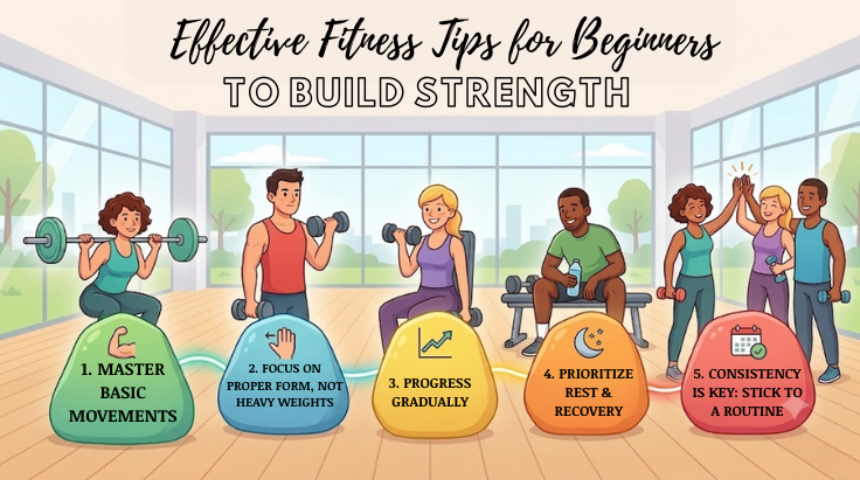
Beginners often make the mistake of doing too much too soon. A better strategy is to create a manageable routine and give yourself time to learn. The following fitness tips can make the process easier:
Start with a realistic schedule that fits your daily routine.
Learn basic exercise form before increasing difficulty.
Include warm-up and cool-down periods in your routine.
Increase exercise intensity gradually rather than rushing.
Pay attention to how your body feels during and after activity.
Include rest days so your routine remains sustainable.
Choose activities you enjoy so staying consistent feels easier.
Track simple progress, such as repetitions, time, or consistency.
Consistency is generally more useful for beginners than trying to complete an intense workout occasionally. Your routine should be practical enough to continue over time.
Home Workout Tips for Building a Consistent Routine?
You do not always need a gym membership to start exercising. Home workout tips can help beginners create a simple routine using bodyweight movements and available space. A chair, exercise mat, resistance band, or light pair of weights may be useful, but equipment is not always necessary.
A basic home session could include movements such as squats, wall push-ups, glute bridges, step-ups, and gentle core exercises. Start with a comfortable amount of work and focus on controlled movement. As you become more familiar with the exercises, you can adjust repetitions, sets, resistance, or duration gradually.
Creating a regular workout time can also make home exercise easier to maintain. Some people prefer exercising in the morning, while others find an evening routine more convenient. The best time is the one that fits your schedule and allows you to stay consistent.

Fitness and wellness are connected, but they are not exactly the same thing. Fitness often focuses on physical activity, strength, endurance, flexibility, and movement. Wellness can include broader daily habits such as balanced nutrition, sleep, hydration, stress management, social connection, and general lifestyle choices.
For beginners, looking at fitness as part of a wider routine can make progress feel more sustainable. Instead of focusing only on workouts, consider building healthy habits around your exercise schedule. Regular movement, adequate rest, nutritious food choices, and a balanced daily routine can all support an active lifestyle.
The goal is not to create a routine. It is to build habits that are practical and easy to repeat.
Beginner Strength Exercises to Learn Before Adding More
Learning basic movement patterns can give beginners a strong foundation. Exercises can be adapted to different fitness levels, so start with a version that feels manageable.
Squats: Practise lowering and standing with controlled movement.
Wall push-ups: Use a wall to practise the pushing pattern.
Glute bridges: Focus on steady movement through the hips.
Step-ups: Use a stable, low step and move with control.
Bird-dog: Practise controlled movement while maintaining balance.
Resistance-band rows: Use suitable resistance and controlled pulls.
Quality of movement is more important than chasing a high number of repetitions. Beginners can concentrate on posture, breathing, balance, and controlled movement before increasing resistance or volume.
How to Create a Weekly Beginner Fitness Schedule?
A weekly plan can remove uncertainty and make exercise easier to organise. You can begin with a few planned sessions rather than trying to exercise every day. Include different forms of movement and allow time for recovery.
For example, a simple week could include strength-focused sessions on selected days, walking or other enjoyable movement on alternate days, and rest when needed. The exact schedule can vary according to your lifestyle, preferences, experience, and current activity level.
Writing down your planned sessions can also help you notice patterns. If a routine repeatedly feels difficult to maintain, adjust the schedule rather than abandoning fitness altogether. A flexible plan is often easier to follow than an overly strict one.
Common Beginner Mistakes That Can Slow Fitness Progress
Many beginners expect quick changes and become discouraged when progress takes time. Fitness development is not identical for everyone, and results can vary according to many factors.
Common mistakes include copying advanced workouts, skipping warm-ups, ignoring rest, using poor form, increasing resistance too quickly, and comparing personal progress with someone else. Another common mistake is changing routines constantly without giving yourself enough time to build consistency.
Try to treat fitness as a long-term habit rather than a short challenge. Focus on what you can do consistently and make small adjustments as you gain experience.
Simple Ways to Track Your Strength and Fitness Progress
Tracking progress can help you stay motivated and understand how your routine is developing. You can use a notebook, phone app, calendar, or simple spreadsheet.
Record useful details such as the exercises you completed, repetitions, sets, duration, resistance used, and how consistently you followed your plan. You can also note non-performance changes, such as finding daily movements easier or feeling more confident with exercise.
Avoid relying on one measurement alone. Progress can appear in different ways, and a beginner does not need to chase a specific number to build a useful routine.
Fitness Tips That Help You Stay Motivated Long Term
Motivation naturally changes from day to day, so habits can be more dependable than waiting to feel motivated. Set small goals that are clear and realistic. For example, you might aim to complete your planned sessions consistently rather than setting an unrealistic performance target.
You can also make workouts more enjoyable by listening to music, exercising with a friend, trying different activities, or changing your environment. Celebrate consistency and learning rather than expecting perfection.
If you miss a workout, simply return to your routine when you can. One missed session does not define your overall progress.
How GoHealthyPro Can Support Your Fitness Learning Journey?
GoHealthyPro can be a useful source for exploring general fitness and wellness topics, including beginner-friendly information about healthy lifestyle habits. Use educational content to learn concepts, compare ideas, and identify topics you may want to discuss with a qualified professional.
Remember that online fitness information cannot account for every person’s circumstances. Exercise choices may need to be adapted based on individual needs, experience, injuries, medical conditions, or other factors. For personalised guidance, seek advice from an appropriately qualified professional.
FAQs
What are the best fitness tips for beginners?
Start with a realistic routine, learn basic movement patterns, focus on controlled form, increase difficulty gradually, and make recovery part of your plan. Choosing enjoyable activities can also make consistency easier.
What are the top 20 fitness tips for beginners?
Useful tips include setting realistic goals, warming up, learning form, starting gradually, staying consistent, taking rest days, varying activities, tracking progress, staying hydrated, eating balanced meals, sleeping well, listening to your body, avoiding comparisons, using suitable equipment, keeping workouts manageable, building strength gradually, maintaining flexibility, making exercise enjoyable, adjusting your schedule when needed, and seeking qualified guidance for individual concerns.
What is the 3-3-3 rule for fitness?
The 3-3-3 rule is not one universally standard fitness method. Different programmes may use the term to describe different routines, such as three exercises, three sets, and three repetitions or other combinations. Always check how a specific programme defines the rule before following it.
How often should a beginner exercise?
There is no single schedule that works for everyone. Beginners can start with a manageable amount of activity that fits their routine and gradually build consistency. Rest and recovery should be considered when planning exercise.
What are the 5 points of fitness for beginners?
Five commonly discussed areas are muscular strength, muscular endurance, cardiovascular endurance, flexibility, and body composition. These areas are often used to describe different aspects of physical fitness, although fitness can be viewed in broader ways.
Final Thoughts on Building Strength as a Beginner
Building strength is a gradual process that starts with simple, consistent habits. Beginners do not need complicated workouts or intense routines to get started. Focus on learning basic movements, following suitable fitness tips, staying active, allowing time for recovery, and gradually improving your routine. Home workout tips can also make exercise more convenient, while a balanced approach to fitness and wellness can support long-term healthy habits. Most importantly, choose activities that fit your lifestyle and focus on steady progress rather than perfection. Read general information about fitness and wellness on the GoHealthyPro blog, but if you need personalised advice, consult a qualified professional.