

Introduction
Don’t forget that beautiful, glowing skin begins from the inside out, and that skincare products are merely one component of the answer. Many people suffer from dryness, dullness and uneven skin tone due to deficiency of hydration in the body. This is where foods that help to hydrate come into the picture.
Hydration of skin refers to the amount of water present in your skin cells, which should be sufficient to keep them soft, smooth and glowing. Signs of dehydration appear immediately in the skin as dryness, flakiness and tiredness.
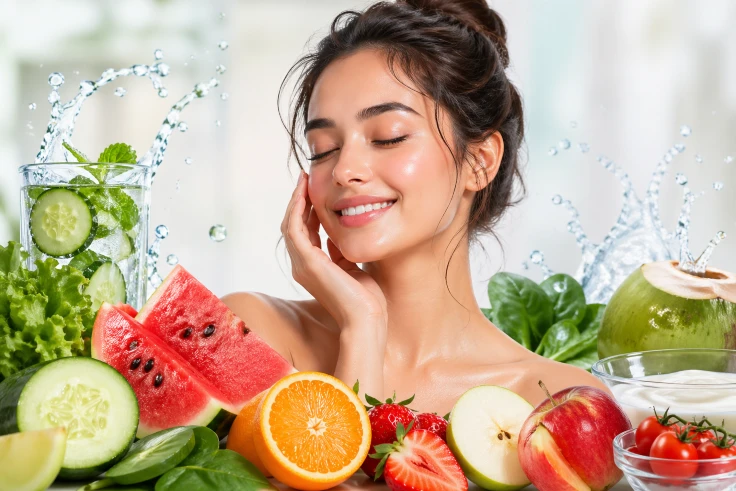
There are ways to get a great skin tone and shine that don’t involve costly beauty products. There are natural ways to achieve a great skin tone and natural skin lustre with the right hydration foods, which can be added to your daily diet. They have healthy amounts of water, vitamins, and antioxidants, which help to deeply nourish skin cells.
How Are Hydration Foods Essential For Glowing Skin?
External skincare is only the surface, but the real change is achieved on the inside.
Many believe there’s no solution to dry skin other than treating it from the outside. But creams only form a barrier on the surface. The real hydration of the skin occurs in the bottom layers of the dermis.
Foods are highly hydrated and contain “structured water”, meaning vitamins and minerals that are more beneficial to the skin than a topical skin care product can ever be. Highly hydrated foods contain “structured water” with high levels of vitamins and minerals which are more effective in repairing the skin than any topical skin care product.
- Elasticity: If your cells have moisture in them they are firm. This will minimize the look of fine lines and avoid the “crepey” skin tone.
- Nutrient Absorption: Water transport nutrients. If there’s not enough moisture on the inside, the skin will lack the vitamins it requires to keep it healthy. If you want to know how to keep your glow on track.
The secret to achieving this deep-layer hydration and keeping the skin elastic lies in the inclusion of certain moisture-rich ingredients in your skin care routine: “If you want glowing skin, you should begin by taking these hydrating foods to your skin.”
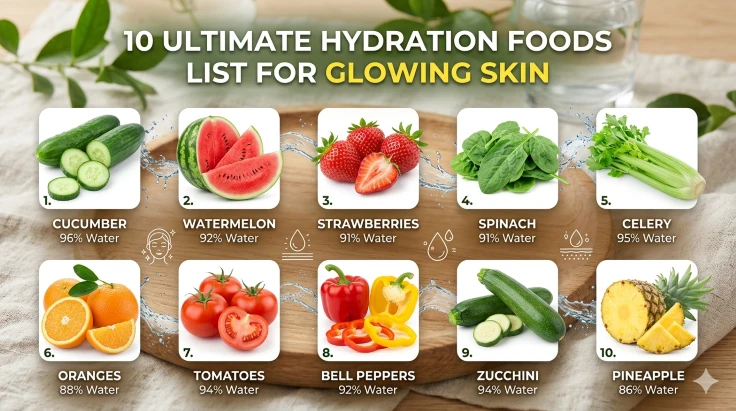
10 Ultimate Hydration Foods List For Glowing Skin
In this article, you will find 10 Ultimate Hydration Foods List For Glowing Skin.
The complete list of foods that help you get glowing skin naturally is here:
1. Cucumber (96% Water)
The kings of the hydration foods list are cucumbers. They consist almost entirely of water, and also contain silica, a key ingredient in the production of collagen.
- Skin Benefit: Natural calming effect for skin, helps to reduce puffiness.
- Best eaten: Slice cucumber and add to salads or mix into a healthy morning juice.
2. Watermelon (92% Water)
This summer favorite is packed with the powerful antioxidant lycopene. Actually, studies have correlated 16mg of lycopene per day, for about ten weeks, with about 40% less skin redness from the sun than people who didn’t take it, and watermelon is one of the richest natural sources of lycopene, so a bowl or two a few times a week is really adding up.
- Skin Benefit: It helps skin cells to resist damage from the sun and help them glow naturally.
- Serving Suggestions: Serve watermelon chunks in a bowl in the middle of the day as a snack.
3. Strawberries (91% Water)
The berries are one of the best hydrating foods due to the fact that they are packed with Vitamin C and contain a high amount of water. Not only is it nice to have, Vitamin C is one of the essential ingredients your body needs to produce collagen, so lack of it means less elasticity and healing time in your skin over time.
- Skin Benefit: Brightens skin tone and neutralizes free radicals which cause aging.
- Assess the consumption: Add to yoghurt or porridge.
4. Spinach (91% Water)
It is a hydrating and nutritious leafy green.
- Skin Benefit: Rich in Vitamin A (retinol) that is useful for skin cell turnover and healing.
- Use: Include in smoothies or sauté with garlic as a side dish.
5. Celery (95% Water)
Celery contains little calories and is extremely rich in water-containing mineral salts.
- Skin benefit: Maintains the skin’s pH balance, which helps to prevent acne. If you’re looking for other ingredients to combat blemishes.
- Ways to eat: Dip in hummus for a refreshing crunchy snack.
6. Oranges (88% Water)
Oranges are an essential in the diet of anyone who wants to have glowing skin.
- Skin Benefit: Water and Vitamin C works to keep skin firm and elastic.
- Eating suggestions: Drink whole fruit rather than juice to reap the fiber benefits, too.
7. Tomatoes (94% Water)
Tomatoes are a wonderful source of vitamins and moisture, and are usually overlooked.
- Skin Benefit: Tightens pores, gives cheeks a natural glow.
- The best way to eat them: Add to salads, sandwiches or create a new tomato basil soup.
8. Bell Peppers (92% Water)
The red and yellow ones are especially rich in hydration and carotenoids.
- Skin Benefit: Enhances circulation to the skin surface resulting in more “glow” in the skin.
- Serving suggestions: Slice and enjoy straight out of the packet with a light dip!
9. Zucchini (94% Water)
The vegetable is versatile, and one of the best hydrating foods for skin.
- Skin Benefit: rich in manganese, supports a healthy moisture barrier in the skin.
- Consumption tips: “Zucchini noodles” (zoodles) are a great option for a light dinner, made by using a spiralizer.
10. Pineapple (86% Water)
Pineapple has an enzyme called bromelain which aids in digestion and skin radiance.
- Reduces the inflammation of the skin, makes the skin clear.
- Serving suggestions: Serve with fruit salad or grill for a healthy dessert.
The Following Are The Top Food Items That Rapidly Hydrate The Skin.
If you are looking to give yourself a “pick-me-up” for a big event, drink cucumber, watermelon, or coconut water. These three contain a near instant hydration effect on the skin. Heavier foods tend to cause the skin to look swollen and oily, but these foods that contain water can help to remove toxins and many people find that the skin can look fresher and less puffy within a day or two of eating them on a regular basis.
Best Time to Eat Hydration Foods for Maximum Glow
The best way to utilize your hydration foods list is by timing it perfectly:
- Morning: Wake up skin cells with high water fruits, on an empty stomach.
- Before Lunch: Have a cucumber salad before your meal to keep you hydrated and from eating too much.
- Night: Eat light veggies that are rich in water—such as zucchini or spinach. Try not to use heavy salts at night as they may give rise to water retention (puffiness) the following morning.
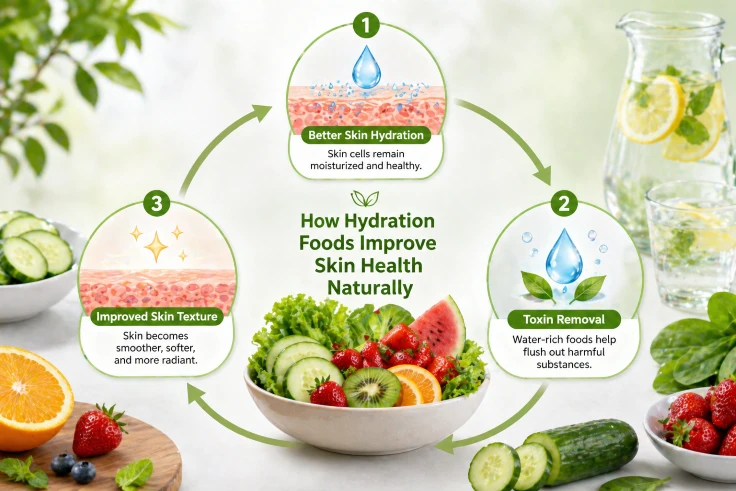
The Benefits Of Hydration Foods For Natural Skin Care.
Consuming foods for glowing skin regularly results in:
- Healthier and hydrated skin – Skin cells stay moisturized and healthy.
- For Toxin Removal — Water-rich foods helps to cleanse the body of toxins.
- Better Skin Texture — The skin becomes smoother, softer and radiant.
Hydration Foods vs Water – What is Better?
It’s not a competition, it’s a partnership!
- Kidneys: Washes out the system, keeps the kidneys going. When you consider all the beverages and foods that you consume, most healthy adults require about 2.7 liters per day for women and 3.7 liters per day for men. Hydration foods are not just an added bonus, but they’re really contributing to that daily requirement.
- Hydration Foods: Give the “glue” (nutrients) that keeps the water in the skin cells. Both are essential to achieve a flawless shine. Water would be the fuel and hydration food would be the fueling station with storage tanks.
👉 Using both together is best.
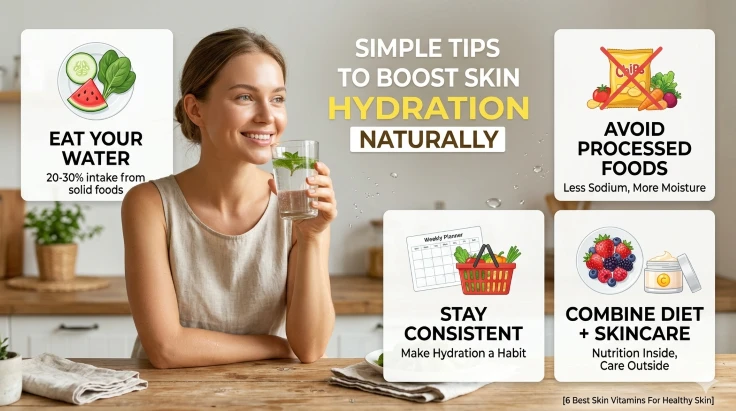
Simple Tips To Enhance Skin Moisture Naturally.
- Eat Your Water: consume at least 20-30% of your water from solid foods — which closely approximates what scientists have observed in actual diets, as food provides about one fifth of the water that most people consume, without them trying to.
- Don’t eat too much processed food – processed foods contain high amounts of salt that can draw water out of the skin.
- Be Steady: Just one salad won’t stop dry skin. Add these foods to your regular shopping list.
- Eat the right food + apply the right skin care: Take the right nutrients orally and apply them to your skin.
This Is The Daily Routine For Naturally Glowing Skin (Real-Life plan)
- Morning (8:00 AM): A big glass of lemon water followed by a bowl of strawberries and pineapple.
- Lunch (1:00 PM): A new salad with cucumber, tomatoes and bell peppers with your protein.
- Evening (4:00 PM): Celery sticks or orange as a snack.
- Dinner (8:00 PM): A light dinner featuring sautéed spinach and zucchini noodles.
Typical Errors That Lead To Dry Skin.
- Too much Caffeine: Coffee is a diuretic and an additional fruit serving is required for every cup of coffee.
- Veggies (and celery and cucumber!) are ignored: People tend to concentrate on the fruits, but veggies such as celery and cucumber are lower in sugar and higher in minerals.
- Too Much Salt: Salt dries out the skin cells, giving them a wrinkled and aged appearance. In addition to cutting down on salt and caffeine, having a meal plan can help speed up the results. Check out our Powerful Clear Skin Diet Tips to discover what food actively fights acne whilst you’re drinking it.
Certain Hydrating Foods Are Suggested As Supplements To Drink Extra Fluids, But Who Should Be Cautious With These?
Although these are healthy foods, moderation is important:
- Citrus/Pineapple Allergies: Watch for citrus or pineapple allergies.
- Some stomachs may not be able to handle the raw vegetables, such as celery and spinach, if consumed in large amounts at once.
- Medical Conditions: If following a kidney-restricted diet, please check with the doctor about high-water/high-potassium foods.
Conclusion
You don’t have to spend a lot of money to get glowing skin. The right foods for hydration, when incorporated into your diet, can help naturally improve the hydration, texture and appearance of your skin. For more helpful nutrition tips and healthy food ideas, explore our diet and nutrition resources.
Be consistent. Begin incorporating these foods into your diet now and get smoother, more radiant skin.
FAQs
Q1:- Which hydration foods are best for skin?
Cucumbers, watermelon, and spinach are top choices. Their high water content, paired with vitamins A and C, strengthens the moisture barrier, flushes toxins, and promotes a plump, naturally radiant complexion.
Q2:- Can hydration foods replace drinking 8 glasses of water?
Hydration foods offer good quality “structured water” as well as vital vitamins, but should not be used as a replacement for water. Consider the use of them as a booster. Drink water all day long, and consume water-rich foods to help meet all your water requirements and hydrate your skin cells.
Q3:- Is it better to eat hydrating fruits or drink their juice?
It is almost always better to eat the whole fruit. When you eat the fruit, you get the fiber, which slows down sugar absorption and keeps your gut healthy. A healthy gut is directly linked to clear skin! Plus, the act of chewing helps your body signal that it’s being nourished.
Q4:- Do hydration foods help with anti-aging?
Yes! Fine lines and wrinkles are more noticeable in a dry skin. With hydrating foods for skin, you keep your skin “plump,” which preserves the elasticity of your skin, giving your face a natural look younger than it is.
Q5:- Are hydration foods enough for glowing skin?
While hydration foods are a vital foundation for radiance, they work best alongside a consistent skincare routine, quality sleep, and sun protection. True glowing skin requires a holistic balance of internal nutrition and external care.
Disclaimer
This article is only for general health awareness and tips. It is not medically suggested advice. Please consult a qualified healthcare professional for medical guidance.