

Introduction
Bone density is one of the most important factors determining the strength and durability of your bones. Healthy bones support movement, protect vital organs, and help maintain overall mobility throughout life. However, aging, inactivity, hormonal changes, poor nutrition, and certain medical conditions can gradually reduce bone density, increasing the risk of fractures and osteoporosis.
The good news is that exercise can play a powerful role in maintaining and even improving bone strength. Bones are living tissues that respond positively to physical stress. When you engage in the right exercises, your body stimulates bone-building cells, helping bones become stronger and more resilient.
Whether you are in your 30s looking to prevent future bone loss or in your 60s aiming to maintain skeletal health, incorporating targeted workouts into your routine can significantly improve bone density naturally. In this guide, we’ll explore the best exercises for stronger bones, explain how they work, and share practical tips for maximizing results.
Understanding Bone Density and Why It Matters
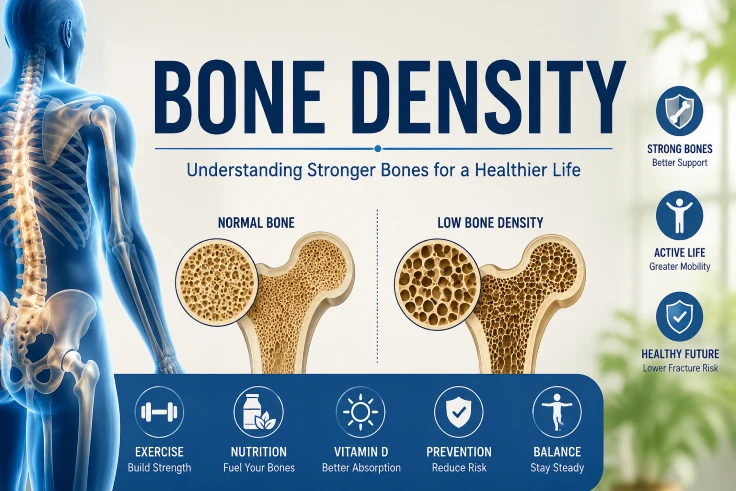
Bone density refers to the amount of mineral content present in your bones. Higher mineral content generally means stronger bones that can better withstand stress and impact.
Maintaining healthy bone density offers numerous benefits:
- Reduced risk of fractures
- Improved posture and balance
- Better mobility with age
- Lower risk of osteoporosis
- Enhanced physical performance
- Greater independence in later years
Since bone loss often occurs without noticeable symptoms, taking preventive action through exercise is essential.
How Exercise Helps Improve Bone Density
Bones continuously rebuild themselves through a process called remodeling. During this process, old bone tissue is broken down and replaced with new tissue.
Exercise supports bone density by:
- Stimulating bone formation
- Increasing mechanical stress on bones
- Strengthening muscles that support the skeleton
- Improving balance and coordination
- Reducing the likelihood of falls
The more consistently bones are challenged through safe physical activity, the stronger they become.
Best Weight-Bearing Exercises for Bone Density
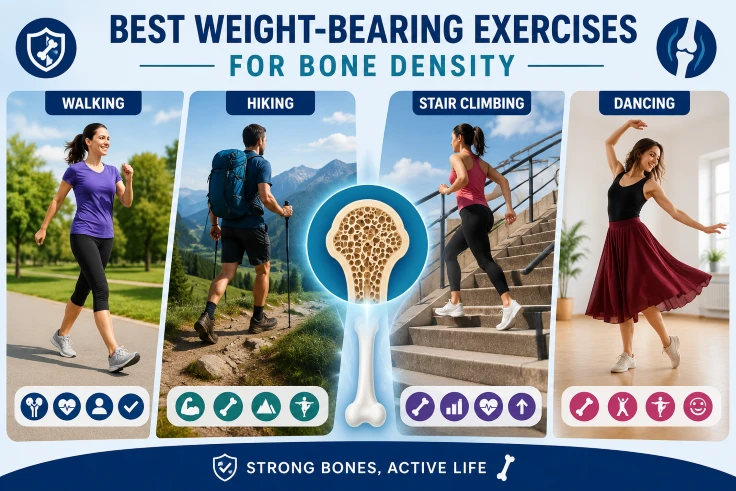
Weight-bearing exercises force your body to work against gravity while remaining upright. These activities are highly effective for maintaining and improving bone density.
Walking
Walking is one of the simplest ways to support bone health.
Benefits include:
- Strengthens leg and hip bones
- Improves circulation
- Suitable for beginners
- Easy to incorporate into daily life
Aim for at least 30 minutes of brisk walking most days of the week.
Hiking
Hiking provides additional challenges due to uneven surfaces and inclines.
Benefits include:
- Increased muscle engagement
- Greater bone stimulation
- Improved endurance
- Enhanced balance
Regular hiking can contribute significantly to maintaining healthy bone density.
Stair Climbing
Climbing stairs creates more impact than regular walking.
Benefits:
- Strengthens lower-body bones
- Builds muscular endurance
- Supports cardiovascular fitness
- Improves functional strength
Even short stair-climbing sessions can benefit bone health.
Dancing
Dancing combines weight-bearing movement with coordination.
Benefits:
- Supports bone growth
- Improves flexibility
- Enhances balance
- Makes exercise enjoyable
Many dance styles provide excellent skeletal benefits while keeping workouts fun.
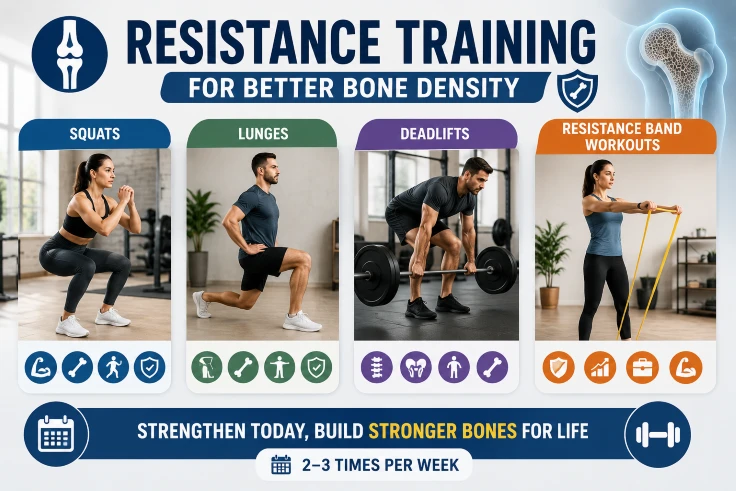
Resistance Training for Better Bone Density
Strength training is among the most effective methods for increasing bone density because it places controlled stress on bones through muscle contractions.
Squats
Squats target the hips, thighs, and lower back.
Benefits:
- Improves lower-body strength
- Stimulates bone growth
- Supports mobility
- Enhances stability
Lunges
Lunges challenge balance while strengthening major muscle groups.
Benefits:
- Builds leg strength
- Increases bone-loading forces
- Improves coordination
- Supports joint health
Deadlifts
Deadlifts engage multiple muscle groups simultaneously.
Benefits:
- Strengthens the spine
- Supports hip health
- Improves posture
- Promotes stronger bones
Resistance Band Workouts
Resistance bands provide a safe option for many fitness levels.
Benefits:
- Low joint stress
- Progressive resistance
- Portable equipment
- Effective muscle activation
Perform strength-training exercises two to three times weekly for optimal results.
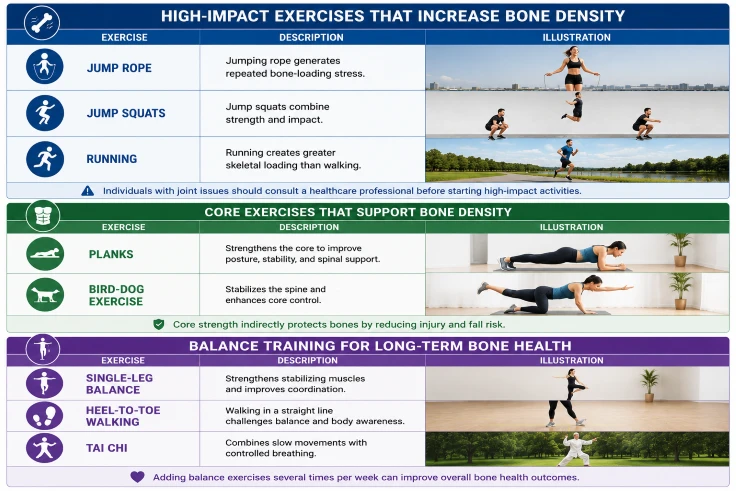
High-Impact Exercises That Increase Bone Density
High-impact activities place greater force on bones, encouraging stronger adaptations.
Jump Rope
Jumping rope generates repeated bone-loading stress.
Benefits:
- Supports bone development
- Improves cardiovascular fitness
- Enhances coordination
- Burns calories efficiently
Jump Squats
Jump squats combine strength and impact.
Benefits:
- Strengthens lower-body bones
- Improves power
- Enhances athletic performance
- Stimulates bone formation
Running
Running creates greater skeletal loading than walking.
Benefits:
- Builds stronger leg bones
- Improves endurance
- Supports weight management
- Enhances cardiovascular health
Individuals with joint issues should consult a healthcare professional before starting high-impact activities.
Core Exercises That Support Bone Density
A strong core improves posture, stability, and spinal support.
Planks
Benefits include:
- Strengthening abdominal muscles
- Supporting spinal alignment
- Improving balance
- Enhancing overall stability
Bird-Dog Exercise
Benefits include:
- Better coordination
- Stronger lower back muscles
- Improved balance
- Enhanced posture
Core strength indirectly protects bones by reducing injury and fall risk.
Balance Training for Long-Term Bone Health
Balance exercises may not directly increase bone density, but they significantly reduce the risk of falls and fractures.
Single-Leg Balance
This exercise strengthens stabilizing muscles and improves coordination.
Heel-to-Toe Walking
Walking in a straight line challenges balance and body awareness.
Tai Chi
Tai Chi combines slow movements with controlled breathing.
Benefits include:
- Improved stability
- Better flexibility
- Reduced fall risk
- Enhanced body control
Adding balance exercises several times per week can improve overall bone health outcomes.
Lorem ipsum dolor sit amet, consectetur adipiscing elit. Ut elit tellus, luctus nec ullamcorper mattis, pulvinar dapibus leo.
Common Mistakes That Prevent Bone Density Improvement
Many individuals unknowingly limit their progress.
Relying Only on Cardio
While cardio is beneficial, resistance training remains essential for improving bone density.
Skipping Recovery Days
Bones need time to rebuild after exercise. Proper recovery supports bone remodeling.
Using Poor Technique
Incorrect exercise form may reduce effectiveness and increase injury risk.
Inconsistent Workouts
Bone density improvements require regular and ongoing physical activity.
Ignoring Nutrition
Exercise alone is not enough. Bone-building nutrients are equally important.
Nutrition and Bone Density: A Powerful Combination
Exercise and nutrition work together to build stronger bones.
Calcium
Important sources include:
- Milk
- Yogurt
- Cheese
- Leafy vegetables
Vitamin D
Vitamin D helps the body absorb calcium effectively.
Sources include:
- Sunlight exposure
- Fatty fish
- Fortified foods
Protein
Protein supports muscle and bone repair.
Good sources include:
- Eggs
- Fish
- Poultry
- Legumes
- Dairy products
Magnesium
Magnesium contributes to healthy bone structure and mineralization.
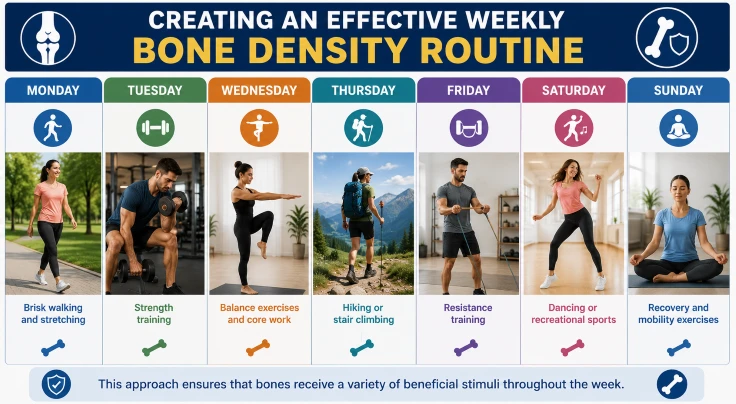
Creating an Effective Weekly Bone Density Routine
A balanced weekly plan may include:
Monday
Brisk walking and stretching
Tuesday
Strength training
Wednesday
Balance exercises and core work
Thursday
Hiking or stair climbing
Friday
Resistance training
Saturday
Dancing or recreational sports
Sunday
Recovery and mobility exercises
This approach ensures that bones receive a variety of beneficial stimuli throughout the week.
Who Should Focus on Improving Bone Density?
Certain groups may benefit particularly from bone-strengthening exercises:
- Adults over age 50
- Postmenopausal women
- Individuals with family history of osteoporosis
- People with sedentary lifestyles
- Individuals recovering from long periods of inactivity
Early intervention can help preserve bone strength for years to come.
Conclusion
Improving bone density naturally is achievable through a combination of weight-bearing activities, resistance training, balance exercises, and proper nutrition. Consistent physical activity encourages bone growth, slows age-related bone loss, and helps maintain mobility and independence.
By incorporating exercises such as walking, hiking, strength training, stair climbing, and balance workouts into your routine, you can build stronger bones and reduce the risk of future fractures. Combined with a nutrient-rich diet, these habits create a solid foundation for lifelong bone health.
FAQs
1. Can exercise really improve bone density?
The best food for bone health includes dairy products, leafy green vegetables, fatty fish, nuts, seeds, and fortified foods. These foods provide essential nutrients such as calcium, vitamin D, magnesium, and protein that support bone density, strength, and long-term skeletal health.
2. Which exercise is best for bone density?
Most adults require approximately 1,000 to 1,200 milligrams of calcium daily. The exact amount varies depending on age and gender. Consuming calcium-rich foods regularly helps maintain bone density and supports the continuous process of bone remodeling and repair.
3. How often should I exercise for bone density?
Yes, vitamin D plays a critical role in helping the body absorb calcium efficiently. Without adequate vitamin D, calcium absorption decreases significantly, potentially leading to weaker bones and a higher risk of fractures, osteoporosis, and other skeletal health concerns.
4. Can walking improve bone density?
Absolutely. Many plant-based foods support bone health, including kale, broccoli, tofu, almonds, chia seeds, sesame seeds, lentils, and fortified plant milks. These foods provide calcium, magnesium, phosphorus, and other nutrients that contribute to maintaining strong bones.
5. What nutrients are essential for bone density?
Fruits such as oranges, prunes, berries, and figs can support bone health. They contain vitamins, antioxidants, potassium, and minerals that contribute to bone maintenance, collagen formation, and protection against age-related declines in bone density and strength.
6. At what age should I start focusing on bone density?
Limiting excessive salt, sugary drinks, highly processed foods, and heavy alcohol consumption can help protect bone health. These dietary habits may interfere with calcium balance, reduce nutrient intake, or contribute to long-term bone weakening when consumed excessively.
Disclaimer
“This article is only for general health awareness and tips. It is not medically suggested advice. Please consult a qualified healthcare professional for medical guidance.”