


Introduction
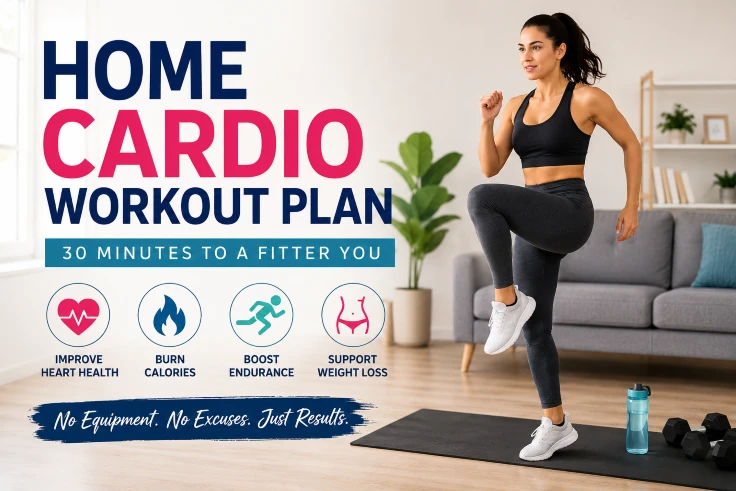
Cardio Workout Plan routines are among the most effective ways to improve fitness, burn calories, and support overall health without requiring expensive gym memberships or specialized equipment. Whether your goal is weight management, increased stamina, better heart health, or simply staying active, a well-structured home cardio routine can deliver impressive results.
Many people struggle to find time for lengthy workouts. The good news is that a properly designed 30-minute session can provide significant cardiovascular benefits while fitting easily into a busy schedule. By combining simple bodyweight exercises with strategic intervals, you can elevate your heart rate, strengthen muscles, and improve endurance from the comfort of your home.
This guide outlines a practical 30-minute home cardio workout plan suitable for beginners and intermediate fitness enthusiasts. You’ll also learn the benefits of cardio training, workout modifications, safety tips, and ways to maximize your results.
Why Follow a Cardio Workout Plan?
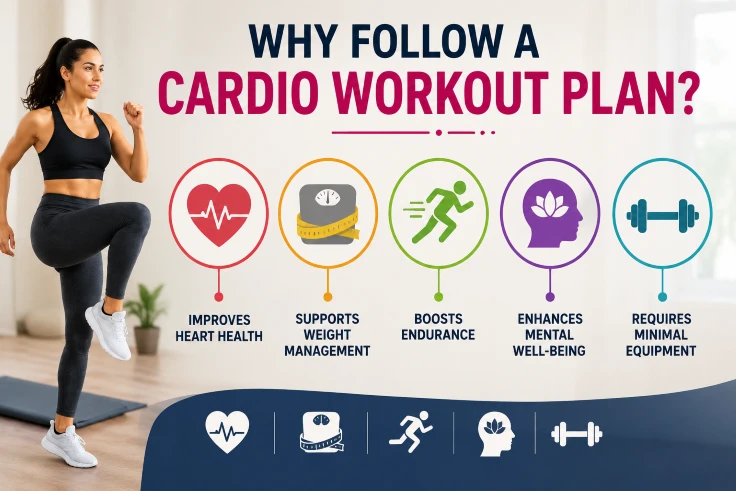
A structured cardio workout plan offers several advantages over random exercise sessions.
Improves Heart Health
Cardiovascular exercises strengthen the heart muscle and improve blood circulation. Regular cardio helps reduce blood pressure and supports healthy cholesterol levels.To learn more about the long-term cardiovascular advantages of regular exercise, read our guide on Top Benefits of Cardio Workouts for Heart Health.
Supports Weight Management
Cardio workouts increase calorie expenditure, helping create the energy deficit needed for weight loss while also assisting with weight maintenance.
Boosts Endurance
Consistent training improves your body’s ability to use oxygen efficiently, making daily activities feel easier and less tiring.
Enhances Mental Well-Being
Exercise stimulates the release of endorphins, often referred to as feel-good hormones, which can help reduce stress and improve mood.
Requires Minimal Equipment
Most home cardio exercises use body weight only, making them accessible to nearly everyone.
Preparing for Your 30-Minute Cardio Workout Plan
Before starting any workout session, proper preparation is essential.
Choose a Safe Workout Space
Select an area with enough room to move comfortably. Remove objects that could cause tripping or injury.
Wear Comfortable Clothing
Choose breathable clothing and supportive athletic shoes designed for physical activity.
Stay Hydrated
Drink water before, during, and after exercise to maintain optimal performance.
Warm Up Properly
A warm-up gradually prepares your body for exercise and reduces injury risk.
30-Minute Home Cardio Workout Plan Overview
This cardio workout plan is divided into four sections:
Workout Phase | Duration |
Warm-Up | 5 Minutes |
Cardio Circuit 1 | 10 Minutes |
Cardio Circuit 2 | 10 Minutes |
Cool-Down | 5 Minutes |
The workout alternates between moderate and higher-intensity movements to maximize calorie burn while maintaining sustainability.
Cardio Workout Plan Warm-Up (5 Minutes)
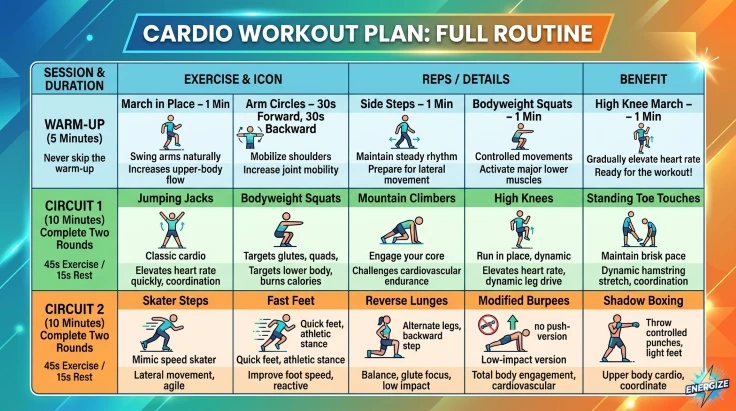
Never skip the warm-up. It prepares muscles and joints for increased activity.
1. March in Place – 1 Minute
Lift your knees comfortably while swinging your arms naturally.
2. Arm Circles – 30 Seconds Forward, 30 Seconds Backward
Mobilize your shoulders and increase upper-body blood flow.
3. Side Steps – 1 Minute
Step side-to-side while maintaining a steady rhythm.
4. Bodyweight Squats – 1 Minute
Perform controlled squats to activate major lower-body muscles.
5. High Knee March – 1 Minute
Raise your knees higher than during normal marching to gradually elevate your heart rate.
By the end of the warm-up, you should feel energized and ready for the workout.
Cardio Workout Plan Circuit 1 (10 Minutes)
Perform each exercise for 45 seconds followed by 15 seconds of rest. Complete two rounds.
Jumping Jacks
A classic cardio exercise that elevates heart rate quickly and improves coordination.
Bodyweight Squats
Targets the glutes, quadriceps, hamstrings, and core while increasing calorie burn.
Mountain Climbers
Engage your core while challenging cardiovascular endurance.
High Knees
Run in place while bringing your knees toward your chest.
Standing Toe Touches
Alternate touching opposite hands to feet while maintaining a brisk pace.
After completing all five exercises, repeat the circuit once more.
Cardio Workout Plan Circuit 2 (10 Minutes)
Perform each movement for 45 seconds with 15 seconds of recovery.
Skater Steps
Move side to side, mimicking a speed skater’s motion.
Fast Feet
Quickly move your feet in place while maintaining an athletic stance.
Reverse Lunges
Step backward into a lunge position and alternate legs.
Modified Burpees
Perform a low-impact version without the push-up if needed.
Shadow Boxing
Throw controlled punches while maintaining light foot movement.
Repeat the entire circuit a second time.
How This Cardio Workout Plan Helps Burn Calories
One reason people choose cardio exercise is its ability to increase daily calorie expenditure.
Several factors influence calorie burn:
- Body weight
- Workout intensity
- Fitness level
- Exercise duration
- Muscle mass
A 30-minute cardio session may burn approximately:
Activity Level | Estimated Calories |
Moderate Intensity | 200–300 |
Vigorous Intensity | 300–450 |
Combining cardio with a balanced diet can support sustainable weight management over time.
Cardio Workout Plan for Beginners
Beginners can easily modify this routine.
Reduce Work Intervals
Instead of 45 seconds, work for 30 seconds and rest for 30 seconds.
Choose Low-Impact Variations
Replace:
- Jumping jacks with step jacks
- High knees with marching
- Burpees with bodyweight squats
Focus on Consistency
Completing shorter workouts regularly often produces better results than occasional intense sessions.
Intermediate and Advanced Cardio Workout Plan Adjustments
As your fitness improves, challenge yourself further.
Increase Exercise Duration
Extend work periods from 45 seconds to 60 seconds.
Add Additional Rounds
Complete a third circuit round to increase workout volume.
Minimize Rest
Reduce rest intervals to maintain a higher heart rate.
Include Plyometric Exercises
Add squat jumps or jump lunges for greater intensity.
Progressive overload helps prevent fitness plateaus and keeps workouts effective.
Benefits of Following a Home Cardio Workout Plan
Convenience
You can exercise whenever it fits your schedule.
Cost Savings
No gym membership or expensive equipment is required.
Greater Flexibility
Workouts can be modified according to your fitness level and goals.
Improved Consistency
Removing travel time and logistical barriers makes it easier to maintain regular exercise habits.
Better Overall Health
Regular cardio contributes to improved cardiovascular function, metabolism, and energy levels.
Common Mistakes to Avoid During a Cardio Workout Plan
Skipping Warm-Ups
Starting too intensely may increase injury risk.
Ignoring Proper Form
Poor technique reduces effectiveness and can lead to discomfort.
Exercising Too Hard Too Soon
Gradually increase intensity rather than pushing beyond your capabilities immediately.
Neglecting Recovery
Rest days allow muscles and the cardiovascular system to recover and adapt.
Forgetting Hydration
Even mild dehydration can negatively affect workout performance.
Avoiding these mistakes can improve both safety and results.
Weekly Schedule Using This Cardio Workout Plan
A balanced weekly routine might look like this:
Day | Activity |
Monday | 30-Minute Cardio Workout |
Tuesday | Strength Training |
Wednesday | Cardio Workout |
Thursday | Active Recovery |
Friday | Cardio Workout |
Saturday | Strength Training |
Sunday | Rest or Light Walk |
This schedule combines cardiovascular exercise, strength development, and recovery.
Nutrition Tips to Support Your Cardio Workout Plan
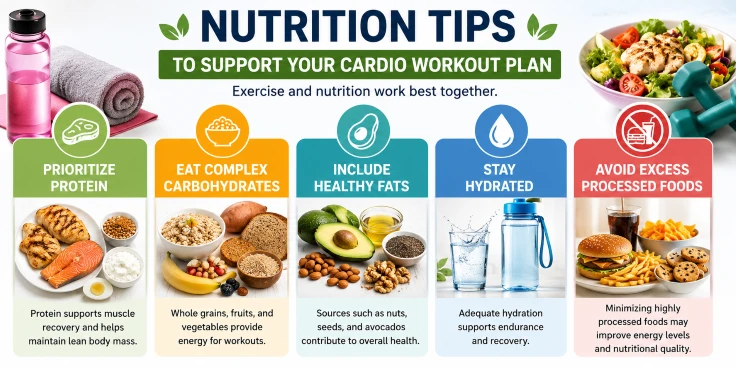
Exercise and nutrition work best together.
Prioritize Protein
Protein supports muscle recovery and helps maintain lean body mass.
Eat Complex Carbohydrates
Whole grains, fruits, and vegetables provide energy for workouts.
Include Healthy Fats
Sources such as nuts, seeds, and avocados contribute to overall health.
Stay Hydrated
Adequate hydration supports endurance and recovery.
Avoid Excess Processed Foods
Minimizing highly processed foods may improve energy levels and nutritional quality.
Tracking Progress with Your Cardio Workout Plan
Monitoring progress helps maintain motivation.
You can track:
- Workout frequency
- Exercise duration
- Heart rate improvements
- Weight changes
- Energy levels
- Endurance gains
Small improvements over time often lead to substantial long-term results.
Conclusion
A well-designed Cardio Workout Plan does not require a gym, expensive equipment, or hours of training. With just 30 minutes at home, you can improve cardiovascular health, burn calories, increase endurance, and support overall wellness. The key to success is consistency, gradual progression, and maintaining proper exercise form.
Whether you’re just beginning your fitness journey or looking to supplement your existing routine, this 30-minute home cardio workout plan offers a practical and effective way to stay active. Start at a pace that feels comfortable, stay consistent, and build upon your progress over time.
FAQs
1. Is a 30-minute cardio workout enough for weight loss?
Yes. A 30-minute cardio workout can contribute significantly to weight loss when combined with a balanced diet and consistent exercise routine. The workout helps increase calorie expenditure, improve metabolism, and support overall fitness. Results depend on workout intensity, nutritional habits, and long-term consistency.
2. How many times per week should I follow this cardio workout plan?
Most adults can benefit from performing this cardio workout plan three to five times per week. This frequency provides enough cardiovascular stimulation while allowing adequate recovery.
3. Can beginners safely follow this cardio workout plan?
Absolutely. Beginners can modify exercises, reduce workout intervals, and choose low-impact alternatives such as marching instead of high knees. Starting slowly and progressing gradually allows the body to adapt while minimizing the risk of injury or excessive fatigue.
4. Do I need equipment for this home cardio workout plan?
No. This workout plan is designed primarily around bodyweight movements that require little to no equipment. Comfortable workout clothing, supportive shoes, and adequate space are generally all that’s needed to complete the routine effectively.
5. What should I eat before a cardio workout?
A light meal or snack containing carbohydrates and some protein about 30 to 90 minutes before exercise can provide energy. Examples include fruit with yogurt, oatmeal, or whole-grain toast with peanut butter. Avoid heavy meals immediately before workouts.
Disclaimer
“This article is only for general health awareness and tips. It is not medically suggested advice. Please consult a qualified healthcare professional for medical guidance.”