

Introduction
Bodyweight exercises are one of the best, most versatile, and most budget friendly ways to develop full body fitness – no gym, no fancy equipment, no excuses. These 15 exercises can be performed in your living room, a hotel room or park, and will make you stronger, leaner and more confident in your own skin.
What Are Bodyweight Exercises?
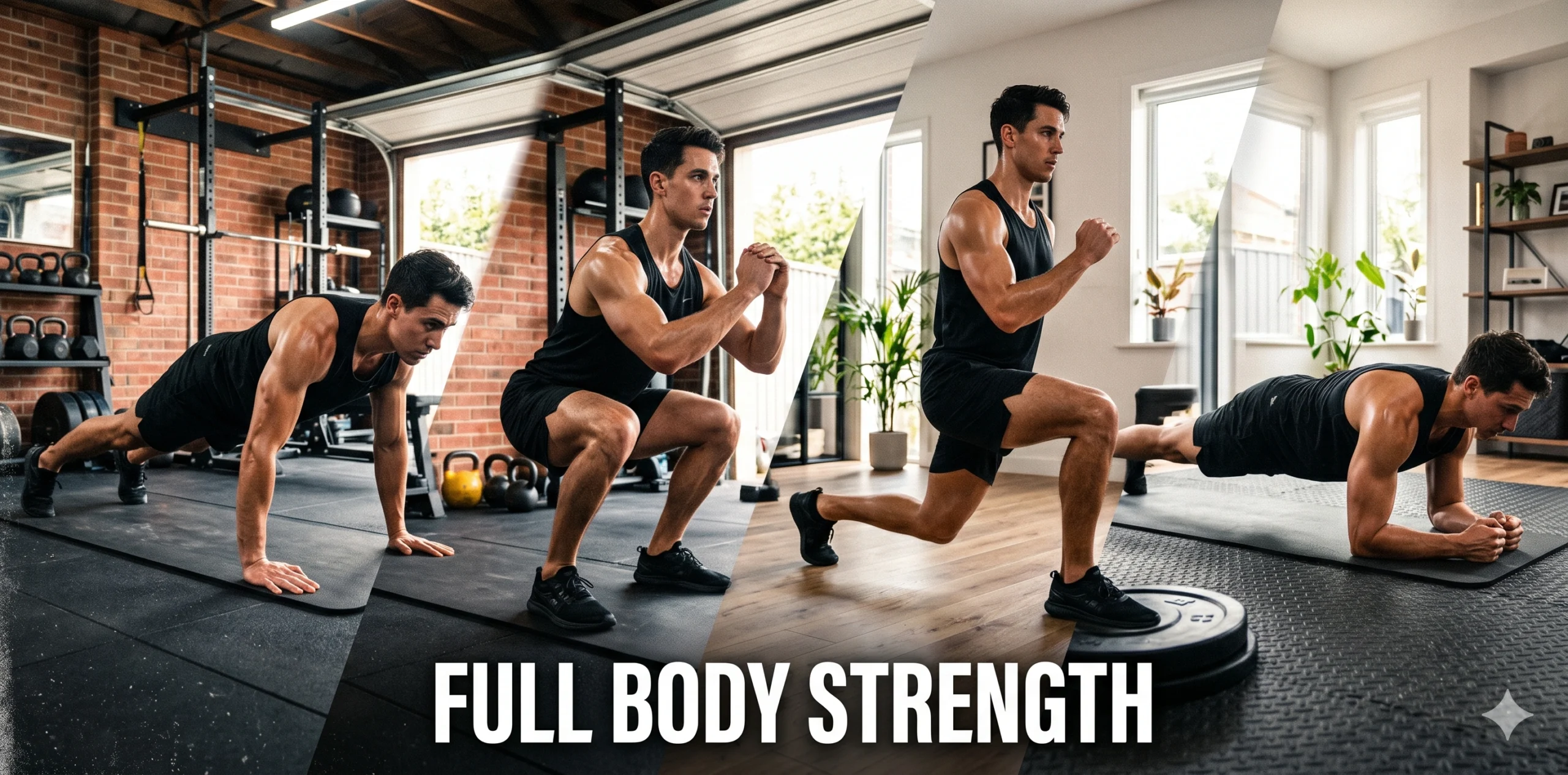
Bodyweight exercises involve using your body weight to provide resistance (as opposed to dumbbells or machines). Push-ups, squats, plank and pull-ups. No gym needed.
These exercises are the heart of calisthenics, which dates back centuries, and were used by soldiers in ancient Greece and still used today in the military. They engage several muscle groups simultaneously and they help develop functional strength—strength that can be used in everyday life.
Body weight exercises tend to activate the core, stabiliser muscles and joints in many instances, which creates a multi-joint, multi-movement exercise. This translates into improved overall fitness without injuries.
The Advantages of Body Weight Training
The advantages of body weight training.The benefits of body weight training.
For many, there are numerous reasons why bodyweight training becomes a part of their lives after a genuine effort:
- No equipment or gym required — train any time, anywhere!
- Develops functional strength and stability in the real world.
- Lowers the risk of injury from heavy weight lifting.
- Increases flexibility, balance, and coordination
- Ideal for weight loss, increases muscle mass and burns calories at the same time.
- Easily scalable for any fitness level, beginners to advanced.
- Saves money — no gym memberships, no equipment —
Ready to begin to get fit at home today? For easy and effective ways to get fit at home, read our article on how to stay fit at home.
“If you like the idea of skipping the gym entirely, our guide on 10 Simple Fitness Habits: No Need to Join Gym has more ways to stay fit at home.”
“For a broader look at building healthy daily habits beyond exercise, check out our guide on 15 Healthy Lifestyle Tips to Stay Active and Feel Great.”
Bodyweight exercise can make you stronger and stouter even after a few weeks of 20-30 minutes, 3-4 times per week.
Tips to Help You Get Started With Bodyweight Exercises
It doesn’t have to be difficult to begin a bodyweight program. Here is a simple 3 step plan for you to get started.
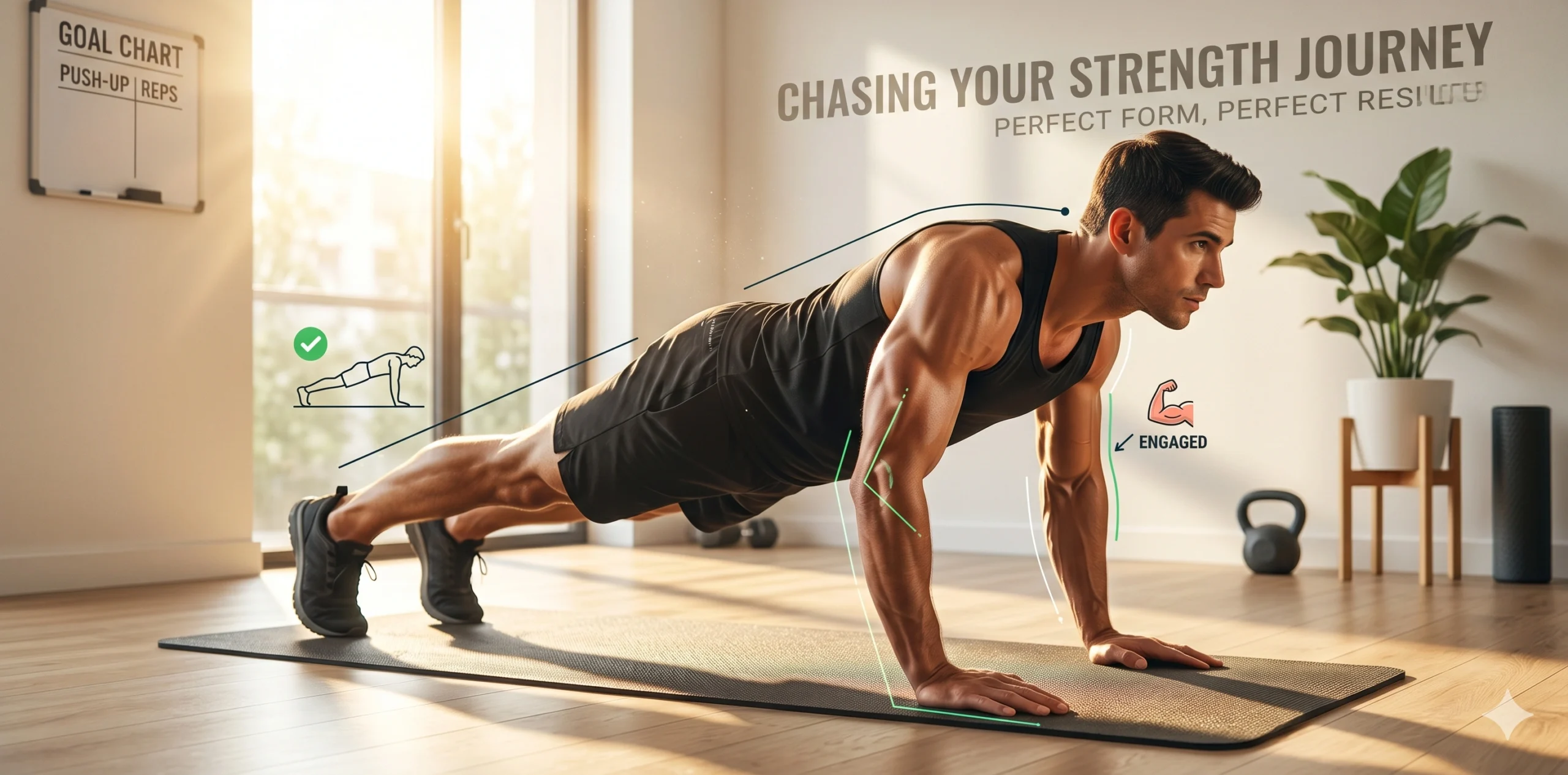
1. Determine Your Workout Plan
Before you perform any squats, make sure you are clear on what you want. If you are looking to lose fat, Build muscle? Improve your energy? It is important to have a clear goal so that you stay motivated and you can select the appropriate routine. Write it down – it makes a difference.
2. Select a Workout Space
You only need a flat surface as large as a yoga mat. Any of these will do, your bedroom floor, a yard, or a balcony. Ensure there is sufficient space, the floor is not slippery and ample space is available to fully extend arms and legs.
3. Warm Up Properly
Do not cut out warm up. Move lightly for 5-7 minutes: Arm circles; leg swings; hip rotations; jumping jacks. Warm body = better moving, better performing, fewer injuries.
When you’re just beginning your fitness quest, our beginner exercises guide will help you learn how to create a safe and effective workout from scratch.
15 Best Bodyweight Exercises for Full Body Strength
Here are the 15 best no-equipment exercises that cover every major muscle group. Each one is explained with how to do it, what muscles it targets, and a quick tip to get more out of it.
| # | Exercise | Primary Muscles | Level |
| 1 | Push-Ups | Chest, Triceps, Shoulders | Beginner |
| 2 | Pull-Ups | Back, Biceps | Intermediate |
| 3 | Squats | Quads, Glutes, Hamstrings | Beginner |
| 4 | Lunges | Quads, Glutes, Balance | Beginner |
| 5 | Plank | Core, Shoulders | Beginner |
| 6 | Burpees | Full Body, Cardio | Intermediate |
| 7 | Mountain Climbers | Core, Cardio | Beginner |
| 8 | Dips | Triceps, Chest | Intermediate |
| 9 | Glute Bridges | Glutes, Lower Back | Beginner |
| 10 | Superman Hold | Lower Back, Glutes | Beginner |
| 11 | Jump Squats | Quads, Glutes, Power | Intermediate |
| 12 | Pike Push-Ups | Shoulders, Triceps | Intermediate |
| 13 | Step-Ups | Quads, Glutes, Balance | Beginner |
| 14 | Hollow Body Hold | Core, Abs | Intermediate |
| 15 | Bear Crawl | Full Body, Coordination | Intermediate |
1. Push-Ups
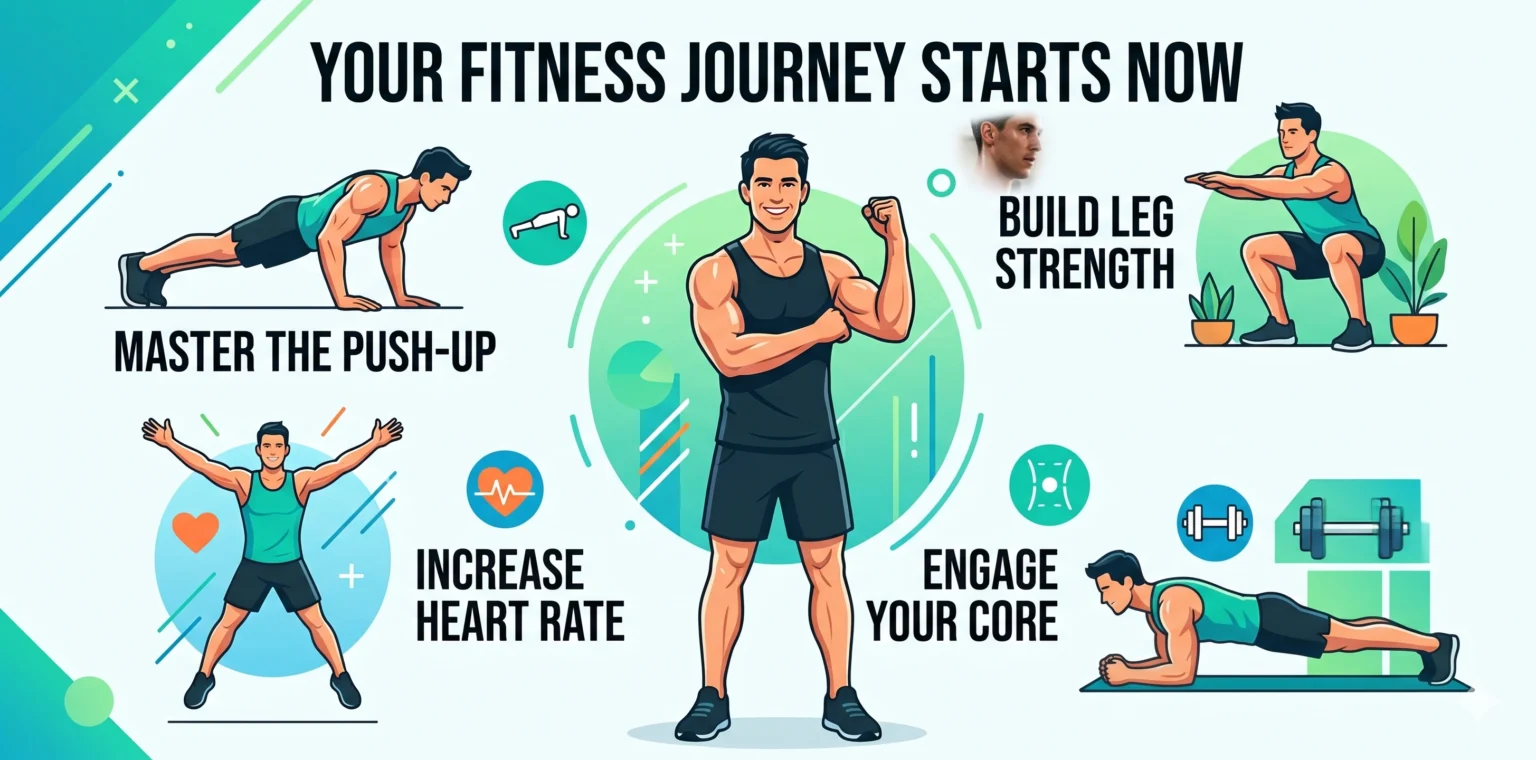
The push up is the queen of upper body body weight exercises. Get into the high plank position, with hands shoulder-width apart. Slowly lower your chest to the ground, then slowly push back up. Maintain a straight body, avoiding sagging hips.
Muscles toned: Chest, triceps, front shoulders, core. Tip: You can do pushups with your knees on the ground if regular push ups are difficult. If they’re too difficult, raise legs.
2. Pull-Ups
Pullups are the perfect way to develop a strong back. Using an overhead bar with palms facing out, hang fully, then pull yourself up until your chin is above the bar. Slowly descend — The pull itself will build strength as well as that controlled descent.
Muscles engaged: Lats, biceps, back of shoulders, core. Tip: No pull-up bar? Inverted rows are a good initial alternative using a sturdy table edge.
3. Squats
The squat is the key to lower body strength. Position feet shoulder width apart with toes just out. Lower hips so thighs are parallel to the floor (or lower if comfortable) then push back up through the heels.
Muscle groups targeted: Upper and lower legs, glutes, core. Hint: maintain the chest high and knees over the toes as the movement is made.
4. Lunges
The lunge works one leg at a time, making it a good exercise to improve strength imbalances. Take one foot forward, lower back foot to floor (no contact) and then step back to standing. Alternate legs.
Muscles targeted: Quads, glutes, hamstrings and calves. Challenge: Walk Lunge across the room for a more challenging exercise.
5. Plank
The plank is so easy to do, yet so effective for strengthening your core. Come into a push up position and hold that position. Maintain level hips, tight core, neutral neck. Begin at 20 seconds and gradually increase.
Muscles exercised: Abs, obliques, lower back, shoulders. Tip: While performing the plank squeeze your buttocks and press your hands flat against the floor so that it will be more effective.
6. Burpees
Burpees engage the entire body and rapidly get the heart racing. From standing position, lower hands to the floor, jump feet back to push up position and perform a push up, jump feet forward to push up position, then jump up with arms overhead.
Muscles worked: Chest, shoulders, arms, core, legs. Hint: Do them at your own speed — even slow burpees are amazing!
7. Mountain Climbers
Stand in a high plank position. Bring one knee up towards the chest and then use the other knee to switch in the opposite direction quickly — as if running in place sideways. Hips should remain low and core compacted in all movements.
Muscles targeted: Core, hip flexors, shoulders and cardio system. Tip: The quicker you increase your speed, the greater cardiovascular benefits. Take it easy, concentrate on core control.
8. Dips
Standing with a stable chair or bench, hold hands behind back, fingers pointing forward. Slowly bend with elbows at 90 degrees and push back up. Sit with back against the chair.
Muscles targeted: Triceps, lower chest, front shoulder. You should avoid flaring your elbows out to the side, but keep them pointing straight back, tip:
9. Glute Bridges
Spread your knees and feet on the floor and lie back on your back. Drive hips forward into ceiling with heels pushing forward. Contract glutes at the top, hold, and slowly lower down.
Muscles engaged: Glutes, hamstrings, lower back, core. Tip: If you want to challenge yourself and isolate your glutes even more, try single leg glute bridges.
10. Superman Hold
Face down with arms raised, extended above your head. Raise arms, chest and legs off floor simultaneously, maintaining the position for 2-3 seconds and then lower. This one focuses on the muscles that are neglected.
Muscles targetted: Erector spinae, lower back, gluteus, back shoulders. TIP: concentrate on length – extend your arm and leg, don’t just lift up high.
11. Jump Squats
Squat, and jump off the floor as if you were going to stand up, but instead jump up. Land gently through knees and hips and immediately begin the next movement.
Muscles worked: Quads, glutes, calves, explosive power. Tip: Make sure that you land as softly as you can – this means that you will use your muscles as shock absorbers, which is better for your joints.
12. Pike Push-Ups
Get into a downward dog position with your hips high. With arms bent, lower the top of the head towards the floor and then push back up. This is a variation of the overhead press with body weight.
Muscles targeted: triceps, upper chest and shoulders. Hint: The more perpendicular to the floor your body can be, the harder your shoulders will work.
13. Step-Ups
Step one foot up, using a sturdy step, box or chair and drive through that heel until you are fully on the step, then step back down. Alternate sides. An amazing glute and quad builder.
Muscles worked: Quads, glutes, hamstrings, calves. Hint: Use one water bottle in each hand to create more resistance.
14. Hollow Body Hold
With your back on the ground, arms above your head, and legs straight. Raise shoulders and legs several inches off ground and hold. Your lower back should be flat all the way across.
Muscles worked: Abs, hip flexors, serratus anterior. Hint: This isn’t as easy as it appears. Begin with 10-15 seconds, and increase the length.
15. Bear Crawl
Begin on all fours on an inch of the floor. Step right foot and left foot forward then left foot and right foot. Hips should be low and back flat.
Body parts used: Shoulders, abs, thighs, coordination. TIP: For even more challenge, try crawling backwards.
How to Organize a HIIT Whole-Body Bodyweight Training Session
However, it is only half the equation to know what the exercises are. It’s as important how you put them together. Looking for a comprehensive plan? Our beginner home exercise program guides you through a full week-by-week workout program that is designed for real results at home.
Beginner Routine (3 Days/Week)
| Exercise | Sets | Reps / Time | Rest |
| Push-Ups | 3 | 8–10 reps | 60 sec |
| Squats | 3 | 12–15 reps | 60 sec |
| Plank | 3 | 20–30 sec | 45 sec |
| Glute Bridges | 3 | 12–15 reps | 45 sec |
| Mountain Climbers | 3 | 30 sec | 60 sec |
Intermediate Routine (4 Days/Week)
| Exercise | Sets | Reps / Time | Rest |
| Burpees | 4 | 10 reps | 60 sec |
| Jump Squats | 4 | 12 reps | 45 sec |
| Pike Push-Ups | 3 | 10 reps | 60 sec |
| Lunges | 3 | 12 each leg | 45 sec |
| Hollow Body Hold | 3 | 20–30 sec | 45 sec |
| Bear Crawl | 3 | 20 metres | 60 sec |
Need a full structured plan? Our beginner home workout plan walks you through a complete week-by-week program designed for real results from home.
The Most Frequently Recurring Errors
The most frequently recurring errors are identified and explained.
It’s possible to develop bad habits, even with simple exercises, that can hinder progress or lead to unnecessary pain. Be aware of these:
- Muscles that are not warmed up are muscles that are prone to injury and will cause pain.
- Rushing the reps – speed kills form and bad form leads to injury.
- Not respecting rest days – the muscles grow when they recover not during exercise!
- Don’t do more of what you’re comfortable with — if you can do a lot of pushups, then do more pushups
- Tighten the abdominal muscles and breathe out during the active (contracting) portion of any movement
- Don’t underestimate the importance of the lower back and posterior chain, avoid glute bridges and supermans.
If you experience any sharp or shooting pain at any time during any exercise, STOP. It is normal to be sore, it is not normal to be in pain. Always listen to your body.
Helpful Tips to Stay Consistent
There is no better workout than the one that you do. Here are a few easy tips to get bodyweight training to stick:
- Plan it as a meeting; same time, same days per week
- Make small steps — even 10 minutes daily is better than nothing!
- Keep track of your progress – record your reps, times and feelings
- Find an accountability partner or community online
- Reward small successes: If you complete a week of regular attendance, then pat yourself on the back!
Conclusion
Are you thinking of paying for gym memberships or fancy equipment to become physically strong? Think again because it is possible to do it with a body weight. Each of these 15 exercises works all the major muscle groups and can be done from beginner to advanced, so there is always something to progress to.
Choose a schedule, try a few sessions a week and be disciplined — your body will thank you for it.