

Introduction
Feeling stressed out looking for easy ways to relax and de-stress? Don’t despair, you’re not alone. Feeling overwhelmed is almost the norm these days, especially with having a busy work schedule, constant notifications, family life and the overall hustle and bustle. The great thing is that it is not a drastic change of lifestyle or hours of free time that you don’t have that you need to find calm. Some simple, intentional habits, if done consistently, can actually change your mindset and body response to everyday stress.
It’s important to note, first of all, that these techniques are not “the answer” or a “one size fits all” solution. Everyone’s stress is unique and what works for some may not work for others. Consider this to be a starter guide to the tools, a crash course of possibilities to try out until you discover a few of your favorites.
Why a Few Small Habits Matter
When we are stressed, we become more alert and our body responds with a release of hormones such as cortisol and adrenaline to deal with the perceived threat. It is a reasonable reaction to physical threats, but email and deadlines and traffic did not put it into place for its frequent use. When it is left unchecked, it can lead to fatigue, tension, poor sleep and a short fuse. (For a deeper look at how these hormones affect your body over time, see Mayo Clinic: Chronic stress puts your health at risk.)
All of the following techniques are used to tip your nervous system into the “rest and recover” system, which slows your heartbeat, relaxes your muscles, and brings you a sense of stability. All are basic. It’s not that they have to be done perfectly, it’s that they have to be done regularly enough for your body to take them as a signal to relax.
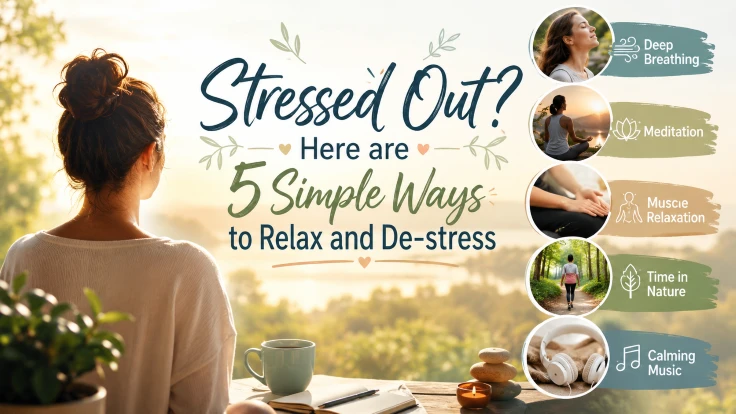
Five Easy Ways to Relax and De-Stress
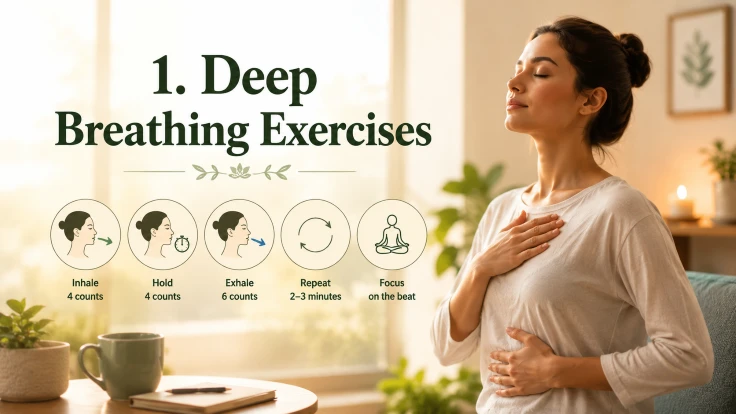
1. Deep Breathing Exercises
Your own breath is as fast and mobile as any other tool! Deep breathing is effective because slow, measured breaths communicate directly with your nervous system that it’s OK to dial down the alarm system — not needing anything special, or a piece of equipment — no special setting needed.
How to do it:
- Rest in a fairly quiet place.
- Slowly inhale through your nose to count to four, rising your chest and belly,
- Gently hold breath for 4 counts.
- Slowly exhale through the mouth for a count of 6.
- Repeat for 2-3 minutes, focusing on the beat.
Find a time to fit it in: If you need to do it, make it something you already do every day – while you’re making coffee, before you check your email, or when you’re sitting in line at the red light – so it becomes second nature.
2. Meditation
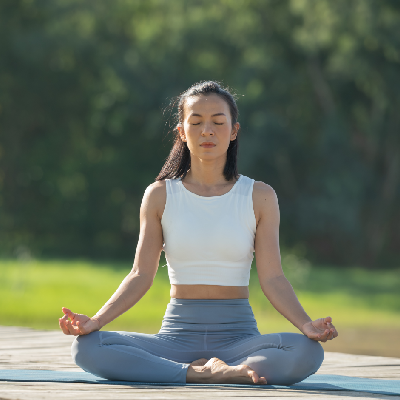
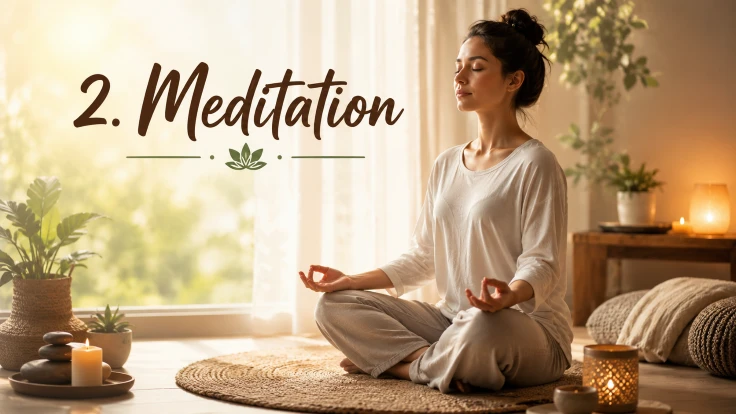
Meditation doesn’t always seem simple or easy because it can sometimes feel like it takes too much time; however, it’s actually nothing more than gentle training of attention. You don’t follow all the thoughts that arise in your mind, but rather you try to return your concentration to something steady, typically your breath, which after some time creates a mental stability that you can access when life gets busy.
Getting started:
- Set the timer for 5 minutes.
- Spend some time sitting comfortably, with your eyes closed, and focus on your breathing.
- If you get lost in your thinking — which you will — you can catch yourself, without frustration, and pull back your thoughts to concentrate again on the lesson.
- Slowly increase the amount of time as it becomes more comfortable.
- If you’re still new to using it there’s a free guided app or audio track that can be a good aid to the learning curve.
Don’t let its timing become a battle for a new time in your calendar, fit it in at a time that works for you, such as after you wake up, or just before brushing your teeth at night.
Beyond stress relief, regular practice comes with a wide range of other benefits — see our full guide on Meditation Benefits for more on how it can support your focus, sleep, and overall well-being.
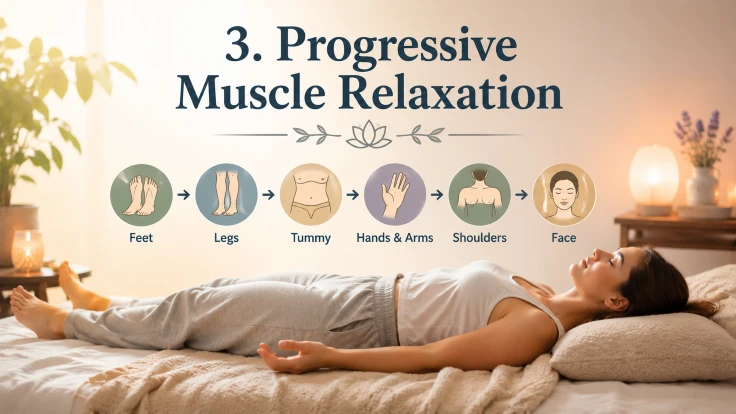
3. Progressive Muscle Relaxation
Tension can be held in a muscle group without being noticed, like a tight jaw, hunched shoulders, and a tight stomach, and it is this technique of deliberately tightening a muscle group and then releasing it that will let you know. This exaggerates the difference between tension and relaxation and teaches your body to recognize what it means to relax.
How to practice it:
- Get comfortable sitting or lying down.
- With your feet first, tightly squeeze the muscles, holding the squeeze for approximately five seconds.
- Make sure to breathe it out fully and relax for approximately thirty seconds, noting the contrast.
- Progress from lower to higher body parts (legs, tummy, hands, arms, shoulders, face) and tense/release at each level.
- Complete when you have completed all the exercises through the entire body starting from the toes to the forehead.
Fit it in: This is one that is great for winding down before you sleep at night, as it also signals to your body that it’s time to unwind.
If sleep troubles are a big part of your stress, this technique pairs well with the tips in our Healthy Sleep Guide: A Guide To Restful Nights for building a more restful nighttime routine.
4. Time in Nature
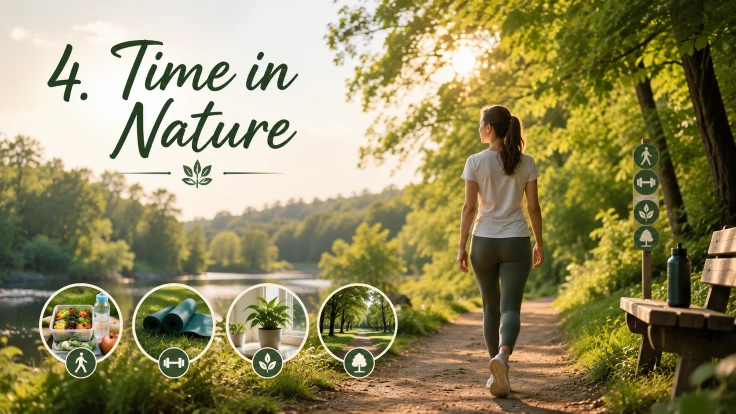
Fresh air is a great stress reliever, and one that’s often forgotten. Whether it’s a walk through a park, a hike on a nearby trail or a few quiet minutes in your backyard, there are other ways to get good mood and relieve tension, which are not related to scrolling through your phone. This is known as “green exercise” in some studies, and the combination of activities in the natural environment has been found to be more effective than either alone.
How to build it in:
- Take a bite of lunch while taking a walk outside instead of lunch at the desk.
- Swap one workout per week for an alternative on the outside.
- When it’s not always possible to get outside, stand near the window or enjoy a few minutes with some house plants for a smaller version of the same.
- Head out on a different hike or to a new park, so it doesn’t get old.
Take it easy: There’s more to getting fresh air than pushing the boundaries — a brisk daily stroll can have a greater impact on stress levels than a longer one every few weeks.
5. Calming Music
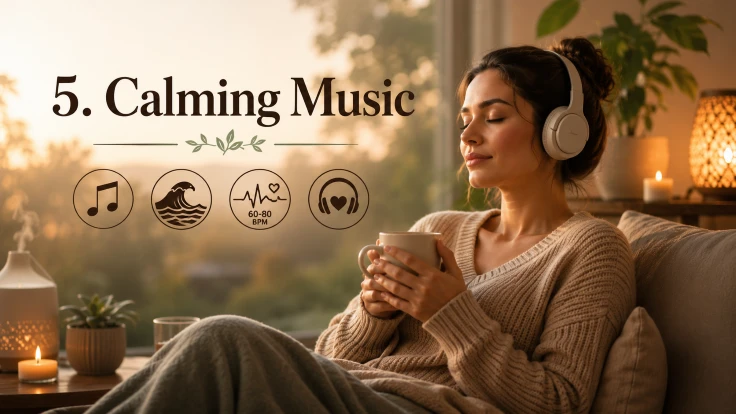
There is a direct connection between sound and emotion and sound and body. Lower-pitched, quieter and calming melodies can help to calm a frenzied, hectic mind and relax strained muscles – and this is why many spas and meditation programs rely not only on silence, but on carefully selected music.
Make a relaxing music playlist:
- Try to focus on instrumental music, like classical, jazz or ambient, because there will be no words distracting you.
- Include nature noises such as rain, ocean waves, etc. to use as a sleep ritual.
- Try to maintain a heart rate of 60–80 beats per minute, near a resting heart rate.
- Save your Playlist somewhere convenient, it will be available when you need it.
Fit it in: Play it quietly in the background when you’re stuck in traffic on your commute, in the middle of a hectic afternoon at the office or while you’re in the midst of cooking dinner after a long day.
Comparing the 5 Techniques
To conclude, let’s take a quick look at the 5 techniques and compare them.
| Technique | Time Needed | Best For | Difficulty |
|---|---|---|---|
| Deep Breathing | 1–3 minutes | Stressful or anxious moments | Easy |
| Meditation | 5–10 minutes | Racing thoughts, building long-term calm | Moderate |
| Progressive Muscle Relaxation | 10–15 minutes | Physical tension, sleep difficulties | Easy |
| Time in Nature | 15–30 minutes | Low mood, mental fatigue | Easy |
| Calming Music | Ongoing / background | Commuting, chores, winding down | Easy |
Quick-Reference Checklist
- Stressed out at the moment? Do some deep breathing for 2 minutes.
- Having a “spacey” mind before going to sleep? Do a 5 minute progressive muscle relaxation exercise.
- Struggling to focus? Take 2 minutes to meditate.
- Sick of being stuck in the house all day? Take a short break and go for a walk.
- Stressed about commuting to work or doing chores? Create a relaxing playlist.
Making These Habits a Habit
- Use only one technique at a time. Attempting to adopt them all at once will likely end up having the opposite effect — choose one that is easiest and then work on that.
- Make it part of a routine you have. The trick is to incorporate the habit into a routine, whether it’s filling your morning coffee, sitting down to relax at night or anything else.
- Allow it to be a few weeks. Often relaxation techniques feel clumsy the first time done, and can be more effective the more they are practiced — do not judge the technique on first use.
- Observe and record moods, broadly. If you make a note in your mind or a note in a journal, you’ll be able to identify which techniques are working for you.
Conclusion
So, there’s no one magical solution to relaxation and de-stressing; it’s about creating a little tool kit that is personally and uniquely yours that you can fall back on as needed. You could find that deep breathing techniques help during a stressful session, a nature walk in the middle of a busy day is just what you need. The ultimate aim is not perfection, but having a few dependable choices to find when stress arises and it will.
Do not do too much, too soon, and allow these tactics to win over and be internalized as habits instead of just a one-off experiment. Even after just a few minutes a day of purposeful relaxation, you will see a difference in your mood, concentration and general sense of calm.
FAQs
Q1. How long does it take for these techniques to help lessen your stress?
There are some people who will experience some improvement after the first few sessions, particularly with deep breathing, but this is the case for most people — the improvements become more noticeable over a few consistent weeks rather than overnight.
Q2. Do you have to use only one technique each day?
Yes, and some people have found that they can use more than one technique at a time with no problems — deep breathing before answering a stressful call, calming music while driving, and meditation before going to sleep.
Q3. But, if meditation seems like a struggle or an uncomfortable experience at first, what?
It’s normal and there is nothing wrong with you. It’s easier to approach if you try practicing for a shorter amount of time, do a guided recording, or just practice breathing for the time being without any other intention.
Q4. Do such methods work for workplace stress as opposed to home stress?
Yes — these are general tools and can be used in any and every situation, although some tools may be more suitable to some of the situations, such as a nature walk on a weekend, as opposed to breathing exercises during a busy workday.
Q5. When does stress need to be dealt with professionally instead?
If stress is ongoing, overwhelming or impacting daily life, relationships or sleep despite self-help and support and, as a last resort, consider contacting a healthcare provider or licensed therapist for more help.