

Introduction
Last night you didn’t eat pizza, drank your water, and still woke up with a new breakout. Sound familiar? Skin does not change because of what you eat for just one day. Your overall habits, including your diet and skin care routine, matter more over time. If that is the case, a checklist can be more useful than a strict diet plan because it gives you simple steps that you can easily follow and maintain.
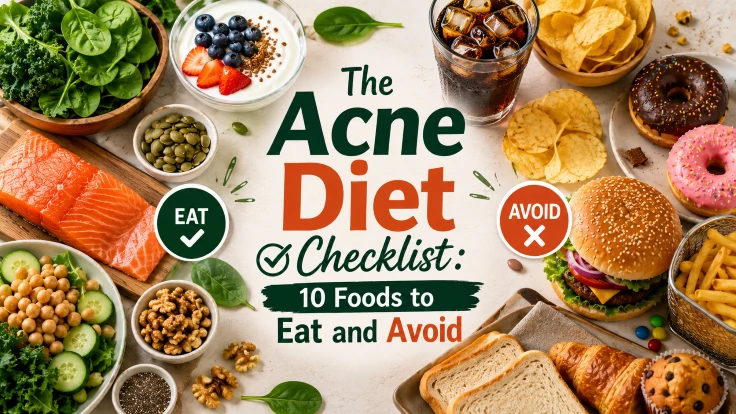
If you have ever found yourself wondering which foods may support clearer skin and which ones you should limit, you are not alone. This acne diet checklist is broken down into two easy lists: five foods you should consume more often and five foods you may want to limit. It is not a rule book or a strict diet plan. Instead, it is a simple reference guide for making practical food choices.
When looking for information about foods to eat and avoid for acne, you can quickly get lost in a sea of conflicting advice. Some people recommend avoiding dairy completely, while others say sugar is the main culprit. Some even suggest that food has nothing to do with acne. The reality is somewhere in between. Diet is not a guaranteed cure for acne, but certain eating habits may influence acne for some people. This checklist is designed to help you make balanced, informed choices that you can maintain over time.
How This Acne Diet Checklist Works?
This list consists of 2 very manageable parts – 5 foods to hold onto, 5 foods to monitor. Do not have to adhere to all the points exactly. Skin is not a one meal reaction. Consider this more a compass than rules, a direction to guide your choices of what to do every day that will help you achieve clearer skin.
Each person’s triggers are slightly different, as well. Some people may experience flares-up in their skin, while others may not. This checklist is provided as a starting point and is not a guarantee because there are so many factors other than diet that interact with genetics, hormones, levels of stress and sleep getting. Use it to create good habits for everyday living, listen to how your body responds and adapt accordingly.
If you’re just starting to consider food and skin as one, don’t try to make too many changes at once. A gradual, one at a time strategy is likely to be much more sustainable – and less likely to be abandoned – than a wholesale overhaul.
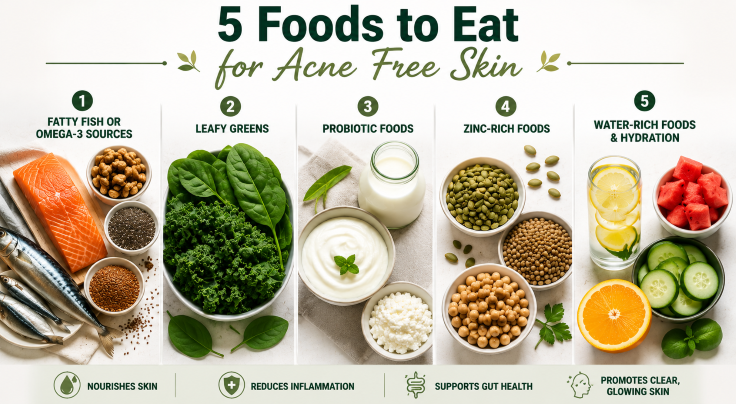
The 5 foods that can help you get clearer skin.
1. Fatty Fish or Omega-3 Sources (Flaxseed).
Salmon, mackerel and sardines contain a type of fat that helps to soothe inflammation all over the body, including the skin. If you aren’t a fan of fish, then you can try chia seeds, flaxseed or walnuts, which are alternatives that also have a similar plant-based effect, but it may not be as strong as fish. Two servings per week is sufficient: For example, have salmon for dinner one or two times weekly instead of the other meals of the day or add a spoonful of ground flaxseed to your morning porridge.
2. Leafy Greens
Dark greens like spinach, kale and other green vegetables contain an abundance of vitamins and plant compounds that help the body repair its skin naturally. They’re also low in refined carbohydrates that can cause a rapid rise in blood sugar levels making them an easy ‘go-to’ low risk food. Add a handful to your morning smoothie or make lunch without thinking of the garnish – even a few small portions can add up.
3. Probiotic Foods
Fermented foods, such as yogurt, kefir and others, contain good bacteria that can help maintain a balanced gut and potentially improve gut health, which relates to skin health. The exact degree of the gut-skin connection remains unknown, but initial studies are encouraging and it’s something you should incorporate into your routine. Find plain and unsweetened versions – added sugar may have a downside. It’s easy to establish the habit of having a small bowl of breakfast each day.
4. Zinc-Rich Foods
Pumpkin Seeds, Lentils and Chickpeas are all a source of zinc, which is associated with reduced inflammation and wound healing. They also provide fiber and protein, helping to maintain a stable blood sugar throughout the day, which helps prevent blood sugar highs that can trigger acne. Add pumpkin seeds to a salad or substitute lentils for meat a few nights a week (or more) for a quick and easy, satisfying alternative.
5. Water-Rich Foods And Fluids:
Along with a daily intake of water, cucumbers, watermelon and citrus fruits are rich in water which also promotes all skin functions. Keeping hydrated is not going to cure that acne but it will eliminate one more factor that is in your case. One of the easiest things to incorporate into this whole acne diet list is to have a bottle of water handy, snack on the fruits that contain water throughout the day, and keep on topping it off all day long, not until you are thirsty.
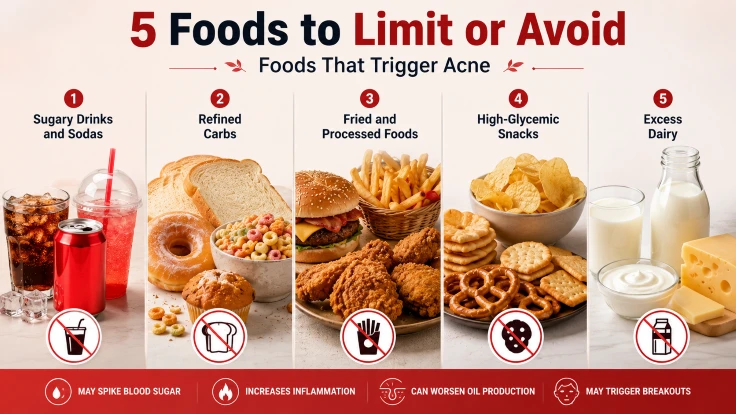
The 5 Foods To Limit Or Avoid Are:
1. Sugar sweetened beverages and sodas.
They provide instant sugar high, and very little else. This sudden influx of glucose into the bloodstream stimulates an increase in insulin that may cause your skin’s oil glands to overdue thus aggravating inflammation concurrently. Consider swapping your regular soda for clear water and a few drops of fruit juice to make it fizzy and taste great, or unsweetened iced tea for something with a little more flavour.
2. Refined Carbs
Sweets like white bread, pastries and sugary cereals are quickly converted into sugar as soon as they are digested, which leads to the same kind of blood sugar swing as sugary drinks. But, eating whole grains—brown rice, whole-wheat bread, oats—as alternatives slows this process down significantly, as the added fiber alters the absorption rate of the sugar in your body. It may be a small change, but one that will make a difference over the course of weeks, if you’re paying attention.
3. Fats and Fried Foods
Fried and processed foods are usually rich in unhealthy fats and sodium, which can trigger inflammation in the body. They are also typically low in the fibre and nutrients that the skin needs to repair itself and they displace the better options. An easy middle ground is to bake or air fry, rather than deep fry, to maintain all the flavor without the same drawbacks.
4. High-Glycemic Snacks
Because the refined flour is rapidly digested, it can cause blood sugar levels to rise quickly, just as sugary beverages do, and these types of fast foods, such as chips and crackers, make it worse. Having a snack and a little protein or fat (crackers with hummus, rather than crackers alone, for instance) reduces the initial surge in blood sugar dramatically and makes the snack last longer. All of this helps to regulate your blood sugar levels throughout the day, which is the key objective behind the “limit” items of this acne diet checklist.
5. Excess Dairy
Sometimes there are more pimples when people consume large amounts of dairy products, especially skim milk, and that could be due to natural hormones found in milk. This doesn’t mean that dairy should be avoided by all people — reactions differ from person-to-person, and many will consume dairy items regularly without any apparent impact on their skin. If you think it could be a problem, test it for a few weeks and see how your skin looks, then make the decision of whether or not it’s worth it.
NOTE:- The honest truth: it’s not necessary to master 10 of these all in one. It’s okay if you just replace the soda with water just this week, better skin is made over time, not in a single day.
Quick-Reference Checklist
Eat More Of:
- Omega 3 from fatty fish or from plants
- Leafy greens
- Probiotic food (yogurt, kefir)
- Foods high in zinc (pumpkin seeds, lentils)
- Stay hydrated and eat foods that contain lots of water.
Limit or Avoid:
- Sugary drinks and sodas,
- Refined Carbs
- Cooked and prepared food items
- High-glycemic snacks
- Too much dairy products (if noticed any personal connection)
Tip: Take a photo of this and save it to your phone for your next shopping trip.
Using This Checklist Daily
Start small. Choose one food to eat more and one food to limit, and concentrate on these two foods for a week or two, before introducing additional foods. The key to changing the diet is not to make radical overnight adjustments, but to make subtle changes that will last longer.
Just make a simple note of what you eat and how your skin looks for the coming few days. Patterns will take time, not a day or two, so don’t be hasty in judging results after the first day. Taking a quick photo every few days, in similar lighting, is much easier to determine if there are real changes than trying to figure it out by looking in the mirror one morning.
It also helps you to find the right balance with your current lifestyle instead of going against it. If mornings are hectic, try to make changes during lunch and dinner. If you have to eat out, try to find things that are on the “eat more” side of the list instead of trying to avoid eating out. The aim of this acne diet checklist is to fit into your life, not to ask you to change your life.
Lastly, view this as a guideline, and not a scorecard. One or two ice licks or pastry snacks isn’t going to break a long period of good habits, it’s the habit you form the majority of the time that’s important.
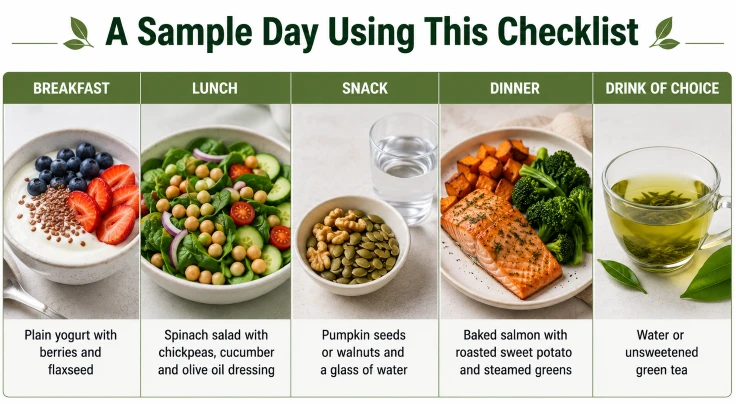
A Sample day using this checklist.
When you see the checklist in action, it’s easier to envision than just a list. One possible day’s schedule is as follows:
- Snack: Plain yogurt with few berries and a spoonful of flaxseed
- Lunch: Spinach salad with chickpeas, cucumber and a light olive oil dressing
- Snack: Small handful of pumpkin seeds or walnuts and a glass of water
- For dinner, we’ll be eating baked salmon, roasted sweet potato and steamed greens.
- Drink of choice: Water or unsweetened green tea (no soft drinks)
No special ingredients or advanced cooking is needed here. Use whatever is realistic for your week, it’s not a day in the week that has to be “perfect”, it’s just a pattern that you can follow.
If This Approach is Working, There Will Be Signs to Look For:-
Food and skin changes are usually subtle, so it is important to be aware of what to look for and not just expect a quick overnight transformation:
- There have been fewer spots that are breaking out week to week, although some of the ones that are poking through are still healing.
- Drier skin during the day than in the past
- Redness and pimples that don’t feel quite as red and painful, if at all.
- An even skin tone over a period of a few weeks)
- Less responsive to occasional rewards than previously
Wait four to eight weeks before making judgements. Skin turns over slowly and it is one of the most common things that people do which is to stop them from doing something that had begun to work for them because of the results that they see.
When Diet Isn’t Enough
I’m not going to sugarcoat it, food is only one factor, and there are many others that can affect acne. Hormonal changes, genetics, certain medications and skin conditions that are not related to diet can all contribute to breakouts that may not improve through dietary changes alone. Along with a balanced diet, exploring simple Beauty Remedies and maintaining a consistent skincare routine may help support healthier-looking skin. If your skin has not improved after following a healthy routine for two months or more, or if you have painful, cystic acne or scarring, it is best to consult a dermatologist for professional guidance.
After two months or more of following a routine similar to this, and if your skin still hasn’t improved, it’s a good sign that the diet changes are too much for it, and it’s time to call in a dermatologist. The same applies to acne that is painful, cystic or causes scarring; this type normally requires more than making dietary adjustments. Although food can help to improve skin clarity, it’s not a replacement for professional skin care when it’s necessary.
Conclusion
This acne diet checklist is essentially a simple swap: make a slight shift in your diet towards foods that support healthier skin, while reducing your intake of foods that may work against your skin. Exploring the best foods for acne-prone skin can help you make better choices without following a strict diet. There are no rules about eating everything or being perfect. These are simply practical tips to start with, and you can adjust them based on what works best for you.
Eating is just one small part of the overall picture. Hormones, stress, sleep and your skincare routine can also play a role, so do not expect a miracle from dietary changes alone. Instead, focus on making small, consistent changes and give your body time to respond.
Why not begin with your next supermarket trip? Choose one food item from each of the two lists in this checklist and gradually build healthier habits from there.
FAQs
Q1. Should I eliminate all of the foods listed in the "limit" column?
No. These are foods that you should be aware of, rather than foods that you have to avoid. Many people can use them without any issues for a week here and there without a problem and if they are completely prohibited, it is more difficult to maintain.
Q2. Does giving treats from time to time cancel out my efforts?
Generally, no. Just one dish of dessert or a soft drink won’t trigger an acne outbreak. It’s more important that the overall picture of your diet most of the time, as long as there are a few treats thrown in, it’s easy to fit into a healthy acne diet checklist.
Q3. How can I determine which foods are my own trigger foods?
Eliminate one of the suspected foods for 2 to 3 weeks and then add back the food and closely monitor for the next few days to see if there are any reactions. This is easier to keep track of than relying on your memory only, even if it’s only a few notes on your phone.
Q4. Would this checklist be appropriate for teens suffering from acne?
Absolutely, the basic concepts are the same, though teens may have more hormonal issues to contend with, which diets alone may not cover. As long as it is another good place to start with other care, and the work done to develop these habits early on could be of benefit to a health that is more than just skin deep.
Q5. Can this checklist be used in conjunction with a skin care regimen?
Yes — diet and skin care are not mutually exclusive; diet and skin care go hand in hand. It’s important to understand that both consistent eating patterns and gentle skin care routines will complement each other over time and yield the most dramatic results over time.
This article is for awareness of health and skin care purposes only. This is not medical advice. For diagnosis and treatment of Acne, please see a qualified dermatologist.