

Introduction
Anyone who’s broken out after a weekend of pizza and soda has probably wondered about the link between diet and acne. It’s one of the most debated topics in skincare — some people swear that cutting sugar cleared their skin, while others change their diet completely and see no difference at all.
For years, doctors mostly dismissed any connection between food and acne. The research since then paints a more nuanced picture: diet isn’t the sole cause of breakouts, but for some people, it’s a real contributing factor.
This guide walks through what the research actually says — which foods tend to trigger acne, which ones may help calm it, and how to make small, sustainable changes without falling into extreme “detox” territory.
Does Diet Really Affect Acne?
The short answer is yes—for many people.
Acne develops when hair follicles become clogged with excess oil (sebum), dead skin cells, and bacteria. While food doesn’t clog pores directly, your diet can influence the internal conditions that make acne worse.
Several studies suggest that diets high in refined carbohydrates and added sugars increase insulin levels. Elevated insulin stimulates hormones known as IGF-1 (Insulin-like Growth Factor-1), which encourages the skin to produce more oil. More oil and inflammation create an environment where acne-causing bacteria thrive.
At the same time, diets lacking essential nutrients like zinc, omega-3 fatty acids, vitamins A and E, and antioxidants may reduce your skin’s ability to repair itself and control inflammation.
What Causes Acne?
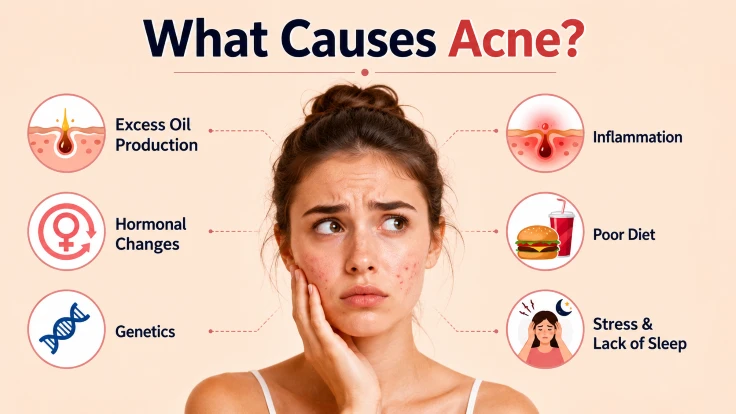
Before changing your diet, it’s important to understand that acne is influenced by multiple factors.
1. Excess Oil Production
Overactive sebaceous glands produce excess oil that blocks pores.
2. Hormonal Changes
Hormonal fluctuations during puberty, menstruation, pregnancy, or stress can increase oil production.
3. Genetics
If acne runs in your family, you’re more likely to experience it as well.
4. Inflammation
Inflammation plays a significant role in acne severity. A poor diet can increase inflammatory responses throughout the body.
5. Poor Diet
Although food isn’t the root cause of acne, diets high in processed foods, sugary drinks, and refined carbohydrates can worsen breakouts in susceptible individuals.
6. Stress and Lack of Sleep
Chronic stress raises cortisol levels, while poor sleep affects hormone balance and skin repair, both of which can contribute to acne.
Foods That Could Be Triggering Your Acne
No single food causes acne in everyone, but a few come up again and again as common triggers:
- High-glycemic foods: White bread, white rice, sugary cereals, and pastries — these cause fast blood sugar spikes that can ramp up oil production.
- Sugar-sweetened drinks: Sodas and similar drinks add refined sugar with little nutritional benefit.
- Milk, especially skim milk: Some studies link dairy to acne, possibly due to naturally occurring hormones in milk.
- Fried foods: Often high in sodium and unhealthy fats, which can contribute to inflammation.
- Whey protein: Not everyone reacts to it, but some people report more breakouts when using whey protein powders.
None of this means you need to cut these foods out entirely — it’s more about awareness than strict avoidance.
Why Your Sweet Tooth May Be Showing on Your Face
Sugar and acne are closely linked, and it’s not for lack of reason. Foods with a high refined sugar content cause a spike in blood glucose and trigger a rush of insulin.
All that insulin doesn’t just impact how you feel. It can also stimulate the oil glands in your skin to make more oil, which can aggravate acne, and can make inflammation worse in your body, which can cause acne to thrive.
This is not to imply that sugar equals acne, or that one dessert will lead to an acne breakout in a single night! Typically, it is the regular consumption of beverages with high sugar content, such as soda, pastries, candy and sweetened beverages, that is problematic. It is likely that gradations of reducing sugar intake, rather than total elimination, are a more sustainable method.
What About Chocolate?
The idea that chocolate causes acne has largely been debunked. There isn’t much research linking plain cocoa itself to breakouts — the usual culprit is the sugar and milk that chocolate is typically mixed with, not the cocoa. If you love chocolate, look for a higher cocoa percentage with less added sugar.
Your Gut, Your Skin: The Surprising Connection
Most people don’t know just how connected your gut is with your skin. Your gut contains trillions of bacteria which help maintain balance of inflammation inside your body, including on your skin.
An imbalance of the bacterial flora in the gut can lead to an overall increase in the inflammatory response that can manifest as acne, redness, or irritated skin. This is referred to as the “gut-skin connection,” and this is a rapidly emerging field of study.
The upshot: supporting your gut health through diet may indirectly support clearer skin.
Foods That May Help Improve Acne-Prone Skin
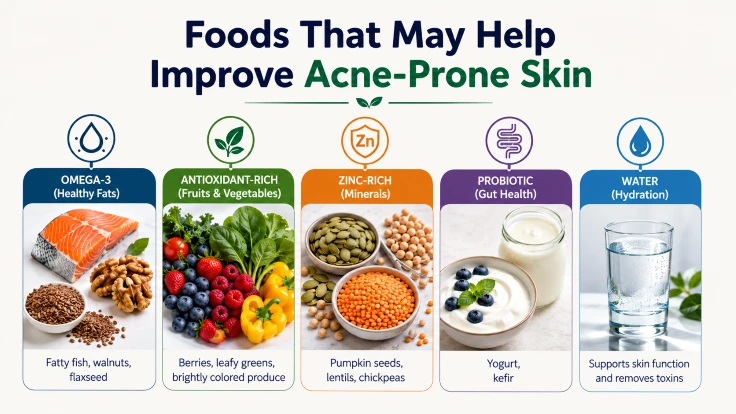
Similar to any other food, a few can make acne worse, while others can help soothe inflammation and promote healthier skin.
- Omega-3-rich foods: Fatty fish, walnuts, and flaxseed provide healthy fats that may help lower inflammation.
- Antioxidant-rich fruits and vegetables: Berries, leafy greens, and brightly colored produce help reduce oxidative stress.
- Zinc-rich foods: Pumpkin seeds, lentils, and chickpeas are linked to skin healing and reduced inflammation.
- Probiotic foods: Yogurt and kefir contain beneficial bacteria that may help balance gut flora.
- Water: Proper hydration supports your skin’s ability to function well and clear out toxins.
10 Skin-Friendly Foods to Add to Your Grocery Cart
For the next time you are shopping, here’s a simple list to have on hand:
- Fatty fish, such as salmon
- Walnuts
- Flaxseeds
- Leafy greens, such as spinach
- Blueberries
- Pumpkin seeds
- Chickpeas or lentils
- Plain yogurt
- Sweet potatoes
- Green tea
7-Day Acne-Friendly Meal Plan
| Day | Breakfast | Lunch | Dinner | Snack |
|---|---|---|---|---|
| Monday | Oatmeal with berries | Grilled chicken salad | Salmon with broccoli | Walnuts |
| Tuesday | Greek yogurt and chia seeds | Lentil soup | Brown rice with vegetables | Apple |
| Wednesday | Vegetable omelet | Chickpea salad | Grilled fish | Pumpkin seeds |
| Thursday | Smoothie with spinach | Quinoa bowl | Stir-fried vegetables | Mixed berries |
| Friday | Whole-grain toast with avocado | Brown rice and beans | Baked chicken | Almonds |
| Saturday | Oats with flaxseeds | Vegetable wrap | Grilled salmon | Yogurt |
| Sunday | Fruit and nuts | Mixed vegetable salad | Lentil curry with brown rice | Green tea |
Having some of these on hand helps to make it easier to put together meals that won’t aggravate acne without much additional preparation.
Drinks to Avoid During a Breakout
It’s easy to make small changes with drinks because many of them are loaded with sugar without you even realising it.
- Soda and other sugary sodas
- Caffeinated coffee lattes and flavored coffee drinks
- Energy drinks
- Fruit juices sweetened with sugar
- Sugar sweetened alcoholic beverages
Drinking just one of these drinks in place of water or unsweetened tea is not a big deal, if you do it most days of the week.
Clear Skin Quick Meal Ideas (No Cooking Skills Required)
If you don’t want to follow a rigid plan, keep a mental shortlist of simple, repeatable meals instead. Mix and match:
- Breakfast: Greek yogurt topped with berries and a sprinkle of flaxseed.
- Lunch: Chicken or chickpea salad with olive oil dressing, or a chicken salad on whole-grain bread with a side of fresh vegetables.
- Dinner: Roasted sweet potato with salmon, sautéed spinach on whole-grain toast, or a simple lentil soup with a side salad.
- Snacks: A handful of walnuts or pumpkin seeds, or fresh vegetables with hummus.
All of these come together in minutes, with no advanced cooking skills needed — built for a busy weekday, not a weekend project
An Acne-Friendly Daily Routine
- Morning: Start with water, then a protein- and fiber-rich breakfast — eggs and vegetables, or oats with fruit.
- Mid-morning: A handful of nuts or a piece of fruit instead of a sugary snack.
- Lunch: A balanced plate with vegetables, whole grains, and lean protein.
- Afternoon: Water or unsweetened tea, plus a small snack if needed.
- Evening: A light dinner a few hours before bed — vegetables and protein, and skip the late-night sugary snacks.
The Wrong Way and the Right Way
Mistake: Not eating breakfast and later binging on processed snacks.
Correct Approach: Consuming balanced meals containing fibre, protein and good fats to maintain normal blood sugar levels.
Everyday Habits That Can Make Acne Worse
A few common patterns tend to work against clear skin:
- Skipping breakfast, then reaching for processed snacks later: leads to blood sugar swings that can increase oil production.
- Too much sugar and refined carbs: causes frequent blood sugar spikes.
- Not drinking enough water: affects your skin’s overall balance and function.
- Relying on processed and fast food: these tend to be low in the fiber and nutrients your skin needs.
- Ignoring gut health: an imbalanced gut can contribute to inflammation that shows up on your skin.
Tips for Improving Skin Health With Diet
Small, consistent changes tend to stick better than one big overhaul:
- Swap sugary drinks for water or unsweetened tea
- Add a portion of fatty fish or walnuts a few times a week for omega-3s
- Choose whole grains over refined white bread and rice where you can
- Include a probiotic food daily, like yogurt
- Keep a water bottle with you as a simple reminder to hydrate
- Try cutting back on dairy and sugar and see how your skin responds
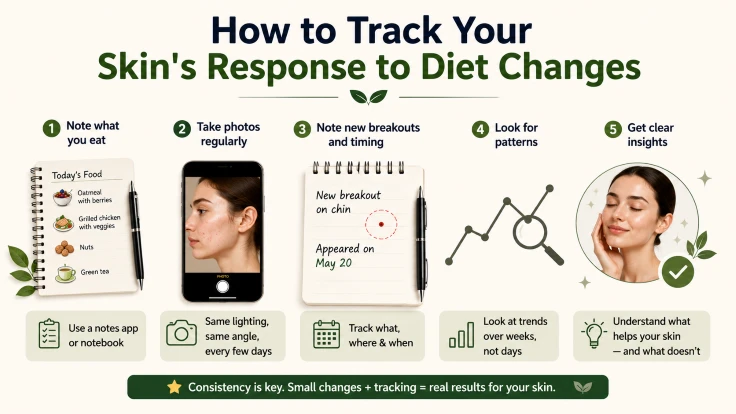
How to Track Your Skin’s Response to Diet Changes
Skin is individual, so it’s worth tracking rather than guessing:
- Note down what you eat in a notes app or small notebook
- Take a photo of your skin every few days in the same lighting, so you can compare over time
- Note any new breakouts and roughly when they appeared
- After a few weeks, look for patterns — not conclusions from a single day
This simple habit gives you a much clearer picture of what, if anything, is actually affecting your skin.
Hormonal Acne vs. Diet-Related Acne
Sometimes it’s hard to distinguish these two:
- Hormonal acne is typically around the jawline and chin, can be deeper or cystic and may get worse during your period.
- Diet-related acne usually occurs after consumption of large amounts of sugar and processed foods, and is not so predictable in terms of its location.
A lot of people suffer from both. It is best to consult with a dermatologist in order to determine what your breakouts are being caused by.
Although diet is part of the equation, there are other factors like hormones, genetics, stress, sleep and skincare products that contribute to the problem. If it’s not improved with diet or the acne is extreme or resistant, it’s advisable to talk to a dermatologist for a correct diagnosis and treatment plan.
What Dermatologists Say
There is general consensus among dermatologists that a link exists between food and acne; however, they are cautious to say that it is not the primary cause. Foods that are typically marked are dairy products and high-glycemic foods; however, the sensitivity of each person to these foods is different. An elimination diet is not always successful and a gradual, trial and error approach is better. According to the American Academy of Dermatology, emerging research suggests that low-glycemic diets may help reduce the amount of acne some people experience.
Common Myths About Diet and Acne
Myth: Greasy or fried foods directly cause acne
Truth: Most people, not to mention sugar and refined carbs, have more of an impact than fat.
Myth: Avoiding a food group will clear your skin
Truth: Well-rounded, consistent habits usually prove to be of more help than any single change in eating.
Myth: Skin condition is directly related to diet alone
Truth: Diet is a part of many factors – it can help reduce symptoms but is not the sole cure.
Myth: The more water you drink, the clearer your skin will be
Truth: Water is important for maintaining overall healthy skin, but it isn’t a magic bullet.
Conclusion
When it comes to acne and diet there is no definitive list to steer clear of or list of foods to eat. For some, certain foods can cause acne, while certain foods that are high in omega-3s, antioxidants, zinc, and probiotics, can actually help to improve the health of their skin.
A balanced strategy is the best approach: Make gradual changes, observe the reactions of your skin, and keep in mind that diet is only one of many factors that can impact the health of your skin, including hormones, stress, sleep and skin care. When you’ve tried everything and breakout still occurs, a dermatologist can help you determine the truth behind your breakouts.
FAQs
Q1. If I get acne what are the best fruits to eat?
Berries, oranges, kiwi and papaya have a high concentration of antioxidants and vitamin C, all of which help to keep the skin healthy, prevent cell damage from oxidative stress and boost collagen production.
Q2. Is stress a trigger of acne?
Yes. Stress increases cortisol, leading to inflammation and oil production, causing new acne or exacerbating current acne. This can be diminished with exercise, meditation, proper sleep and relaxation.
Q3. Do eggs contribute to the development of acne?
At this present moment, most people can’t find any research to support the direct link between eggs and acne. If you think that eggs may be an individual trigger, discuss any big dietary changes with a health care provider.
Q4. If a person suffers from acne, how many times a day should he wash his face?
The majority of dermatologists advise washing your face twice daily with a mild cleanser. Natural oils are stripped away with over washing and can cause irritation, aggravating acne. Wash after profuse sweating.
Q5. Can vitamin deficiencies be linked to acne?
The low intakes of zinc, vitamin A, vitamin D and omega-3s may have a detrimental impact on skin health, according to some research. There are, however, various causes for acne and any supplements should be discussed with a health care professional.
Note: The information provided in this article is for general information only and should not be considered a recommendation or a substitute for professional medical or dermatological advice. Please see a dermatologist if acne does not go away and/or is severe.