Daily Approach
1. What to Eat
- Include more fruits and vegetables
- Add protein like eggs, dal, paneer
- Eat whole grains instead of refined foods
- Avoid excessive junk and processed food
2. When to Eat
- Avoid Late-Night Snacking: Try to finish your last meal at least 2–3 hours before bed. This gives your body time to digest before it goes into “repair mode” during sleep.
- Consistent Meal Times: Eating at similar times every day helps regulate your hunger hormones.
3. Hydration Habits
Water is your best friend in this journey. Often, our brains confuse thirst with hunger. Before grabbing a snack, drink a glass of water and wait 10 minutes—you might find the “hunger” disappears!
Example Daily Routine
Morning
- Wake up and drink warm water
- Light exercise or walking
- Healthy breakfast (oats, fruits, eggs)
Afternoon
- Balanced lunch (roti, vegetables, protein)
- Drink water regularly
Evening
- Light snacks (fruits, nuts)
- Short walk or activity
Night
- Early, light dinner
- Avoid heavy or oily food
Mistake vs Correct Approach
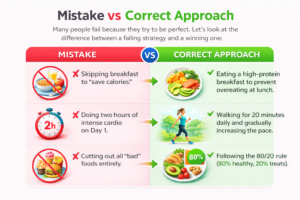
Many people fail because they try to be perfect. Let’s look at the difference between a failing strategy and a winning one:
- Mistake: Skipping breakfast to “save calories.”
- Correct: Eating a high-protein breakfast to prevent overeating at lunch.
- Mistake: Doing two hours of intense cardio on Day 1.
- Correct: Walking for 20 minutes daily and gradually increasing the pace.
- Mistake: Cutting out all “bad” foods entirely.
- Correct: Following the 80/20 rule (80% healthy, 20% treats).
Common Weight Loss Mistakes
Many people unknowingly slow down their progress. Avoid these mistakes:
1. Crash Dieting
Eating very little might give quick results, but it’s not sustainable and harms your body.
2. Skipping Meals
This leads to a “starvation” mindset. When you finally do eat, you are much more likely to choose junk food and eat too much of it.
3.Drinking Your Calories
Sodas, sweetened coffees, and energy drinks are hidden sources of sugar that don’t make you feel full but add hundreds of calories to your day.
4. Lack of Consistency
Doing everything right for two days and then “giving up” on the weekend. Success comes from what you do most of the time, not some of the time.
5. No Physical Activity
Without movement, weight loss becomes difficult.
Practical Tips for Effective Weight Loss
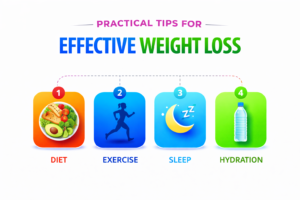
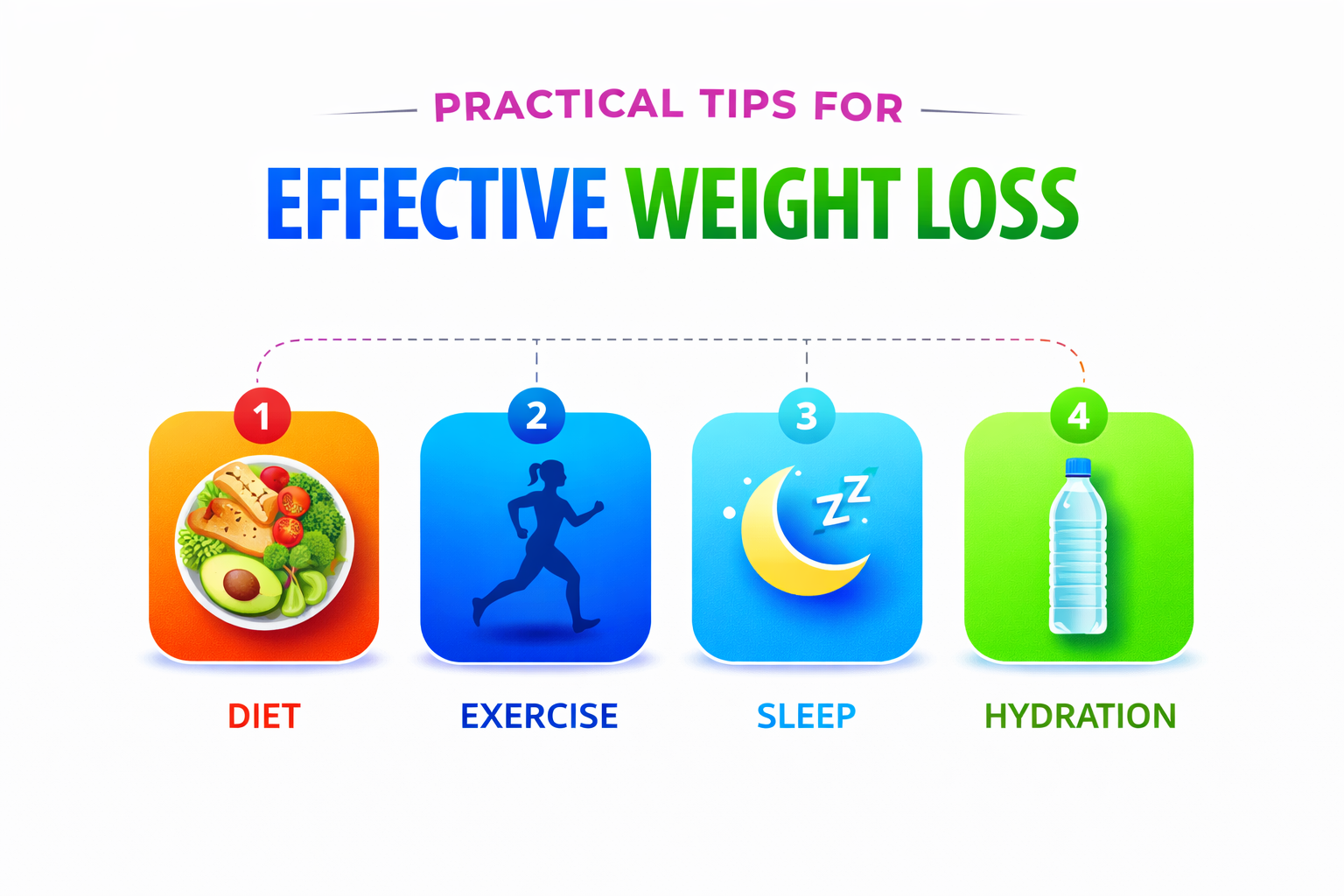
Here are simple tips you can follow easily:
1. Eat More Fiber
Fiber keeps you full for longer and helps control hunger.
2. Add Protein to Meals
Protein helps in muscle building and keeps you satisfied.
3. Drink Enough Water
Water improves digestion and supports weight loss.
4. Reduce Sugar Intake
Avoid sugary drinks, sweets, and packaged snacks.
5. Stay Active Daily
You don’t need a gym—walking, stretching, or light exercise is enough.
6. Sleep Well
Lack of sleep can affect your weight.
7. Follow Healthy Eating Habits
Plan your meals and avoid random eating.
Simple Weight Loss Plan
Ready to start? Don’t try to change everything at once. Use this habit-based plan to ease into your new lifestyle.
Weekly Habit Plan (The “Small Wins” Strategy)
- Day 1–3: Improve Water Intake Focus only on drinking water. Replace one soda or sugary juice with a glass of water. Carry a reusable bottle with you everywhere.
- Day 4–5: Add Healthy Meals Focus on your plate. Make sure at least two of your meals today have a portion of vegetables the size of your fist and a portion of protein.
- Day 6–7: Include Physical Activity Add movement. Go for a 20-minute walk after dinner. Park your car further away from the store. Take the stairs
The Never Miss Twice Rule
If you have a bad day and eat a big slice of cake or skip your walk, don’t worry! The secret to long-term weight loss isn’t being perfect; it’s getting back on track immediately. If you miss a healthy meal, make the next one healthy. Never miss twice.
Conclusion
In summary, achieving permanent weight loss isn’t about finding a “secret” diet or a miracle pill. It is about the power of small, daily decisions. By choosing whole foods over processed ones, water over soda, and movement over sitting, you are building a new version of yourself.
Remember, this is a marathon, not a sprint. Be patient with yourself, celebrate your small victories, and stay consistent. You didn’t gain the weight overnight, and it won’t leave overnight—but with these habits, it will leave for good. Start today by drinking one extra glass of water or taking a short walk. You’ve got this!