

Introduction
Foods for Healthy Hair and Skin can provide important nutrients such as vitamins, minerals, protein, healthy fats, and antioxidants that support overall nutrition. Hair and skin are influenced by your overall diet, so eating a variety of nutrient-rich foods is a practical part of maintaining general health. While no single food can guarantee healthy-looking hair or skin, a balanced eating pattern can help provide the nutrients your body needs for normal growth and maintenance. For more practical ideas about nutrition and healthy food, explore our guide to making nutritious food choices.
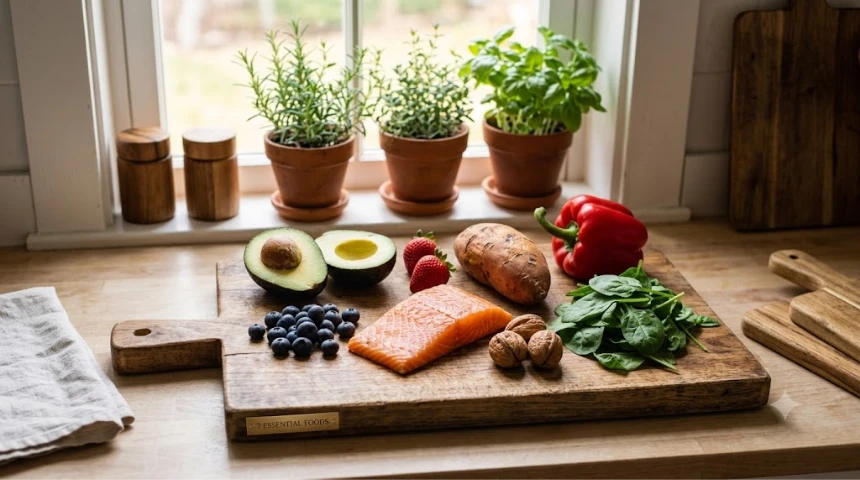
Your daily meals do not need to be complicated. Simple foods such as eggs, fatty fish, berries, leafy greens, nuts, seeds, and sweet potatoes can provide a range of nutrients that support normal body functions. The key is variety rather than focusing on one particular “beauty food.”
This guide explains seven healthy foods for skin and hair, what nutrients they provide, and simple ways to include them in everyday meals.
Foods for Healthy Hair and Skin: How Nutrition Supports Them
Foods for healthy hair and skin can provide important nutrients such as protein, vitamins, minerals, healthy fats, and antioxidants. These nutrients support normal body functions, including tissue maintenance, cell growth, and collagen production. While no single food can guarantee healthy-looking hair or skin, eating a varied and balanced diet can help provide the nutrients your body needs.
Hair and skin require different nutrients to carry out their normal functions. Protein provides amino acids used throughout the body, while vitamins and minerals support processes such as cell maintenance and normal tissue growth. Along with a balanced diet, following practical skin care tips and useful hair care tips can help you maintain a more consistent approach to caring for your hair and skin.
The best approach is to include a variety of nutrient-rich foods in your daily meals. Fruits, vegetables, whole grains, pulses, dairy or alternatives, nuts, seeds, eggs, fish, and other protein-rich foods can each contribute different nutrients.
For example, vitamin C is involved in normal collagen production and also helps the body absorb iron from plant foods. Protein-rich foods provide amino acids, while foods containing healthy fats can add further nutritional variety to your meals. Rather than focusing on one particular food, aim to create balanced meals that include different food groups regularly.
A nutritious diet is only one part of maintaining healthy hair and skin. Factors such as genetics, age, lifestyle, hydration, environmental exposure, and personal care habits can also influence how hair and skin look and feel.
Why Does a Balanced Diet Matter?
A balanced diet is more useful than relying on individual foods or supplements. Different foods provide different nutrients, so eating a mixture of fruits, vegetables, whole grains, pulses, dairy or alternatives, nuts, seeds, and protein-rich foods can make it easier to meet nutritional needs.
For example, vitamin C is involved in collagen production and also helps the body absorb iron from plant foods. The National Institutes of Health explains that fruits and vegetables are important sources of vitamin C.
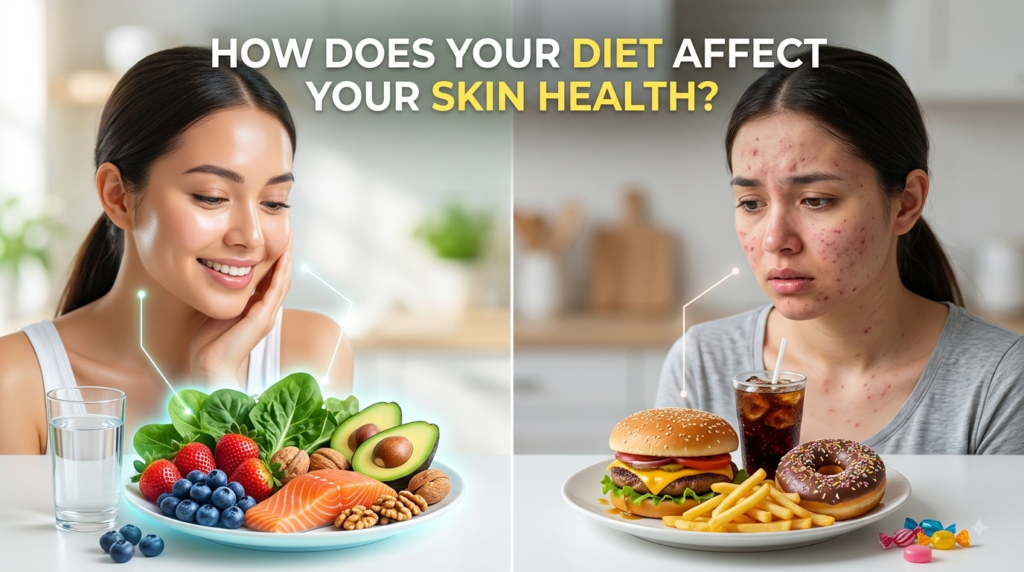
How does diet affect skin health
The relationship between nutrition and skin is influenced by the overall quality of the diet rather than one specific ingredient. Including a variety of nutrient-rich foods regularly can contribute to an adequate intake of vitamins, minerals, protein, and essential fats that support overall health. For more information about the connection between food and skin, you can also explore our guide on how diet affects skin health.
However, food alone cannot prevent every skin or hair concern. Genetics, age, hormones, lifestyle, environmental exposure, and other factors can also influence how hair and skin look and feel. A balanced diet is therefore one part of a broader approach to maintaining overall health and wellbeing.
1. Eggs Provide Protein and Important Nutrients
Eggs are among the most convenient foods for healthy hair because they provide high-quality protein along with several vitamins and minerals. Protein is particularly important because hair is primarily made of a protein called keratin.
Why can eggs be part of a balanced diet
Including adequate protein in meals helps support normal growth and tissue maintenance. Eggs also provide nutrients such as vitamin B12, selenium, and choline.
Rather than depending on eggs alone, include them as one protein option within a varied diet. People who do not eat eggs can choose alternatives such as beans, lentils, dairy products, tofu, or other protein-rich foods according to their dietary preferences.
Easy ways to add eggs to meals
Eggs can be boiled, scrambled, or added to vegetable-based dishes. Pairing eggs with vegetables and whole-grain toast can create a simple and balanced breakfast.
2. Fatty Fish Provides Omega-3 Fatty Acids
Fatty fish such as salmon, sardines, mackerel, and tuna are useful sources of protein and omega-3 fatty acids. Omega-3s are essential fats, meaning certain types must be obtained through food.
The NIH notes that fatty fish and seafood provide EPA and DHA, while plant foods such as flaxseed, chia seeds, and walnuts provide ALA.
Why are omega-3s part of healthy nutrition
Omega-3 fatty acids are components of cell membranes and have several functions throughout the body. Including food sources of these fats can therefore be part of an overall balanced eating pattern.
If you do not eat fish, plant-based sources such as chia seeds, flaxseeds, and walnuts can provide ALA. The body converts only a small amount of ALA into EPA and DHA, so these forms should not automatically be considered nutritionally identical.
Simple serving ideas
Try grilled or baked fish with vegetables and brown rice for a balanced meal. For a vegetarian option, add ground flaxseed or chia seeds to oatmeal, yoghurt, or smoothies.
3. Berries Offer Antioxidants and Vitamin C
Berries such as strawberries, blueberries, and raspberries can add colour, fibre, vitamins, and plant compounds to your diet. They are also convenient additions to breakfast or snacks.
Vitamin C for normal collagen production
Some berries, particularly strawberries, provide vitamin C. The body needs vitamin C to make collagen, a protein found in connective tissue. Vitamin C also has antioxidant functions.
For readers who want reliable information about this nutrient, the vitamin C guide from the NIH Office of Dietary Supplements explains food sources, recommended amounts, and other basic information.
How to include more berries
Add fresh or frozen berries to oatmeal, plain yoghurt, smoothies, or a fruit bowl. Choosing whole fruit also adds dietary fibre to your meals.
4. Leafy Greens Supply Vitamins and Minerals
Leafy green vegetables such as spinach, kale, mustard greens, and fenugreek leaves are nutrient-dense foods that can contribute several vitamins and minerals to the diet.
Why leafy greens are useful
Greens can provide nutrients such as folate, vitamin C, vitamin K, carotenoids, and minerals. Their nutritional profile makes them a useful part of a varied diet focused on vegetables.
Spinach and other greens can also contribute iron, although the amount absorbed by the body varies depending on the food and the overall meal.
Pair greens with vitamin C foods
Combining plant sources of iron with vitamin C-rich foods can be a useful dietary strategy because vitamin C improves absorption of non-heme iron found in plant foods.
For example, add tomatoes, lemon, bell peppers, or another vitamin C-rich food to a meal containing spinach, lentils, or beans.
5. Sweet Potatoes Provide Beta-Carotene
Sweet potatoes are a convenient source of carbohydrates, fibre, and beta-carotene. Beta-carotene is a plant pigment that the body can convert into vitamin A.
Adding colourful vegetables to your diet
Orange and yellow vegetables can make meals more varied while providing different plant nutrients. Sweet potatoes can be roasted, steamed, or added to soups and vegetable dishes.
A balanced diet should include a range of vegetables rather than relying heavily on one type. Different colours often provide different combinations of naturally occurring nutrients and plant compounds.
Simple meal combinations
Try roasted sweet potato with beans and vegetables, or add it as a side dish with eggs or another protein source. Keeping preparation simple can make nutrient-rich foods easier to include regularly.
6. Nuts and Seeds Provide Healthy Fats
Nuts and seeds are compact sources of healthy fats, protein, fibre, and several minerals. Almonds, walnuts, pumpkin seeds, sunflower seeds, chia seeds, and flaxseeds can all add nutritional variety to meals.
Nutrients found in nuts and seeds
Different varieties provide different nutrients. For example, walnuts, chia seeds, and flaxseeds contain ALA, a type of omega-3 fatty acid.
Seeds can also contribute minerals such as zinc, magnesium, and iron, depending on the type. This makes them useful additions to a balanced eating pattern.
How to use them every day?
Sprinkle seeds over yoghurt or oatmeal, add nuts to a fruit bowl, or use nut butter on whole-grain toast. Because nuts and seeds are energy-dense, moderate portions can fit easily into most balanced diets.
7. Lentils and Beans Add Protein and Iron
Lentils, chickpeas, kidney beans, black beans, and other legumes are affordable and versatile sources of plant protein, fibre, and minerals. They can be especially useful for people who prefer vegetarian or plant-based meals.
Why do iron and protein matter
Protein provides amino acids needed for normal tissue growth and maintenance. Iron is another essential mineral that the body uses to make haemoglobin, which carries oxygen through the blood.
For readers interested in understanding this nutrient in more detail, the NIH’s iron information explains food sources, recommended amounts, and factors that can affect iron intake.
Make plant-based meals more balanced
Combine lentils or beans with vegetables, whole grains, and a source of vitamin C. For example, dal with spinach and tomatoes, or chickpea salad with bell peppers and lemon, can provide a broader range of nutrients in one meal.
Building Nutrition for Healthy Skin and Hair
The best approach to nutrition for healthy skin and hair is to focus on overall dietary variety rather than searching for a single food that promises quick results.
Create balanced meals
A simple meal can include a protein source, vegetables or fruit, whole grains or another carbohydrate source, and a source of healthy fats. This approach helps create variety across the day.
For example, a breakfast could include eggs, whole-grain toast, and fruit. Lunch could include dal, vegetables, and brown rice. Dinner could include fish or beans with vegetables and whole grains.
Stay consistent with healthy food choices
Healthy eating is a long-term habit. One meal is unlikely to make a noticeable difference by itself, but regularly choosing a varied diet can help you obtain important nutrients.
GoHealthyPro provides practical nutrition information and general educational content to help readers make more informed everyday food and lifestyle choices.
Tips for Getting More Nutrients From Food
Small changes can make nutrient-rich eating easier without making meals complicated.
- Include different coloured fruits and vegetables.
- Add a protein source to each main meal.
- Include nuts or seeds in moderate portions.
- Choose whole grains more often.
- Drink enough water throughout the day.
- Vary your food choices instead of relying on one “superfood.”
- Limit highly processed foods when possible.
These habits are more sustainable when they fit your normal routine. You do not need to completely change your diet overnight. Start by adding one or two nutrient-rich foods to meals you already enjoy.
Food Choices Are Only One Part of Hair and Skin Care
Although diet is important for overall nutrition, hair and skin are affected by many factors. Sleep, hydration, physical activity, sun exposure, personal care routines, genetics, age, and environmental conditions can all play a role.
It is also important not to assume that a specific food will solve a persistent hair or skin concern. If you notice ongoing or significant changes, speaking with a qualified healthcare professional can help determine whether further evaluation is appropriate.
Conclusion
Eating a variety of food for healthy hair and skin is a practical way to support overall nutrition. Eggs can provide protein, fatty fish can provide omega-3 fatty acids, berries can contribute vitamin C, leafy greens provide several vitamins and minerals, sweet potatoes offer beta-carotene, nuts and seeds provide healthy fats, and lentils and beans contribute protein and iron.
The goal is not to find one perfect food but to build balanced meals that provide a broad range of nutrients. Regular, varied food choices combined with healthy lifestyle habits can support overall wellbeing. For personalised dietary guidance or concerns about ongoing hair or skin changes, consult a qualified healthcare professional.
GoHealthyPro provides general educational information to help readers understand practical nutrition and healthy food choices.