

Introduction
If you’re trying to achieve clearer skin, your skincare routine isn’t the only thing worth paying attention to. What you drink throughout the day may also influence how your skin behaves. Acne is affected by many factors — hormones, genetics, stress, sleep, and skincare habits — but your daily beverage choices can either support or work against your skin’s natural balance. That’s why understanding the best and worst drinks for acne-prone skin can help you make smarter, more consistent choices without following a restrictive diet.
No single drink can magically clear acne or guarantee breakouts. Everyone’s skin responds differently, so instead of chasing a “miracle” beverage, focus on building habits that support your overall wellbeing over time.
If you’re new to the connection between nutrition and skin health, start with our comprehensive guide: Acne and Diet: What to Eat, What to Avoid, and Why It Actually Matters. This guide zooms in specifically on the drinks that may benefit acne-prone skin and the ones worth limiting, plus a realistic daily routine you can actually stick to.
Why Drinks Matter More Than You Think
Food usually gets all the attention in diet-and-acne conversations. Drinks are often overlooked, even though many beverages carry large amounts of sugar, dairy, or caffeine that may influence your skin.
Hydration supports your skin’s protective barrier and countless daily body functions. It won’t cure acne on its own, but staying well hydrated helps your skin function at its best.
Sugar is the bigger mechanism worth understanding. Drinks with added sugar cause rapid blood glucose spikes, and your body responds by releasing insulin. Repeated spikes raise a related hormone, IGF-1, which pushes oil glands to produce more sebum and speeds up skin cell turnover — a combination linked to clogged pores.
Dairy is more specific than most people realize. Several studies link skim milk in particular to increased breakouts, likely because dairy’s natural hormones and proteins trigger the same insulin/IGF-1 response as sugar. This doesn’t mean everyone needs to avoid dairy — it’s worth paying attention to how your own skin responds.
On the positive side, some drinks provide antioxidants that may help. Green tea contains catechins — particularly EGCG — which have anti-inflammatory properties some research links to lower sebum production. Probiotic drinks like kefir may also support the gut-skin axis.
The takeaway: no drink single-handedly determines whether you break out, but choosing skin-friendly beverages more often than sugary ones is one more habit that adds up.
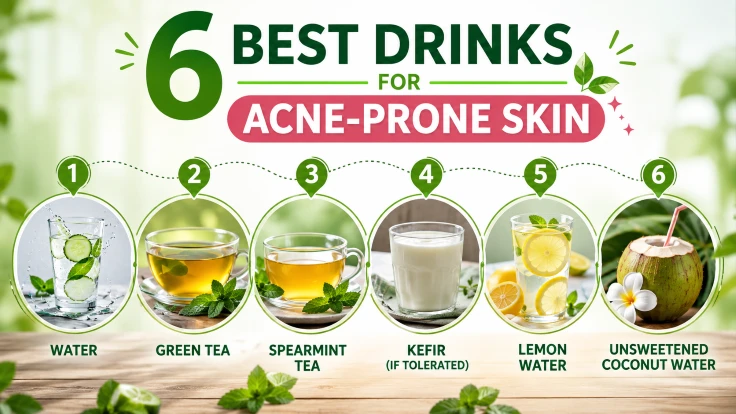
6 Best Drinks for Acne-Prone Skin
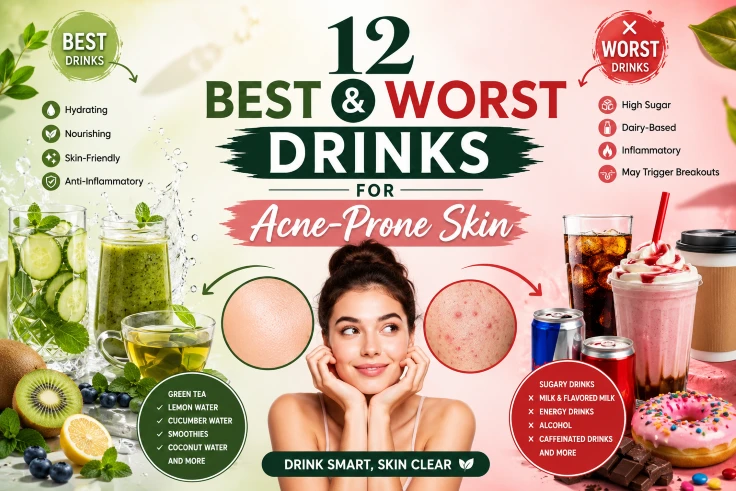
1. Water
Why it may help: Water is the foundation of healthy hydration and supports your skin’s protective barrier. It won’t instantly clear pimples, but consistent hydration supports the processes behind healthier-looking skin — and replacing sugary drinks with water removes a source of blood sugar spikes.
Best time to drink: First thing in the morning, throughout the day, before meals, and after exercise.
Easy daily habit: Carry a reusable bottle everywhere. Add cucumber, lemon, mint, or berries if plain water feels boring.
2. Green Tea
Why it may help: Green tea is rich in catechins, particularly EGCG, which have antioxidant and anti-inflammatory properties. Some studies suggest these compounds may help reduce inflammation and oil production, though more research is needed before drawing firm conclusions. Choose unsweetened varieties — added sugar cancels out much of the benefit.
Best time to drink: Mid-morning or early afternoon; avoid it close to bedtime if you’re caffeine-sensitive.
Easy daily habit: Replace one sugary drink a day with a cup of freshly brewed green tea, hot or chilled.
3. Spearmint Tea
Why it may help: This is one of the more specifically studied options here. Small clinical trials found that drinking spearmint tea twice daily reduced active testosterone levels in women with hormonal acne and PCOS-related hirsutism, likely through mild anti-androgen effects. The evidence is limited — small sample sizes, and benefits appear most consistent for people whose acne is genuinely androgen-driven — so treat it as a supportive habit, not a treatment.
Best time to drink: Morning or evening, since it’s naturally caffeine-free.
Easy daily habit: Two cups a day for at least a month mirrors the actual study protocols, so give it that long before judging results.
4. Kefir (If Tolerated)
Why it may help: Kefir is fermented, so it carries beneficial probiotics that may support gut health — an emerging area linked to skin inflammation. But it’s still dairy, which carries some of the same insulin-related concerns as milk. If you already suspect dairy triggers your breakouts, kefir may not be the right choice for you despite its probiotic content.
Best time to drink: With breakfast, paired with fiber to blunt any blood sugar impact.
Easy daily habit: Choose plain, unsweetened kefir a few times a week rather than daily, and track your skin over several weeks.
5. Lemon Water
Why it may help: Lemon water isn’t a detox miracle, but it’s a genuinely useful tool: it makes water more appealing, which helps many people drink more of it and reach less often for sugary alternatives. Lemons also provide a small amount of vitamin C, involved in collagen production.
Best time to drink: Morning, during meals, or throughout the day.
Easy daily habit: Add fresh lemon slices to your water bottle instead of buying flavored sugary waters.
6. Unsweetened Coconut Water
Why it may help: Naturally rich in electrolytes like potassium and magnesium, it’s a lower-sugar way to rehydrate after exercise or heat exposure compared to sports drinks. It shouldn’t replace plain water as your everyday default.
Best time to drink: After workouts or on hot days.
Easy daily habit: Check the label — many “coconut water” products blend in added sugar or juice, which defeats the purpose.
Quick takeaway: Rather than chasing one “perfect” drink, build a routine around several of these. Water stays your default; green tea, spearmint tea, lemon water, coconut water, and kefir (if tolerated) all fit around it. Small, repeated swaps beat dramatic overnight changes.
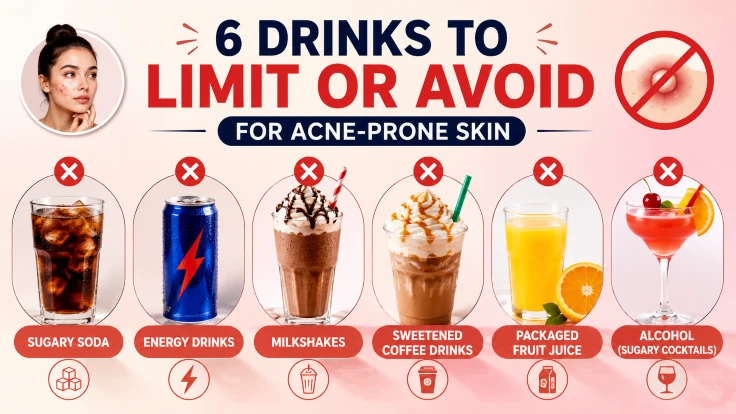
6 Drinks to Limit or Avoid for Acne-Prone Skin
Not every drink affects everyone’s skin the same way — the goal isn’t banning favorites forever, it’s recognizing which options are more likely to cause problems and knowing what to reach for instead.
1. Sugary Soda
Why it may worsen acne: A single can can contain several teaspoons of sugar, causing a rapid glucose spike and, by extension, the insulin/IGF-1 response described earlier.
Swap it for: Sparkling water with lemon or lime, or unsweetened iced tea.
Watch for: Treating “diet” versions as a free pass — check whether you’re just replacing sugar with something else that keeps the habit going.
2. Energy Drinks
Why it may worsen acne: These combine high sugar with caffeine and stimulants, which can disrupt sleep — and poor sleep independently affects the hormones tied to acne. Sugar-free versions still carry high caffeine loads that aren’t ideal for regular hydration.
Swap it for: Green tea for a gentler lift, or plain water after exercise.
Watch for: Relying on them for energy when the real issue is poor sleep, skipped meals, or dehydration — addressing those directly usually helps more.
3. Milkshakes
Why it may worsen acne: Milkshakes combine two acne-relevant triggers at once — dairy’s insulin/IGF-1 effect and a heavy dose of added sugar — which is why they’re one of the more commonly reported “trigger” drinks anecdotally.
Swap it for: A homemade smoothie with frozen berries, unsweetened yogurt, and water — no added sugar.
4. Sweetened Coffee Drinks
Why it may worsen acne: Coffee itself isn’t the issue — it’s the flavored syrups, whipped cream, and sweetened creamers. A large flavored latte can carry as much sugar as a dessert, and when it’s a daily habit rather than a treat, those spikes stack up.
Swap it for: Black coffee, or coffee with a splash of milk and no syrup.
Watch for: Loading up “healthy-sounding” oat-milk or protein lattes with extra pumps of syrup — the base doesn’t offset the sugar.
5. Packaged Fruit Juice
Why it may worsen acne: Juicing strips out the fiber that would normally slow sugar absorption, so even “100% juice” can spike blood sugar similarly to soda, just with a healthier-sounding label.
Swap it for: The whole fruit instead, or water with citrus slices.
6. Alcohol (Especially Sugary Cocktails)
Why it may worsen acne: Alcohol doesn’t directly cause acne, but sugary mixers add the same insulin-spiking effect as soda, and alcohol itself can disrupt sleep and hydration. The occasional drink is unlikely to undo your progress; frequent consumption makes consistency harder.
Swap it for: Sparkling water with citrus, low-sugar kombucha, or an alcohol-free mocktail.
Quick Comparison Table
| Category | Choose More Often | Limit More Often |
|---|---|---|
| Everyday hydration | Water | Sugary soda |
| Tea | Green tea, spearmint tea | Sweetened bottled tea |
| Dairy-based | Plain kefir (if tolerated) | Milkshakes |
| Coffee | Black or lightly milked coffee | Flavored syrup coffee drinks |
| Refreshing drinks | Lemon water, coconut water | Packaged fruit juice |
| Social drinks | Sparkling water, mocktails | Sugary cocktails |
Daily Drink Routine for Healthier Skin
- Morning: A large glass of water, with fresh lemon slices if you like.
- Mid-morning: Green tea, spearmint tea, or black coffee — a gentle boost without the sugar load.
- Lunch: Water, sparkling water, or unsweetened iced tea; skip the soda.
- Afternoon: Unsweetened coconut water, plain kefir, or water with cucumber instead of an energy drink.
- Evening: Water, or a caffeine-free herbal tea like chamomile or peppermint.
- Before bed: Skip energy drinks, sugary sodas, and large sweet coffee drinks — they can interfere with sleep, which matters for skin too.
Common Drink Mistakes That Can Affect Acne
- Assuming “healthy” drinks are automatically low-sugar — smoothies, flavored waters, and vitamin drinks often hide more added sugar than a soda. Read the label before you buy.
- Only drinking water when you feel thirsty — by then, mild dehydration has often already begun. Sip steadily instead of catching up all at once.
- Expecting overnight results — skin renewal takes weeks, not days. Give any change at least a month before judging whether it’s working.
- Depending on energy drinks for energy — when the real fix is often sleep, meals, or hydration, not more caffeine.
Conclusion
Healthy skin isn’t built from one perfect drink — it’s shaped by small, repeated choices. Drinks are only one half of the picture — pair these swaps with Foods. Read our full guide for foods, The Acne Diet Checklist: 10 Foods to Eat and Avoid Genetics, hormones, stress, and skincare all play a role, but your beverage habits are one piece you can actually control. Among the best and worst drinks for acne-prone skin, the pattern holds up: options that spike blood sugar and insulin — soda, sweetened coffee, juice, sugary cocktails — tend to work against clear skin, while water, unsweetened teas, and lower-sugar swaps tend to support it.
Replacing one sugary drink a day with water or tea is a habit you can actually keep — and that consistency matters more than any single “perfect” choice.
Q1. Are protein shakes bad for acne?
It depends on the base. Whey protein has been linked to breakouts in some people through the same insulin-raising effect as milk; plant-based protein powders may be gentler if you suspect whey is a trigger for you.
Q2. Can teenagers follow these drink recommendations?
Yes — these are low-risk, general swaps suitable for most teens. Persistent or severe acne is still worth a dermatologist visit regardless of age.
Q3. Does the type of milk alternative matter for acne?
Plant-based milks like almond, oat, or soy generally don’t trigger the same insulin/IGF-1 response as dairy, making them reasonable swaps. Watch added sugar though — some flavored versions carry as much sugar as a milkshake, which cancels out the potential benefit of skipping dairy altogether.
Q4. Does drinking on an empty stomach affect acne?
Sugary or caffeinated drinks on an empty stomach can cause a sharper blood sugar and insulin spike than the same drink with food, since there’s nothing to slow absorption. Pairing tea, coffee, or juice with a small meal may soften that effect.
Q5. Can caffeine itself worsen stress-related acne?
High caffeine intake can raise cortisol, the body’s main stress hormone, which may indirectly influence oil production and inflammation in some people. This effect varies widely by individual tolerance, so moderate intake — rather than complete avoidance — is usually the more realistic approach.