



Introduction
If you’re time poor mornings then adding exercise to your schedule is probably not feasible. However, getting an hour at the gym doesn’t have to be the only way to achieve real fitness, since a short ten-minute cardio workout done regularly can help to give you a much-needed energy boost, maintain your heart health and kick off a productive day.
There are many people who can’t even get into exercise because they believe it should be lengthy and difficult to count. This is not the case. A brief, well-designed morning exercise session wakes your muscles, increases your heart rate and stimulates the release of hormones that promote well-being — in less time than you can spend scrolling on your smartphone in the morning.
This guide explains this simple, no equipment, beginner-friendly exercise you can do anywhere, as well as the habits and adjustments that will keep this routine as part of your life for the long haul.
Why Morning Cardio Works Better for Busy People
For busy people, why morning cardio works better?Why Morning Cardio Works Better for Busy People?
For one thing, “morning person” workouts are easier to stick to than evening ones, because quite a few things don’t get in the way. After the day begins, meetings drag on, errands accumulate and energy levels drop — all of which can easily convince you to give up on exercise. If you do it first thing you’re eliminating that decision fatigue altogether.
There are several benefits that add up when you make a habit of exercising in the morning:
- Develops a more consistent schedule of exercise sessions than occasional, extended sessions
- Increases energy levels for the rest of the day
- Promotes fat loss and metabolism
- Focuses and is mentally alert for work or school
- Does not require any significant time investment (only a few minutes)
- Establishes a positive trend that can be applied to other healthy behaviors
Just 10 minutes of targeted exercise could help make the rest of the day feel more productive and clear.
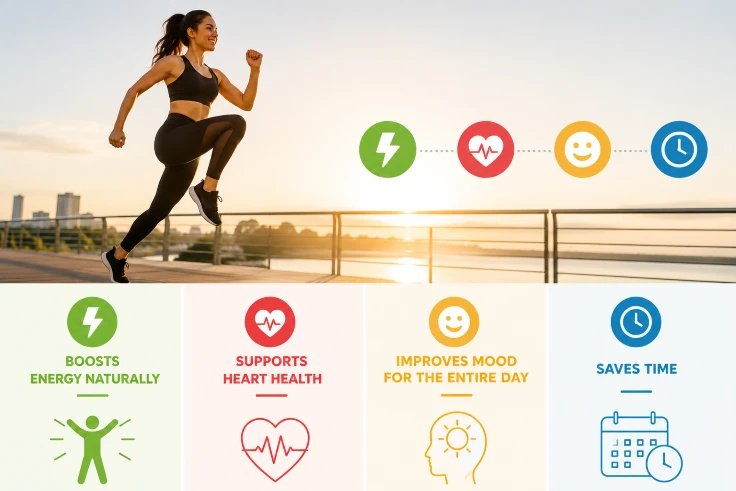
Why Cardio in the Morning Is So Beneficial
The benefits of doing cardio in the morning.Why is it so beneficial to do cardio in the morning?
1. Boosts Energy Naturally
The motion helps to get blood flowing and start your day in the morning, rather than staying in rest mode longer than caffeine does. Getting a bit of exercise rather than a second cup of coffee can help make you feel more awake than just “wired,” as well.
2. Supports Heart Health
Cardiovascular exercise helps to keep your circulatory system active and engaged, even if it’s just a quick session. Regular, but not strenuous, exercise over time helps improve long-term cardiovascular fitness and health.
“For a deeper look at how cardio protects your cardiovascular system, see our guide on Top Benefits of Cardio Workouts for Heart Health.”
3. Improves Mood for the Entire Day
When you exercise, these chemicals are released into the body that elevate mood. People tell me they will notice that their concentration, patience and motivation will improve on the day they moved first thing in the morning than the day they didn’t.
4. Saves Time Without Compromising Results
The greatest benefit of this routine is its efficiency. Ten minutes is enough time to make a difference, and 10 minutes can be incorporated into almost any workout regime with no need to find a gym, warm up, or set up complex equipment.
Prep Tips You Should Do Before You Start
It’s a more effective and more comfortable workout with a few small preparations:
- Drink water first. When you wake up, your body is a little dehydrated, and rehydrating before you get up will keep you still more energised and not get tired early.
- Dress in comfortable clothing that is breathable. Don’t have to have exercise equipment — just something that will not limit movement.
- Clean up a small area. Just enough space to move from side to side and swing your arms.
- Start slow. The first minute should be easy – you’re getting warm, not maxing out.
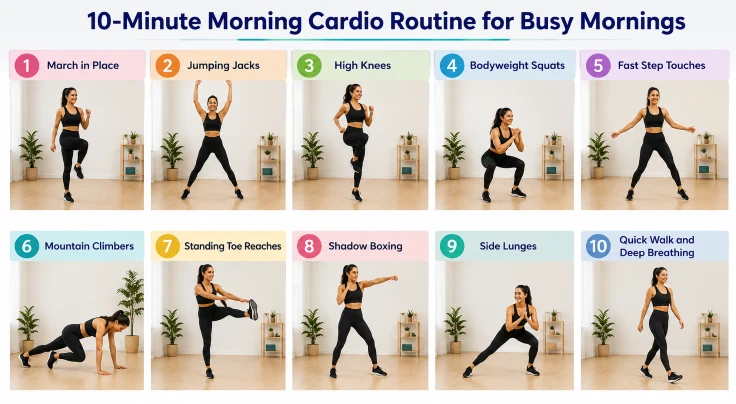
The 10-Minute Morning Cardio Routine
This workout combines light activity, moderate-intensity and rest to get your whole body moving on equipment-free exercises.
Minute 1 – March in Place
Move in place for 1 minute.Move in place for 1 minute (M1).
Begin with your feet shoulder width apart and your arms relaxed at your sides and your body upright, with your knees lifted to a comfortable height. This is a gentle one that will help to warm up the muscles and increase circulation before your muscles are ready for more intense exercise.
Minute 2 – Jumping Jacks
Step your feet out to the side, with your arms up, then move back to the starting position. This classic exercise quickly increases your heart rate and works on all of your body. If you don’t want to put too much stress on your joints, step side-to-side rather than jump.
Minute 3 – High Knees
Elevate your knees above the marching step, maintain the core tight and travel arms should move naturally. This will activate the legs directly and help begin to develop cardiovascular endurance. Modification: If you need to ramp up slowly then slow marching is fine.
Minute 4 – Bodyweight Squats
Keep feet shoulder-width apart and sit down into the chair by pushing hips back through heels. Squats build leg strength and contribute to the overall mobility of the lower body, which is essential for daily activities and not only for exercise.
Minute 5 – Fast Step Touches
Devise a strategy to get fast moving touches in the minute.
Step right then left, step right then left, stepping at a steady pace. This helps maintain a steady heart rate without allowing your joints a momentary respite from more strenuous exercise — perfect for anyone taking their first steps in fitness.
Minute 6 – Mountain Climbers
Start in plank position and alternate knee drive with knees towards chest. This exercise also engages the core muscles, and gets the heart rate up quite high. Modification: To make it easier, walk at a slower pace — it counts as long as it is slow.
Minute 7 – Standing Toe Reaches
The Standing Toe Reach is performed in minute 7.The Standing Toe Reach is done in minute 7.
Alternate reaching out to opposite foot with good posture. This is a slightly reduced-intensity exercise to help increase flexibility and decrease stiffness before moving on to the next higher-intensity part of the exercise.
Minute 8 – Shadow Boxing
Balance and throw a series of controlled punches using the shoulders, arms and body. This makes the routine more varied, it develops coordination and it exercises the upper body in different ways than the previous movements.
Minute 9 – Side Lunges
Side step, bend to one side, and alternate sides. It works your hips and legs and boosts the ability to move laterally, which is one aspect you may not be seeing in your regular cardio.
Minute 10 – Quick Walk and Deep Breathing
Complete by taking slow steps while taking deep breaths, then slowly breathing out. The cool down period helps you recover and helps to slowly return your heart rate to normal before you head back in the morning.
“If you’re curious how walking compares to more intense cardio for overall fitness, check out our breakdown: Walking vs Running: Which Cardio Workout Is Better?.”
Learn How to Develop This Into a Lasting Habit
People don’t stop doing a fitness programme because they have been doing it incorrectly, they simply find it difficult to continue. Some simple tactics can make a world of difference:
- Keep expectations realistic. Ten minutes of regular exercise daily will be better than one strenuous hour of exercise every few days. Over time intensity is not as important as consistency.
- Make in advance the day before. Put clothes for your exercise out and away, so you don’t have to think about them when you wake up.
- Track small wins. Completing the days, even by making a simple check list, creates momentum and helps to see progress.
- Pay attention to being consistent, not perfect. Not doing it every day is not a failure – it’s the habit that is important.
Common Mistakes That Can Hamper Results
These are some common mistakes to avoid to maximize the benefit from this routine:
- Skipping the warm-up. Rushing into high-intensity exercise makes it more likely for you to get injured and the entire exercise will appear more difficult than it is.
- Rushing, or doing too much, too quickly. Often people want to go all out on day one, but it’s better to start simple and gradually add more as they go.
- Not recovering properly. Sleep and hydration are as important as the exercise itself — and that both are underutilized will negatively impact your gains.
- Making comparisons with others. Just remember that people of all ages adapt at various rates, and stick to your own consistency, not comparing with anyone else!
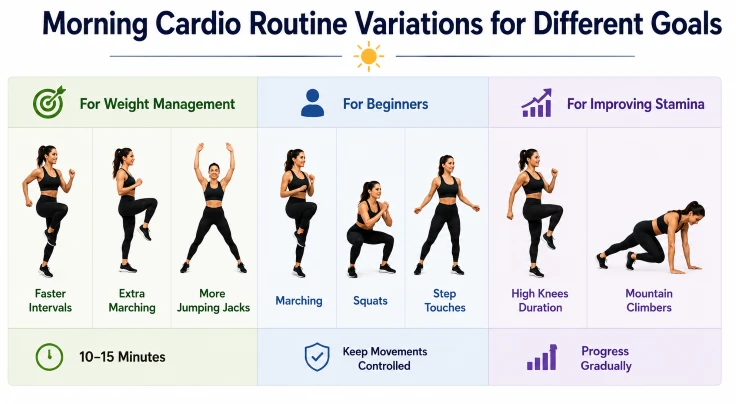
Variations for Regular Purposes as for Different Aims
For Weight Management
Include faster intervals, more marching and jump jacks to add to the intensity. If the workout can be extended to 10-15 minutes, that can help to burn additional calories without taking a significant amount of time.
“If weight loss is your main goal, you may want to explore more options in our guide to Best Cardio Workouts for Weight Loss.”
For Beginners
Do only marches, squats and step touches and ensure all movements are controlled and comfortable. You don’t need to go onto more challenging exercises until you feel comfortable with the basics.
For Improving Stamina
As endurance improves, slowly increase length of high knees and mountain climbs. It should be a slow progression; 10–15 additional seconds per week would be a good rate.
“Once 10 minutes starts to feel easy, you can level up with our 30-Minute Home Cardio Workout Plan for a more advanced session.”
Foods That Pair Well With Your Morning Cardio Routine
Yesterday, we discussed how we can eat a healthful breakfast.We talked about eating a healthy breakfast yesterday.
If this is a short session, then it’s not always a good idea to eat a full meal prior to training — but there are some good guidelines to follow.
If you are planning a workout, eat a banana, a glass of water or a small portion of fruit before your workout, which will give you a quick and easily digested source of energy without adding too much weight.
Following exercise: a protein-rich oat, egg, yoghurt or smoothie, or toast with a protein source, will help your muscles recover and fuel your day.
Go with whatever you feel light and comfortable on, the idea is to fuel your body and not complicate your morning.
A Sample Busy Morning Schedule
One easy option to do this exercise in the morning without interfering with the rest of your day is to do it before breakfast while you’re still in bed.
- 6:30 AM – Wake up
- 6:35 AM – Drink water
- 6:40 AM – Begin 10 minutes of cardio.
- 6:50 AM – Cool down
- 7:00 AM – Breakfast
- 7:30 AM – Start the day’s work activities
This whole block will take less time than most of the people would take to figure out what to wear.
Signs Your Morning Cardio Is Working
If you’re working out in the morning, there are some signs that you’ll know if your morning cardio is working.
The short daily routine has to be followed for a period of time to yield results, not all at once. As a guideline for improvement, look for these indicators:
- Improved energy levels all day long
- Beginnings improving – more comfortable and natural
- More consistency – less missed time
- Less early morning drowsiness or fogginess
- Becoming more confident in your fitness level while you are exercising.
- Slowly increasing the length of time throughout the more challenging minutes
Final Thoughts
You don’t need to buy any fancy equipment, invest a ton of time or get stuck on creating a complex fitness plan to get a cardio workout in the morning. The best part of a 10-minute workout is that there’s no time to get an excuse out of it, making it easy to carry on no matter how busy you might be on your busiest day.
You don’t have to sacrifice fitness when you’re busy in the morning. Begin with low intensity, work up to it and then ramp it up as you get better.
Don’t do the hardest routine — do the one that you will stick to!
FAQs
1. Is a 10-minute morning cardio routine enough?
Yes. A short routine can support activity levels, improve energy, and help build exercise consistency. Daily movement often matters more than workout length.
2. Can beginners follow this morning cardio routine?
Absolutely. Beginners can reduce speed, take short breaks, and choose low-impact versions until endurance improves.
3. Should I eat before morning cardio?
For a short 10-minute session, many people exercise with water only. If needed, eat something light like fruit.
4. How many days a week should I do morning cardio?
Aim for 4–6 days weekly depending on comfort and recovery. Adjust based on your schedule and fitness level.
5. Will morning cardio help with weight management?
Morning cardio may support calorie expenditure and healthy habits when combined with balanced eating and regular activity.
6. What if I miss a workout day?
Missing one day is normal. Return to your routine the next morning and focus on consistency rather than perfection.
Disclaimer
“This article is only for general health awareness and tips. It is not medically suggested advice. Please consult a qualified healthcare professional for medical guidance.”