

Introduction
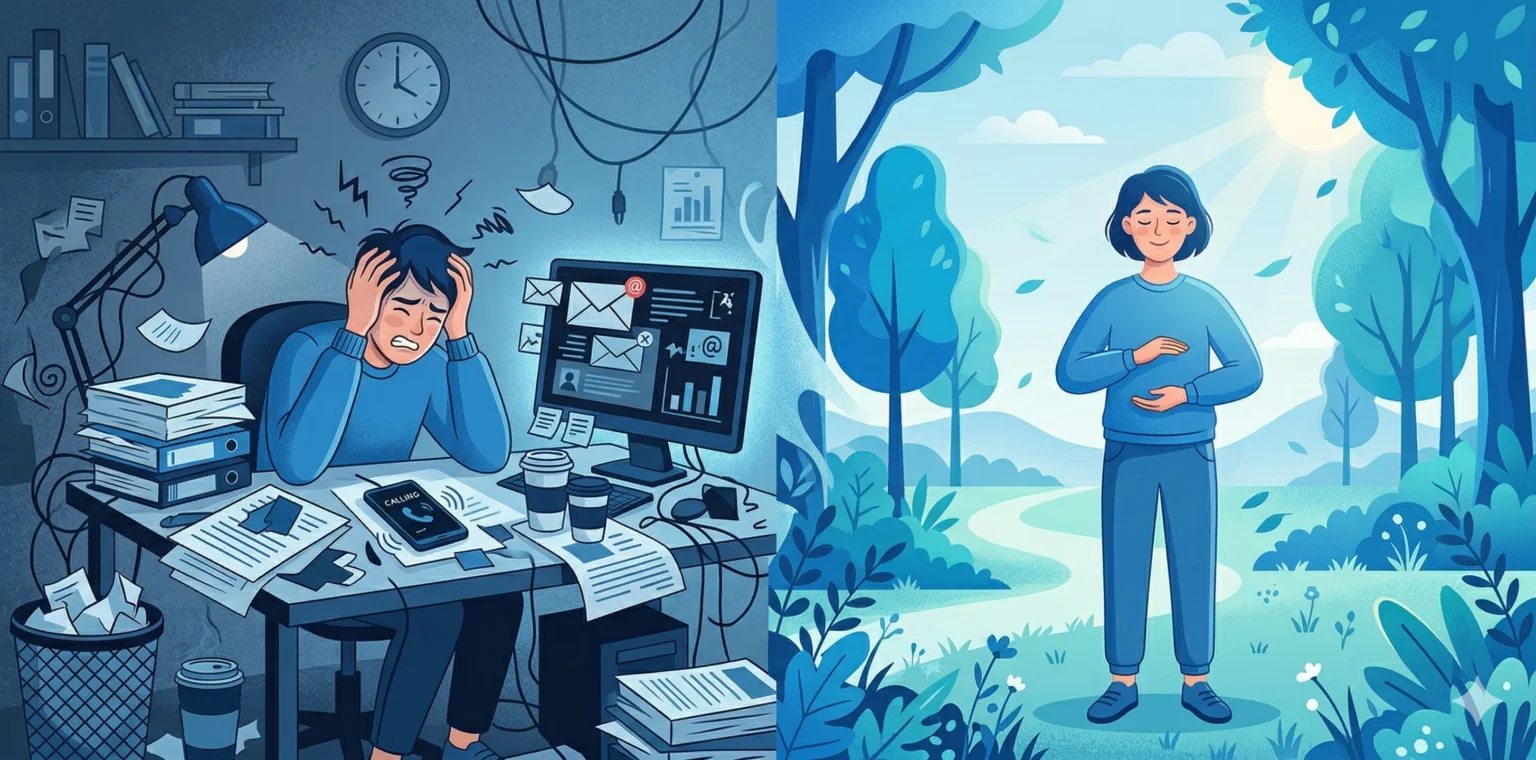
Stress is like a faucet that never fully turns off. Some days it drips, other days it floods. The good news? You don’t need a prescription pad or a week off work to feel better. These proven natural stress relief methods can help you dial down the pressure — starting right now.
What is Natural Stress Relief?
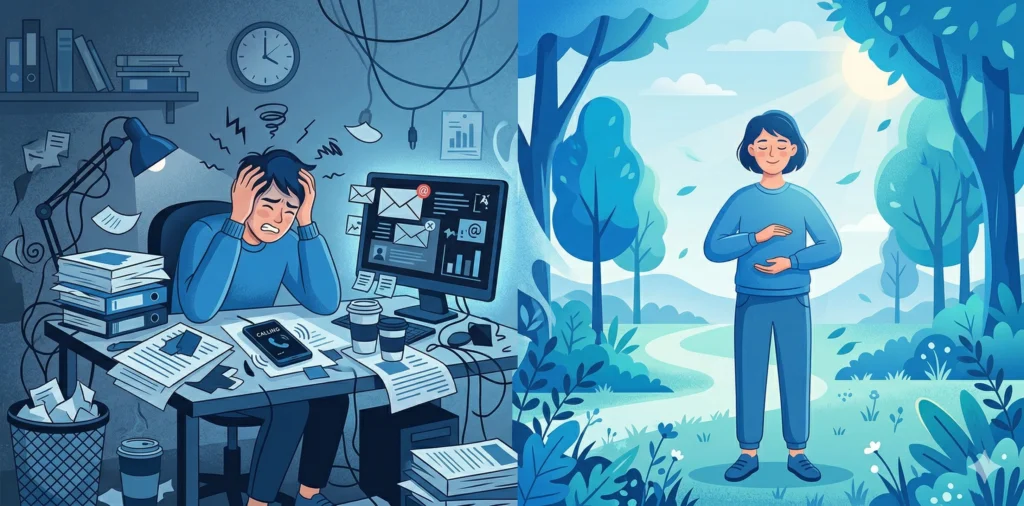
Natural stress relief refers to any technique, habit, or approach that helps your body and mind recover from stress without pharmaceutical intervention. Think of it as giving your nervous system the tools it already knows how to use. Instead of suppressing symptoms, these methods address the root causes — an overactive stress response, a noisy mind, or a body that’s been running on empty.
This approach is closely tied to mental wellness, which looks at emotional, psychological, and social well-being as an interconnected system. When you support one, the others benefit too.
Natural stress relief isn’t about pretending stress doesn’t exist. It’s about building a stronger internal buffer so that when life gets loud, you can respond — not just react.
| 💡 Key Insight Chronic stress activates the body’s “fight-or-flight” response repeatedly, raising cortisol levels and increasing the risk of heart disease, anxiety disorders, and sleep problems. Natural methods help reset this system regularly. |
Benefits of Managing Stress Naturally
Choosing natural approaches to stress relief comes with a wide range of physical, emotional, and social rewards. Here’s why it’s worth building these habits:
- Better sleep quality: Calm nervous systems fall asleep faster and stay asleep longer.
- Improved focus and productivity: Lower cortisol means a clearer, sharper mind.
- Stronger immune function: Chronic stress suppresses immunity; natural relief reverses this.
- Healthier relationships: When you’re less reactive, conversations go better.
- Reduced risk of burnout: Consistent stress management acts like armor against exhaustion.
- No side effects: Unlike medication, these methods support the body’s natural rhythms.
Mindfulness and Breathing Techniques
Your breath is the most underused stress management tool you carry with you every single day. When you’re anxious, your breathing gets shallow and fast. Slow it down deliberately, and your body gets the signal that the danger has passed. Here are four techniques that genuinely work.
🌬 Deep Belly Breathing (Diaphragmatic Breathing)
Place one hand on your chest and one on your belly. Breathe in slowly through your nose so only your belly rises. Hold for a second, then exhale fully. This activates the parasympathetic nervous system — your body’s “rest and digest” mode. Just five minutes of this can measurably lower heart rate and reduce feelings of anxiety. It’s the simplest and most immediately effective stress relief technique for absolute beginners.
⏱ The 4-7-8 Technique
Inhale for 4 counts, hold for 7, exhale for 8. The extended exhale triggers a strong relaxation response by activating the vagus nerve. Dr. Andrew Weil popularized this method as a natural tranquilizer for the nervous system. It’s especially useful at bedtime or during moments of sudden stress. After just four breath cycles, most people feel noticeably calmer.
| 👃 Inhale 4 counts | 🤐 Hold 7 counts | 💨 Exhale 8 counts | 🔁 Repeat 4 cycles |
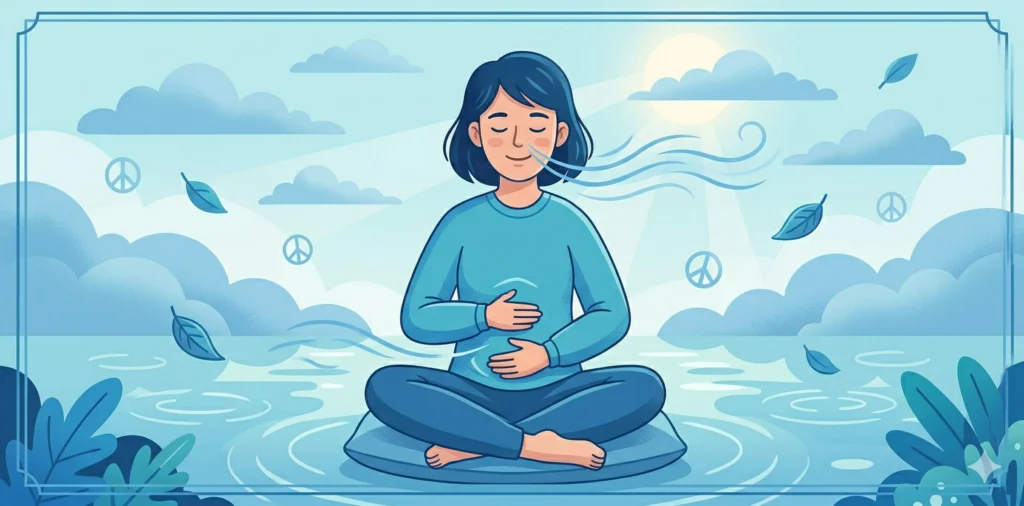
The 4-7-8 Breathing Cycle
🎯 Guided Imagery and Visualization
Close your eyes and imagine a place where you feel completely safe and at peace — maybe a beach, a forest trail, or your grandmother’s kitchen. This isn’t wishful thinking; it’s neuroscience. Your brain processes vivid mental imagery similarly to real experience, releasing calming neurotransmitters in the process. Use a guided recording or simply describe the scene to yourself in detail. Five to ten minutes is enough to shift your emotional state considerably.
💪 Progressive Muscle Relaxation
Starting from your toes and working up, tense each muscle group for five seconds, then release. The contrast between tension and relaxation helps your body recognize and let go of stored stress. It’s like wringing out a wet cloth — you release what’s been stuck. This technique is particularly effective for people who carry physical tension in their shoulders, jaw, or back. It also improves sleep quality when practiced before bed.
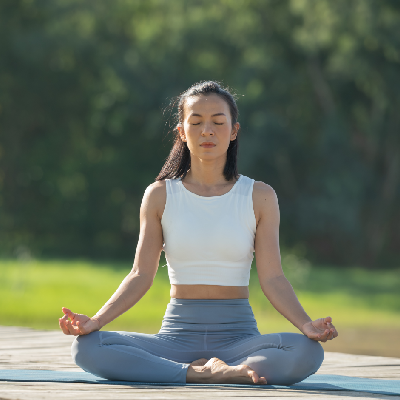
| 🧠 Mindfulness Tip You don’t need a meditation cushion or 30 minutes of silence. Even 3–5 minutes of focused breathing during a lunch break counts as mindfulness practice and delivers real benefits over time. |
Role of Physical Activity in Stress Reduction
Exercise is one of the most powerful natural antidepressants and stress relievers available. When you move your body, it burns off excess cortisol and releases endorphins — those feel-good chemicals that give you a natural mood lift. The best part? You don’t need to train like an athlete to get the benefits.
🧘 Low-Impact Movement: Yoga and Pilates
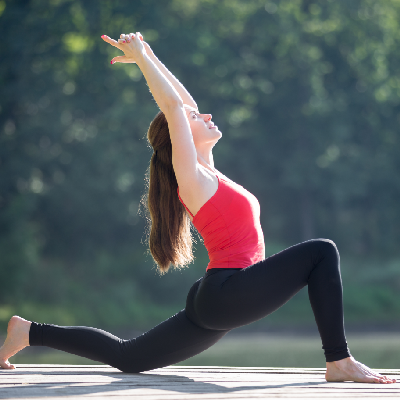
Yoga combines controlled breathing with gentle, intentional movement, making it a double-duty stress buster. Research consistently shows it lowers cortisol and reduces symptoms of anxiety and depression. Pilates strengthens the core while promoting body awareness and breath control. Both are accessible at any fitness level. Explore the full yoga benefits — they extend well beyond flexibility and the mat.
⚡ High-Energy Release: Cardio and Strength Training
Sometimes stress needs a bigger outlet. Running, cycling, dancing, or lifting weights gives your body a physical channel for emotional tension. A 20-minute cardio session raises your heart rate, floods your brain with endorphins, and can reset your mood dramatically. Strength training adds the bonus of building physical confidence, which psychologically reinforces your ability to handle challenges. Even two to three sessions per week makes a measurable difference in stress levels and emotional resilience.
🌿 The Power of Walking in Nature
A 20-minute walk in a green space — a park, a trail, even a tree-lined street — reduces cortisol more effectively than a walk on a busy urban road. The Japanese practice of shinrin-yoku (forest bathing) shows that simply being among trees lowers blood pressure, heart rate, and anxiety. You don’t need a national park; your local neighborhood greenery counts. Walk without your phone if you can manage it — that’s the real secret.
| 🏃 Movement Minimum for Stress Relief Research suggests that just 20–30 minutes of moderate exercise, 3–5 days a week, significantly reduces perceived stress and anxiety levels. You don’t need an hour at the gym — consistency matters more than intensity. |
Nutritional Strategies for a Calmer Mind
What you eat feeds more than your body — it directly influences your brain chemistry and emotional state. Building healthy eating habits doesn’t require a complete overhaul — small, consistent shifts are enough to support a calmer nervous system.
🥦 Magnesium-Rich Foods
Magnesium is often called “nature’s relaxation mineral.” It regulates the HPA axis — the body’s central stress response system — and helps prevent the spikes in cortisol that leave you wired and exhausted. Most people are deficient without knowing it. Top sources include dark leafy greens (spinach, Swiss chard), pumpkin seeds, almonds, black beans, avocados, and dark chocolate. Adding even one or two of these to daily meals can make a noticeable difference in how calm and grounded you feel.
🍵 Herbal Teas: Chamomile and Ashwagandha
Chamomile tea contains apigenin, a compound that binds to GABA receptors in the brain — the same receptors targeted by anti-anxiety medications, but far more gently. Ashwagandha is an adaptogenic herb with decades of clinical support showing it reduces cortisol levels by up to 30%. You can take it as a tea, tincture, or supplement. Consistent use over two to four weeks produces meaningful results. Think of adaptogens as long-term stress insurance, not quick fixes.
| Food / Herb | Key Benefit | How to Use |
| Chamomile Tea | Calms the nervous system | 1–2 cups before bed |
| Ashwagandha | Lowers cortisol levels | Tea, capsule, or powder |
| Dark Leafy Greens | High in magnesium | Daily in salads or smoothies |
| Pumpkin Seeds | Magnesium + zinc boost | Handful as a snack |
| Dark Chocolate (70%+) | Reduces cortisol, boosts mood | 1–2 squares daily |
| Blueberries | Rich in antioxidants | Add to oatmeal or yogurt |
☕ Avoiding Caffeine and Processed Sugars
Caffeine triggers your adrenal glands to release adrenaline — which puts your body in a mild stress state. If you’re already anxious, that morning coffee can escalate tension significantly. Processed sugars cause blood sugar spikes and crashes that directly affect mood and irritability. Swapping one cup of coffee for green tea (lower caffeine, higher L-theanine) and replacing sugary snacks with nuts or fruit can stabilize your energy and emotional baseline throughout the day.
Lifestyle Habits to Lower Daily Stress
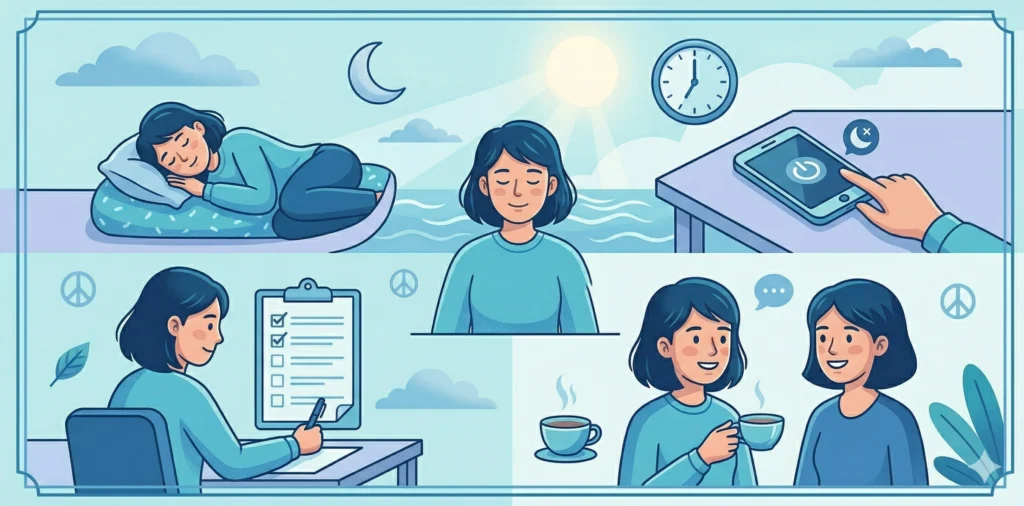
The way you structure your daily life has a massive impact on your baseline stress level. These daily rituals stack up quickly, and staying well-hydrated supports them all — check these hydration tips to see why water matters more than most people realize.
🌙 Optimizing Your Sleep Hygiene
Sleep is where your brain processes stress and emotional memories. Without enough quality sleep, your cortisol levels the next day are noticeably higher, your emotional resilience drops, and everything feels harder. Keep a consistent sleep-wake schedule (even on weekends), dim your lights an hour before bed, and keep your bedroom cool and screen-free. Think of your bedtime routine as a “power-down sequence” — a signal to your nervous system that the day is done.
📱 Setting Boundaries with Digital Devices
Constant connectivity is one of the biggest hidden stressors of modern life. Notifications keep your brain in a low-level alert state all day long — a kind of chronic low-grade “fight-or-flight.” Try a firm no-phone rule during meals and for the first 30 minutes after waking. Set app limits for social media. These boundaries aren’t about being anti-technology; they’re about protecting your attention and nervous system from constant interruption.
📅 Practicing Time Management and Prioritization
Overwhelm is often the result of trying to do everything at once without a clear order. The simple act of writing down your top three priorities for the day — and letting everything else be secondary — can dramatically reduce mental clutter. Tools like time-blocking (scheduling specific tasks into your calendar) reduce decision fatigue throughout the day. A clearer schedule means fewer “I forgot” moments, fewer last-minute rushes, and a more grounded sense of control.
🤝 The Importance of Social Connection
Humans are wired for belonging. Quality social connection triggers oxytocin — the bonding hormone that directly counteracts cortisol. This doesn’t require a packed social calendar. Even a meaningful 15-minute conversation with a friend or family member can shift your stress levels measurably. If loneliness is a factor in your stress, consider joining a class, volunteering, or even an online community centered around your interests.
| 🔥 Real-Life Strategy Try a “Stress Audit” once a week. Rate your stress from 1–10 and note what spiked it. After two to three weeks, patterns emerge — and patterns you can see are patterns you can change. |
Quick Stress Relievers for Busy Schedules
When life is running at full speed and you don’t have an hour to spare, these micro-interventions can shift your state in just five minutes or less.
🖥️ Five-Minute Desk Stretches
Roll your shoulders back, tilt your head gently side to side, stretch your wrists, and stand up for a brief torso twist. Physical tension lives in the body long after the stressor is gone. Regular movement breaks every 60–90 minutes reset your posture and nervous system simultaneously.
🌸 Essential Oils & Aromatherapy
Lavender, bergamot, and frankincense are among the best-researched essential oils for anxiety relief. Inhaling them stimulates the olfactory nerve, which directly connects to the limbic system — the brain’s emotional center. A small diffuser at your desk or a few drops on your wrist is all it takes.
🎵 Short Music Breaks
Music at around 60 beats per minute has been shown to synchronize with brain waves and induce a calm, meditative state. Classical, lo-fi, or nature sounds work particularly well. Put on headphones, close your eyes for five minutes, and let your nervous system reset. It costs nothing and works almost immediately.
🌊 Cold Water Splash
Splashing cold water on your face or running cold water over your wrists activates the dive reflex, which rapidly slows heart rate. It’s not glamorous, but it’s fast. When you’re heading into a high-stakes meeting or feeling overwhelmed, 30 seconds at a cold tap can make a surprising difference.