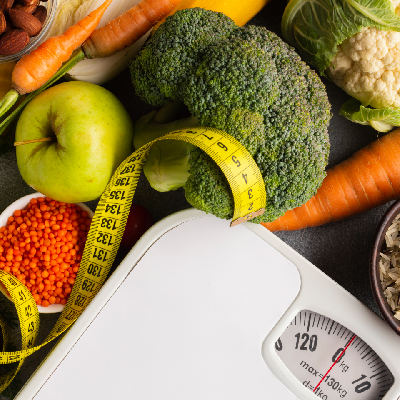



A healthy digestive system plays an important role in overall wellness. Following a balanced health diet plan with fibre-rich foods, fruits, vegetables, whole grains, and suitable protein sources can support digestion and help maintain regular bowel movements.
Daily food choices, hydration, physical activity, and eating habits can influence digestive comfort. Including a variety of nutrient-rich foods in your meals may also help support a healthy gut microbiome, which consists of microorganisms living in the digestive tract.
If you experience occasional bloating, irregular bowel movements, or digestive discomfort, making gradual changes to your eating habits may help. This seven-day gut health diet plan offers simple meal ideas using everyday ingredients, including options commonly found in Indian kitchens.
Why Is a Gut Health Diet Plan Important?
Your digestive system breaks down food, absorbs nutrients, and removes waste. A balanced diet supports these functions and helps maintain a healthy gut environment.
A gut-friendly diet may help:
- Support regular bowel movements.
- Increase dietary fibre intake.
- Encourage a diverse gut microbiome.
- Provide nutrients for digestive health.
- Support hydration and normal digestion.
- Promote balanced eating habits.
According to the National Institute of Diabetes and Digestive and Kidney Diseases (NIDDK), getting enough fibre and fluids can help prevent and relieve constipation.
A well-planned health diet plan should focus on variety, balanced meals, and gradual dietary changes rather than strict food restrictions.
Why Gut Health Matters
Before jumping into the plan, it’s important to understand why gut health is crucial.
- Improves digestion and nutrient absorption
- Boosts immunity
- Supports mental health (gut-brain connection)
- Helps maintain healthy skin
- Reduces inflammation and bloating
A well-balanced gut friendly diet can significantly improve your quality of life.
The Core Principles of a Gut Friendly Diet
Before we dive into the 7-day schedule, it’s important to understand the pillars of this diet for digestion. These aren’t just rules for a week; they are habits for a lifetime.
1. Prioritize Fiber (Prebiotics)
Prebiotics are the “food” for your good bacteria. Without fiber, your gut microbes cannot thrive. Focus on onions, garlic, leeks, asparagus, and bananas.
2. Introduce Probiotics
Probiotics are the live beneficial bacteria themselves. These are found in fermented foods like yogurt, kefir, sauerkraut, and kimchi.
3. Hydration is Non-Negotiable
Water is the lubricant of the digestive system. Without it, fiber can actually cause constipation rather than curing it.
4. Diversity is Key
The more variety you have in your diet, the more diverse your microbiome becomes. Aim for 30 different plant-based foods per week.
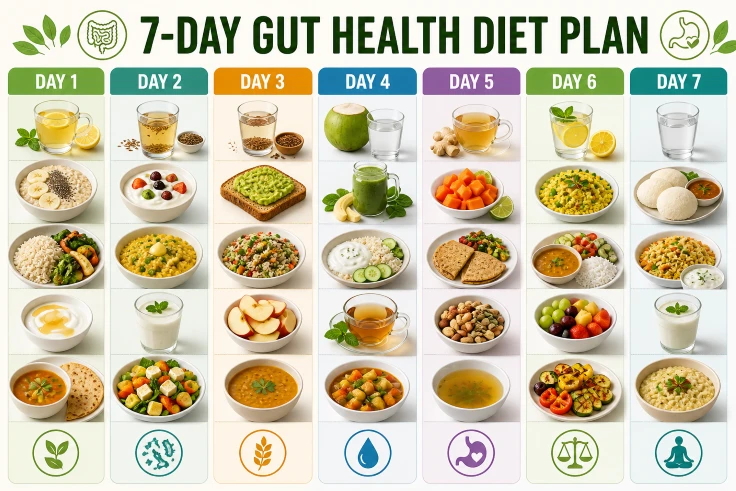
7-Day Gut Health Diet Plan
This sample health diet plan includes simple meal ideas for breakfast, lunch, snacks, and dinner. Adjust portion sizes according to your appetite, activity level, dietary preferences, and health needs.
Day 1: Start with Simple, Balanced Meals
Breakfast
- Vegetable oats with carrots and peas.
- A small bowl of plain curd.
Mid-Morning Snack
- One apple.
Lunch
- Moong dal.
- Whole-wheat roti.
- Cooked seasonal vegetables.
- Cucumber salad, if tolerated.
Evening Snack
- A small handful of almonds.
Dinner
- Vegetable khichdi made with rice and moong dal.
- Cooked bottle gourd.
Start with familiar meals and drink water regularly throughout the day.
Day 2: Add More Fibre Gradually
Breakfast
- Vegetable poha with peanuts.
- One orange.
Mid-Morning Snack
- A small bowl of papaya.
Lunch
- Brown rice.
- Chickpea curry.
- Cooked vegetables.
Evening Snack
- Plain yoghurt with a few berries, if available.
Dinner
- Whole-wheat roti.
- Mixed vegetable curry.
- Moong dal.
Adding different sources of fibre can support dietary variety. Increase fibre gradually to reduce the chance of gas or bloating.
Day 3: Include Fermented Foods
Breakfast
- Plain yoghurt with oats and chopped fruit.
Mid-Morning Snack
- One pear.
Lunch
- Vegetable dalia.
- Plain curd.
- Cooked carrots and beans.
Evening Snack
- Roasted makhana.
Dinner
- Roti.
- Palak paneer or tofu.
- A small serving of dal.
Fermented foods such as yoghurt can be included if they suit your digestion. People who are sensitive to lactose may prefer lactose-free alternatives.
Day 4: Focus on Whole Grains and Vegetables
Breakfast
- Vegetable upma made with whole-grain or suitable semolina.
- A serving of seasonal fruit.
Mid-Morning Snack
- A few soaked almonds.
Lunch
- Whole-wheat roti.
- Mixed vegetable curry.
- Masoor dal.
Evening Snack
- Papaya or another fruit.
Dinner
- Vegetable soup.
- Brown rice.
- Grilled tofu or another suitable protein source.
Whole grains and vegetables can help provide different types of fibre, supporting regular bowel movements.
Day 5: Include Pulses and Healthy Fats
Breakfast
- Moong dal chilla.
- Plain curd.
Mid-Morning Snack
- One orange.
Lunch
- Rajma with rice.
- Cooked vegetables.
Evening Snack
- A small serving of walnuts or pumpkin seeds.
Dinner
- Vegetable khichdi.
- Cooked spinach or another seasonal vegetable.
Beans and pulses are rich in fibre, but they can increase gas in some people. Adjust the serving size and preparation method according to your tolerance.
Day 6: Choose a Variety of Plant Foods
Breakfast
- Oatmeal with banana and chia seeds.
Mid-Morning Snack
- A bowl of seasonal fruit.
Lunch
- Bajra or whole-wheat roti.
- Chana dal.
- Mixed vegetable sabzi.
Evening Snack
- Plain yoghurt or a suitable alternative.
Dinner
- Vegetable pulao with peas and carrots.
- Tofu or paneer.
Eating a variety of plant foods helps provide different fibres and nutrients that contribute to a balanced diet.
Day 7: Maintain a Sustainable Routine
Breakfast
- Vegetable idli.
- Sambar.
Mid-Morning Snack
- One apple or pear.
Lunch
- Whole-wheat roti.
- Moong dal.
- Seasonal vegetable curry.
- Plain curd, if tolerated.
Evening Snack
- Roasted chana.
Dinner
- Vegetable soup.
- Brown rice or roti.
- A protein source such as tofu, paneer, eggs, or lentils.
The goal is to build a routine that can be maintained beyond seven days. You do not need to follow a rigid meal schedule to support digestive health.
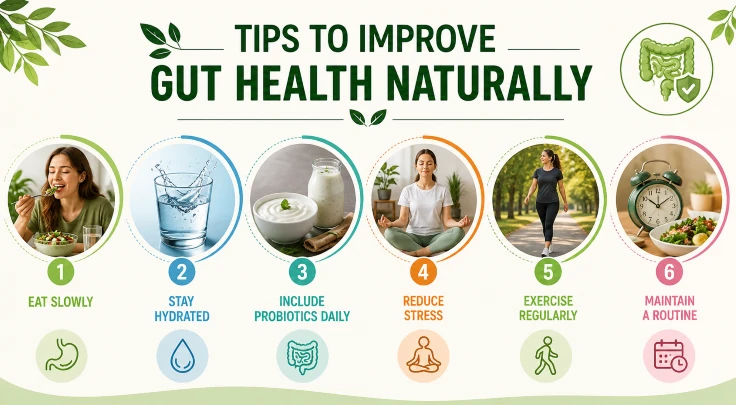
Daily Habits That Support Better Digestion
Food choices are only one part of digestive wellness. Everyday habits also matter.
Drink Enough Water
Water supports digestion and helps fibre work effectively. Keep water available throughout the day and increase fluid intake when needed, particularly during hot weather or physical activity.
Eat Slowly
Eating slowly and chewing food properly can make meals more comfortable. Try to avoid rushing through meals.
Stay Physically Active
Walking, cycling, and other suitable activities support general health and may help maintain regular bowel movements.
Maintain a Consistent Routine
Eating meals at reasonably consistent times may help establish a comfortable daily routine. Pay attention to hunger and fullness rather than forcing yourself to eat at fixed times.
Get Adequate Sleep
Consistent sleep supports overall wellbeing. A regular sleep schedule may also help maintain healthy daily habits.
Track Foods That Cause Discomfort
Some people notice symptoms after particular foods. Keep a simple food and symptom diary if you experience recurring discomfort. Avoid eliminating entire food groups without appropriate guidance.
Foods and Habits to Limit for Digestive Comfort
Certain foods and habits may contribute to digestive symptoms in some people.
- Excessively fatty meals: Large, high-fat meals may cause discomfort for some individuals.
- Too many sugary drinks: Sugary beverages can add excess sugar without providing much fibre.
- Sudden increases in fibre: Increasing fibre too quickly may lead to gas and bloating.
- Excessive caffeine: High caffeine intake may worsen symptoms in some people.
- Skipping meals or eating too quickly: Irregular eating patterns and rushed meals may contribute to discomfort.
Digestive responses vary. A food that causes symptoms in one person may be well tolerated by another.
How a Gut Health Diet Plan Differs from a Weight Loss Diet?
A gut health diet plan focuses on dietary variety, fibre, hydration, and digestive comfort. A weight loss diet plan usually focuses on energy balance while providing sufficient nutrients.
Both approaches can include vegetables, fruits, whole grains, pulses, and protein-rich foods. However, their goals and portion choices may differ.
For more information about balanced eating and meal planning, read the Complete Guide to a Diet Plan for Weight Loss.
Tips for Following a Gut Health Diet Plan Long Term
A seven-day plan can help introduce new habits, but long-term consistency matters more than short-term restrictions.
- Add different fruits and vegetables to your weekly meals.
- Include whole grains and pulses according to your tolerance.
- Drink water regularly.
- Choose suitable fermented foods if you enjoy them.
- Prepare simple meals at home when practical.
- Make gradual changes instead of changing your entire diet overnight.
- Adjust your food choices based on your digestive comfort.
For more everyday nutrition ideas, explore the Diet and Nutrition Tips on GoHealthyPro.
Conclusion
A balanced health diet plan can support digestive wellness by providing fibre, fluids, and a variety of nutrients. This seven-day gut health diet plan from GoHealthyPro offers simple meal ideas using fruits, vegetables, whole grains, pulses, and fermented foods that can fit into everyday routines.
Focus on gradual changes, balanced meals, and foods that suit your individual needs. If you experience persistent bloating, abdominal pain, diarrhoea, constipation, blood in your stool, or unexplained weight loss, seek advice from a qualified healthcare professional rather than relying on dietary changes alone.
Disclaimer: This article is intended for general health awareness and educational purposes only. It does not provide medical advice, diagnosis, or treatment. Consult a qualified healthcare professional for personalised dietary or medical guidance.
1. How quickly will I see results on a gut health diet plan?
Most people notice a reduction in bloating and improved energy within the first 3 to 5 days. However, long-term repair of the gut lining typically takes 4 to 12 weeks of consistent effort.
2. Can I drink coffee on this plan?
Yes, but in moderation. Coffee can actually have prebiotic effects, but too much caffeine can speed up digestion too much and cause irritation. Stick to 1-2 cups and avoid adding heavy cream or sugar.
3. Is sourdough bread really good for the gut?
Yes! The fermentation process in sourdough breaks down much of the gluten and phytic acid, making it easier to digest than standard white or whole-wheat bread.
4. What if I feel more bloated when I start?
This is common! When you suddenly increase fiber in a diet for digestion, your bacteria produce gas as they break it down. Increase your water intake and give your body a few days to adjust.
5. Are supplements necessary for gut health?
While a gut health diet plan focuses on food, some people benefit from a high-quality probiotic supplement or digestive enzymes, especially if they are recovering from antibiotic use. Always consult a professional before starting new supplements.