

Finding simple meals that are both tasty and nutritious can make everyday healthy eating easier. Healthy recipes do not need expensive ingredients or complicated cooking methods. Simple foods such as vegetables, fruits, pulses, whole grains, nuts, seeds, curd, paneer, and other suitable protein sources can be combined to make balanced meals.
A healthy eating pattern should include variety, balance, moderation, and different types of nutritious foods. The World Health Organization (WHO) recommends eating a varied diet that includes vegetables, fruits, pulses, whole grains, nuts, and suitable protein sources while limiting excess salt, free sugars, and unhealthy fats.
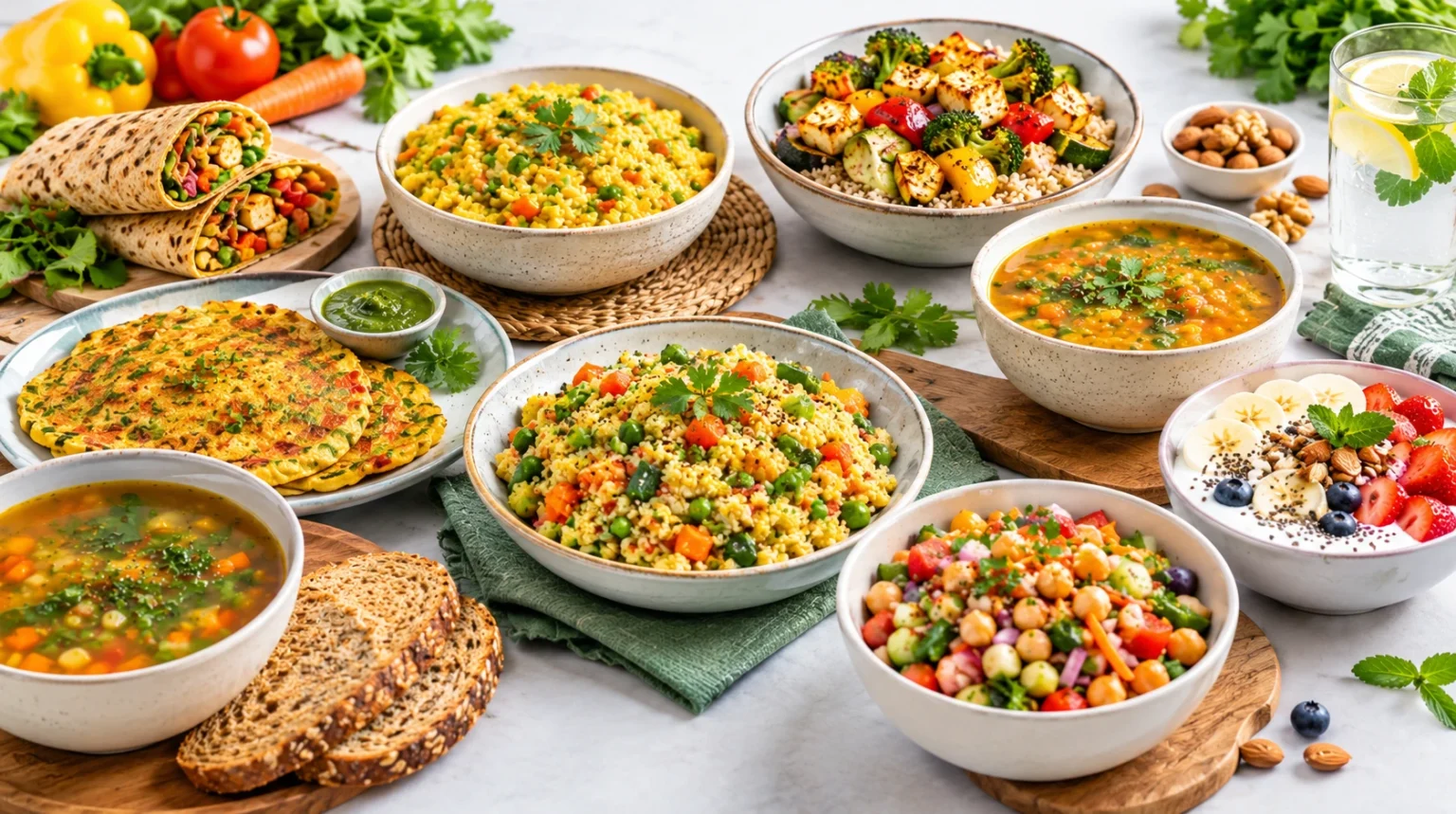
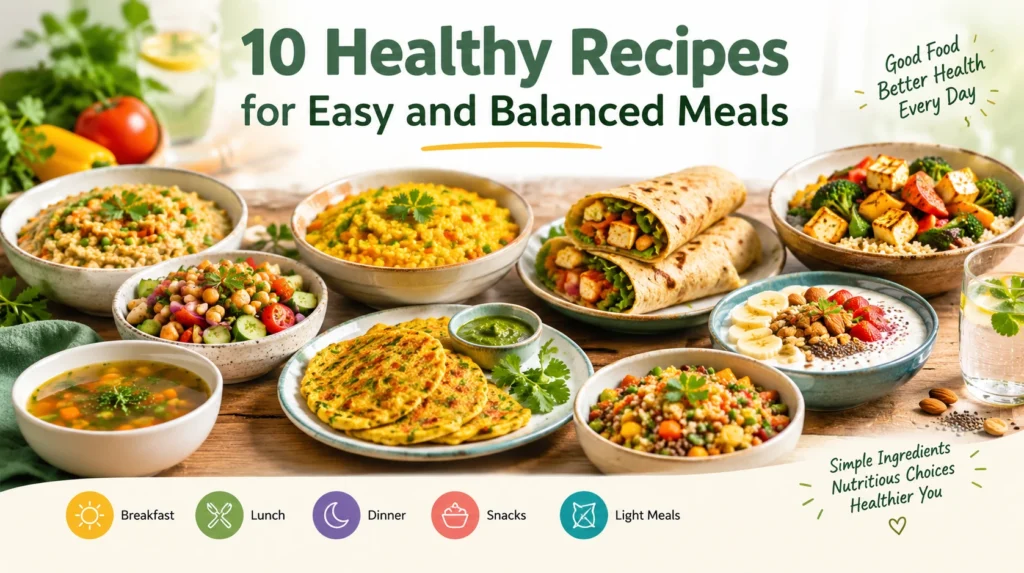
This guide shares 10 healthy recipes that are suitable for everyday meal planning. These healthy food recipes include simple Indian-style options for breakfast, lunch, dinner, snacks, and light meals.
Healthy Recipes for Easy and Balanced Meals
Choosing nutritious food does not mean giving up flavour. You can prepare balanced meals with familiar ingredients and simple cooking methods.
The Harvard Healthy Eating Plate provides one useful general approach to meal planning. It suggests making about half the plate vegetables and fruits, one-quarter whole grains, and one-quarter healthy protein sources.
When preparing healthy recipes, try to include different food groups throughout the day.
Some simple habits include:
- Add vegetables to main meals.
- Include fruits as part of meals or snacks.
- Choose whole grains more often.
- Include pulses, beans, nuts, seeds, or other suitable protein sources.
- Use cooking oil in sensible amounts.
- Limit foods high in added sugar and excess salt.
- Drink water regularly.
- Choose homemade meals when practical.
These simple habits can help you create more balanced healthy meal ideas without making your daily routine complicated.
1. Vegetable Oats Upma
Vegetable oats upma is an easy breakfast option that combines oats with colourful vegetables. It can be prepared quickly and adjusted according to the vegetables available at home.
Ingredients
- 1 cup oats
- ½ cup chopped carrots
- ½ cup peas
- ½ cup chopped beans
- 1 small onion, chopped
- 1 green chilli, optional
- 1 teaspoon cooking oil
- ½ teaspoon mustard seeds
- ½ teaspoon cumin seeds
- A pinch of turmeric
- A small amount of salt
- Water
- Fresh coriander
- Lemon juice
How to Prepare
- Dry roast the oats for a few minutes and keep them aside.
- Heat the oil in a pan.
- Add mustard seeds and cumin seeds.
- Add chopped onion and cook until soft.
- Add carrots, peas, and beans.
- Add turmeric and a small amount of salt.
- Cook the vegetables until slightly tender.
- Add water and bring it to a gentle boil.
- Slowly add the roasted oats while stirring.
- Cook until the oats become soft.
- Add coriander and a little lemon juice before serving.
This recipe combines oats with vegetables and can be a practical breakfast for a busy morning.
2. Moong Dal Chilla With Vegetables
Moong dal chilla is a simple Indian-style breakfast or light meal. It can be prepared with vegetables to add more variety to the meal.
Ingredients
- 1 cup soaked moong dal
- 1 small onion
- 1 small tomato
- 1 small grated carrot
- Fresh coriander
- Cumin seeds
- Green chilli, optional
- A small amount of salt
- Water
- A small amount of cooking oil
How to Prepare
- Soak the moong dal for several hours.
- Drain the water and blend the dal into a smooth batter.
- Add onion, tomato, carrot, coriander, cumin, and salt.
- Add a little water if the batter is too thick.
- Heat a suitable pan.
- Pour some batter onto the pan and spread it into a thin circle.
- Cook both sides until lightly golden.
- Serve with plain curd or homemade chutney.
Moong dal provides plant-based protein, while vegetables add variety to this easy meal.
3. Vegetable Dal Khichdi
Vegetable dal khichdi is a simple one-pot meal made with rice, dal, and vegetables. It can work well for lunch or dinner.
Ingredients
- ½ cup rice
- ½ cup moong dal
- 1 cup mixed vegetables
- 1 small onion
- 1 tomato
- ½ teaspoon cumin seeds
- Turmeric
- A small amount of salt
- Water
- A small amount of oil or ghee
How to Prepare
- Wash the rice and dal.
- Heat a small amount of oil or ghee.
- Add cumin seeds and onion.
- Add tomato and mixed vegetables.
- Add rice and dal.
- Add turmeric and a small amount of salt.
- Add enough water.
- Cook until the rice, dal, and vegetables become soft.
- Serve warm with plain curd if preferred.
This is one of the convenient healthy food recipes for combining grains, pulses, and vegetables in one meal.
4. Chickpea and Vegetable Salad
A chickpea salad can be used as a light lunch, snack, or side dish. It is easy to prepare and does not require complicated cooking.
Ingredients
- 1 cup cooked chickpeas
- 1 cucumber
- 1 tomato
- 1 small onion
- 1 small carrot
- Fresh coriander
- Lemon juice
- Roasted cumin powder
- A small amount of salt
How to Prepare
- Cook the chickpeas until soft.
- Drain and cool them.
- Chop the vegetables.
- Add chickpeas and vegetables to a bowl.
- Add lemon juice and cumin powder.
- Add a small amount of salt.
- Mix everything together.
- Add fresh coriander before serving.
You can serve this salad with whole-wheat roti or another suitable whole-grain food when you want a more filling meal.
5. Vegetable and Paneer Wrap
A vegetable and paneer wrap is a practical option for lunch or dinner. It combines vegetables with paneer and whole-wheat roti.
Ingredients
- 2 whole-wheat rotis
- ½ cup paneer cubes
- ½ capsicum
- 1 carrot
- 1 small onion
- ½ cup cabbage
- Cumin powder
- Black pepper
- A small amount of oil
- Plain curd or homemade chutney
How to Prepare
- Cut the vegetables into thin pieces.
- Lightly cook the paneer with cumin powder and black pepper.
- Stir-fry the vegetables using a small amount of oil.
- Place a whole-wheat roti on a plate.
- Add the cooked vegetables and paneer.
- Add a small amount of plain curd or homemade chutney.
- Roll the roti and serve.
You can change the vegetables based on the season and what you already have at home.
6. Vegetable Poha
Poha is a popular Indian breakfast that can be prepared with vegetables and mild spices. It is quick and easy to prepare.
Ingredients
- 1 cup poha
- ½ cup peas
- 1 small onion
- 1 small carrot
- A small amount of peanuts, if suitable
- Mustard seeds
- Curry leaves
- Turmeric
- Lemon juice
- Fresh coriander
- A small amount of oil
How to Prepare
- Rinse the poha gently and drain it.
- Heat a small amount of oil.
- Add mustard seeds and curry leaves.
- Add chopped onion.
- Add peas and carrot.
- Add turmeric.
- Add the rinsed poha.
- Mix gently and cook for a few minutes.
- Add lemon juice and coriander.
- Serve warm.
Adding vegetables can make a basic poha meal more varied.
7. Vegetable Soup With Whole-Grain Toast
Vegetable soup is a simple light meal or starter. You can use different seasonal vegetables to change the taste and texture.
Ingredients
- 1 carrot
- ½ cup beans
- ½ cup peas
- 1 tomato
- A handful of spinach
- 1 small onion
- 1 garlic clove
- Black pepper
- A small amount of salt
- Water
- Whole-grain bread
How to Prepare
- Wash and chop the vegetables.
- Lightly cook the onion and garlic.
- Add the vegetables.
- Add water.
- Cook until the vegetables become tender.
- Add black pepper and a small amount of salt.
- Serve warm with whole-grain toast.
Avoid adding large amounts of cream, butter, or salt if you want to keep the recipe simple.
8. Curd and Fruit Bowl
A curd and fruit bowl is one of the easiest healthy meal ideas for breakfast or a snack. It requires little preparation.
Ingredients
- Plain curd
- Banana
- Apple
- Papaya or another seasonal fruit
- A small amount of nuts
- Chia or flax seeds, if suitable
- Cinnamon, optional
How to Prepare
- Add plain curd to a bowl.
- Chop the selected fruits.
- Add the fruit to the curd.
- Add a small amount of nuts or seeds.
- Sprinkle cinnamon if preferred.
- Serve fresh.
Choose plain curd rather than heavily sweetened flavoured products when possible.
9. Vegetable Dalia
Vegetable dalia is another simple meal that can work for breakfast, lunch, or dinner. It can be prepared with vegetables and moong dal.
Ingredients
- 1 cup broken wheat
- ½ cup moong dal
- 1 carrot
- ½ cup peas
- ½ cup beans
- 1 tomato
- 1 small onion
- Cumin seeds
- Turmeric
- A small amount of salt
- Water
How to Prepare
- Wash the dalia and moong dal.
- Heat a small amount of oil.
- Add cumin seeds and onion.
- Add chopped vegetables and tomato.
- Add dalia and moong dal.
- Add turmeric and salt.
- Add water.
- Cook until everything becomes soft.
- Serve warm.
This recipe is easy to customise with seasonal vegetables.
10. Grilled Vegetable and Paneer Bowl
A grilled vegetable and paneer bowl can be a simple lunch or dinner. It combines vegetables, paneer, and a suitable whole-grain option.
Ingredients
- Paneer
- Capsicum
- Carrot
- Broccoli
- Onion
- Cooked brown rice
- Cumin powder
- Black pepper
- Lemon juice
- A small amount of oil
How to Prepare
- Cut the paneer and vegetables.
- Add cumin powder and black pepper.
- Lightly grill or cook them using a small amount of oil.
- Prepare the brown rice separately.
- Add the rice to a bowl.
- Add the cooked vegetables and paneer.
- Add a little lemon juice before serving.
You can replace paneer with tofu, chickpeas, beans, or another suitable protein source.
How to Build Balanced Meals?
Healthy eating is about your overall eating pattern rather than making every individual meal perfect.
The Harvard Healthy Eating Plate recommends filling about half the plate with vegetables and fruits, one-quarter with whole grains, and one-quarter with healthy protein sources.
You can use this as a simple guide when preparing everyday meals.
Include Vegetables and Fruits
Try to add different vegetables and seasonal fruits to your meals. Using different colours can also make meals more interesting.
Examples include:
- Carrots
- Spinach
- Tomatoes
- Beans
- Peas
- Cabbage
- Cucumber
- Papaya
- Guava
- Apples
- Oranges
WHO recommends a varied diet containing vegetables, fruits, pulses, whole grains, nuts, and suitable protein sources.
Choose Whole Grains
Whole grains can include:
- Oats
- Dalia
- Whole wheat
- Brown rice
- Millet
- Barley
Choosing whole-grain options more often can be part of a balanced eating pattern.
Add Suitable Protein Sources
Depending on your dietary preferences, protein can come from:
- Dal
- Chickpeas
- Beans
- Paneer
- Curd
- Tofu
- Eggs
- Fish
- Chicken
- Nuts and seeds
Include Healthy Fats in Sensible Amounts
Nuts, seeds, and suitable plant oils can be included as part of a balanced diet. The WHO recommends replacing saturated and trans fats with healthier unsaturated fats where possible.
Healthy Food Recipes: Simple Ways to Improve Everyday Meals
You do not need to completely change your diet to prepare nutritious meals. Small cooking changes can make your healthy food recipes easier to manage.
Use More Vegetables
Add vegetables to:
- Dal
- Poha
- Upma
- Khichdi
- Wraps
- Omelettes
- Rice dishes
- Soups
- Salads
Reduce Excess Salt
Use herbs, spices, lemon, ginger, garlic, and fresh coriander to add flavour instead of relying heavily on salt.
WHO recommends limiting salt intake and notes that adults should consume less than 5 grams of salt per day.
Limit Added Sugar
Try to reduce added sugar in drinks and desserts. Whole fruits can be a useful option when you want something naturally sweet.
WHO recommends keeping free sugars below 10% of total daily energy intake, with a further reduction potentially providing additional health benefits.
Choose Better Cooking Methods
Try:
- Steaming
- Boiling
- Roasting
- Grilling
- Light sautéing
These methods can be useful alternatives to frequent deep-frying.
Healthy Meal Ideas for Busy Days
A busy schedule can make cooking difficult. Simple planning can help you continue making nutritious food choices.
Try these practical ideas:
- Wash vegetables after shopping.
- Chop some vegetables in advance.
- Keep seasonal fruits ready to eat.
- Cook dal or chickpeas in a batch when practical.
- Keep oats and dalia available for quick meals.
- Prepare homemade chutney for several meals.
- Use leftover vegetables in wraps or salads.
- Keep whole-wheat roti or other suitable staples available.
- Carry simple homemade snacks when travelling.
- Keep drinking water regularly throughout the day.
The best healthy meal ideas are often the ones that fit naturally into your routine.
Meal Planning and Portion Balance
Meal planning can help you decide what to cook before you become hungry or busy.
A simple weekly plan could include:
Meal | Healthy Meal Ideas |
Breakfast | Vegetable poha, oats upma, moong dal chilla |
Lunch | Dal, vegetables, roti, rice, salad |
Snack | Fruit, plain curd, nuts |
Dinner | Vegetable khichdi, soup, paneer bowl |
Light meal | Chickpea salad or curd and fruit bowl |
Portion needs are different for every person. Instead of following a fixed portion size, focus on including a suitable mix of vegetables, fruits, whole grains, and protein sources.
Harvard’s Healthy Eating Plate can be used as a general visual guide when planning balanced meals.
How to Make Healthy Recipes More Enjoyable?
Healthy food does not need to be boring.
You can improve flavour by using:
- Fresh coriander
- Mint
- Lemon
- Ginger
- Garlic
- Cumin
- Turmeric
- Black pepper
- Homemade chutneys
- Seasonal vegetables
Try different combinations instead of preparing the same meal every day.
For example, you can use the same basic ingredients in different ways. Chickpeas can be used in a salad, wrap, curry, or bowl. Vegetables can be added to poha, dalia, soup, rice, or roti rolls.
This approach gives you more variety without requiring many different ingredients.
Common Mistakes When Preparing Healthy Meals
Using Too Much Oil
Oil can be part of a balanced diet, but using large amounts can make meals heavier. Measure oil when cooking if you are trying to control how much you use.
Adding Too Much Salt
Processed sauces, packaged snacks, instant foods, and pickles can also contribute salt to the diet. Check labels when buying packaged foods.
Using Too Much Sugar
Adding sugar to drinks, curd, desserts, and other foods can increase free sugar intake.
Relying Only on One Food Group
A meal made only from vegetables, only from rice, or only from fruit may not provide the same variety as a meal containing different food groups.
Making Recipes Too Complicated
If a recipe takes too long to prepare, you may find it difficult to repeat regularly. Simple recipes are often easier to include in your routine.
Frequently Asked Questions About Healthy Recipes
What are healthy recipes?
Healthy recipes are meals made with a variety of nutritious ingredients, such as vegetables, fruits, whole grains, pulses, nuts, seeds, and suitable protein sources. A healthy eating pattern also considers balance and moderation.
What are some easy healthy meal ideas?
Some easy healthy meal ideas include vegetable poha, oats upma, moong dal chilla, chickpea salad, vegetable dalia, vegetable soup, and curd with fresh fruit.
What are healthy food recipes for Indian meals?
Indian meals such as dal with vegetables, vegetable khichdi, poha, moong dal chilla, vegetable dalia, chickpea salad, and paneer wraps can be prepared with simple ingredients and balanced cooking methods.
Can healthy recipes be quick to prepare?
Yes. Many healthy recipes can be prepared quickly. Poha, oats upma, salads, curd and fruit bowls, and simple vegetable wraps are examples of meals that can require relatively little preparation.
How can I make my meals more balanced?
Try including vegetables or fruit, a suitable protein source, and a whole-grain or other carbohydrate source. Harvard’s Healthy Eating Plate offers a general guide for creating balanced meals.
Final Thoughts
Preparing healthy recipes at home can be a simple way to include more nutritious foods in your everyday meals. You can use familiar ingredients such as vegetables, fruits, pulses, whole grains, curd, paneer, nuts, and seeds to create a variety of meals.
The 10 recipes in this guide provide practical options for breakfast, lunch, dinner, snacks, and light meals. You can also adjust ingredients based on seasonal availability and personal food preferences.
Focus on variety rather than perfection. Include different food groups, use sensible cooking methods, limit excess salt and added sugar, and plan meals that are realistic for your daily routine.
For more general information about healthy eating, nutrition, meal planning, and wellness, explore the Diet and Nutrition Tips category on GoHealthyPro.
Disclaimer
This article is intended for general health awareness and educational purposes only. It does not provide medical advice, diagnosis, or treatment. Nutritional needs can vary between individuals. Please consult a qualified healthcare professional or registered dietitian for personalised dietary advice.