

Introduction
Getting fit doesn’t require a gym membership, expensive gear, or hours of your day. The best no-equipment home workout is the one you’ll actually do. This guide covers fitness and exercise fundamentals in one practical plan — built for real life, real schedules, and real beginners.
The Science Behind Bodyweight Training for Beginners
A lot of people assume you need a barbell or a cable machine to see real fitness results. The research says otherwise. Your bodyweight is a remarkably effective training tool — especially when you’re just starting out.
Efficiency of Compound Movements in Home Workouts
Compound movements work multiple muscle groups at the same time. A squat engages your quads, hamstrings, glutes, and core simultaneously. This makes bodyweight training incredibly time-efficient — you’re doing more work in less time than a machine that isolates a single muscle. For a beginner home workout plan with limited time, compound moves are the engine that drives fast results.
How Muscle Adaptation Occurs Without Heavy Weights
Your muscles grow when they face more challenge than they’re used to — a process called progressive overload. You don’t need heavy iron to trigger this. Slowing down your reps, reducing rest time, or modifying an exercise to a harder variation all create the tension needed for muscle adaptation. Calisthenics for beginners leverages this principle naturally.
The Metabolic Impact of Short, High-Intensity Intervals
Short bursts of higher-intensity effort — even just 15 to 20 minutes — can elevate your metabolism for hours after you finish. This is called the EPOC effect (Excess Post-Exercise Oxygen Consumption). A focused 20-minute full body workout for beginners delivers measurable calorie burn long after you’ve sat back down at your desk.
| 🔬 Science Note Studies show that 20–30 minutes of structured bodyweight training, 3–4 times per week, produces comparable strength and cardiovascular improvements to longer gym-based sessions — especially for entry-level strength routines. |
5 Key Health Benefits of Starting a Home Fitness Routine
A beginner workout routine at home isn’t just about how you look. The benefits run much deeper than the mirror.
- Improved Cardiovascular Health: Regular low-impact home exercises strengthen your heart muscle, lower resting heart rate, and improve blood circulation. Even 20 minutes of moderate movement three times per week significantly reduces heart disease risk.
Enhanced Mental Clarity: Exercise releases endorphins and serotonin. Supporting your mental well-being through movement is one of the most evidence-backed interventions for reducing anxiety and sharpening focus.
- Increased Bone Density: Functional strength training for beginners at home places gentle stress on bones, signaling them to become denser. This reduces osteoporosis risk dramatically with consistent, simple wellness movements.
- Metabolism Boost: Building lean muscle through a minimalist home fitness routine raises your resting metabolic rate, supporting a home workout plan for weight loss without equipment.
- Convenience: Eliminating the Time-Barrier: No commute, no waiting for equipment. Apartment-friendly beginner workouts fit inside a yoga mat’s footprint and a 25-minute window.
| Quick Stats Most beginners notice energy improvements within 1–2 weeks. Visible changes appear around 4–6 weeks. Strength gains can show even sooner — progress starts from day one. |
Step-by-Step Guide to Your First Home Workout
Think of this routine like a three-act play. The warm-up sets the stage, the main circuit is the performance, and the cool-down is the curtain call. Skip any act, and the whole show suffers.
| 5 min — Warm-Up | 15–20 min — Circuit ×3 | 5 min — Cool-Down |
| 1 | Phase 1: The 5-Minute Dynamic Warm-Up Prepare your joints and raise your core temperature before any loading |
[60 sec] Arm Circles and Leg Swings
Start small and progressively widen the circles to lubricate your shoulder and hip joints. These mobilize the most commonly stiff areas before any loaded movement.
[60 sec] Cat-Cow Stretch for Spinal Mobility
On hands and knees, alternate arching and rounding your spine in sync with your breath. This warms up your vertebrae and activates your deep core stabilizers before squats and lunges.
[2 min] Light Jogging in Place
Gradually increase your pace over two minutes. This raises your heart rate, warms your muscles, and mentally prepares you for the circuit ahead.
| 2 | Phase 2: The Core Bodyweight Circuit Complete all 5 exercises with 30–45 sec rest between moves. Repeat 3 rounds. |
[15 reps] Squats — The King of Lower Body Exercises
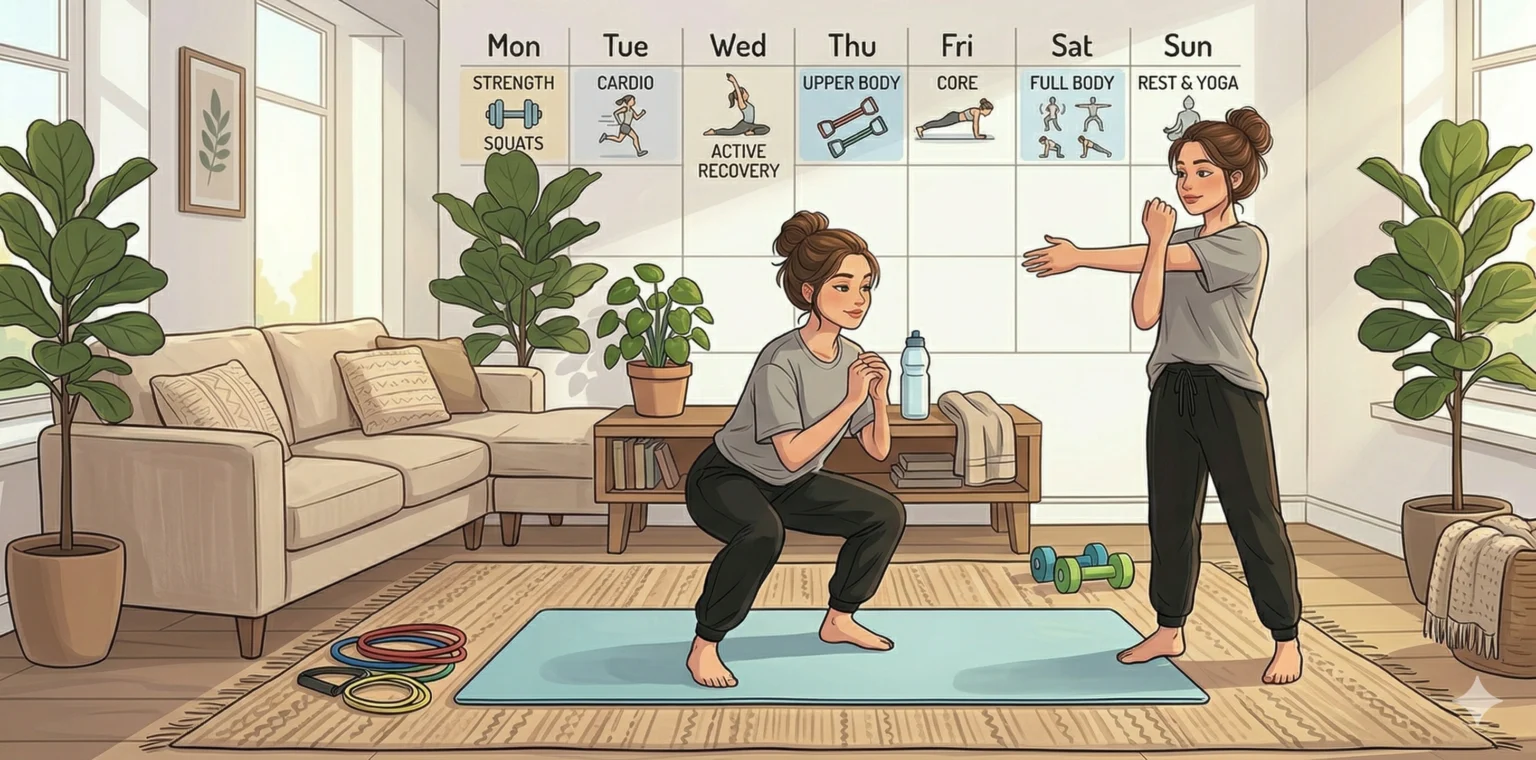
Stand feet shoulder-width apart, toes slightly out. Lower as if sitting into a chair — chest tall, knees tracking over toes, weight in your heels. Proper squat form for beginners means your knees never cave inward. Drive through your heels to stand. This single move targets quads, hamstrings, glutes, and core.
[10–12 reps] Incline or Standard Push-Ups
Start with incline push-ups (hands on a counter or chair) if standard feels too hard. Modified push-ups for strength are just as effective when done slowly. Keep your core tight and your hips level — a sagging hip is a back injury waiting to happen.
[10 per leg] Walking Lunges for Balance and Coordination
Step forward, lower your back knee toward the floor, then drive up and step forward with the opposite foot. Walking lunges for leg strength challenge your balance while building single-leg stability — critical for everyday movement.
[30 sec] Forearm Plank — Core Stability Foundation
Elbows under shoulders, forearms flat, toes on the floor. Keep your body in a straight line from head to heel. This beginner core stability exercise is the most functional movement in this entire routine. If 30 seconds is too much, start at 15 and build up.
[15 reps] Glute Bridges — Strengthening the Posterior Chain
Lie on your back, knees bent, feet flat. Drive your hips toward the ceiling, squeezing your glutes hard at the top. This counters the damage done by prolonged sitting and is essential for a healthy lower back.
| 3 | Phase 3: Post-Workout Recovery and Cool-Down Recovery is where the results actually happen — don’t skip it |
[3 min] Static Stretching (Hamstrings, Chest, and Quads)
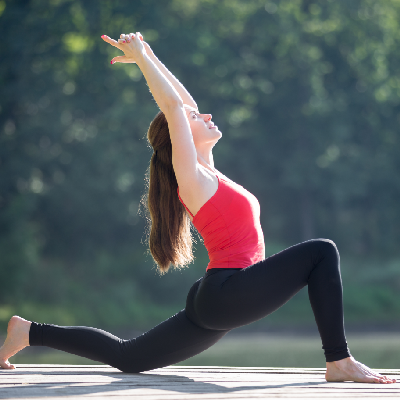
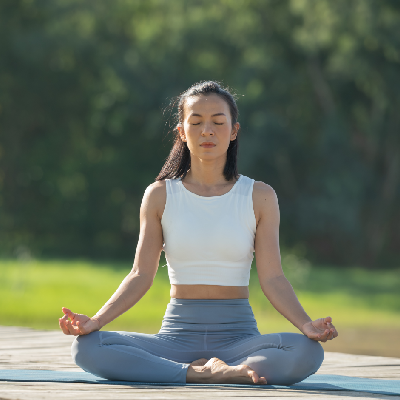
Hold each stretch for 20–30 seconds without bouncing. This reduces next-day soreness and improves long-term flexibility. Pairing this with yoga and meditation practices on rest days accelerates recovery significantly.
[2 min] Deep Breathing to Lower Heart Rate
Slow your breathing to a 4-count inhale and 6-count exhale. This activates the parasympathetic nervous system, bringing your heart rate and cortisol levels back down.
Common Myths vs. Facts About Home Fitness
Let’s clear up three myths that might be holding you back. Misconceptions are the number one reason people quit before they ever see results.
|
|
| You need expensive equipment to see real results. | Bodyweight resistance is sufficient for significant strength gains — especially in the first 6–12 months. Progressive overload works without any equipment at all. |
| Home workouts are “easier” than gym workouts. | Intensity is determined by form, tempo, and rest periods — not location. A properly executed bodyweight circuit can be more demanding than a casual gym session. |
| You must work out for at least an hour to see benefits. | A focused 15-minute beginner fitness routine yields major cardiovascular and strength benefits. Science backs short, high-effort training as highly effective. |
|
Bottom Line The best at-home workouts aren’t defined by duration or dollar spend. They’re defined by consistency, effort, and sound technique. Show up regularly, move with intention, and the results follow. |
Precautions and Safety Tips for Beginners
Starting a new home fitness routine is exciting — but going too hard too fast is the most common beginner mistake. Here are four non-negotiables to keep you training injury-free.
- Master Form Before Speed: Slow, controlled reps with good technique will always outperform fast, sloppy ones. Record yourself or use a mirror to check alignment. Speed is earned, not assumed.
- Breathe Intentionally: Exhale on the exertion (the ‘hard’ part), inhale on the release. Holding your breath spikes blood pressure and accelerates fatigue. Breathing techniques during exertion are a skill — practice them from day one.
- Know Your Pain Signals: Muscle burn and fatigue is expected. Sharp, stabbing, or joint pain is a stop signal. Learning to distinguish ‘good pain’ from injury protects your long-term consistency.
- Create a Safe Space: Use a non-slip mat on hard floors. Clear enough room to extend your arms fully in every direction. Small space exercise routines work perfectly in apartments when the surface is stable.
| Beginner Reminder If you have any existing injuries, chronic conditions, or have been sedentary for an extended period, please consult a physician before beginning any new daily exercise for beginners program. |
Expert Tips for Maintaining Consistency in a Busy Schedule
Knowing the workout is the easy part. Showing up when life gets busy is the real challenge. These four strategies help beginners build sustainable health habits.
- Habit Stacking: Attach your workout to an existing habit. ‘After I make my morning coffee, I do my workout.’ The established habit becomes the trigger. Don’t rely on motivation — rely on structure.
- Prepare Your Workout Gear the Night Before: Set out your mat, clothes, and water bottle before bed. Decision fatigue in the morning is real — removing every friction point makes it dramatically easier to actually start.
- Set Micro-Goals to Stay Motivated: Instead of ‘I want to lose 10 kg,’ set ‘I’ll complete 3 workouts this week.’ Micro-goals give you frequent small wins that build momentum and identity.
- Use Mobile Apps and Timers: A simple interval timer app takes the guesswork out of rest periods. Apps like Nike Training Club or FitOn provide structure and accountability — turning how to get fit at home into a guided experience.
Conclusion
Getting fit doesn’t require a gym, a personal trainer, or an hour carved out of an already packed day. The beginner workout routine at home you’ve just read covers everything you need: the science, the structure, the safety, and the strategy to stay consistent.
Start with three sessions per week. Focus on form. Add one extra rep or one extra second of plank each week. Small, sustainable progress compounds into remarkable results over months.
| MEDICAL DISCLAIMER The information in this article is for general educational purposes only and does not constitute medical advice. Always consult with a qualified physician or certified fitness professional before beginning any new exercise program, particularly if you have a pre-existing health condition, injury, or have been inactive for an extended period. Individual results may vary. |
FAQs
Do I need to work out every day to see results?
No. Three to four sessions per week with adequate rest between them is the sweet spot for most beginners. Rest days are when your muscles actually repair and grow. Consistency over time matters far more than daily frequency.
What is the best time of day for a home workout?
The best time is whenever you’ll actually do it. Morning workouts tend to have fewer scheduling conflicts. Evening sessions relieve accumulated stress. Pick the time that works for your life and stick to it.
Can I lose weight by only doing home workouts?
Yes — with the right combination of training and nutrition. A home workout plan for weight loss (no equipment) works when combined with a caloric deficit and sufficient protein intake.
What should I eat before and after my home workout?
Eat a light meal with carbohydrates and some protein 1–2 hours before training. Post-workout, prioritize protein within 45–60 minutes to support muscle repair. For a complete approach to fueling your fitness, explore this healthy diet plan tailored to active lifestyles.
How do I know if I’m doing a squat correctly?
Use a mirror or record yourself from the side. Key checkpoints: chest tall, knees tracking over your second toe (not caving inward), hips going below parallel if possible, and weight staying in your heels — not rolling to your toes.
Can I do these exercises if I have a small living space?
Absolutely. All exercises in this plan fit within the space of a standard yoga mat — roughly 60cm × 180cm. Walking lunges can be replaced with stationary lunges in especially tight spaces. Apartment-friendly beginner workouts are intentionally designed for compact environments.
How long will it take to see physical changes?
Most people notice improved energy and mood within the first one to two weeks. Visible physical changes typically begin around four to six weeks with consistent training and supportive nutrition.