

A quick answer: The best foods to eat on an empty stomach are those that are low in acid, easy to digest, and gentle on the stomach such as soaked almonds, oats, papaya and bananas. Empty-stomach foods that are high in fat, carbonated, spicy or highly acidic such as citrus, black coffee and fried food don’t make for the best options as there’s nothing in your tummy to neutralize them.
The right foods to eat on an empty stomach lay the groundwork for the rest of your day, digestion, energy and stomach lining. There are some foods which are soothing and actually beneficial in the morning. Others can cause stomach discomfort, bloating or acidity by just being there; and there isn’t anything else in your stomach to buffer them.
It isn’t a book of rules, it’s a rule-of-thumb guide, so everyone’s system works a little differently. However, there are some trends being noticed by dietitians and doctors that are worth the knowledge before deciding on that favorite morning coffee or that last slice of citrus fruit. Here is a list of empty stomach foods, foods to eat at the first bite of the morning and the foods to stay away from and why.
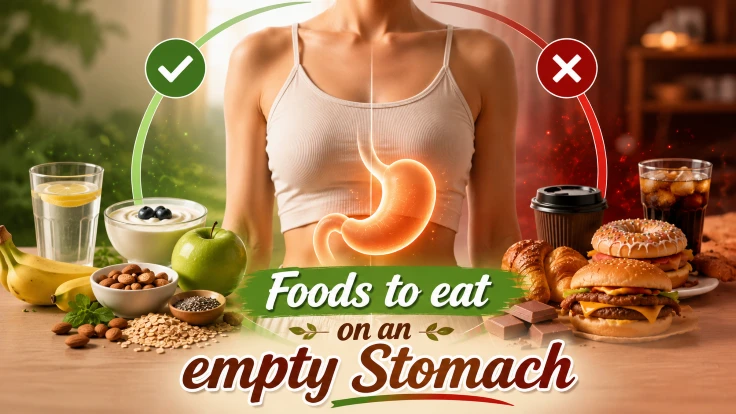
Eat on an empty stomach! vs. Don’t on an empty stomach
Here’s a quick snapshot of the best foods to eat on an empty stomach compared with what to avoid:
| Eat on an empty stomach! | Don’t eat on an empty stomach |
|---|---|
| Soaked almonds | Fresh fruits and vegetables (citrus fruits like orange, lemon and grapefruit) |
| Boil water for a few minutes and add 1/4 lemon juice. | Black coffee (unmixed coffee) |
| Papaya | Spicy food |
| Oats | Carbonated/cold drinks |
| Soaked chia seeds | Raw tomatoes |
| Bananas (in moderation) | Alcohol |
| Watermelon | Crackers or biscuit sticks with sugar added. |
| Boiled eggs | Raw leafy greens/salad |
| Dates | Fatty foods or fried food |
| Herbal tea (ginger/chamomile) | Carbonated energy drinks |

The 10 Best Foods for an Empty Stomach
Below is a closer, one-by-one look at the best foods to eat on an empty stomach and why each one made the list.
1. Soaked Almonds
The skin of raw almonds contains tannins and enzyme inhibitors which make it more difficult to digest if the stomach is empty. That’s because soaked almonds feel considerably easier to sit on than dry almonds do, due to these compounds being neutralized by soaking overnight. They can also provide you with healthy fats, plant protein and magnesium without any spiking of your blood sugar and are digested slowly to keep you feeling full for longer. The trick: Soak about 5-6 almonds overnight and consume them first thing in the morning before anything else.
2. Prepare a Warm Water with Lemon (Diluted)
Gently re-hydrated with warm water after hours without water, and a little lemon juice is added to boost digestive enzymes and provide vitamin C. You should dilute the acid, as in squeezing a full lemon into a small glass, or as in real lemon juice, is concentrated enough to cause the same acidity problems as eating lemons. Try this: A few teaspoons of juice in a full glass of warm water. If you already suffer with acid reflux, it’s safer to go with warm water.
3. Papaya
The digestive enzyme, papain, in papaya, is superior in its ability to digest protein rather than overworking your stomach like other fruits. It releases its sugars slowly and doesn’t have a high amount of acid like citrus, tomatoes or pineapple, which is why it’s one of the top fruits recommended for empty stomachs. Do this: A cup of ripe, cubed papaya 20-30 minutes before eating other foods.
4. Oats
The soluble fiber (beta-glucan) found in oats creates a gel in the stomach, which slows the digestion rate — carbohydrates are absorbed gradually and help to keep your blood sugar more stable and help to delay hunger for hours. They are not very tasty or nutritious, hence their status as one of the most recommended “safe default” breakfasts. To try this: Add half a cup to water or milk and garnish with banana slices or some almonds; avoid sugary instant packets that reduce the blood-sugar effect.
5. Soaked Chia Seeds
Dry chia seeds are dense and take up liquid very quickly, and may feel uncomfortable on an empty tummy. A 20+ minute soaking allows them to set up as a soft gel which is easier to digest while still providing fiber and plant-based omega-3s. Mix 1 to 2 tablespoons in water or milk; allow to gel and then eat or drink. Do not use too much fiber at a time, as it can cause bloating even if soaked.
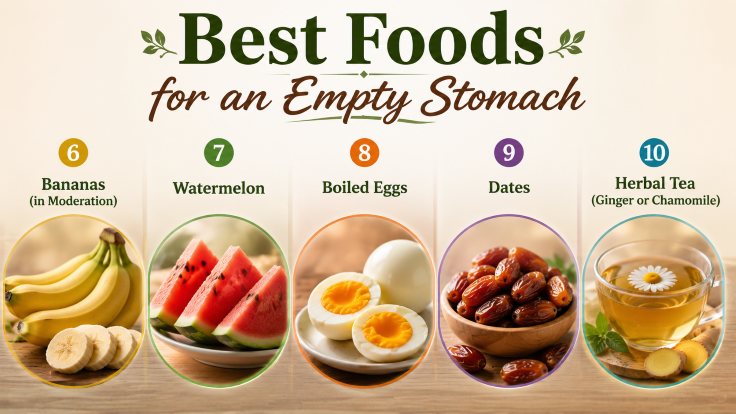
6. Bananas (in Moderation)
Banana’s are one of the easier-to-digest fruits to consume in the morning as they contain natural sugars and potassium. But the “in moderation” is important: eaten all by itself some people find a banana makes them hunger again soon; eaten unripe it is a bit harder to digest, as the banana contains more resistant starch. Don’t eat bananas alone, and instead try serving them with a little protein or fat, like a handful of almonds.
7. Watermelon
This is because watermelon is one of the most hydrating and lightest foods you can consume, as it’s made up of about 90% water, which means that there’s less solid food to work through in your stomach. The acidity is also quite low, as are citrus and pineapple, so it won’t bother anyone who is susceptible to acidity in the morning. The trick: Sip a cup or two by itself. It is very watery, so don’t consider it as a “stay full for hours” food.
8. Boiled Eggs
Eggs are rich in protein, and a choice of protein for breakfast, vs sugar or refined carbohydrates, can lead to more sustained energy levels and less mid-morning craving for food. Specifically, boiling is the gentler method of preparation (as opposed to frying, which adds in oil, which may slow digestion and add to sluggishness). Try this: One or two boiled eggs, on their own or with oats or toast.
9. Dates
In several cultures dates have been used specifically to break a fast: sweet, easily chewed and digested, and provide a nice blood sugar spike and energy after an overnight fast. They are higher in fibre than refined sugar, so they are absorbed more slowly and don’t cause the ‘crash’ that happens after eating something such as a pastry. Try this: Two or three dates with some almonds.
10. Herbal Tea (Ginger or Chamomile)
Ginger and Chamomile tea, unlike coffee, are not acid forming and are also naturally free of caffeine. Therefore, they do not stimulate the production of acid and do not cause an increase in cortisol. Ginger is especially and quite widely used for digestion and to alleviate mild stomach pain, and it’s a very useful alternative to coffee. Try this: A cup (unsweetened) alone or with a light food choice.
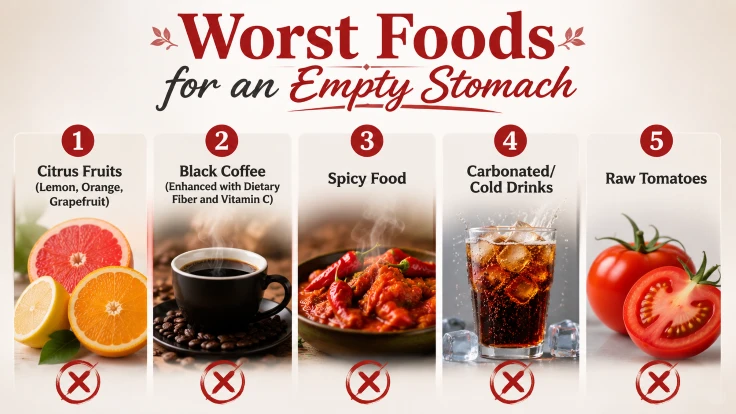
10 Worst Foods for an Empty Stomach (and Why)
1. Citrus Fruits (Lemon, Orange, Grapefruit)
Citrus fruits contain a lot of citric acid; usually, this acid is neutralized by the contents of your stomach. If you’re very hungry, the stomach is not protected by anything, and the acid will come into direct contact with the stomach wall, which can often lead to heartburn, particularly in those who are already susceptible to reflux. The fruit is good, but it is the timing that is the problem – having it after a small amount of other food generally doesn’t cause a problem.
2. Black Coffee (Enhanced with Dietary Fiber and Vitamin C)
Coffee increases the production of gastric acid whether or not there is food in the stomach. When unoccupied with food, that acid will lay right next to the stomach wall and can irritate it or make it feel like a hungry stomach. Caffeine has also been known to increase cortisol, and if it’s not food that helps to lower the absorption, it will be more pronounced, hence some people will feel quite jittery or anxious after a cup of coffee without eating first. Even biting into a few almonds initially can help to tone down the excess.
For further reading on how coffee interacts with stomach acid, see the Cleveland Clinic’s guide to coffee and acid reflux.
3. Spicy Food
Capsaicin and other compounds, such as capsaicin, irritate the lining of the stomach at any time of the day, and more so when it’s empty, because it isn’t mixed with other foods. This is a fairly common, and oft-ignored, reason for stomach pain in the morning and is more severe in individuals with an already sensitive stomach or acid reflux.
4. Carbonated/Cold Drinks
Carbonated drinks put gas in an empty stomach that is already more sensitive and are very cold, just when the body is trying to warm up for the day and digest its food. A favorite combination that often causes mild cramping and bloating. The same goes for sparkling water – not just soda – and sugary sodas add a blood sugar boost as well.
5. Raw Tomatoes
Tomatoes are acidic like citrus, but can also contain an acid called tannic, which in some individuals, with regular use on an empty stomach, may lead to stomach stones (bezoars), an unknown condition but not without cause that physicians warn of. In most cases, the acidity will make for the same type of heartburn as citrus fruit.
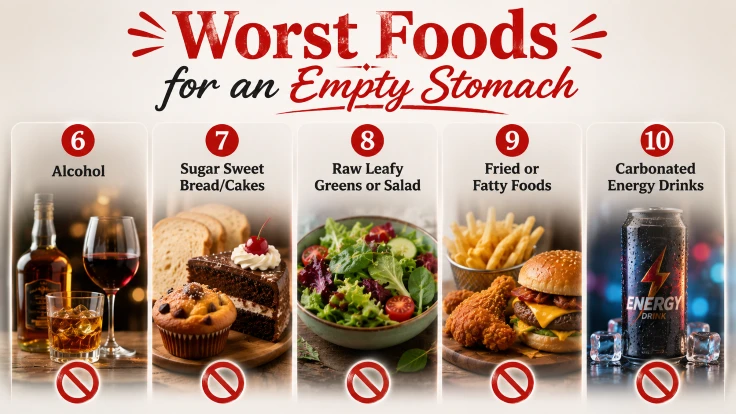
6. Alcohol
When you have nothing in your stomach, the alcohol goes straight into the small intestine, the most important place to absorb alcohol from food, and for this reason you get “sobered” quicker and harder, plus the alcohol will irritate the lining of the small intestine, which is the lining of your stomach as well. This is most important in situations such as day drinking or not eating before an event.
7. Sugar Sweet Bread/Cakes
Pure sugar (low fibre and protein) gets rapidly absorbed and triggers a rapid rise in blood sugar. Your body reacts by releasing insulin that brings your glucose down quickly, sometimes even dramatically — to the extent that you may be hungry and fatigue more quickly within an hour or two after eating this meal, than you would after a protein- or fiber-rich breakfast.
8. Raw Leafy Greens or Salad
Though leafy greens offer tremendous nutritional value, the high fiber content is the reason for their not being an easy breakfast option for many people: After a good night’s sleep and a nightcap, digestion is still “warming up” and a large dose of raw fiber at the start of the day can lead to bloating or discomfort. They’re great later in the day when you can digest them, so it isn’t what they are, it’s the time of day.
9. Fried or Fatty Foods
Fried and fatty foods are harder to digest, and require more stomach acid to digest. Normally, doing that first thing will cause your body to become sluggish or bloated and may allow the fat to relax the valve between your stomach and esophagus, increasing the chance of reflux.
10. Carbonated Energy Drinks
There are a number of issues here with energy drinks, not only are they going to be bloated, but they’re going to have a lot of caffeine and sugar in them, which can cause a rise in cortisol and blood sugar at the same time. That combo is more potent — and any more jumbled — when it’s taken on an empty stomach, with no buffers slowing the absorption.
A Few Practical Notes
Keeping a shortlist of the best foods to eat on an empty stomach handy can make it much easier to build a gentler morning routine.
- Individual tolerance varies. There are some people who can eat citrus or coffee on an empty stomach without any problems, and others who feel it as soon as they eat citrus or coffee. Notice any patterns of your own, and don’t think that all of these items apply to you.
- It’s all about the pairing as well as the timing. What may have been a food that is hard on an empty stomach may be tolerated with a small amount of protein or fat (for some people, a banana alone is a hard food to eat).
- This is a list that isn’t about fear, it’s about pattern recognition. Anyone who has felt unwell after drinking their morning cup of coffee or citrus fruit juice and wondered why, may have this problem.
FAQs
Q1. What are the risks of consuming coffee on empty stomach daily?
It’s not necessarily a bad thing, but it’s a more prevalent cause of acidity and a jittery morning. Try to have some food before drinking your first cup of coffee if you experience stomach upset or anxiety after your coffee. A small amount of food – just a banana or soaked almonds – can make a significant difference.
Q2. Are all fruits OK for consumption without any food?
No — that is one of the more common of the misconceptions. Fruits are healthy in general, but some fruits such as citrus, tomato, are generally not well tolerated on an empty stomach, and others such as papaya, watermelon and bananas are more tolerable.
Q3. What is the reason why spicy food doesn't seem to agree with me in the morning as much as it does at other times?
The effect on the stomach lining is more direct and noticeable than the same food later in the day, when there’s other food in the stomach to buffer and dilute the irritation from the food.
Q4. Should you have a light snack prior to your morning workout?
Most people: yes, a small easy to digest food such as a banana or a few dates will provide your body with some energy without being too heavy, while some people may feel faint or lightheaded amid the exercise if they are very hungry.
Q5. When is the best time to have breakfast?
While there is no one “right” window, it’s after 3–4 hours of sleeping when you’ve not eaten anything, particularly if you haven’t had any caffeine for the same period, that acid and discomfort tend to present for those who are prone to it. It is usually better to tune into internal cues of hunger rather than to a rigid schedule.
Final Takeaway
Sticking to the best foods to eat on an empty stomach — soaked almonds, papaya, oats, bananas and the rest of the list above — is a simple way to protect your digestion and start the day on the right note.