


Introduction
In today’s fast-moving world, stress and exhaustion have become part of daily life. Mental burnout is a growing problem that affects emotional health, productivity, relationships, and overall well-being. Many people ignore the early signs until they feel completely drained, overwhelmed, and emotionally exhausted.
Whether you are a student, working professional, business owner, or homemaker, understanding the symptoms of mental burnout can help you take action before it impacts your health seriously. Recognizing these warning signs early is essential for protecting your mental health and maintaining a balanced, productive, and fulfilling life.
What Is Mental Burnout?
Mental burnout is a state of emotional, physical, and mental exhaustion caused by prolonged stress and pressure. It usually develops slowly when a person constantly feels overwhelmed, emotionally drained, and unable to meet ongoing demands.
Unlike normal tiredness, mental burnout does not disappear after a short rest. It can affect concentration, mood, sleep quality, energy levels, and motivation. If ignored for too long, it may lead to anxiety, depression, and other health-related issues.
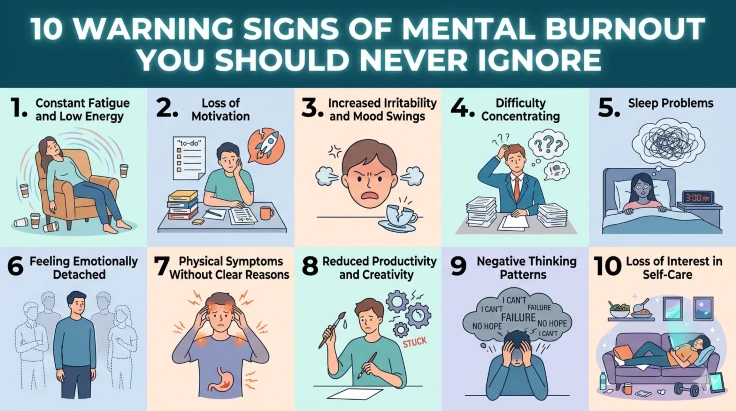
10 Warning Signs of Mental Burnout You Should Never Ignore
1. Constant Fatigue and Low Energy
One of the biggest signs of mental burnout is feeling tired all the time, even after getting enough sleep. You may wake up exhausted and struggle to complete simple daily tasks.
Mental exhaustion often drains motivation and energy levels. Small responsibilities may start feeling difficult, and your body may feel heavy throughout the day.
Common Symptoms
- Feeling drained from the morning
- Lack of enthusiasm
- Difficulty completing tasks
- Reduced physical energy
Ignoring this symptom can make burnout worse over time.
2. Loss of Motivation
Another major symptom of mental burnout is losing interest in activities you once enjoyed. Work, hobbies, fitness routines, or social interactions may suddenly feel meaningless.
People experiencing burnout often feel emotionally disconnected from their goals. Even highly motivated individuals may struggle to stay productive.
Why It Happens
Continuous stress reduces mental energy and emotional engagement. Your brain starts protecting itself by lowering enthusiasm and motivation.
3. Increased Irritability and Mood Swings
Mental burnout can significantly affect emotional balance. You may become impatient, frustrated, or angry over small issues.
Simple conversations may feel overwhelming, and emotional reactions can become stronger than usual. This often affects personal and professional relationships.
Signs to Watch
- Frequent frustration
- Short temper
- Emotional outbursts
- Feeling overwhelmed easily
These mood changes are often early warning signs that your mind needs rest.
4. Difficulty Concentrating
When mental burnout increases, concentration and focus become weaker. Many people find it hard to complete tasks, remember information, or make decisions.
Your mind may constantly feel distracted or foggy. Even simple work can take longer than usual because the brain struggles to process information efficiently.
Effects on Daily Life
- Reduced productivity
- Forgetfulness
- Poor decision-making
- Lack of mental clarity
Mental fatigue directly impacts cognitive performance and efficiency.
5. Sleep Problems
Sleep disturbances are another common symptom of mental burnout. Some people struggle to fall asleep, while others sleep for long hours but still feel exhausted.
Stress and overthinking often keep the mind active at night, preventing proper rest and recovery.
Common Sleep Issues
- Insomnia
- Frequent waking during the night
- Restless sleep
- Feeling tired after sleeping
Poor sleep can create a harmful cycle that increases burnout symptoms further.
6. Feeling Emotionally Detached
People experiencing mental burnout often start feeling emotionally numb or disconnected from others. Conversations, relationships, and responsibilities may feel emotionally exhausting.
You may avoid social interactions and prefer isolation because emotional energy becomes limited.
Emotional Symptoms
- Lack of empathy
- Feeling disconnected
- Avoiding people
- Emotional numbness
This detachment can affect both personal happiness and relationships.
7. Physical Symptoms Without Clear Reasons
Mental burnout does not only affect the mind. It can also create physical health problems.
Chronic stress often leads to headaches, body pain, digestive issues, muscle tension, and weakened immunity.
Physical Signs of Mental Burnout
- Frequent headaches
- Stomach discomfort
- Body aches
- Increased illness
- Muscle tension
When stress remains unmanaged for long periods, the body starts reacting physically.
8. Reduced Productivity and Creativity
Burnout decreases mental performance and creative thinking. Tasks that once felt simple may suddenly require extra effort and time.
You may struggle with problem-solving, idea generation, or completing deadlines efficiently.
Workplace Impact
- Declining work quality
- Missed deadlines
- Lack of innovation
- Increased mistakes
Mental burnout can significantly reduce professional growth and confidence.
9. Negative Thinking Patterns
Another important warning sign of mental burnout is constant negativity. You may become overly critical of yourself and lose confidence in your abilities.
Stress can make the mind focus more on problems than solutions, creating feelings of hopelessness.
Common Negative Thoughts
- “I am not good enough.”
- “Nothing is improving.”
- “I cannot handle this anymore.”
These thoughts can seriously affect emotional health if ignored.
10. Loss of Interest in Self-Care
When people experience mental burnout, they often stop prioritizing healthy habits. Exercise, healthy eating, hydration, and personal care may feel unimportant.
This creates a cycle where poor self-care increases stress and exhaustion further.
Major Causes of Mental Burnout
Understanding the causes of mental burnout can help prevent it in the future.
Work Overload
Long working hours, unrealistic expectations, and constant deadlines are major contributors to burnout.
Lack of Work-Life Balance
When personal time disappears, stress levels increase rapidly. Continuous work without relaxation affects mental recovery.
Emotional Stress
Relationship issues, financial pressure, and family responsibilities can also contribute to emotional exhaustion.
Perfectionism
Trying to achieve unrealistic standards often creates constant pressure and dissatisfaction.
Digital Overload
Too much screen time and social media exposure can overwhelm the brain and increase stress levels.
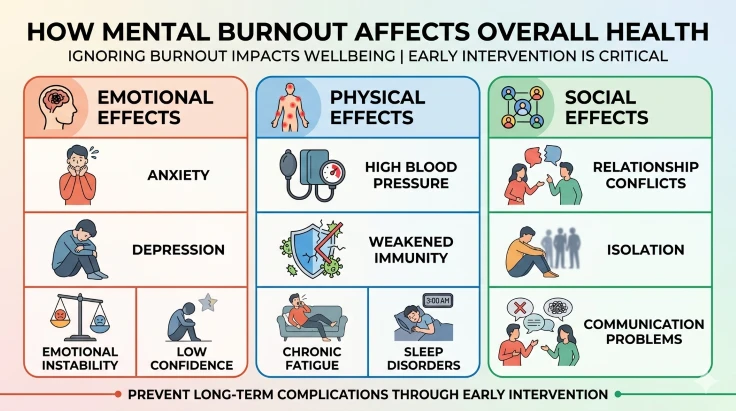
How Mental Burnout Affects Overall Health
Ignoring mental burnout for too long can impact both physical and emotional health.
Emotional Effects
- Anxiety
- Depression
- Emotional instability
- Low confidence
Physical Effects
- High blood pressure
- Weakened immunity
- Chronic fatigue
- Sleep disorders
Social Effects
- Relationship conflicts
- Isolation
- Communication problems
Early intervention is important to prevent long-term complications.
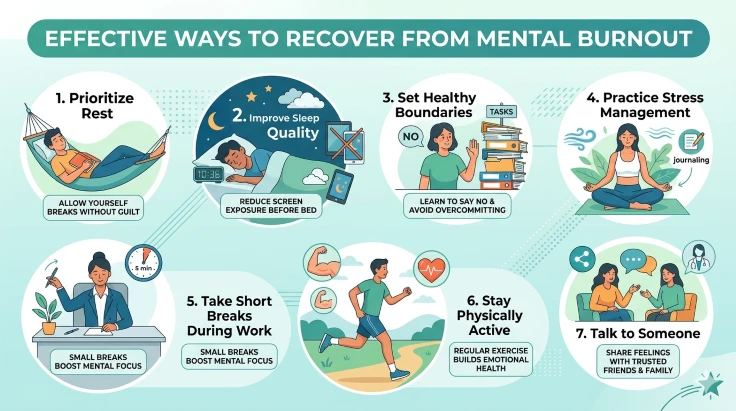
Effective Ways to Recover From Mental Burnout
Prioritize Rest
Your body and mind need proper recovery time. Allow yourself breaks without guilt.
Improve Sleep Quality
Maintain a healthy sleep schedule and reduce screen exposure before bedtime.
Set Healthy Boundaries
Learn to say no to unnecessary responsibilities and avoid overcommitting yourself.
Practice Stress Management
Meditation, yoga, deep breathing, and journaling can help reduce stress naturally.
Developing healthy daily habits is essential for emotional recovery. Read our detailed article on Mental Wellness Tips to build a healthier and more balanced lifestyle.
Take Short Breaks During Work
Small breaks improve mental focus and reduce emotional exhaustion.
Stay Physically Active
Regular exercise supports emotional health and boosts energy levels.
Talk to Someone
Sharing your feelings with trusted friends, family members, or therapists can provide emotional relief.
Simple Daily Habits to Prevent Mental Burnout
Preventing mental burnout is easier than recovering from severe exhaustion.
Healthy Habits That Help
- Drink enough water
- Eat balanced meals
- Exercise regularly
- Limit social media usage
- Spend time outdoors
- Maintain hobbies
- Practice gratitude
Building a healthy routine improves emotional resilience and mental clarity.
When Should You Seek Professional Help?
Sometimes mental burnout becomes too overwhelming to manage alone. Seeking professional support is important if:
- Burnout lasts for several weeks
- Daily functioning becomes difficult
- Anxiety or depression increases
- Sleep problems continue
- Emotional distress becomes severe
Mental health professionals can provide guidance, therapy, and coping strategies for recovery.
Final Thoughts
Mental burnout is more than simple tiredness. It is a serious condition that affects emotional health, physical well-being, productivity, and relationships. Ignoring the warning signs can lead to long-term health challenges and emotional exhaustion.
Recognizing the early symptoms of mental burnout allows you to take action before stress becomes overwhelming. Prioritizing rest, maintaining healthy habits, setting boundaries, and seeking support can help restore balance and improve overall well-being.
Remember that taking care of your mental health is not a luxury—it is essential for living a healthier and happier life.
FAQs
1. What is the main cause of mental burnout?
The main cause of mental burnout is prolonged stress without proper rest or recovery. Excessive workload, emotional pressure, lack of balance, and constant mental exhaustion often contribute to burnout symptoms over time.
2. How do I know if I have mental burnout?
Common signs include constant fatigue, irritability, lack of motivation, sleep problems, poor concentration, and emotional exhaustion. If these symptoms continue for weeks, you may be experiencing mental burnout.
3. Can mental burnout affect physical health?
Yes, mental burnout can cause headaches, body pain, digestive issues, weakened immunity, and sleep disorders. Chronic stress impacts both emotional and physical health significantly.
4. How long does it take to recover from mental burnout?
Recovery time depends on the severity of burnout and lifestyle changes. Some people recover within weeks, while others may need several months of proper rest, therapy, and stress management.
5. Can exercise help reduce mental burnout?
Yes, regular physical activity improves mood, reduces stress hormones, boosts energy levels, and supports emotional health. Exercise is one of the most effective natural ways to manage mental burnout.
6. Is mental burnout the same as depression?
Mental burnout and depression share similar symptoms, but they are different conditions. Burnout is mainly related to chronic stress and exhaustion, while depression is a mental health disorder requiring professional diagnosis and treatment.
Disclaimer
“This article is only for general health awareness and tips. It is not medically suggested advice. Please consult a qualified healthcare professional for medical guidance.”