


Healthy skin starts with a balanced diet, proper hydration, and consistent skincare habits. Including nutrient-rich skin repair foods in daily meals can help support normal skin function and maintain its natural protective barrier. Foods rich in vitamins, minerals, healthy fats, and antioxidants contribute to overall skin health. Following simple healthy food tips and making balanced food choices can support overall wellness. In this guide by GoHealthyPro, explore 10 nutritious foods that may help maintain healthy-looking, glowing skin.
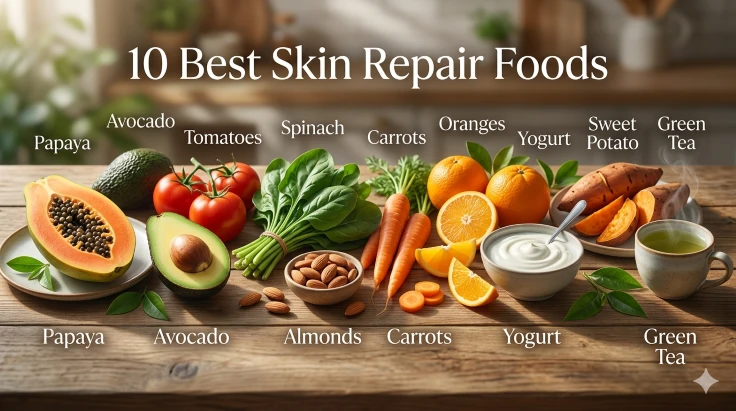
Skin Repair Foods: 10 Best Foods for Healthy and Glowing Skin
Your skin needs a variety of nutrients to maintain its normal structure and function. Vitamins, minerals, antioxidants, protein, and healthy fats all contribute to overall skin health. While no single food can repair every skin concern, eating a balanced diet with different nutrient-rich ingredients can support your skin from within.
Here are 10 foods you can include in your everyday meals.
1. Oranges
Oranges are among the popular foods for healthy skin because they contain vitamin C. This essential nutrient supports collagen production. Collagen is a protein that helps provide structure to the skin and supports its normal function.
Vitamin C also acts as an antioxidant, helping protect cells from oxidative stress. Including oranges in your diet is a simple way to add this important nutrient.
How to include oranges in your diet:
- Eat a fresh orange as a mid-morning snack.
- Add orange segments to fruit salads.
- Combine orange slices with other fruits for breakfast.
- Enjoy fresh orange pieces instead of sugary snacks.
Other citrus fruits, such as lemons and sweet limes, can also contribute to vitamin C intake.
2. Almonds
Almonds contain vitamin E, healthy fats, fibre, and other nutrients that contribute to overall health. Vitamin E is an antioxidant that helps protect cells from oxidative damage. Healthy fats also support normal body functions and form part of a balanced eating pattern.
Almonds are convenient to add to daily meals and snacks. However, eating more almonds does not automatically lead to better skin. Portion size and overall dietary balance also matter.
How to include almonds in your diet:
- Enjoy a small handful of almonds as a snack.
- Add chopped almonds to oatmeal or porridge.
- Sprinkle them over yoghurt or fruit bowls.
- Mix almonds with other nuts and seeds for a homemade snack.
For more meal inspiration, explore these healthy recipes.
3. Avocados
Avocados provide monounsaturated fats, vitamin E, and other nutrients. Their healthy fat content makes them a useful addition to a balanced eating pattern. They also contain fibre, which supports digestive health.
Healthy fats are important for normal body functions, and including a variety of fat sources in your meals can help maintain dietary balance. Avocados are also versatile and can be paired with vegetables, whole grains, and protein-rich foods.
How to include avocados in your diet:
- Spread mashed avocado on whole-grain toast.
- Add avocado slices to salads and sandwiches.
- Mix avocado into homemade dips.
- Combine avocado with tomatoes and cucumber for a refreshing salad.
4. Spinach
Spinach is a leafy green vegetable that contains vitamins A, C, and K, along with folate, iron, and other nutrients. These nutrients support different functions in the body, including normal skin and overall health.
Including leafy vegetables in your diet can help increase the variety of vitamins and minerals you consume. Spinach is easy to prepare and can be added to many Indian meals.
How to include spinach in your diet:
- Prepare spinach sabzi with other vegetables.
- Add fresh spinach to salads.
- Mix spinach into dal or vegetable soups.
- Add spinach to omelettes or homemade sandwiches.
Pair spinach with other colourful vegetables to create varied, nutrient-rich meals.
5. Sweet Potatoes
Sweet potatoes are rich in beta-carotene, a plant pigment that the body can convert into vitamin A. Vitamin A supports normal skin function, vision, and immune health. Sweet potatoes also provide fibre and other nutrients.
Their natural sweetness makes them a useful alternative to some highly processed snack options. They can be prepared in different ways without requiring complicated ingredients.
How to include sweet potatoes in your diet:
- Roast sweet potato pieces with mild spices.
- Add boiled sweet potatoes to vegetable bowls.
- Prepare homemade sweet potato soup.
- Include sweet potatoes in a balanced lunch or dinner.
Eating a variety of colourful vegetables can help provide a broad range of nutrients.
6. Tomatoes
Tomatoes provide vitamin C and lycopene, a naturally occurring antioxidant. Vitamin C supports collagen production, while lycopene contributes to the antioxidant content of a balanced diet.
Tomatoes are easy to include in everyday meals. They can be eaten raw or cooked and pair well with many vegetables and protein sources.
How to include tomatoes in your diet:
- Add fresh tomatoes to salads and sandwiches.
- Prepare homemade tomato soup.
- Use tomatoes in vegetable curries.
- Make a fresh tomato and cucumber salad.
Including tomatoes alongside other fruits and vegetables helps add variety to your meals.
7. Walnuts
Walnuts contain plant-based omega-3 fatty acids, vitamin E, protein, and other nutrients. Omega-3 fats are essential fats that the body needs to obtain from food. They contribute to normal body functions and form part of a balanced diet.
Walnuts are a convenient snack and can add crunch to meals. They are one of several plant-based sources of healthy fats that can be included in a varied eating pattern.
How to include walnuts in your diet:
- Sprinkle chopped walnuts over oatmeal.
- Add walnuts to yoghurt or fruit bowls.
- Mix them into salads.
- Combine walnuts with other nuts and seeds for a snack.
Choose a moderate portion and include different sources of healthy fats throughout the week.
8. Carrots
Carrots are a source of beta-carotene, which the body can convert into vitamin A. This vitamin supports normal skin function and several other important processes in the body. Carrots also provide fibre and other plant nutrients.
Their natural crunch makes them a simple addition to meals and snacks. Carrots can be eaten raw or cooked, offering flexibility in everyday cooking.
How to include carrots in your diet:
- Eat carrot sticks with hummus or another dip.
- Add grated carrots to salads.
- Include carrots in vegetable pulao or mixed sabzi.
- Prepare homemade carrot soup.
Eating carrots with other colourful vegetables can help you enjoy a wider range of nutrients.
9. Papaya
Papaya contains vitamin C, beta-carotene, fibre, and other nutrients. Vitamin C is required for collagen production, while beta-carotene contributes to vitamin A intake. These nutrients support normal body functions, including skin health.
Papaya is a refreshing fruit that can be enjoyed at breakfast or as a snack. It also pairs well with other fruits for a simple fruit bowl.
How to include papaya in your diet:
- Eat fresh papaya as a mid-morning snack.
- Add papaya pieces to a fruit salad.
- Combine papaya with yoghurt and other fruits.
- Serve chilled papaya as part of breakfast.
Choose a variety of fruits throughout the week instead of depending on one fruit for skin health.
10. Pumpkin Seeds
Pumpkin seeds provide zinc, magnesium, protein, and healthy fats. Zinc supports normal immune function and plays a role in several processes in the body, including skin maintenance. Magnesium contributes to normal muscle and nerve function.
These seeds are easy to add to everyday meals. They can provide extra texture and nutrients without requiring much preparation.
How to include pumpkin seeds in your diet:
- Sprinkle pumpkin seeds over salads.
- Add them to porridge or oatmeal.
- Mix them into homemade trail mixes.
- Use them as a topping for soups or vegetable bowls.
Pumpkin seeds can be part of a varied diet that includes different nuts, seeds, fruits, and vegetables.
Daily Tips to Support Healthy Skin
Including skin repair foods in your meals is one part of supporting healthy skin. Your daily habits, skincare routine, hydration, and overall lifestyle also matter.
1. Eat a Balanced Diet
Include fruits, vegetables, whole grains, protein sources, nuts, and seeds in your meals. A varied diet helps provide the nutrients your body needs for normal functions.
Explore more practical ideas in our Diet & Nutrition Tips section.
2. Stay Hydrated
Drink water regularly throughout the day. Your hydration needs can vary depending on your activity level, weather, and individual circumstances. Water supports normal body functions, although drinking extra water does not guarantee glowing skin.
3. Limit Highly Processed Foods
Reduce frequent consumption of foods high in added sugar, excess salt, and unhealthy fats. Focus on balanced meals and snacks rather than following restrictive diets.
4. Follow a Consistent Skincare Routine
Use gentle skincare products that suit your skin. Avoid introducing too many new products at once, especially if your skin is sensitive. Seek professional advice if you experience persistent irritation or other skin concerns.
5. Protect Your Skin from the Sun
Sun protection is an important part of everyday skincare. Use broad-spectrum sunscreen as directed, wear protective clothing, and seek shade when appropriate.
6. Get Enough Sleep
Maintain a regular sleep schedule and create a comfortable sleep environment. Adequate sleep supports general well-being and helps your body maintain its normal functions.
The World Health Organization’s healthy diet guidelines highlight the importance of dietary variety, balance, and moderation. These principles can help guide everyday food choices.
Frequently Asked Questions
Q1: What are the best skin repair foods?
The best skin repair foods include papaya, avocado, tomatoes, and spinach. These natural skin repair foods are rich in vitamins and antioxidants that heal damaged cells, boost collagen, and ensure a healthy, glowing complexion naturally.
Q2: Which vitamin is best for skin repair?
Vitamin C is essential for collagen production, while Vitamin A (Retinol) is the powerhouse for cell regeneration. Including skin repair foods rich in these vitamins helps heal damaged tissue, fades marks, and improves your overall skin texture and glow naturally.
Q3: What foods should I avoid?
Avoid excess sugar, processed junk, and refined carbs, as they cause inflammation. For effective skin repair foods to work, limit sodas and salty snacks that dehydrate and dull your complexion.
Q4: Can skin repair foods help with acne scars?
Yes! Foods rich in Vitamin C (like oranges) and Zinc (like pumpkin seeds) promote tissue healing and collagen synthesis, which helps fade acne marks and smooth out skin texture over time.
Q5: Can I repair my skin naturally after sun damage?
Yes. Consuming natural skin repair foods high in lycopene (tomatoes) and beta-carotene (carrots) helps your body repair DNA damage caused by UV rays and reduces redness.
Q6: Should I eat skin repair foods raw or cooked?
It depends on the food. For example, Vitamin C in fruits is best eaten raw, but the lycopene in tomatoes is better absorbed by the body when cooked with a little healthy oil.
Conclusion
Including nutrient-rich foods in everyday meals is a simple way to support overall wellness and normal skin function. Oranges, almonds, avocados, spinach, tomatoes, and other skin repair foods provide a range of vitamins, minerals, healthy fats, and antioxidants.
Focus on a varied, balanced diet rather than relying on one particular food for visible results. Small, consistent food choices can contribute to long-term healthy eating habits. GoHealthyPro shares general health and nutrition information to help readers make informed everyday food choices.
Health disclaimer: This article is for general health awareness and educational purposes only. It does not provide medical advice, diagnosis, or treatment. Consult a qualified healthcare professional for persistent skin concerns or individual dietary guidance.