

Start Your Daily Fitness Journey
Building a daily fitness routine does not have to be complicated. Whether you are just getting off the couch for the first time or looking to level up an existing exercise plan, having a clear, structured home workout for beginners is the single biggest step you can take. Think of your daily exercise plan as a personal blueprint — one that fits your life, not someone else’s highlight reel. This guide will walk you through everything you need: from designing a simple workout plan to staying consistent long-term.
Benefits of a Daily Fitness Routine
Before diving into the ‘how’, let’s talk about the ‘why’. Committing to effective daily workouts is one of the highest-return investments you can make in yourself. The benefits go far beyond the mirror.
| Physical | Mental | Lifestyle |
| Stronger muscles | Reduces stress | Better sleep quality |
| Improved heart health | Boosts mood & focus | More daily energy |
| Muscle preservation | Sharpens memory | Builds confidence |
| Supports weight goals | Reduces anxiety | Healthy daily rhythm |
A consistent daily fitness routine also supports muscle preservation as you age, improves Zone 2 heart rate training capacity, and trains your body to handle everyday physical demands — this is the heart of functional fitness training. You sleep better, think clearer, and feel more energised throughout the day.
How to Design a Simple Workout Plan
Creating a workout plan from scratch feels intimidating until you break it into small steps. Here is a proven four-step framework to get you started with a morning workout routine for beginners at home or anywhere that works for you.
Assess Your Current Fitness Level
Start with an honest self-check. Can you walk briskly for 20 minutes without stopping? Can you do 10 bodyweight squats comfortably? Your answers determine your starting point, not someone else’s benchmark. Track your baseline — note how many push-ups, squats, or lunges you can do in a single set. This data becomes your personal progress map.
Set Clear and Realistic Weekly Goals
Vague goals like ‘get fit’ rarely stick. Specific goals like ‘complete three 20-minute workouts this week’ do. Use the SMART framework: Specific, Measurable, Achievable, Relevant, Time-bound. For beginners, starting with three days a week and building from there is a sustainable approach.
Choose Activities You Actually Enjoy
The best exercise is the one you will actually do. If you dread running, try dancing, cycling, swimming, or yoga. Enjoyment fuels consistency. This is not the time to follow a program built for elite athletes — it is the time to discover what movement feels good to you.
Schedule Dedicated Time Blocks
Treat your workout like a meeting you cannot cancel. Block it on your calendar — even 20 minutes counts. Many people find that a
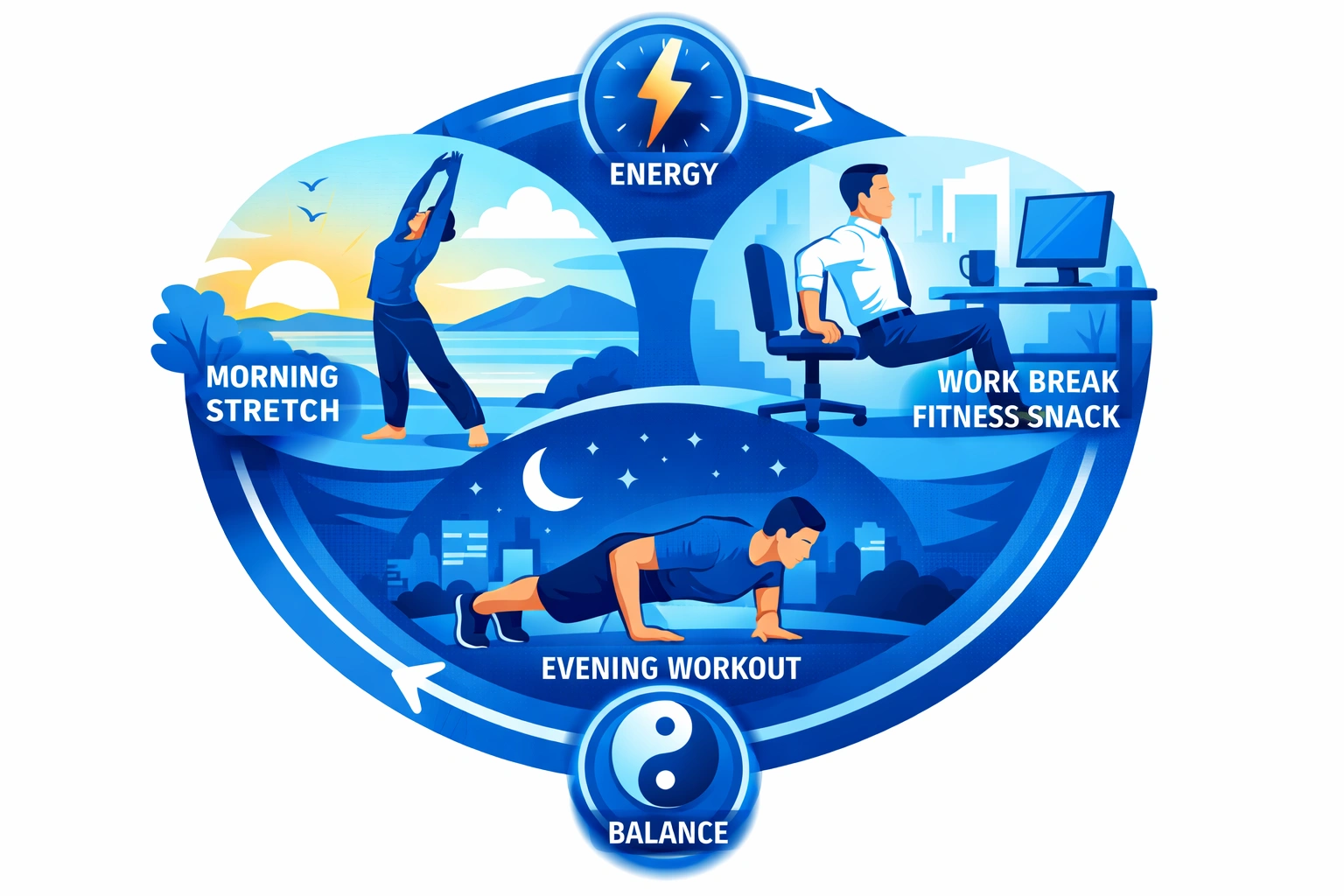
Treat your workout like a meeting you cannot cancel. Block it on your calendar — even 20 minutes counts. Many people find that a morning fitness routine helps them stay consistent because it gets done before the day’s demands pile up.
Components of a Balanced Daily Routine
A well-rounded full body workout routine has four key components. Think of these as the four wheels of a car — remove one and the ride gets bumpy.
Dynamic Warm-Up Movements (5 Minutes)
Never skip the warm-up. A dynamic warm-up raises your heart rate and lubricates your joints, reducing injury risk by up to 50%. Try these:
- Leg swings — 10 per leg
- Arm circles — 10 forward, 10 backward
- Hip circles — 10 per direction
- Jumping jacks or march in place — 30 seconds
- Bodyweight squats — 10 slow reps
Strength and Resistance Exercises (15–20 Minutes)
Strength training for longevity is not about getting huge — it is about keeping your body functional, injury-free, and metabolically active. Core strength for beginners can be built with zero equipment:
- Push-ups (knees or toes)
- Bodyweight squats or goblet squats
- Glute bridges
- Plank holds (20–45 seconds)
- Reverse lunges
Aim for 2–3 sets of 8–12 reps per exercise. As you get stronger, add resistance bands or dumbbells to progress safely. This is the backbone of any effective bodyweight exercises for beginners program.
Cardiovascular or Aerobic Activity (10–15 Minutes)
At-home cardio for busy people does not require a treadmill. Options include:
- Brisk walking or marching in place
- Jump rope or jumping jacks
- Low-impact step touches or side shuffles
- Dance to 2–3 of your favourite songs
For a low-impact daily routine, focus on sustaining movement at a conversational pace. You should be able to speak in short sentences but still feel your heart working. This is Zone 2 heart rate training — gentle enough to sustain, powerful enough to improve cardiovascular health over time.
Flexibility and Cool-Down Stretching (5 Minutes)
This is your mobility and stretching routine — the part most people skip and later regret. Hold each stretch for 20–30 seconds:
- Standing hamstring stretch
- Hip flexor lunge stretch
- Seated spinal twist
- Child’s pose
- Chest opener stretch
Cooling down lowers heart rate gradually and begins the muscle recovery process. It is also a rare moment of mindful movement — a chance to breathe and connect with how your body feels.
| 📋 Sample 30-Minute Daily Routine at a Glance Warm-Up (5 min): Leg swings, arm circles, jumping jacks | Strength (15 min): 3 rounds of push-ups, squats, glute bridges, plank | Cardio (7 min): Brisk walk or dance break | Cool-Down (3 min): Hip flexor, hamstring, spinal twist stretch |
Practical Tips for Fitting Fitness into a Busy Schedule
‘I don’t have time’ is the number one reason people abandon a daily exercise plan. The good news: you don’t need a two-hour gym session to see results. You just need a strategy.
Utilize Short ‘Fitness Snacks’ Throughout the Day
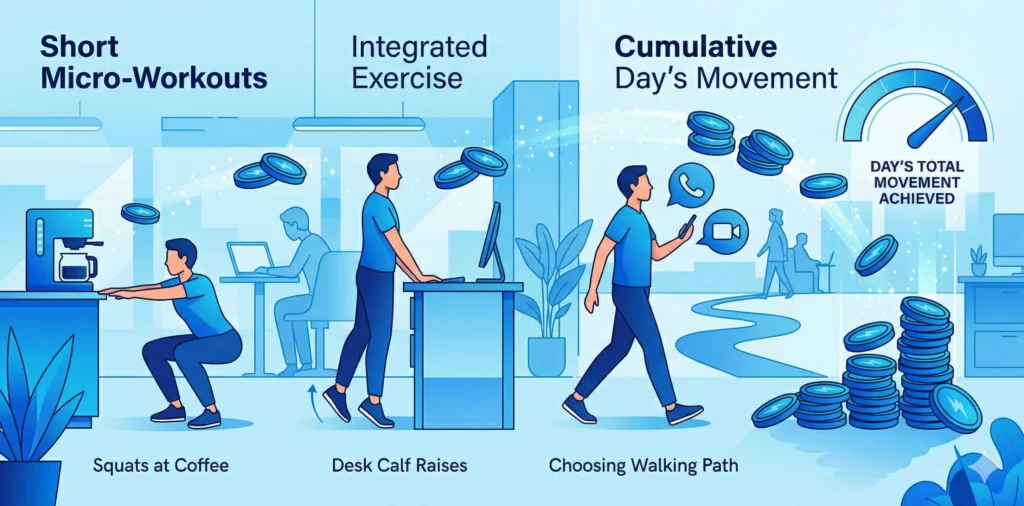
Micro-workouts — also called ‘exercise snacks’ — are brief bursts of movement scattered throughout your day. This hybrid fitness model blends structured sessions with everyday activity. Try these:
- 10 squats every time you make coffee
- Walk to a colleague instead of emailing
- Do calf raises while brushing your teeth
- Take a 5-minute walk after every hour at your desk
Research increasingly supports the idea that accumulating short bouts of movement throughout the day can be just as effective as one longer session — great news for busy people and office workers looking for the best daily exercises.
Prepare Your Workout Gear the Night Before
Habit stacking for fitness is a game-changer. Lay your workout clothes next to your bed before you sleep. Put your water bottle in the fridge. Set your shoes by the door. When morning comes, your environment nudges you toward action instead of excuses. This small act removes decision fatigue — one of the biggest hidden barriers to a consistent routine.
Use Your Lunch Break for Active Movement
A brisk 15-minute walk during lunch is a legitimate 15-minute daily workout. It boosts afternoon energy, reduces post-lunch fatigue, and contributes directly to your daily movement target. Wearable tech integration can help here — set a step reminder on your smartwatch or phone for midday movement.
Focus on Consistency Over High Intensity
Think of consistency as the slow, steady stream that carves out a canyon. Daily movement at moderate intensity outperforms sporadic intense workouts every time. A sustainable workout habit built on realistic effort levels is far more valuable than burning yourself out in week one. The goal is to make fitness a natural part of your day — not a punishment.
The Role of Nutrition in Supporting Your Routine

Exercise and nutrition are two sides of the same coin. You cannot out-train a poor diet, and a perfect diet without movement leaves physical potential untapped. Supporting your daily fitness routine with smart eating does not mean complicated meal plans.
Focus on these core principles:
- Eat protein at every meal to support muscle repair and preservation
- Stay hydrated — even mild dehydration impacts workout performance
- Prioritise whole foods: vegetables, fruits, lean proteins, healthy fats
- Avoid exercising on an empty stomach for sessions longer than 30 minutes
- Refuel with a protein-and-carb combo within 45 minutes post-workout
Your gut health plays a surprisingly important role in how well you recover and how much energy you have for your workouts. A diverse, plant-rich diet feeds the beneficial bacteria that support both immunity and mood.
| 💡 Quick Nutrition Tip A banana with peanut butter before a workout provides fast carbs and a dose of healthy fat. After your workout, try Greek yoghurt with berries or a simple protein smoothie. Keep it practical — not perfect. |
How to Stay Consistent and Avoid Burnout
Starting a daily fitness routine is the easy part. Keeping it going past week two is where most people struggle. Here are four proven strategies for how to build a sustainable workout habit:
Listen to Your Body’s Recovery Signals
Feeling unusually fatigued, sore for more than two days, or dreading every session? These are signals from your body, not signs of weakness. Active recovery sessions — like light walking, gentle yoga, or stretching — count as movement and help you recover faster than complete rest.
Find an Accountability Partner or Community
You are significantly more likely to stick with a routine when someone else expects you to show up. Join a local walking group, find a virtual fitness challenge, or simply text a friend your workout plan for the week. Social accountability transforms a solo struggle into a shared journey.
Track Your Progress Without Obsessing Over Numbers
A simple daily fitness routine for energy and focus does not require a complex spreadsheet. Use a habit-tracking app, a paper journal, or even a checklist on your fridge. Note what you did, how you felt, and any small wins. Progress is not always visible in the mirror — some of the most meaningful gains happen in energy levels and mental clarity.
Reward Small Wins and Milestones
Completed your first week? Celebrate it. Treat yourself to a new workout playlist, a relaxing bath, or a healthy meal at your favourite restaurant. Positive reinforcement wires your brain to associate fitness with reward rather than hardship. Small, consistent acknowledgements of progress are the fuel that keeps the engine running long-term.
For deeper strategies on maintaining routines over time, explore this guide on building healthy habits — it covers the psychology of habit formation in a practical, beginner-friendly way.
Why Recovery and Sleep are Essential
Here is something many beginners do not hear enough: your body does not get stronger during exercise — it gets stronger during recovery. Exercise creates tiny micro-tears in muscle fibres. Sleep and rest are when those fibres repair and grow stronger. Skip recovery, and you are building a house without letting the cement dry.
Rest and recovery essentials for your daily fitness routine:
- Aim for 7–9 hours of quality sleep each night
- Include at least one or two active recovery days per week
- Prioritise sleep hygiene: consistent bedtime, dark room, limited screen time before bed
- Incorporate foam rolling or light stretching on rest days
- Stay hydrated and eat anti-inflammatory foods (berries, leafy greens, fatty fish)
Improving sleep quality is one of the fastest ways to accelerate fitness results. When you sleep well, hormones like growth hormone and cortisol regulate properly — directly impacting how effectively your body builds muscle and burns fat.
| ⚠️ Watch For These Overtraining Signs Persistent fatigue after sleep • Irritability or mood swings • Declining performance week over week • Frequent minor injuries • Loss of motivation or enjoyment — If you notice these, schedule a full rest day and reassess your routine intensity. |