

Introduction
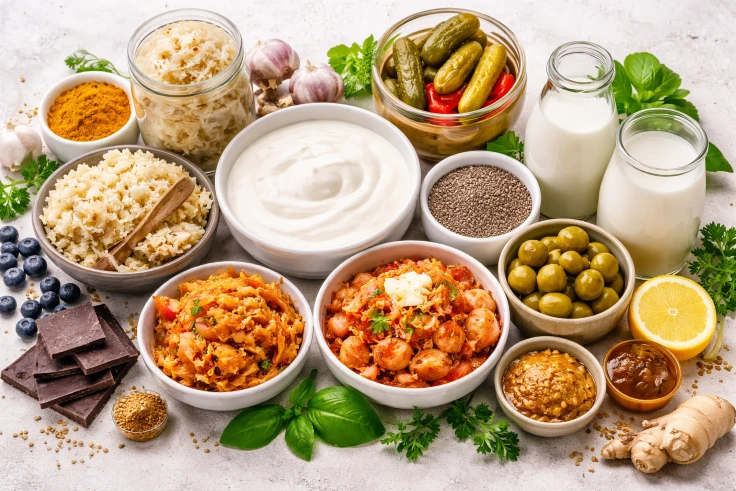
Probiotic Foods are one of the most effective ways to improve gut health naturally and support better digestion. A healthy gut contains good bacteria that help break down food, absorb nutrients, and maintain overall digestive balance. When this balance is disturbed, it can lead to bloating, acidity, and low energy.
Including probiotic-rich foods in your daily diet helps restore gut flora and improve digestion naturally. These foods introduce beneficial bacteria into your system, supporting long-term digestive wellness.
What Are Probiotic Foods?
Probiotic foods are items that have undergone a process of fermentation, resulting in the growth of “friendly” bacteria. These microorganisms are similar to the ones naturally found in the human body.
- Definition: Live microorganisms which, when consumed in adequate amounts, confer a health benefit on the host.
- Role in Gut Health: They act as a defense mechanism against harmful pathogens and help maintain the acidic environment required for optimal digestion.
- Sources of Probiotics: While many think only of dairy, probiotics are found in fermented vegetables, soy products, and even certain ancient grains.
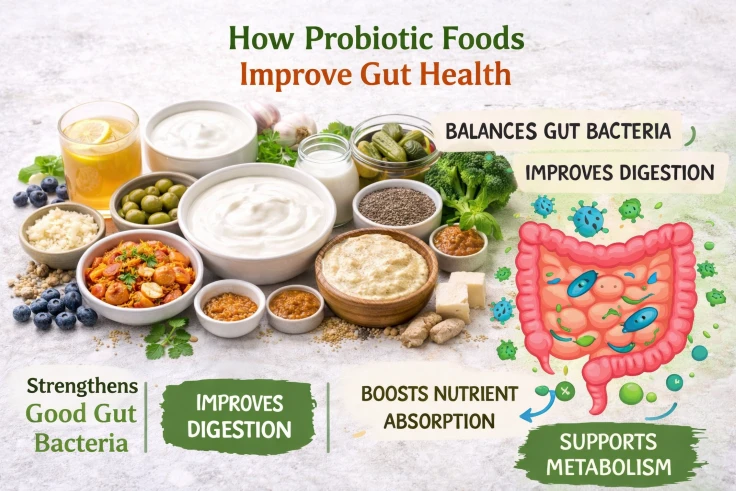
How Probiotic Foods Improve Gut Health
Consuming foods for gut health leads to a measurable shift in your internal ecosystem. Here is how they function:
- Balance Gut Bacteria: They prevent “dysbiosis,” a condition where harmful bacteria outnumber the good ones.
- Improve Digestion: They help break down complex carbohydrates and fibers that the human body cannot process alone.
- Enhance Nutrient Absorption: A healthy gut lining, supported by probiotics, absorbs vitamins and minerals like Calcium and Vitamin B12 more efficiently.
- Support Metabolism: Certain strains of gut bacteria foods are linked to better blood sugar regulation and weight management.
Key Benefits of Probiotic Foods
Adding foods with probiotics to your plate offers a wide range of systemic benefits:
- Reduces Bloating: Helps break down gas-producing compounds in the digestive tract.
- Improves Immunity: Approximately 70% of the immune system resides in the gut.
- Supports Weight Management: Balances hormones related to appetite and fat storage.
- Enhances Skin Health: Reduces systemic inflammation, often clearing up conditions like acne or eczema.
- Improves Mental Wellness: Supports the “gut-brain axis,” potentially reducing anxiety and brain fog.
Probiotic Foods List: Top 15 Foods for Better Gut Health
1. Yogurt (Curd)
- Nutrients: Calcium, protein
- Benefits: Improves digestion, strengthens gut
- Best Time: Morning
- Tip: Choose plain, unsweetened curd
2. Buttermilk
- Nutrients: Electrolytes, probiotics
- Benefits: Reduces acidity
- Best Time: After meals
- Tip: Add roasted cumin for taste
3. Kefir
- Nutrients: Protein, probiotics
- Benefits: Improves gut bacteria
- Best Time: Morning
- Tip: Drink on empty stomach
4. Sauerkraut
- Nutrients: Fiber, vitamins
- Benefits: Supports digestion
- Best Time: With meals
- Tip: Use raw, unpasteurized
5. Kimchi
- Nutrients: Vitamins A, B, C
- Benefits: Boosts gut health
- Best Time: Lunch
- Tip: Eat in small quantities
6. Idli/Dosa Batter
- Nutrients: Fermented nutrients
- Benefits: Easy digestion
- Best Time: Breakfast
- Tip: Use naturally fermented batter
7. Pickles (Natural)
- Nutrients: Probiotics
- Benefits: Improves gut flora
- Best Time: With meals
- Tip: Avoid vinegar-based pickles
8. Apple Cider Vinegar
- Nutrients: Acetic acid
- Benefits: Improves digestion
- Best Time: Morning
- Tip: Mix with warm water
9. Miso
- Nutrients: Protein, probiotics
- Benefits: Supports gut health
- Best Time: Lunch
- Tip: Add to soups
10. Tempeh
- Nutrients: Protein
- Benefits: Improves digestion
- Best Time: Lunch
- Tip: Use as plant protein
11. Cheese (Aged)
- Nutrients: Calcium
- Benefits: Supports gut bacteria
- Best Time: Snacks
- Tip: Choose natural cheese
12. Green Peas
- Nutrients: Fiber
- Benefits: Supports digestion
- Best Time: Lunch
- Tip: Combine with meals
13. Kombucha
- Nutrients: Antioxidants
- Benefits: Detoxifies gut
- Best Time: Evening
- Tip: Drink in moderation
14. Dark Chocolate
- Nutrients: Antioxidants
- Benefits: Supports good bacteria
- Best Time: Snacks
- Tip: Choose 70% cocoa
15. Kanji
- Nutrients: Natural probiotics
- Benefits: Improves digestion
- Best Time: Morning
- Tip: Traditional fermented drink
Additionally we should eat food which are good for our gut health (15 best foods for gut health).
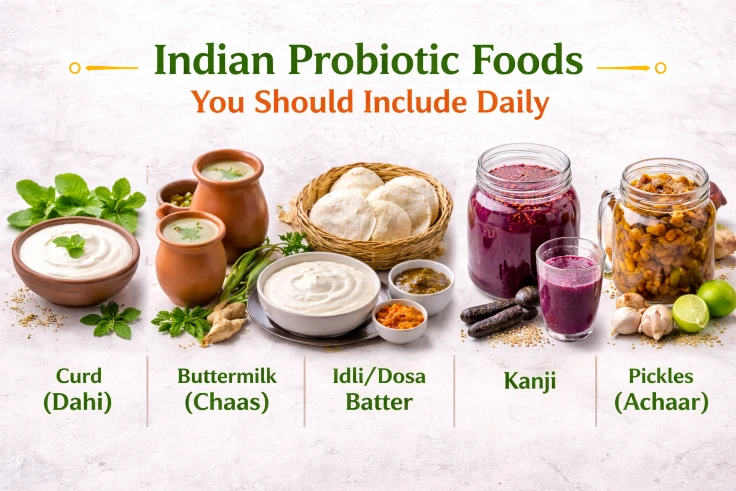
Indian Probiotic Foods You Should Include Daily
India has a rich tradition of incorporating probiotic foods into every meal. These regional options are affordable and highly effective:
- Curd (Dahi): The most common source, consumed plain or as Raita.
- Buttermilk (Chaas): A fermented dairy drink seasoned with ginger and curry leaves.
- Idli/Dosa Batter: Naturally fermented rice and lentil batter that is rich in lactic acid bacteria.
- Kanji: A winter drink made from black carrots and mustard seeds.
- Pickles (Achaar): Traditional sun-dried pickles made without excessive vinegar are natural probiotic powerhouses.
Best Time to Eat Probiotic Foods
Timing can influence how well these bacteria colonize your gut:
- Morning Benefits: Taking probiotics on an empty stomach (especially Kefir or ACV) allows bacteria to pass through the stomach faster.
- Before vs After Meals: Eating probiotics with or just before a meal provides them with a “buffer” against stomach acid.
- Night Consumption: Helps repair the gut lining while you sleep.
How to Add Probiotic Foods to Your Daily Diet
- Add curd to lunch
- Drink buttermilk after meals
- Include fermented breakfast items
- Use pickles in moderation
- Try kombucha as a healthy drink
Probiotic Foods vs Prebiotic Foods
It is vital to understand that probiotics need “food” to survive.
Feature | Probiotics | Prebiotics |
What it is | Live beneficial bacteria | Plant fibers (food for bacteria) |
Function | Populates the gut | Feeds the existing bacteria |
Examples | Yogurt, Kimchi, Kefir | Garlic, Onions, Bananas, Oats |
Probiotic Foods vs Supplements
While supplements are convenient, natural probiotic foods are often superior because:
- They provide additional nutrients (Fiber, Protein, Vitamins).
- The fermentation process makes nutrients more bioavailable.
- They are generally more affordable and sustainable for long-term health.
Tips To Make Probiotic Foods More Effective
- Eat consistently: Your gut microbiome changes daily; regular intake is key.
- Avoid processed foods: High sugar and artificial fats kill good bacteria.
- Stay hydrated: Water is essential for moving fiber and bacteria through the gut.
- Combine with fiber: Always eat prebiotics (like veggies) with your probiotics.
Common Mistakes to Avoid While Eating Probiotic Foods
- Overconsumption: Introducing too much too fast can cause temporary bloating.
- Wrong Timing: Taking them with very hot foods can kill the live bacteria.
- Ignoring Diet Balance: Probiotics cannot fix a diet that is primarily junk food.
- Heating Them: Cooking fermented foods like Kimchi or Miso at high heat destroys the probiotics.

Foods That Destroy Good Gut Bacteria
To protect your gut bacteria foods, limit these items:
- Refined Sugar: Feeds harmful yeast and “bad” bacteria.
- Processed Food: Contains preservatives that inhibit microbial growth.
- Antibiotics Misuse: Kills both good and bad bacteria indiscriminately.
- Alcohol: Can irritate the gut lining and disrupt microbial balance.
Use of these products make gut health poor.
Sample 1-Day Diet Plan with Probiotic Foods
Morning: Diluted Apple Cider Vinegar followed by a bowl of Yogurt with flaxseeds.
Lunch: Dal, Brown Rice, and a side of Sauerkraut or Kimchi.
Evening: A small glass of Kombucha or a handful of Green Olives.
Dinner: Grilled Tempeh with sautéed vegetables and a small cup of Miso soup.
Who Should Eat Probiotic Foods?
Everyone can benefit from a balanced gut, but it is especially helpful for:
- People suffering from frequent bloating or gas.
- Those with Irritable Bowel Syndrome (IBS).
- Individuals with weak immunity who fall sick often.
- Anyone who has recently finished a course of antibiotics.
Conclusion
Probiotic Foods are a simple and natural way to improve digestion and maintain a healthy gut. Including probiotic-rich foods like curd, buttermilk, and fermented items in your daily diet can help balance gut bacteria and support overall health.
Consistency is key when it comes to improving gut health. Focus on natural foods, avoid processed items, and maintain a balanced diet for long-term benefits. Small daily changes can lead to significant improvements in digestion and overall wellness.
FAQs
Q1: What are probiotic foods?
Probiotic foods are fermented products containing live, beneficial bacteria. They support digestive health, strengthen the immune system, and balance the gut microbiome. Common examples include yogurt, kefir, sauerkraut, and kimchi.
Q2:How to improve gut bacteria naturally?
Improve gut bacteria naturally by consuming diverse probiotic foods like yogurt and kefir, eating fiber-rich prebiotics, staying hydrated, and reducing sugar. Consistency in a whole-food diet is essential for maintaining a healthy microbiome.
Q3: Are probiotic foods safe daily?
Yes, probiotic foods are safe to consume daily in moderate amounts. They support digestion, improve gut bacteria, and boost immunity. Avoid excessive intake to prevent discomfort
Q4: What is the best time to eat probiotic foods?
The best time is typically before or during meals to buffer bacteria against stomach acid. Morning consumption on an empty stomach also helps probiotics reach the gut quickly for colonization.
Q5: How long does it take to see results?
Most people notice improvements like reduced bloating within one to two weeks of consistent consumption. However, deeper changes to the gut microbiome and immune health typically take four to eight weeks of daily intake.
⚠️ Disclaimer
This article is only for general health awareness and tips. It is not medically suggested advice. Please consult a qualified healthcare professional for medical guidance.