

Introduction:
We live in a world that never really stops. Notifications buzz, deadlines pile up, and rest feels like a luxury. In the middle of all this noise, meditation stands out as one of the simplest — and most powerful — tools for finding calm. The daily meditation benefits are real, research-backed, and accessible to everyone, no matter how busy life gets.
What Is Meditation?
At its core, meditation is the practice of training your attention. Think of your mind like a puppy — it runs everywhere unless you gently guide it back. Meditation is that gentle guide.
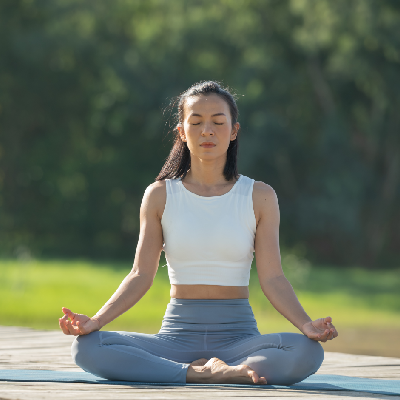
It is not about emptying your mind or sitting still for hours. It is simply about becoming more aware of the present moment. Whether you follow your breath, repeat a word, or scan your body from head to toe, every meditation technique points toward the same goal: mental clarity and emotional balance.
The practice has existed for thousands of years across cultures, and today it is backed by modern neuroscience. Studies show that regular practice literally changes how the brain works — improving focus, reducing stress hormones, and boosting emotional resilience.
Why Meditation Is Important in Daily Life
So why does meditation matter for everyday people? Here is the short answer: your mind affects everything. How you think shapes how you feel, how you work, how you sleep, and how you treat others.
Here is why building a meditation practice into your daily life is worth it:
- It lowers your stress response, so small problems stop feeling like emergencies.
- It sharpens your focus in a world full of distractions.
- It improves sleep, which powers every other health goal.
- It builds emotional intelligence, helping you respond instead of react.
- It creates a foundation for other healthy habits — nutrition, exercise, and rest all improve when the mind is settled.
When you understand the importance of meditation, it stops being something you “should” do and becomes something you actually want to do.
Top Benefits of Meditation
Reduces Stress and Anxiety
This is the big one. Meditation for stress relief works by directly lowering cortisol — the stress hormone your body releases when you feel overwhelmed. When cortisol stays elevated for too long, it damages sleep, digestion, immunity, and mood.
Regular meditation teaches your nervous system to calm down faster after stressful events. Over time, you become less reactive. Things that used to spike your anxiety start to roll off you more easily.
Want more ways to reduce stress naturally? Meditation is just one part of a bigger toolkit.
Improves Focus and Concentration
Meditation for focus and concentration works like a workout for your attention muscle. Every time you notice your mind has wandered and bring it back to your breath or chosen anchor, you are training the brain to stay on task.
Research shows that even eight weeks of consistent mindfulness practice measurably improves attention span and working memory. For anyone juggling work, family, and personal goals, this is a genuine competitive advantage.
Enhances Emotional Health
Meditation and emotional health are closely linked. When you practice observing your thoughts without immediately reacting to them, you build a kind of emotional buffer zone. You start noticing patterns — like how you always catastrophize before big meetings — and those patterns lose their power.
This is why meditation for mental health is now recommended by therapists and psychologists worldwide. It does not replace professional treatment, but it is a powerful daily complement.
Promotes Better Sleep
If you have ever lain awake running through tomorrow’s to-do list, meditation can help. The relaxation response triggered during meditation lowers heart rate and prepares the body for deep rest.
Combining meditation with other strategies for better sleep can dramatically improve sleep quality. Many people report falling asleep faster and waking up feeling more refreshed within just a few weeks of starting a practice.
Boosts Self-Awareness
One of the quieter benefits of meditation is how it deepens self-awareness. You start to notice your triggers, your habits, your automatic thought patterns. This kind of inner knowledge is foundational for any personal growth work.
You cannot change what you do not see. Meditation gives you a front-row seat to your own mind.
Supports Physical Health
The physical benefits of meditation are just as real as the mental ones. The mind-body connection is powerful — a calmer mind leads to lower blood pressure, a stronger immune system, reduced inflammation, and less chronic pain.
Studies link regular meditation practice to improved cardiovascular health. Some hospitals now include it as part of treatment programs for heart disease, chronic pain, and cancer recovery.
| Key Takeaway The benefits of meditation span your mental, emotional, and physical health. Whether you want to reduce stress, sleep better, or sharpen your focus — meditation delivers results that compound over time. |
Types of Meditation You Should Know
Mindfulness Meditation
This is the most widely practiced form in the West. You focus on the present moment — usually your breath — without judging what arises. It is simple, flexible, and can be done anywhere. Explore more mindfulness techniques to deepen your practice.
Guided Meditation
A teacher or recorded voice leads you through the session. Great for beginners who find silence overwhelming. Apps like Calm, Headspace, and Insight Timer offer thousands of guided options.
Loving-Kindness Meditation
Also called Metta, this practice involves sending goodwill and compassion — first to yourself, then to others. Research shows it reliably boosts positive emotions, reduces self-criticism, and improves relationships.
Body Scan Meditation
You move attention slowly from your feet to the top of your head, noticing sensations without judgment. It is excellent for releasing physical tension and is a popular choice for improving sleep quality.
Breathing Meditation
This involves focusing entirely on the rhythm of your breath — counting inhales, extending exhales, or simply observing the rise and fall of your chest. Breathing exercises activate the parasympathetic nervous system, creating an almost immediate calming effect.
How to Start Meditation for Beginners
Simple meditation techniques for beginners do not require any special training. Here is a straightforward approach to how to start meditation at home:
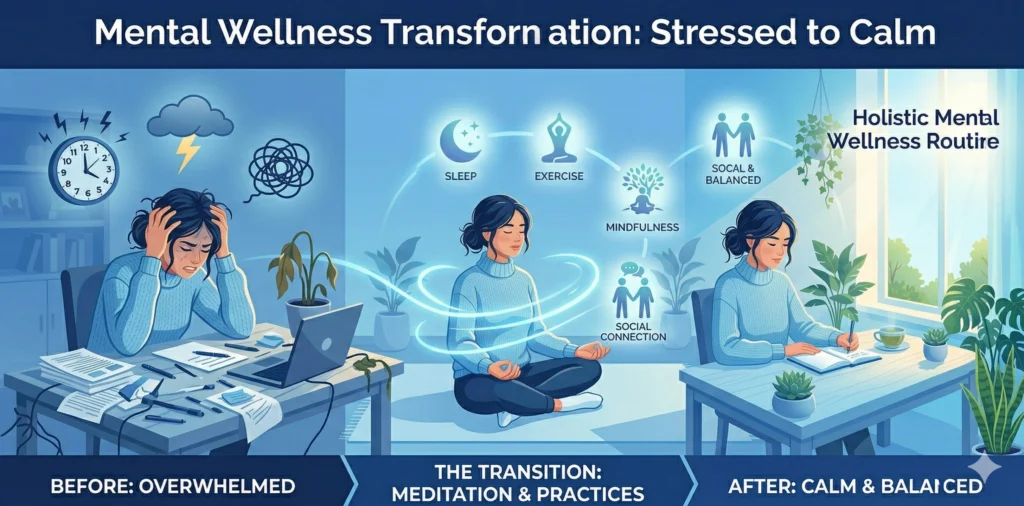
Choose a Quiet Space
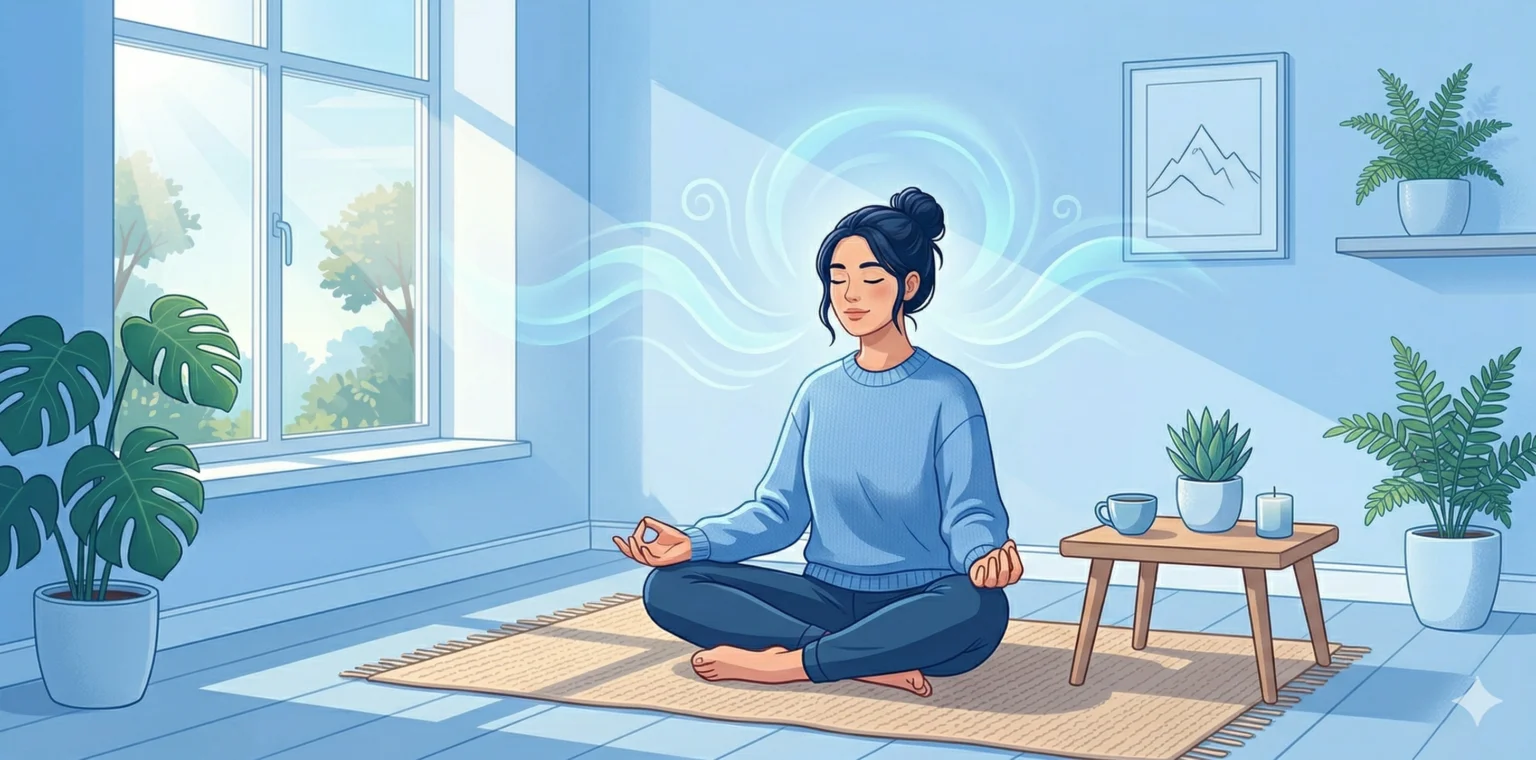
Pick a corner of your home where you will not be interrupted. It does not need to be fancy — a chair, a cushion on the floor, or even your bed works fine. Consistency of place helps train the brain to shift into a calm state faster.
Set a Time Limit
Start with just five minutes. Using a timer removes the temptation to check the clock. As the practice feels more natural, gradually work up to ten, fifteen, or twenty minutes.
Focus on Your Breath
Close your eyes and bring attention to your breathing. Notice the sensation of air entering and leaving your nostrils. You do not need to control or change your breathing — just observe it.
Notice Wandering Thoughts
Your mind will wander. This is completely normal — it is what minds do. The practice is not about stopping thoughts. It is about noticing when you have drifted and gently returning to your breath. Each return is a repetition, like a mental curl at the gym.
Stay Consistent
Five minutes every day beats sixty minutes once a week. Regularity is the secret ingredient. Think of meditation as brushing your teeth — it only works if you do it daily.
Best Time to Meditate
The best time to meditate for best results is the time you will actually stick to. That said, most experienced practitioners recommend the morning. Here is why:
- Your mind is fresh and less cluttered before the day begins.
- Morning practice sets a calm, intentional tone for the rest of the day.
- It is easier to maintain as a consistent habit when paired with a morning routine.
If mornings do not work, evening meditation is excellent for winding down. A body scan or breathing exercise before bed supports deeper sleep. Consider building meditation into your broader morning routine for maximum benefit.
How to Make Meditation a Daily Habit
Start Small and Simple
Begin with two to five minutes per day. Resistance drops dramatically when the ask is tiny. Once you consistently show up, gradually lengthen your sessions.
Attach It to Existing Habits
Habit stacking works brilliantly here. Meditate right after your morning coffee, just before your shower, or immediately after brushing your teeth. Pairing a new habit with an existing one makes it stick.
Use Reminders and Apps
Set a daily phone alarm. Use apps like Calm, Headspace, or Insight Timer for structure and accountability. Many apps also track your streak, which provides just enough motivation to keep going.
Track Your Progress
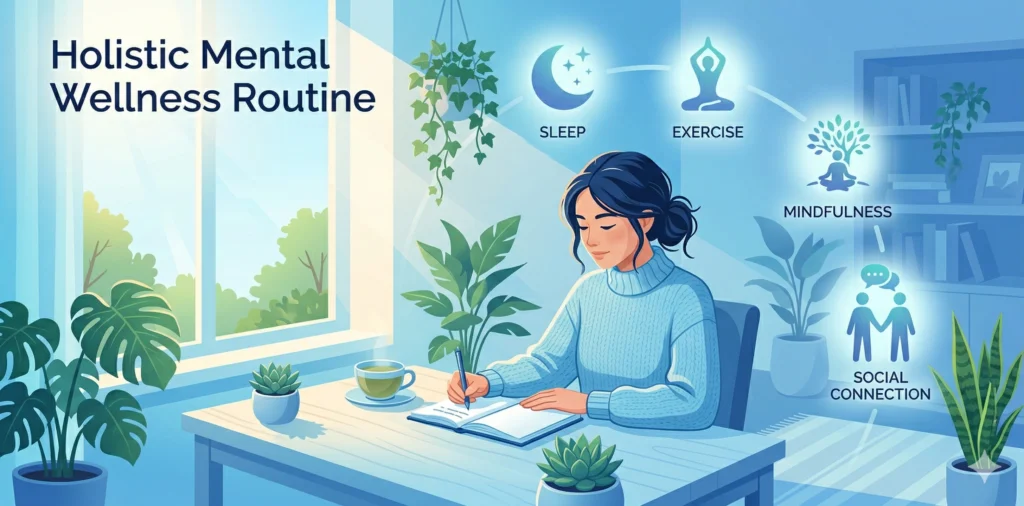
A simple journal or habit-tracking app helps you see how far you have come. Combine this with other daily habits for mental health to build a comprehensive wellness routine that supports your long-term goals.
Common Challenges and How to Overcome Them
Difficulty Focusing
Solution: Use a guided audio or focus on counting your breaths (one on the inhale, two on the exhale, up to ten, then repeat). Having a simple anchor for attention dramatically reduces distraction.
Lack of Time
Solution: Even two minutes counts. Use micro-meditations — one mindful minute between meetings, three deep breaths before a meal, a short body scan before sleep. Frequency matters more than duration, especially at the start.
Restlessness or Boredom
Solution: This is actually the practice working. Noticing restlessness without acting on it is exactly what mindfulness trains. Try a walking meditation if sitting still feels impossible — move slowly and bring full attention to each step.
Unrealistic Expectations
Solution: Does meditation really work for stress? Yes — but not overnight. Think of it like physical fitness. You do not get strong after one workout. The benefits build gradually and compound over weeks and months. Trust the process.
Meditation Tips for Busy People
Try Short Sessions
Research shows five to ten minutes of daily meditation produces measurable changes in the brain. You do not need long sessions to see real results.
Practice Mindful Moments
Mindfulness practice does not always require a formal sitting session. Wash dishes with full attention. Walk to your car noticing the sensation of the ground under your feet. Eat lunch without your phone. These informal practices add up.
Use Guided Audio
A five-minute guided session on your commute, during a lunch break, or just before bed is a powerful and time-efficient option. Noise-cancelling headphones help in public spaces.
Meditate Anywhere
A park bench, a quiet office, your parked car before walking into work — these are all valid meditation spaces. You do not need incense, candles, or a cushion. You just need a few minutes and a willingness to be present.
| Quick Tips for Busy People Set a 5-minute alarm each morning — no excuses, just breathe.Use commute time with guided meditation audio.Turn off notifications for just 5 minutes and focus on your breath.Try a one-minute breathing reset between tasks at work.Use an app streak to stay accountable. |
Meditation vs Other Relaxation Techniques
| Technique | Primary Focus | Best For | Time Needed |
| Meditation | Mental attention & awareness | Stress, focus, emotional health | 5–20 min daily |
| Deep Breathing | Breath control | Immediate calm, anxiety relief | 1–5 min |
| Yoga | Body movement & breath | Flexibility, body-mind connection | 20–60 min |
| Music Therapy | Auditory relaxation | Mood uplift, emotional processing | 15–30 min |
Meditation vs Deep Breathing
Deep breathing is a stress management technique that delivers fast, physiological calm. Meditation is a broader practice that includes breathing but also trains attention and awareness. They complement each other well — deep breathing can be the starting point of a meditation session.
Meditation vs Yoga
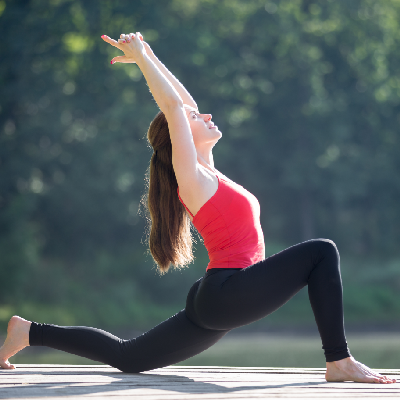
Yoga integrates body and breath with movement — it is a complete wellness routine in itself. Meditation is its quieter, more internal sibling. Many yoga classes end with Savasana, a lying-down meditation that brings everything together.
Meditation vs Music Therapy
Music therapy uses sound to shift mood and reduce tension, but it does not train the mind in the same way meditation does. However, calm music can be a useful entry point for beginners who find silence uncomfortable.
Who Should Practice Meditation?
The simple answer: almost everyone. Meditation is especially beneficial for:
- People experiencing high stress, burnout, or anxiety.
- Anyone struggling with sleep problems.
- People wanting to improve focus for work or study.
- Those going through emotional challenges or transitions.
- Athletes looking to improve mental performance.
- Anyone seeking a low-cost, accessible wellness tool.
Meditation for beginners is just as effective as for seasoned practitioners — the benefits of meditation for beginners start showing up within a few weeks of consistent practice. Children, seniors, and everyone in between can benefit.
Note: If you have a history of trauma or severe mental illness, check with a healthcare professional before starting an intensive mindfulness practice, as some techniques can occasionally surface difficult emotions.
Frequently Asked Questions
How long should I meditate daily?
How long should you meditate daily? For beginners, five to ten minutes is a great starting point. Research shows consistent short sessions beat occasional long ones. As the habit solidifies, aim for fifteen to twenty minutes. Even experienced meditators often keep to twenty to thirty minutes daily — more is not always better.
Can meditation really reduce anxiety?
Yes. Multiple peer-reviewed studies confirm that meditation for anxiety produces significant reductions in generalized anxiety disorder symptoms. It works by calming the amygdala — the brain’s alarm center — and strengthening the prefrontal cortex, which governs rational thought. It is not a cure, but it is a clinically recognized complementary tool.
Is meditation suitable for beginners?
Absolutely. Meditation is one of the most beginner-friendly practices available. Start with a five-minute guided session. You do not need any experience, equipment, or special knowledge. Benefits for beginners often show up within the first two to three weeks of consistent daily practice.
What happens if my mind keeps wandering?
This is completely normal — and it is actually the whole point of the practice. Every time you notice your mind has drifted and bring it back, you are doing exactly what meditation is designed to train. Think of each return as one mental repetition. The wandering is not failure; it is the workout.
Can I meditate lying down?
Yes, you can meditate lying down — especially for body scan or sleep meditations. The main risk is falling asleep, which is fine if your goal is rest. If you want to stay alert and gain the cognitive benefits, a seated position (chair or floor) with a straight spine works better.
How soon will I see results?
Many people notice a subtle shift in mood and stress levels after just a few sessions. More substantial benefits — better sleep, improved focus, reduced anxiety — typically emerge within two to eight weeks of daily practice. Like any skill or fitness routine, results compound the longer you stay consistent.
How long should you meditate daily? For beginners, five to ten minutes is a great starting point. Research shows consistent short sessions beat occasional long ones. As the habit solidifies, aim for fifteen to twenty minutes. Even experienced meditators often keep to twenty to thirty minutes daily — more is not always better.
Yes. Multiple peer-reviewed studies confirm that meditation for anxiety produces significant reductions in generalized anxiety disorder symptoms. It works by calming the amygdala — the brain’s alarm center — and strengthening the prefrontal cortex, which governs rational thought. It is not a cure, but it is a clinically recognized complementary tool.
Absolutely. Meditation is one of the most beginner-friendly practices available. Start with a five-minute guided session. You do not need any experience, equipment, or special knowledge. Benefits for beginners often show up within the first two to three weeks of consistent daily practice.
This is completely normal — and it is actually the whole point of the practice. Every time you notice your mind has drifted and bring it back, you are doing exactly what meditation is designed to train. Think of each return as one mental repetition. The wandering is not failure; it is the workout.
Yes, you can meditate lying down — especially for body scan or sleep meditations. The main risk is falling asleep, which is fine if your goal is rest. If you want to stay alert and gain the cognitive benefits, a seated position (chair or floor) with a straight spine works better.
Many people notice a subtle shift in mood and stress levels after just a few sessions. More substantial benefits — better sleep, improved focus, reduced anxiety — typically emerge within two to eight weeks of daily practice. Like any skill or fitness routine, results compound the longer you stay consistent.