

Introduction
Poor digestion, bloating, low energy, and even skin issues are often signs of an unhealthy gut. The good news is that simple foods for gut health can help improve digestion naturally and support overall wellness.
Gut health refers to how well your digestive system functions and how balanced your gut microbiome (the community of good and bad bacteria in your gut) is. A healthy gut improves nutrient absorption, boosts energy, and supports clear skin.
Adding the right foods for gut health to your daily routine can make a noticeable difference.
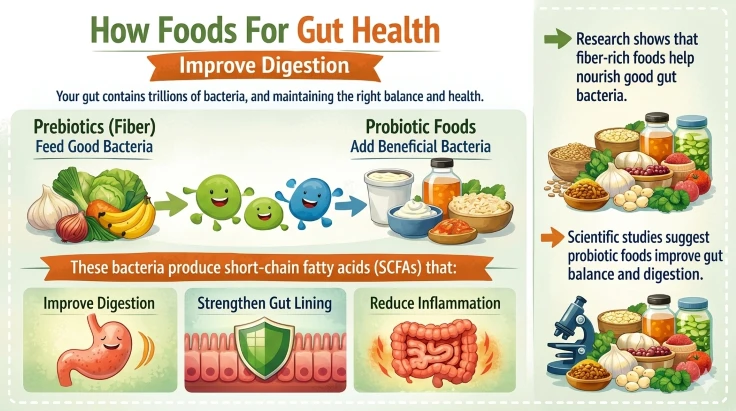
How Foods For Gut Health Improve Digestion
Your gut contains trillions of bacteria, and maintaining the right balance is essential for digestion and health.
- Prebiotics (fiber) feed good bacteria
- Probiotic foods add beneficial bacteria
- These bacteria produce short-chain fatty acids (SCFAs) that:
- Improve digestion
- Strengthen gut lining
- Reduce inflammation
Research shows that fiber-rich foods help nourish good gut bacteria.
Scientific studies suggest probiotic foods improve gut balance and digestion.
Quick Facts:
- A diverse gut microbiome improves digestion efficiency
- Low fiber intake reduces healthy gut bacteria
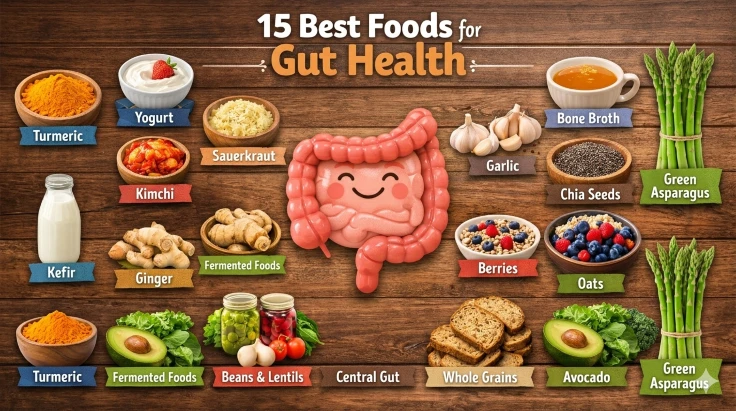
15 Best Foods For Gut Health
Yogurt
✔️ Helps: Improves digestion and gut balance
✔️ Who should eat: People with bloating
✔️ How to consume: 1 bowl daily
✔️ Science: Contains live probiotics that support gut microbiome
Curd
✔️ Helps: Reduces acidity and improves digestion
✔️ Who should eat: People with stomach discomfort
✔️ How to consume: Add to lunch
✔️ Science: Rich in beneficial bacteria that aid digestion
Buttermilk
✔️ Helps: Lightens digestion and reduces heaviness
✔️ Who should eat: After heavy meals
✔️ How to consume: Drink after lunch
✔️ Science: Supports gut bacteria balance
Banana
✔️ Helps: Relieves constipation
✔️ Who should eat: People with irregular digestion
✔️ How to consume: Morning or snack
✔️ Science: Contains prebiotic fiber that feeds good bacteria
Apple
✔️ Helps: Cleanses digestive system
✔️ Who should eat: Those needing gut healing foods
✔️ How to consume: Eat raw
✔️ Science: Contains pectin, a fiber that improves gut health
Oats
✔️ Helps: Improves digestion
✔️ Who should eat: People with slow metabolism
✔️ How to consume: Breakfast
✔️ Science: High in soluble fiber that supports gut bacteria
Ginger
✔️ Helps: Reduces bloating
✔️ Who should eat: People with gas issues
✔️ How to consume: Tea or meals
✔️ Science: Enhances digestive enzyme activity
Garlic
✔️ Helps: Supports immunity and digestion
✔️ Who should eat: People with weak digestion
✔️ How to consume: Add to food
✔️ Science: Acts as a prebiotic feeding good bacteria
Green Leafy Vegetables
✔️ Helps: Improves digestion
✔️ Who should eat: Everyone
✔️ How to consume: Daily meals
✔️ Science: High fiber supports gut microbiome diversity
Fermented Foods (Idli, Dosa, Pickles)
✔️ Helps: Improves gut bacteria
✔️ Who should eat: People with poor gut health
✔️ How to consume: Small portions
✔️ Science: Provide natural probiotic foods
Papaya
✔️ Helps: Aids digestion
✔️ Who should eat: People with constipation
✔️ How to consume: Morning
✔️ Science: Contains enzymes that break down food
Chia Seeds
✔️ Helps: Improves bowel movement
✔️ Who should eat: People needing gut healing foods
✔️ How to consume: Soaked overnight
✔️ Science: High fiber supports SCFA production
Coconut Water
✔️ Helps: Hydrates digestive system
✔️ Who should eat: People with acidity
✔️ How to consume: Morning
✔️ Science: Maintains electrolyte balance for digestion
Turmeric
✔️ Helps: Reduces inflammation
✔️ Who should eat: People with gut irritation
✔️ How to consume: In food or milk
✔️ Science: Contains curcumin which reduces gut inflammation
Whole Grains
✔️ Helps: Improves digestion
✔️ Who should eat: Everyone
✔️ How to consume: Replace refined grains
✔️ Science: Fiber supports healthy gut bacteria
Fiber vs Probiotic Foods — What’s Better?
A common question is whether you should focus on fiber or probiotics.
- Fiber (Prebiotics) acts as the fuel for existing bacteria.
- Probiotics act as the reinforcements that add new beneficial bacteria.
Conclusion: Neither is “better” than the other. Scientific studies suggest that the best results come from combining both. Without fiber, probiotics may not survive; without probiotics, there may not be enough bacteria to ferment the fiber.
Tips To Improve Gut Health Naturally
- Eat slowly and chew properly
- Stay hydrated
- Avoid processed foods
- Include fiber-rich digestion foods
Pro Tip: Gut bacteria thrive on consistent eating habits
Pro Tip: Include a variety of foods for better microbiome diversity.
Common Mistakes That Damage Gut Health
- Low fiber diet: This starves your beneficial bacteria, leading to a thin mucus layer in the gut.
- Too much sugar: High sugar intake feeds “bad” bacteria and yeast, causing dysbiosis.
- Processed foods: These often contain emulsifiers that can damage the protective gut lining.
- Overuse of antibiotics: While necessary at times, antibiotics can “wipe out” both good and bad bacteria.
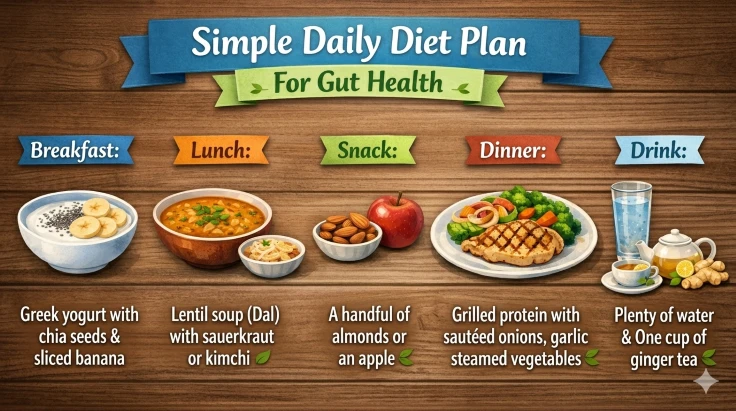
Simple Daily Diet Plan For Gut Health
Breakfast: Greek yogurt with chia seeds and a sliced banana.
Lunch: Lentil soup (Dal) with a side of fermented sauerkraut or kimchi.
Snack: A handful of almonds or an apple.
Dinner: Grilled protein with sautéed onions, garlic, and steamed vegetables.
Drink: Plenty of water and one cup of ginger tea.
This plan combines fiber and probiotic foods effectively.
Conclusion
Improving your gut health doesn’t require complicated diets or expensive supplements. By simply adding the right foods for gut health to your daily routine, you can support better digestion, reduce bloating, and feel more energetic throughout the day. Foods rich in fiber help feed good bacteria, while probiotic foods add beneficial bacteria to your gut. Together, they create a healthy balance that supports overall wellness.
Consistency is the key. Eating a variety of natural, whole foods like fruits, vegetables, curd, and whole grains can gradually improve your gut health. Small daily changes often lead to long-term benefits.
Remember, your gut plays a major role in how your body feels and functions. Start with simple steps, stay consistent, and choose the right foods for gut health to build a stronger and healthier digestive system over time.
FAQs
What are the best foods for gut health?
The best foods for gut health include yogurt, curd, oats, bananas, apples, leafy vegetables, garlic, and fermented foods. These support good bacteria, improve digestion, and promote overall gut balance.
What foods improve gut bacteria?
Probiotic foods like yogurt and fiber-rich foods like fruits and vegetables help improve gut bacteria.
How to heal gut naturally?
To heal your gut naturally, eat fiber-rich and probiotic foods, stay hydrated, avoid processed foods, and follow a regular eating routine. Manage stress and get enough sleep. Consistency in these habits helps improve digestion, balance gut bacteria, and support overall health.
Are probiotic foods necessary daily?
Yes, probiotic foods are beneficial daily. They help maintain healthy gut bacteria, improve digestion, and reduce bloating. Regular intake supports gut balance, but variety and moderation are important for overall digestive health.
How long does gut healing take?
Gut healing can take 1 to 4 weeks with consistent healthy habits. Improvements in digestion may appear early, but long-term gut health requires regular diet and lifestyle changes.
Disclaimer
This article is only for general health awareness and tips. It is not medically suggested advice. Please consult a qualified healthcare professional for medical guidance.