

Introduction
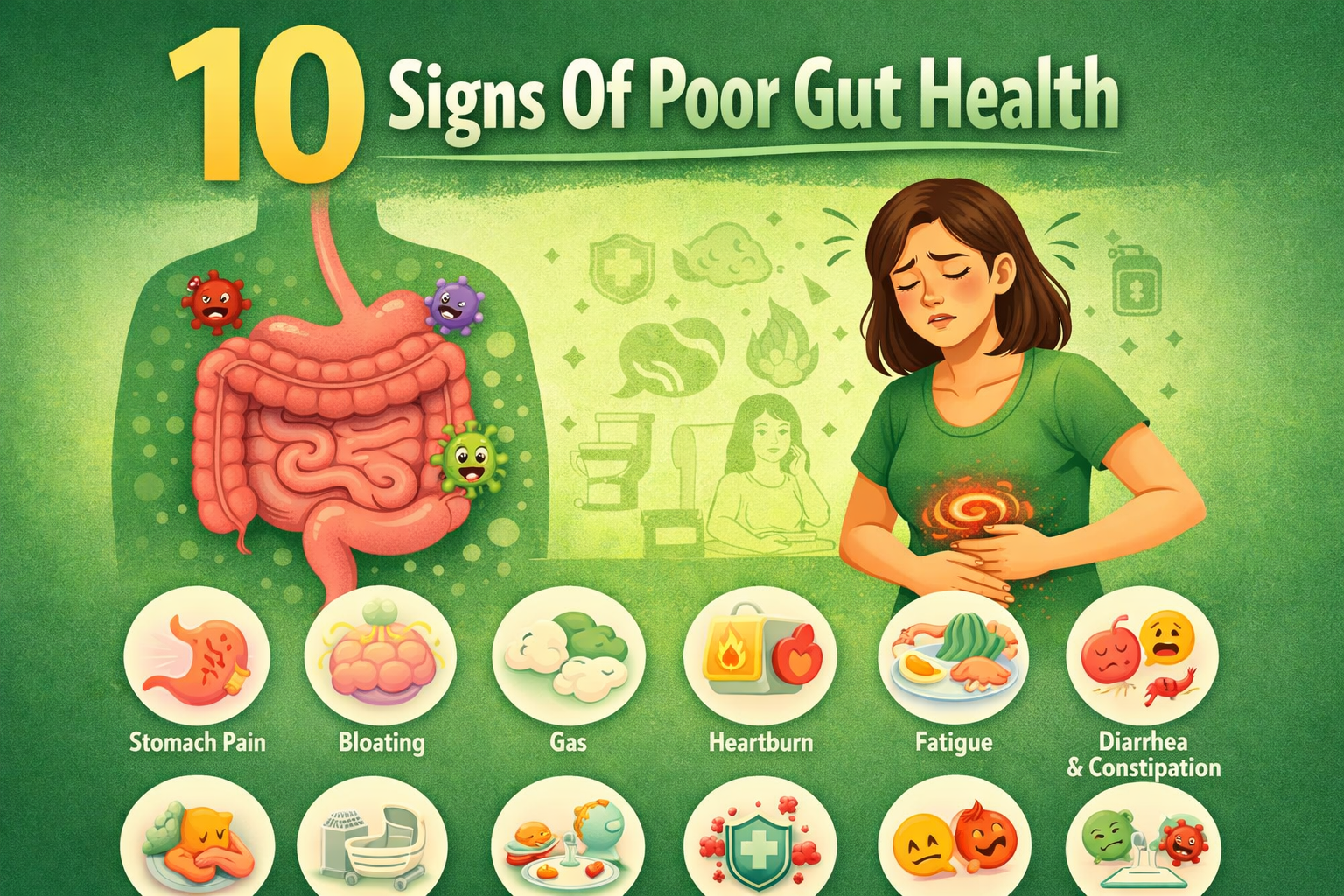
10 Signs Of Poor Gut Health are often ignored in daily life, even though your gut plays a crucial role in your overall well-being. From digestion to immunity and even your mood, a healthy gut is the foundation of a healthy body. However, due to poor eating habits, stress, lack of sleep, and an unhealthy lifestyle, your gut can easily become imbalanced without you even realizing it.
Many people experience common issues like bloating, fatigue, or skin problems but fail to connect them to gut health. Your body constantly gives signals when something is wrong, and understanding these signs can help you take action early.
In this blog, we will explore the most common signs that indicate your gut health may be suffering. Recognizing these symptoms can help you make simple lifestyle changes and improve your overall health naturally.
Case Study
Meet Riya, a 28-year-old marketing professional. Every morning, she starts her day with a rushed cup of coffee, skips breakfast, and grabs a quick sandwich for lunch at her desk. By 4:00 PM, she feels a familiar, uncomfortable tightness in her stomach. She often feels bloated after lunch and tired by the evening, but she simply brushes it off as “work stress” or “just getting older.”
What Riya doesn’t realize is that these aren’t just random occurrences. These were actually early poor gut health signs.
But what exactly is “gut health“? In simple terms, your gut is the long tube that starts at your mouth and ends where waste leaves your body. Inside this tube live trillions of tiny organisms—bacteria, viruses, and fungi—collectively known as the microbiome. When these “good” and “bad” bacteria are in balance, you feel energetic, your skin glows, and your digestion is smooth. When they are out of balance, your whole body feels the impact.
Many people ignore these signs because they happen slowly. We get used to feeling a little bit gassy or a little bit sluggish, thinking it’s just part of a busy life. However, your gut is the foundation of your entire health system. If the foundation is weak, the rest of the house—your immunity, your mood, and your energy—will eventually struggle.
Gut Health Self-Check (Interactive List)
Take a moment and answer honestly with YES or NO:
✔ Do you feel bloated after meals, even after eating simple food?
✔ Do you feel tired or sleepy after lunch?
✔ Do you often experience gas, acidity, or discomfort?
✔ Do you suffer from constipation or irregular bowel movements?
✔ Do you feel heavy even after eating a small meal?
✔ Do you have frequent cravings for sugar or junk food?
✔ Do you fall sick often (low immunity)?
✔ Do you notice skin problems like acne or dull skin?
✔ Do you experience bad breath regularly?
✔ Do you often face digestion problems?
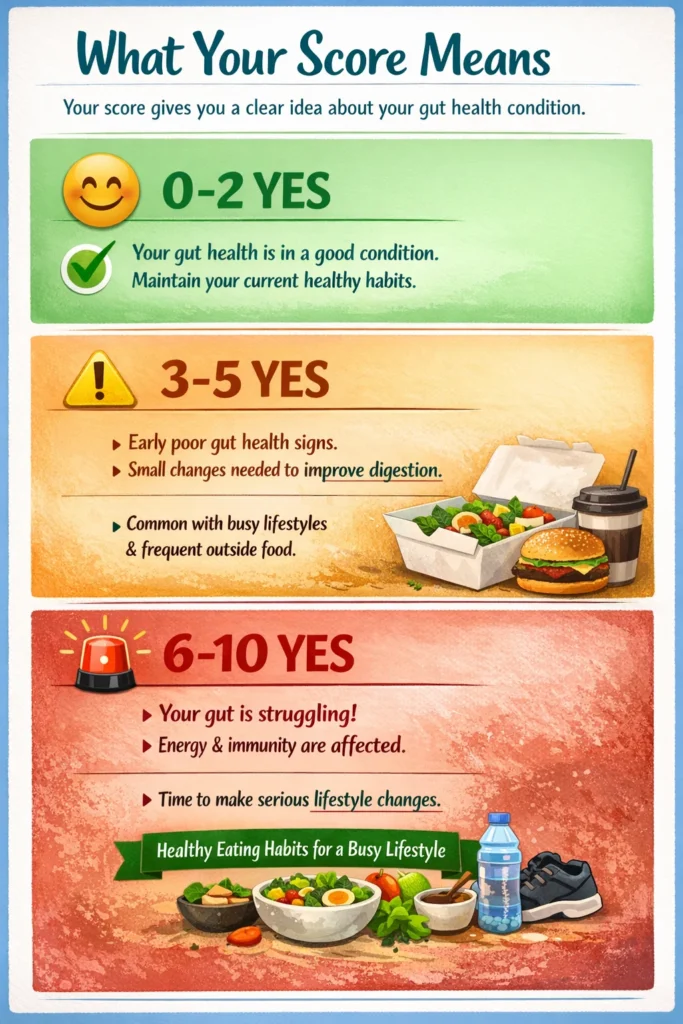
Count your total YES answers before moving ahead.
If your lifestyle is hectic, improving daily habits can help:
Why These Signs Matter
It is easy to think that a little bloating or a mid-day energy crash is just an inconvenience. However, these symptoms are your body’s way of communicating.
Digestion and Bloating If bloating happens daily, it means food is not digesting properly. When food sits in your digestive tract for too long without being broken down correctly, it begins to ferment. This produces gas, which causes that “tight balloon” feeling in your stomach.
The Energy Drain Low energy can happen when nutrients are not absorbed well. You could be eating the healthiest salad in the world, but if your gut lining is inflamed or your bacteria are imbalanced, those vitamins never reach your bloodstream. This is why you might feel exhausted even after a “healthy” meal.
Immunity and Frequent Illness Did you know that about 70% of your immune system lives in your gut? Frequent colds may be linked to weak gut immunity. If your gut is busy fighting off bad bacteria from poor food choices, it has less “manpower” to fight off the flu virus.
The Emotional Connection These small issues slowly affect your productivity and mood. There is a direct “phone line” between your gut and your brain called the Vagus Nerve. If your gut is unhappy, it sends distress signals to your brain, leading to irritability, anxiety, and that “heavy” feeling that makes it hard to enjoy your day.
👉 Your sleep also plays a role in digestion:
Action Plan Based on Your Score
Now that you understand your score, let’s take action.
Low Score (0–2)
Keep doing what you are doing, but add variety.
- The “30-Plant” Challenge: Try to eat 30 different types of plants (vegetables, fruits, nuts, seeds, grains) in one week. Variety is the best way to keep your gut bacteria diverse.
- Hydration: Ensure you drink at least 8–10 glasses of water daily to keep things moving.
Moderate Score (3–5)
If you scored 4, start small. You don’t need to change your whole life overnight.
- The Snack Swap: For example, replace your evening snack (chips or biscuits) with a piece of fruit or a handful of roasted makhana (fox nuts).
- Chew More: Commit to chewing every bite 20 times. This simple act reduces the work your stomach has to do.
- Probiotic Boost: Add one serving of homemade curd (yogurt) to your lunch every day.
High Score (6–10)
If you scored 8, avoid eating a heavy dinner late at night and shift to lighter meals.
- The 12-Hour Rule: Try to leave 12 hours between your dinner and your breakfast. This gives your gut time to “clean house” while you sleep.
- Cut the “White” Foods: For two weeks, try to reduce white sugar and highly processed white flour (maida). These are the favorite foods of “bad” bacteria.
- Move Your Body: A simple 15-minute walk after dinner can significantly improve how your body processes food.
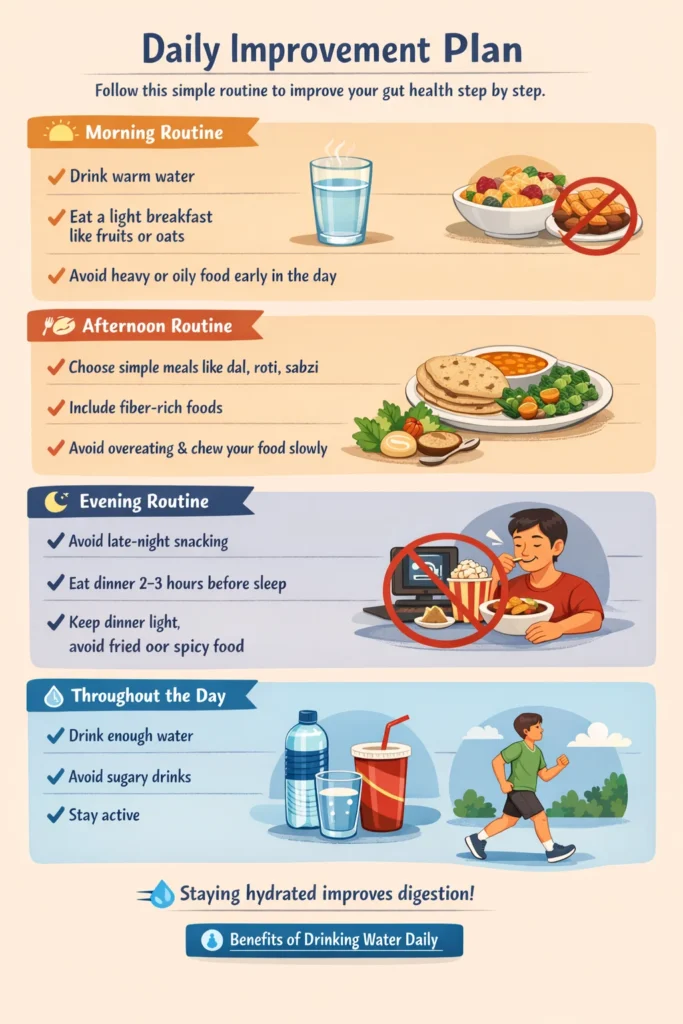
Daily Improvement Plan
Follow this simple routine to improve your gut health step by step.
Morning Routine
Start your day with one glass of warm water every morning and avoids tea on an empty stomach.
- Drink warm water
- Eat a light breakfast like fruits or oats
- Avoid heavy or oily food early in the day
Afternoon Routine
Choose simple meals like dal, roti, sabzi instead of fast food.
- Include fiber-rich foods
- Avoid overeating
- Eat slowly and properly chew your food
Evening Routine
Avoid late-night snacking while watching TV.
- Eat dinner at least 2–3 hours before sleep
- Keep dinner light
- Avoid fried or spicy food
Throughout the Day
- Drink enough water
- Avoid sugary drinks
- Stay active
👉 Staying hydrated improves digestion:
Conclusion
Recognizing poor gut health signs early can help you avoid bigger health issues in the future. Symptoms like bloating, low energy, and digestion problems are not something you should ignore.
The good news is that you don’t need drastic changes. Even small steps like drinking more water, eating on time, and choosing simple home-cooked food can improve your gut health over time.
Start today — your future health depends on it.
👉 For a complete guide, read: Ultimate Guide to Gut Health
FAQs
1. What are poor gut health signs?
If you feel bloated after meals, tired often, or face constant digestion problems like gas or constipation, these may be signs of poor gut health. Other signs include skin breakouts and frequent sugar cravings.
2. What are common gut health symptoms?
Common gut health symptoms include gas, acidity, irregular digestion, fatigue, and food intolerance.
3. What causes bloating?
Bloating is caused by accumulation of excess gas or fluid in the digestive tract. Constipation, Irritable Bowel Syndrome and Small Intestinal Bacterial Overgrowth are common causes of bloating.
4: How long does it take to see improvements?
While everyone is different, many people notice a decrease in bloating and an increase in energy within just 7 to 14 days of making simple dietary changes.
5: Is yogurt enough to fix my gut?
Yogurt is a great start because it contains probiotics, but you also need “prebiotics” (fiber from vegetables and fruits) to feed those healthy bacteria. Think of yogurt as the seeds and fiber as the water and sunlight.
6: Can stress really affect my digestion?
Absolutely. Your brain and gut are connected. When you are stressed, your body “shuts down” non-essential functions like digestion to focus on the perceived threat. This is why you might get a stomach ache before a big presentation.
Lorem ipsum dolor sit amet, consectetur adipiscing elit. Ut elit tellus, luctus nec ullamcorper mattis, pulvinar dapibus leo.