


Introduction
Gut health tips are essential for maintaining good digestion, strong immunity, and overall wellbeing When we talk about gut health, we are really talking about the engine room of the human body. Think of your gut as a complex system of busy workers that help break down the food you eat, soak up the nutrients, and get rid of the waste. In simple terms, a healthy gut means that the “good” bacteria in your digestive system are in balance and doing their jobs effectively. Unfortunately, many people ignore their digestive well-being until something goes wrong. In our fast-paced world, it is easy to grab a quick snack or skip a glass of water without thinking about the consequences. However, poor gut health doesn’t just stay in the stomach; it affects your whole day. When your system is struggling, you might feel sluggish, irritable, or simply “off.” Understanding how to support this system is the first step toward feeling your best every single day
Why Gut Health is Important
The role of your gut goes far beyond just processing a meal. Its primary job is digestion—turning that apple or sandwich into the fuel your cells need to function. If your digestion isn’t working well, your body can’t access the vitamins and minerals it needs, no matter how healthy your diet might be.
Beyond digestion, there is a powerful connection between your gut and your overall health. Did you know that a large portion of your immune system lives in your digestive tract? A balanced gut helps you fight off common colds and keeps your body’s defenses strong. Furthermore, scientists often call the gut the “second brain.” This is because the gut and brain are constantly talking to each other. When your gut is happy, your mood and energy levels often stay stable. When it is out of balance, you might experience brain fog or feel more stressed than usual.
Signs Your Gut Health is Poor
It is important to listen to the “messages” your body sends you. You don’t need a medical degree to notice when things aren’t right. Here are some common, practical signs that your system needs a little extra care:
- Bloating: Feeling uncomfortably full or swollen after eating, even if it wasn’t a large meal.
- Constipation: If things aren’t moving regularly, it’s a clear sign that your digestive system is struggling.
- Low Energy: Since the gut provides the body with fuel, a poorly functioning gut often leads to feeling tired all the time.
- Frequent Illness: If you find yourself catching every sniffle or cough that goes around the office, your gut-based immune system might be weakened
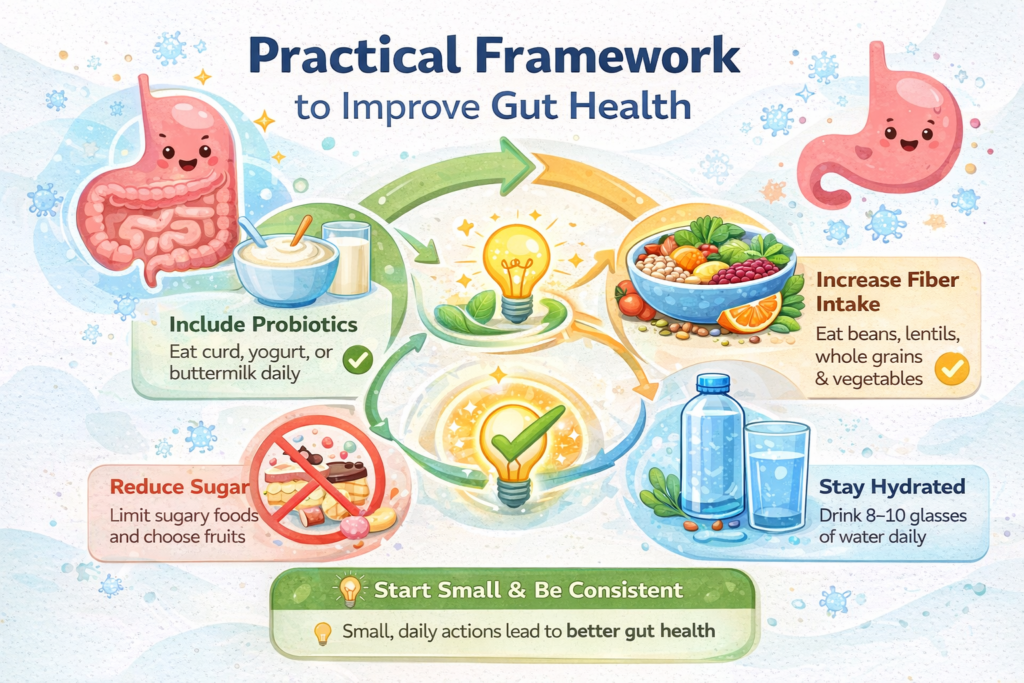
Practical Framework to Improve Gut Health
Improving gut health does not require complicated steps. A simple and consistent routine can make a big difference.
Step-by-Step Daily Approach
- What to Eat: Focus on “real” foods. Think of things that grow in the ground or come from nature. Fiber is your best friend here.
- When to Eat: Try to eat at regular times. Your body loves a routine, and eating your last meal a few hours before bed gives your gut time to rest while you sleep.
- Hydration Habits: Water is the “oil” for your digestive engine. Without it, things get stuck.
How Your Day Should Look for Better Health
| Morning | Have a glass of warm water | breakfast with fruits or oats |
| Afternoon | Drink water before meals | Balanced meal with vegetables and whole grains |
| Evening | Light snacks (avoid processed food) | |
| Night | Avoid heavy or late-night meals | Give your body at least 10–12 hours of “fasting” time between dinner and the next day’s breakfast. |
Avoid These Daily Health Mistakes
| ❌Mistake | ✅Correct Approach |
| Skipping meals | Eat at regular intervals to maintain energy and metabolism |
| Eating too much junk food | Choose fresh, whole, and fiber-rich foods |
| Eating too fast | Eat slowly and chew food properly for better digestion |
| Drinking very little water | Stay hydrated by drinking water throughout the day |
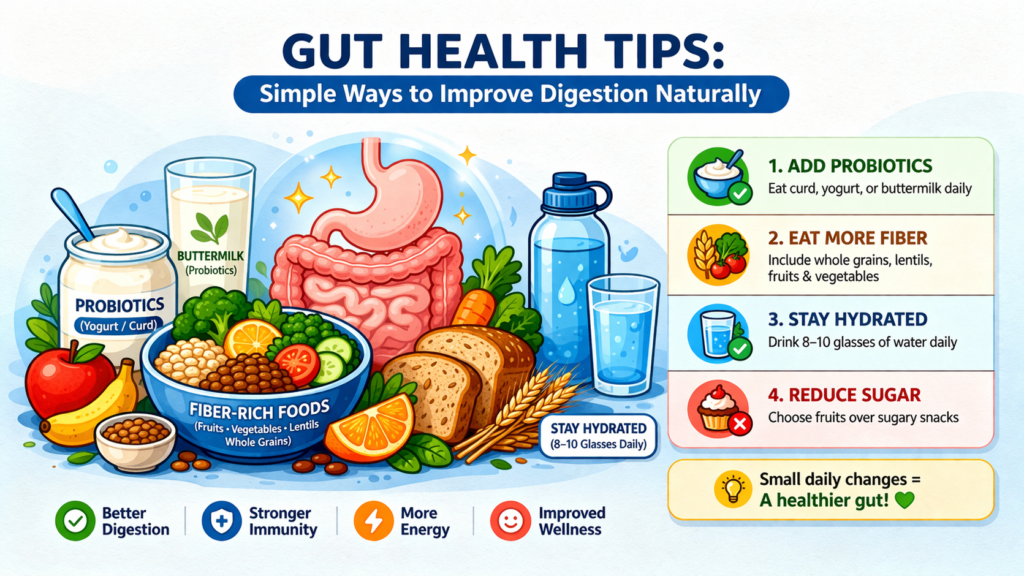
Gut Health Tips: 4 Simple Ways to Improve Your Digestion Naturally
Improve your gut health naturally with simple daily habits. Learn how probiotics, fiber-rich foods, hydration, and reduced sugar intake can boost digestion and overall wellness.
Maintaining good gut health is essential for overall wellbeing, as it directly impacts digestion, immunity, and even energy levels. The good news is that improving your gut health doesn’t require drastic lifestyle changes. By adopting a few simple daily habits, you can significantly enhance your digestive system and overall health
Simple Daily Tips to Improve Gut Health
1. Include Probiotics in Your Diet
Probiotics are beneficial bacteria that help maintain a healthy balance in your gut. Regularly consuming fermented foods like curd, yogurt, and buttermilk can improve digestion and support your immune system.
2. Eat More Fiber-Rich Foods
Dietary fiber plays a crucial role in feeding good gut bacteria. Include foods such as whole grains, lentils, beans, fruits, and vegetables in your meals to promote better digestion and gut health.
3. Stay Properly Hydrated
Water helps break down food and supports nutrient absorption. Aim to drink at least 8–10 glasses of water daily to keep your digestive system functioning smoothly.
4. Limit Sugar Intake
High sugar consumption can disrupt the balance of gut bacteria. Reducing sugary foods and choosing healthier alternatives like fruits can help maintain a healthy gut microbiome.
Quick Summary Table
| Habit | What to Do |
| Add Probiotics | Eat curd, yogurt, or buttermilk daily |
| Increase Fiber | Include whole grains, lentils, fruits, vegetables |
| Stay Hydrated | Drink 8–10 glasses of water daily |
| Reduce Sugar | Replace sugary snacks with fruits |
Conclusion
Improving gut health is a gradual process built on consistent habits. Start small, stay consistent, and over time, these simple changes will lead to better digestion, increased energy, and improved overall health.
What is gut health?
Gut Health refers to the balance and function of the bacteria living in your digestive tract. A healthy gut helps you digest food and supports your immune system.
How can I improve gut health naturally?
You can improve gut health by eating fiber-rich foods, drinking enough water, and including probiotics like curd in your diet.
What foods are good for gut health?
Whole foods like bananas, oats, lentils, yogurt, garlic, and leafy green vegetables are excellent for supporting your digestive system.
How long does it take to improve gut health?
It depends on your habits, but consistent changes can show improvement within a few weeks. While every body is different, many people start to feel less bloated and more energetic within 2 to 4 weeks of consistent healthy eating and hydration.
Does water help gut health?
Yes! Water is essential for the mucosal lining of the intestines and helps move food through the digestive system smoothly.
Disclaimer
This article is only for general health awareness and tips. It is not medically suggested advice. Please consult a qualified healthcare professional for medical guidance.