



Start Your Wellness Journey
Life moves fast, and it is easy to put yourself last on your daily to-do list. But taking time for yourself isn’t a luxury; it is a necessity. If you are ready to improve your emotional health and find balance, starting a simple self care routine is your first step.
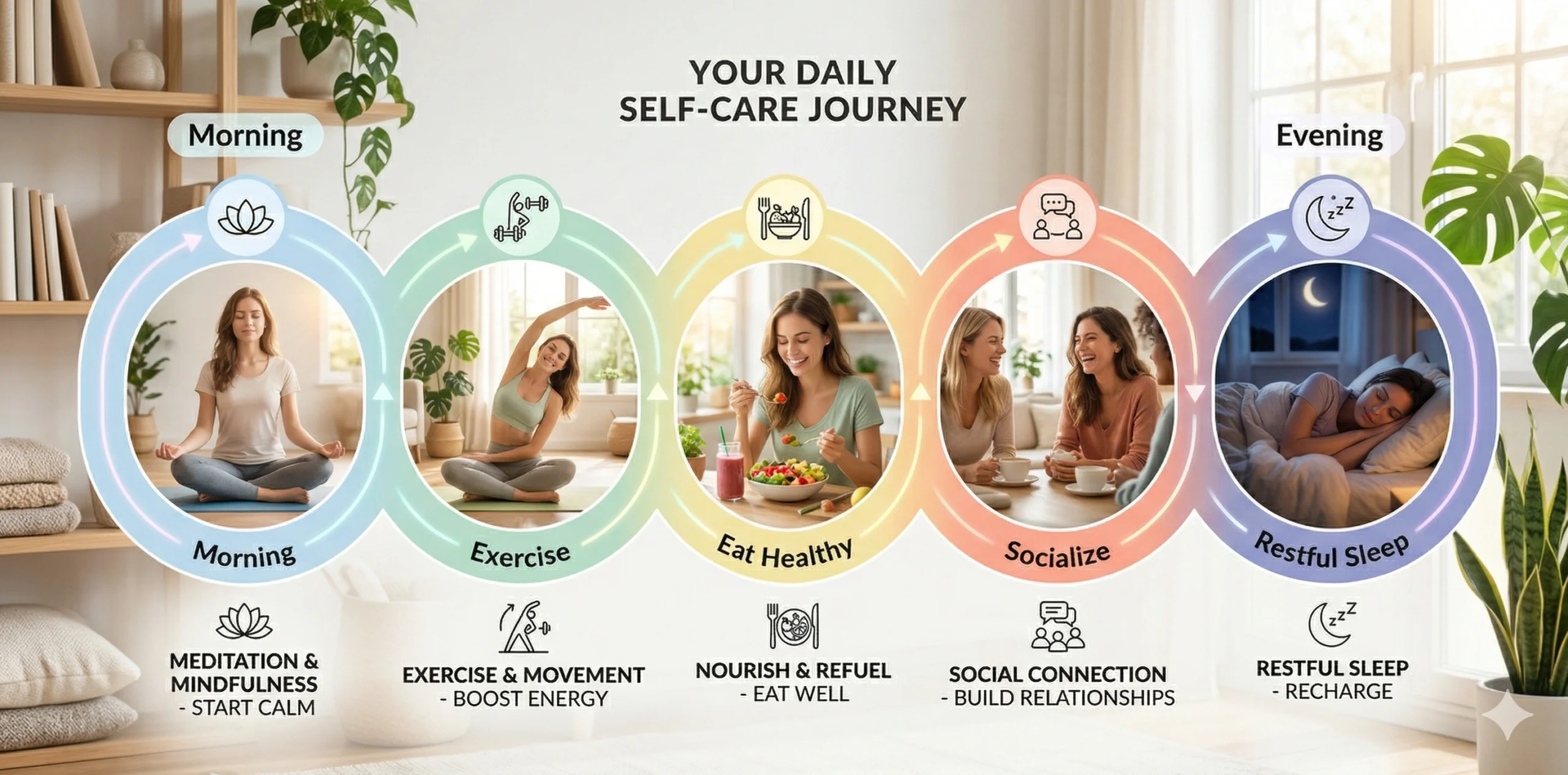
What is Self-Care?
When you hear “self care,” you might picture expensive spa days or weekend retreats. In reality, true self-care is much simpler and far more powerful. It is the active, daily practice of protecting your own well-being and happiness, especially during periods of stress.
Think of it as routine self-maintenance for your mind and body. It is a personal wellness routine made up of small, intentional choices that help you recharge. Whether it is drinking a glass of water, taking a brief walk, or pausing to take a deep breath, these actions build your foundation.
Effective self care for physical and mental health does not require hours of free time. Instead, it relies on simple self care for beginners that easily fits into your existing day. By focusing on practical wellness tips for busy routines, you can create a sustainable well-being practice that actually works for your lifestyle.
Benefits of a Consistent Self-Care Routine
Why should you carve out time for healthy lifestyle habits? The answer is simple: you cannot pour from an empty cup. When you practice daily habits for better mental health, the positive effects ripple into every area of your life.
A realistic self care routine acts as a buffer against daily stressors. It shifts you from a state of survival mode into a state of thriving. When you commit to a routine, you train your brain to recognize that your needs matter.
Wellness Tip: Consistency is more important than intensity. Doing something small for yourself every single day yields better results than doing one massive “self-care day” once a month.
Here is a quick look at the core benefits you can expect when you make yourself a priority:
| Benefit | How It Improves Your Life |
| Mental Clarity | Clears brain fog, sharpens focus, and helps you make better decisions throughout your workday. |
| Emotional Health | Stabilizes your mood, reduces feelings of overwhelm, and increases your patience with others. |
| Mind-Body Balance | Connects your physical sensations with your mental state, reducing tension and fatigue. |
| Stress Reduction | Lowers cortisol levels and helps prevent chronic burnout. |
| Better Energy | Replenishes your natural energy stores so you don’t rely heavily on caffeine or sugar. |

Daily Habits for Emotional and Mental Wellness
You do not need a complete lifestyle overhaul to see results. By adopting these micro-habits for stress relief, you can transform your day.
Practice Mindful Morning Stillness
How you start your morning sets the tone for the rest of your day. Instead of immediately grabbing your phone to check emails or social media, give yourself five minutes of mindful morning stillness. Sit on the edge of your bed, sip a warm cup of water or tea, and simply notice your surroundings. This quiet self-nourishment grounds you, preventing the immediate rush of morning anxiety and setting a calm, intentional pace for the hours ahead.
Prioritize Hydration and Clean Nutrition
Your brain and body run on the fuel you provide them. Dehydration and processed foods can lead to sluggishness and mood swings. Start prioritizing water intake throughout the day. Pair this with clean nutrition by adding more whole foods, like vegetables, lean proteins, and complex carbohydrates to your plate. When you nourish your body with wholesome ingredients, you support stable blood sugar levels, which directly impacts your emotional stability and overall focus.
Move Your Body for Ten Minutes
You don’t need a grueling hour-long gym session to experience the benefits of exercise. Engaging in just ten minutes of mindful movement can completely reset your mood. Take a brisk walk around your neighborhood, do a quick stretching routine in your living room, or follow a short yoga video. Physical activity releases endorphins, which are natural mood lifters. Moving your body regularly helps shake off physical tension and mental stagnation.
Set Digital Boundaries and Screen Breaks
We live in a hyper-connected world, which can easily lead to sensory overload. To protect your mental wellness, practice a daily digital detox. Set hard boundaries for your screen time. For example, close your laptop during your lunch break, or put your phone in another room during dinner. Taking deliberate breaks from glowing screens reduces eye strain and gives your brain a much-needed pause from constant information processing.
Engage in Daily Gratitude Journaling
It is easy to focus on what went wrong during a busy day. You can rewire your brain to focus on the positive through gratitude journaling. Each day, write down three simple things you are thankful for. They don’t have to be massive achievements; it could be a great cup of coffee or a kind text from a friend. This daily habit shifts your perspective, fosters optimism, and is a proven stress management technique.
Practice Breathwork for Stress Relief
When stress hits, your breathing naturally becomes shallow, which tells your nervous system to panic. You can reverse this by practicing breathwork exercises. Try the 4-7-8 method: inhale for four seconds, hold for seven, and exhale for eight. Taking a few minutes to focus on deep, controlled breathing acts as immediate stress relief. It slows your heart rate, signals safety to your brain, and brings you back to the present moment.
Establish a Calming Evening Wind-Down
A great day actually starts the night before. Creating an evening wind-down routine for anxiety prepares your body for restorative sleep. About an hour before bed, dim the lights, turn off screens, and engage in a relaxing activity like reading or listening to soft music. Practicing good sleep hygiene is the ultimate form of self-maintenance, ensuring you wake up refreshed, emotionally resilient, and ready to tackle the new day.
How to Build a Routine on a Busy Schedule
Knowing what to do is only half the battle; integrating these practices into a packed schedule is the real challenge. Here is how to make it work.
Start with One Habit at a Time
Trying to adopt seven new habits all at once is a recipe for failure. Choose just one practice to focus on this week. Once that single action feels like a natural part of your day, introduce a second one. Slow, steady progress is the secret to lasting change.
Use Habit Stacking Techniques
One of the most effective ways to build a routine is to tie a new habit to an existing one. If you want to practice morning stillness, pair it with your daily coffee. By utilizing habit stacking, your brain uses the established routine (drinking coffee) as an automatic trigger for the new behavior (mindful stillness).
Schedule Self-Care Like an Appointment
If you don’t block out time for yourself, other tasks will inevitably fill your day. Look at your calendar and physically schedule your wellness activities. Treat a ten-minute walk or your evening wind-down with the same respect and non-negotiability as a meeting with your boss.
Focus on Consistency Over Perfection
Some days will be chaotic, and your routine will fall apart. That is perfectly normal. The goal is not perfection; it is resilience. If you only have two minutes for deep breathing instead of ten, take those two minutes. Doing something is always better than doing nothing.
Common Barriers to Self-Care
Even with the best intentions, roadblocks will appear. Recognizing these common barriers helps you navigate around them.
Overcoming Guilt and Self-Ishness
Many people, especially caregivers and busy professionals, feel guilty taking time for themselves. Remind yourself that self-care is not selfish. Taking care of your emotional health makes you a better, more present partner, parent, and worker. You deserve care just as much as anyone else in your life.
Managing Time Constraints
“I don’t have time” is the most common excuse. However, you can always find small pockets of time. Swap ten minutes of social media scrolling for ten minutes of stretching. By auditing your day, you will likely find hidden moments that you can reclaim for your personal wellness routine.
Dealing with Lack of Motivation
Motivation is a feeling, and feelings are temporary. Rely on discipline and routine instead of waiting to “feel” like doing your habits. On days when motivation is low, lower the barrier to entry. Tell yourself you will just do one minute of journaling; usually, once you start, you will want to keep going.
Tools to Enhance Your Wellness Journey
Having the right tools can simplify your routine, keep you accountable, and make the process much more enjoyable.
Wellness and Meditation Apps
Your smartphone can be a tool for peace instead of stress. Apps like Headspace, Calm, or Insight Timer offer guided meditations, breathing exercises, and sleep stories. These are fantastic for beginners who need a little extra guidance to quiet their minds.
Physical Planners and Journals
There is something powerful about putting pen to paper. A dedicated wellness planner helps you track your water intake, mood, and daily goals. Meanwhile, a beautiful, blank notebook is the perfect canvas for your daily gratitude journaling, keeping you organized and reflective.
Wearable Fitness Trackers
If you love data, wearable technology can be incredibly motivating. Devices like smartwatches and fitness trackers monitor your daily steps, heart rate, and sleep quality. They provide tangible proof of your progress and offer gentle reminders to get up and move throughout the day.
Small Steps to Big Changes
Building a self care routine doesn’t require a massive life overhaul. By integrating these 7 daily habits into your life, you are actively choosing to protect your emotional and mental wellness. Remember, self care is a continuous journey of self-discovery and self-compassion. Start small, stay consistent, and watch as these simple daily practices transform your health, your mindset, and your overall quality of life.