

Introduction
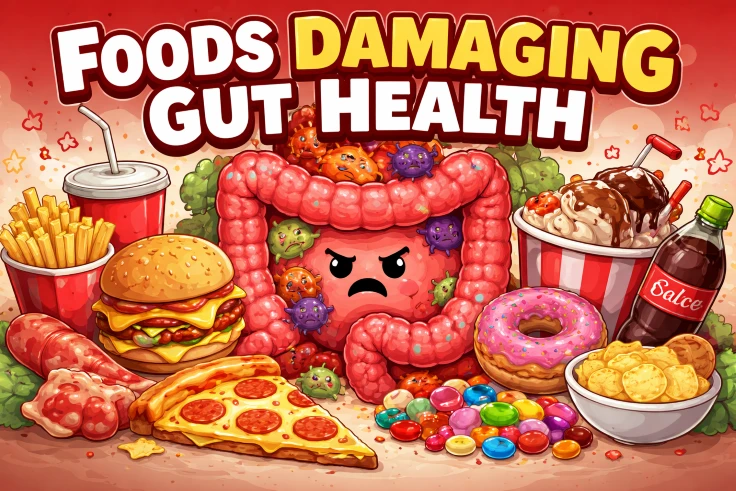
Foods damaging gut health can silently disrupt your digestion and overall well-being. Your gut plays a key role in breaking down food, absorbing nutrients, and maintaining a healthy balance of good bacteria. When you regularly consume harmful foods, this balance gets disturbed, leading to bloating, acidity, and low energy.
Diet directly impacts gut health, and poor food choices can damage the gut lining and increase bad bacteria. Avoiding such foods is essential for maintaining digestive balance and improving overall health. Making simple dietary changes can help restore gut function and prevent long-term digestive issues.
What Are Foods Damaging Gut Health?
Foods damaging gut health are typically highly processed items that contain artificial additives, excessive sugars, and unhealthy fats. These ingredients are foreign to your natural digestive processes and can be difficult for your body to break down effectively.
- Definition: Consumables that disrupt the microbial balance (dysbiosis) or weaken the intestinal barrier.
- Impact on Bacteria: These foods promote the growth of harmful pathogens while killing off beneficial strains like Lactobacillus.
- Link with Disorders: Consistent intake is closely linked to Leaky Gut Syndrome, IBS, and chronic acid reflux.
Before understanding these harmful foods, it’s important to recognize the warning signs check out our guide on 10 Signs of Poor Gut Health.
Signs Your Diet Is Damaging Your Gut Health
The real reason behind your digestive problems could be your daily diet. If your gut flora is out of balance, your body will send clear warning signals:
- Persistent Bloating: Feeling heavy or “full” even after small meals.
- Frequent Gas: Excessive flatulence caused by undigested food fermenting in the gut.
- Acidity and Heartburn: Irritation of the stomach lining leading to acid reflux.
- Low Energy: A damaged gut cannot absorb the nutrients required for energy production.
- Skin Issues: Conditions like acne or eczema are often “gut-skin” reactions to inflammation.
Foods Damaging Gut Health: Top 10 Foods You Should Avoid
1. Refined Sugar
- Why it is harmful: It acts as a primary fuel source for harmful yeast and bacteria.
- Impact on digestion: Causes rapid fermentation in the gut, leading to gas and bloating.
- Better alternative: Small amounts of raw honey or stevia.
2. Processed Foods
- Why it is harmful: They are loaded with preservatives and emulsifiers that strip the gut lining.
- Impact on digestion: Slows down the transit time of food, causing constipation.
- Better alternative: Whole, single-ingredient foods like fresh vegetables.
3. Fried Foods
- Why it is harmful: High in trans fats that trigger systemic inflammation.
- Impact on digestion: Extremely heavy and difficult to digest, often causing “heavy stomach” syndrome.
- Better alternative: Air-fried or roasted versions of your favorite snacks.
4. Artificial Sweeteners
- Why it is harmful: Chemicals like aspartame can alter the composition of gut bacteria.
- Impact on digestion: Can cause a laxative effect and contribute to glucose intolerance.
- Better alternative: Natural fruit extracts or monk fruit.
5. Alcohol
- Why it is harmful: It is a toxin that can “burn” or irritate the delicate gut lining.
- Impact on digestion: Disrupts the movement of food through the small intestine.
- Better alternative: Sparkling water with a squeeze of fresh lime.
6. Carbonated Drinks
- Why it is harmful: They contain high levels of phosphoric acid and high-fructose corn syrup.
- Impact on digestion: The gas in these drinks expands the stomach, causing pressure and acidity.
- Better alternative: Herbal teas or infused water.
7. Refined Flour (Maida)
- Why it is harmful: It is stripped of all fiber, making it a “sticky” substance in the gut.
- Impact on digestion: It provides zero fuel for good bacteria and leads to sluggish digestion.
- Better alternative: Whole wheat, oats, or millets.
8. Packaged Snacks
- Why it is harmful: High sodium levels can alter the way your gut absorbs water.
- Impact on digestion: Leads to water retention and a feeling of being constantly bloated.
- Better alternative: Roasted Makhana (fox nuts) or walnuts.
9. Excess Dairy (For Sensitive Individuals)
- Why it is harmful: Many adults lack the enzymes to process lactose correctly.
- Impact on digestion: Can cause immediate cramping, diarrhea, or bloating.
- Better alternative: Almond milk or coconut-based yogurt.
10. Fast Food
- Why it is harmful: A combination of refined carbs, poor-quality oils, and high sodium.
- Impact on digestion: Creates a toxic environment where good bacteria cannot survive.
- Better alternative: Home-cooked meals prepared with olive oil or ghee.
How Junk Food Affects Digestion and Gut Health
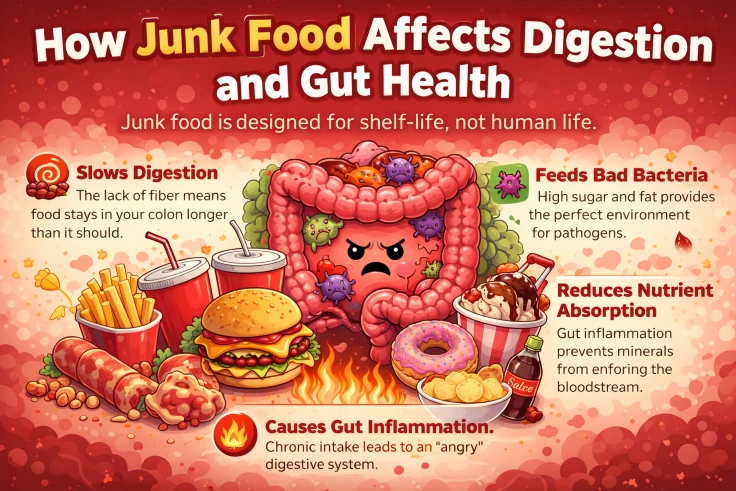
When discussing junk food digestion, it is important to realize that these foods are designed for shelf-life, not human life.
- Slows Digestion: The lack of fiber means food stays in your colon longer than it should.
- Feeds Bad Bacteria: High sugar and fat content provide the perfect environment for pathogens.
- Reduces Nutrient Absorption: Inflammation in the gut wall prevents minerals from entering the bloodstream.
- Causes Gut Inflammation: Chronic intake leads to a permanently “angry” digestive system.
Why These Gut Damage Foods Harm Your Body
These poor digestion foods do more than just cause a stomach ache; they change your internal biology:
- Disrupt Gut Flora: They wipe out the diversity of your microbiome.
- Damage Gut Lining: They create microscopic “holes” in the gut wall (Leaky Gut).
- Increase Toxins: As bad bacteria die off, they release metabolic byproducts that stress the liver.
- Long-Term Issues: Constant irritation can lead to autoimmune responses.
Healthy Alternatives to Replace Gut Damaging Foods
Unhealthy Food | Healthy Alternative |
Refined Sugar | Honey, Jaggery, or Dates |
Soda / Cold Drinks | Lemon Water or Coconut Water |
Potato Chips | Roasted Nuts & Seeds |
Fast Food Burgers | Home-cooked Veggie Wraps |
White Bread | Sourdough or Multigrain Bread |
Replacing junk is just the first step—discover the best foods for gut health to truly heal and strengthen your gut.
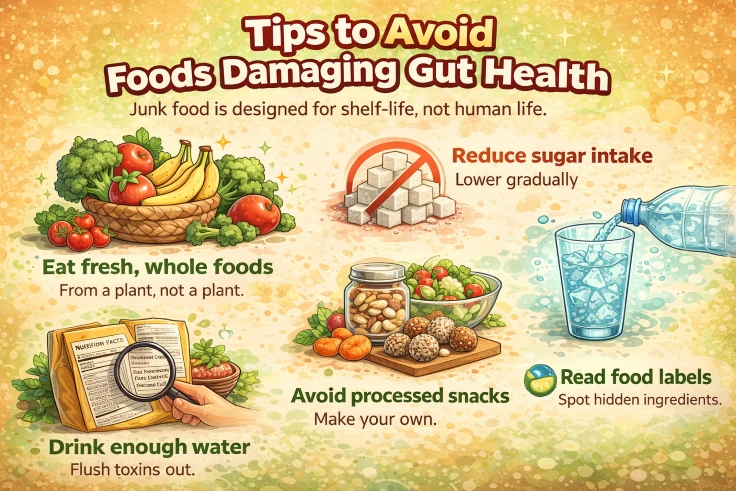
Tips to Avoid Foods Damaging Gut Health
- Eat fresh, whole foods: If it comes from a plant, eat it; if it was made in a plant, avoid it.
- Reduce sugar intake: Gradually lower your sugar until your taste buds adapt.
- Avoid processed snacks: Prep your snacks at home using natural ingredients.
- Drink enough water: Water helps flush out the toxins released by harmful foods.
- Read food labels: Look out for hidden terms like “maltodextrin” or “high fructose syrup.”
Best Diet Habits to Improve Gut Health Naturally
To counter the effects of foods damaging gut health, adopt these positive habits:
- Eat fiber-rich foods: Fiber is the “broom” that cleans out your digestive tract.
- Include probiotics: Natural yogurt or fermented pickles help repopulate good bacteria.
- Maintain meal timing: Give your gut a “rest period” between meals to repair itself.
- Avoid overeating: Excessive portions put undue stress on your digestive enzymes.
Common Mistakes That Worsen Gut Health
Skipping meals: This can cause acid buildup and disrupt your metabolic rhythm.
Eating late at night: Your digestion slows down significantly while you sleep.
Excess caffeine: Too much coffee can speed up digestion too much, preventing nutrient absorption.
Ignoring hydration: Dehydration is the leading cause of chronic constipation.
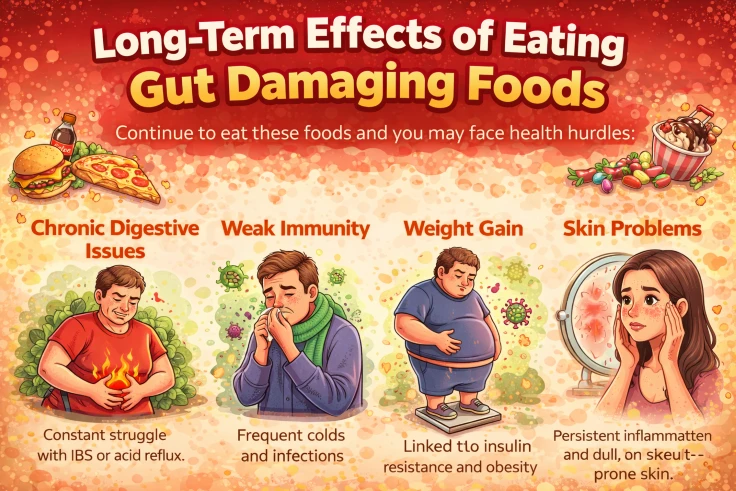
Long-Term Effects of Eating Gut Damaging Foods
If you continue to consume gut damage foods, you may face serious health hurdles:
- Chronic Digestive Issues: Constant struggle with IBS or acid reflux.
- Weak Immunity: Frequent colds and infections due to 70% of the immune system being in the gut.
- Weight Gain: A damaged microbiome is linked to insulin resistance and obesity.
- Skin Problems: Persistent inflammation often shows up as dull, breakout-prone skin.
Who Should Avoid These Foods the Most?
While everyone should limit these items, it is crucial for:
- People already diagnosed with IBS or IBD.
- Those who experience frequent bloating after every meal.
- Individuals with weak digestion or low stomach acid.
- Anyone dealing with lifestyle-related issues like high stress or sedentary habits.
Conclusion
Foods damaging gut health can have a serious impact on your digestion and overall well-being. Regular consumption of processed, sugary, and fried foods disrupts the balance of good bacteria and weakens your digestive system.
Improving gut health starts with simple dietary changes. Avoid harmful foods, choose natural alternatives, and follow healthy eating habits. Consistency is key to maintaining a balanced gut and better digestion. Small changes in your daily diet can lead to long-term health benefits.
FAQs
Q1: What foods damage gut health the most?
The foods that damage gut health most include refined sugars, processed foods, and artificial sweeteners, which fuel harmful bacteria. Fried foods, alcohol, and refined flour also irritate the gut lining, causing inflammation and disrupting the delicate microbial balance.
Q2: How to improve gut health naturally?
Naturally improve gut health by eating diverse probiotic foods, increasing fiber-rich prebiotics, and staying hydrated. Additionally, managing stress and getting quality sleep help restore balance to your digestive microbiome..
Q3: Can gut health affect skin?
Yes, the gut-skin axis links digestive health to skin clarity. An imbalanced microbiome can trigger systemic inflammation, potentially leading to conditions like acne, eczema, and psoriasis. Improving gut bacteria often results in clearer skin.
Q4: What should I avoid for better digestion?
Avoid processed foods, refined sugar, fried items, excess dairy, and carbonated drinks. Limit junk food and alcohol, as they disrupt gut bacteria, slow digestion, and cause bloating. Focus on fresh, natural foods instead.
Q5: Are processed foods harmful daily?
Yes, daily consumption of processed foods is harmful. Their high levels of preservatives, refined sugars, and unhealthy fats trigger gut inflammation, damage the intestinal lining, and suppress beneficial bacteria, leading to chronic digestive issues.
⚠️ Disclaimer
This article is only for general health awareness and tips. It is not medically suggested advice. Please consult a qualified healthcare professional for medical guidance.
Lorem ipsum dolor sit amet, consectetur adipiscing elit. Ut elit tellus, luctus nec ullamcorper mattis, pulvinar dapibus leo.
⚠️ Disclaimer
This article is only for general health awareness and tips. It is not medically suggested advice. Please consult a qualified healthcare professional for medical guidance.