

Introduction: Starting Your Fitness Journey
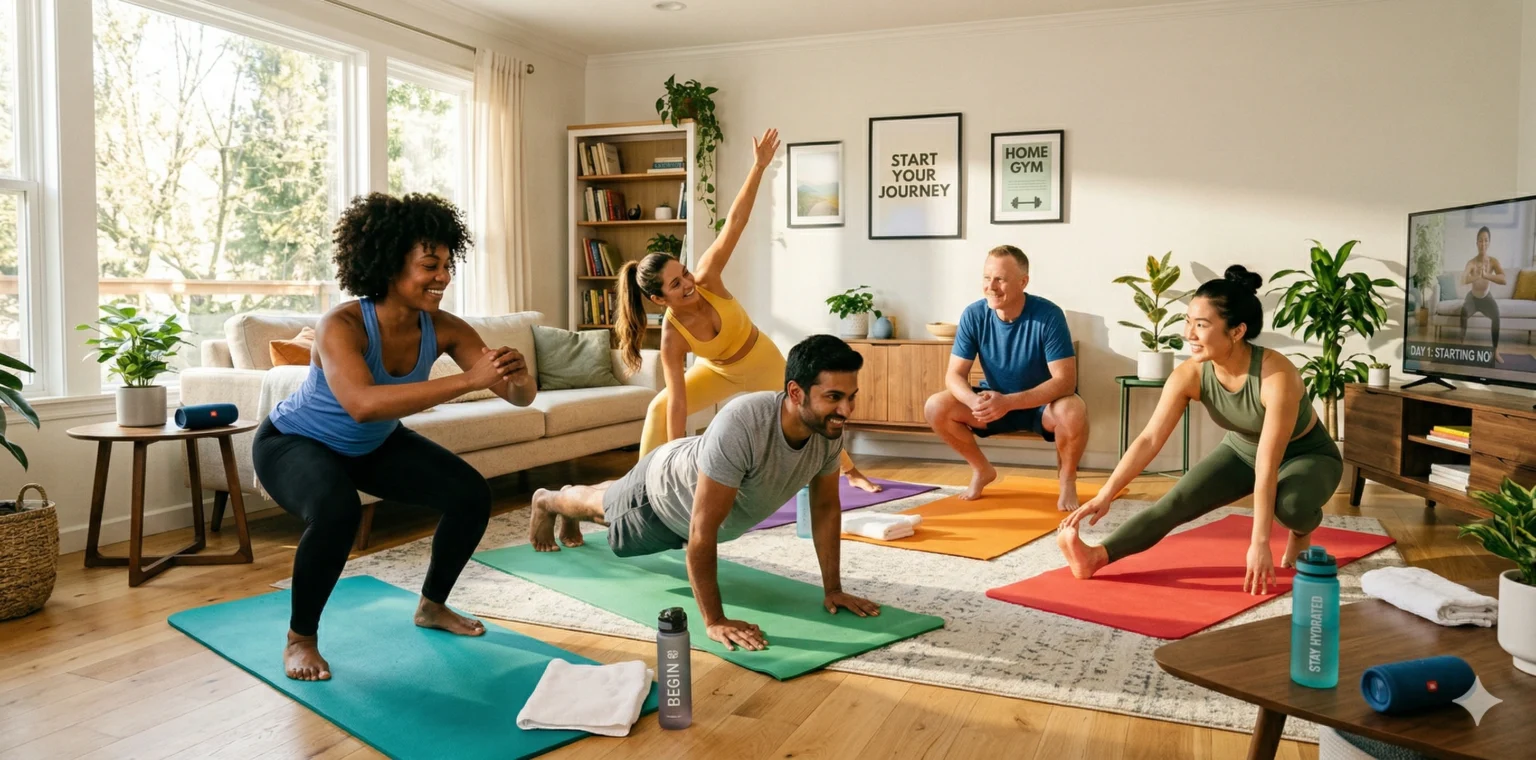
Starting a fitness journey can feel like standing at the base of a mountain—exciting but a little daunting. The good news? You don’t need to climb it all at once. The best beginner exercises are simple, safe, and designed to build your confidence one small step at a time. Whether you want to lose weight, gain energy, or just feel better every morning, this guide is your starting point.
What Are Beginner Exercises?
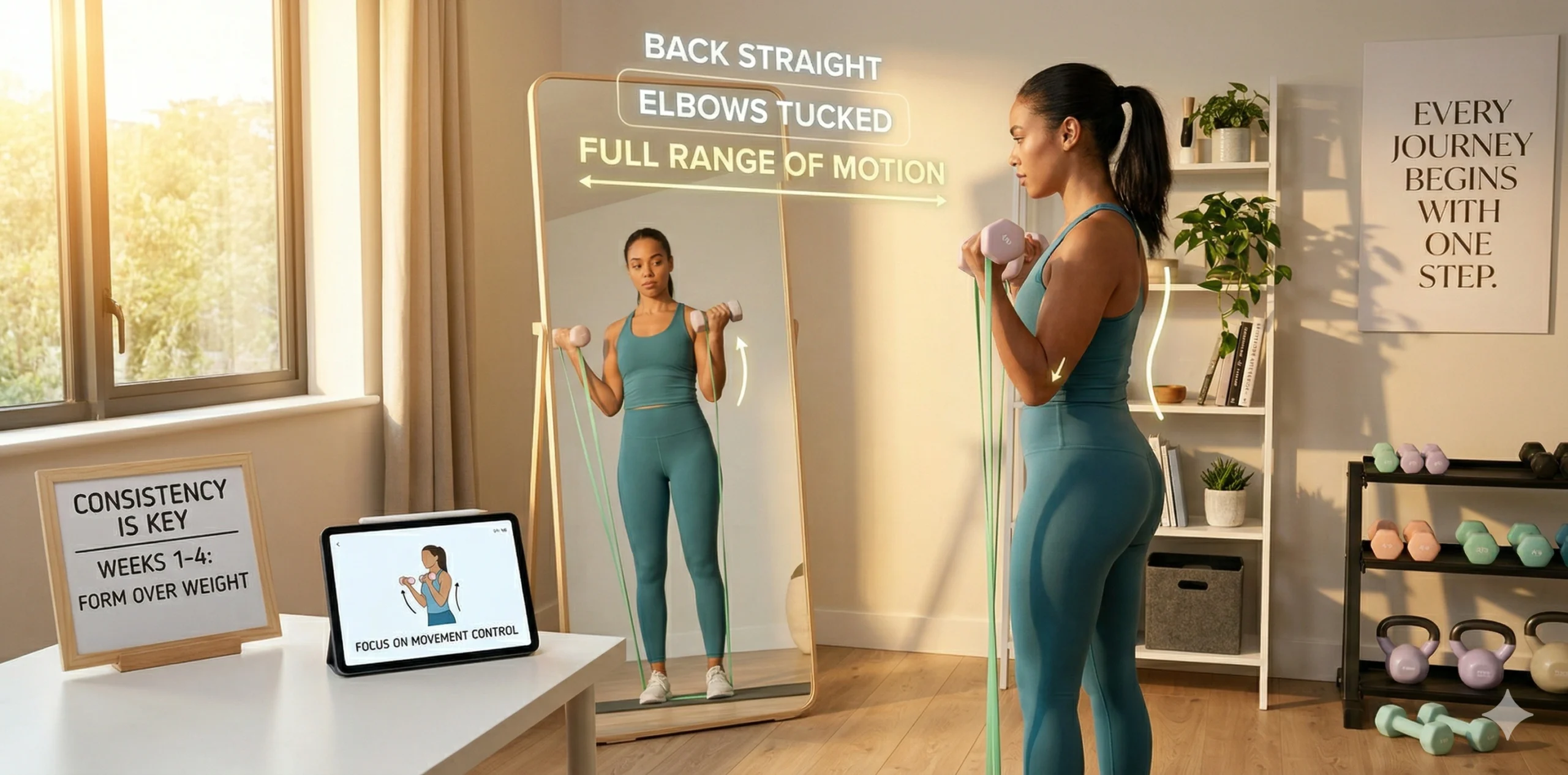
Beginner exercises are low-impact, easy-to-learn movements that help your body adapt to regular physical activity. Think of them as the ABCs of fitness—the foundation everything else is built on. These workouts for beginners don’t require fancy equipment, expensive gym memberships, or years of athletic experience. They focus on mastering basic movement patterns like pushing, pulling, bending, and walking. Once your body gets comfortable with these, leveling up feels natural, not forced.
Benefits of Starting a Fitness Routine
Adding a simple fitness routine to your life is like watering a plant—the results may not be instant, but they are very real. Here’s a quick look at what consistent beginner workouts can do for you:
Physical Health Improvements
Regular easy workouts strengthen your heart, improve your lung capacity, and help maintain a healthy weight. Even light cardio for beginners—like brisk walking—can lower blood pressure and reduce the risk of chronic diseases like type 2 diabetes. Your muscles and bones also grow stronger, making everyday tasks feel less tiring.
Mental Well-being Boosts
Exercise is one of the most underrated mood-boosters available to us. When you work out, your brain releases endorphins—natural chemicals that reduce stress and anxiety. A simple beginner workout routine done three times a week can meaningfully reduce symptoms of depression and improve sleep quality.
Increased Daily Energy
It sounds counterintuitive, but expending energy during exercise actually creates more of it. Beginners who stick to an easy daily exercise routine often report feeling more alert during the day, sleeping better at night, and having more stamina for work, family, and everything in between.
| 💡 Quick Stat |
| According to the CDC, just 150 minutes of moderate-intensity activity per week can reduce your risk of heart disease by up to 35%. That’s only 30 minutes, five days a week. |
How to Prepare for Your Workouts
Jumping into exercise without preparation is like driving without a seatbelt—technically possible, but not wise. A little groundwork goes a long way in preventing injury and keeping you motivated.
Choose Comfortable Clothing and Shoes
Wear breathable, stretchy clothing that lets you move freely. More importantly, invest in a proper pair of athletic shoes. The right footwear gives your joints the support they need, especially during low-impact exercises like walking or step-ups. You don’t need to spend a fortune—just make sure they fit well and feel comfortable on your feet.
Stay Hydrated and Fueled
Drink at least 16 oz of water an hour before your workout and sip throughout. Pair hydration with a light snack—like a banana or some oats—30 minutes before you start. To learn more about what to eat before you train, check out our complete guide on how to stay hydrated and fuel your body right for maximum performance.
Complete a Quick Warm-Up
Warming up is your body’s way of shifting gears before a workout. Spend 3–5 minutes doing light movements like arm circles, gentle leg swings, or slow marching in place. This raises your heart rate gradually and warms your muscles, dramatically lowering the risk of pulls and strains.
| ⚠️ Heads Up |
| Never skip your warm-up! Cold muscles tear more easily. Even five minutes of easy movement makes a significant difference in injury prevention and workout quality. |
Top 12 Easy Beginner Exercises
Below are the 12 best exercises for beginners at home or at the gym. These bodyweight exercises for beginners require no equipment and can be done in as little as 20 minutes. Think of this as your complete beginner fitness program in one place.
Quick Reference: All 12 Exercises at a Glance
| Exercise | Type | Duration/Reps | Benefit |
| Brisk Walking | Cardio | 10–20 min | Heart health |
| Jumping Jacks | Cardio | 3 sets x 30 sec | Full-body warmup |
| Bodyweight Squats | Strength | 3 sets x 10 reps | Leg & glute strength |
| Wall Push-Ups | Strength | 3 sets x 10 reps | Upper body strength |
| Glute Bridges | Strength | 3 sets x 12 reps | Core & hip strength |
| Stationary Lunges | Strength | 3 sets x 10/leg | Balance & leg power |
| Modified Planks | Core | 3 sets x 20 sec | Core stability |
| Bird-Dog Stretches | Mobility | 3 sets x 8/side | Balance & posture |
| Seated Overhead Press | Strength | 3 sets x 10 reps | Shoulder strength |
| Step-Ups | Cardio/Strength | 3 sets x 10/leg | Leg endurance |
| Calf Raises | Strength | 3 sets x 15 reps | Lower leg toning |
| Cool-Down Stretch | Flexibility | 5–10 min | Recovery & relaxation |
1. Brisk Walking or Light Jogging
Walking is the most underrated beginner exercise on the planet. It’s low-impact, requires zero equipment, and burns calories while improving cardiovascular health. Start with 10–15 minutes of brisk walking and gradually increase to 30 minutes. If walking feels too easy after a few weeks, mix in 30-second light jogs. This simple cardio for beginners builds the aerobic base everything else depends on.
2. Jumping Jacks
Jumping jacks are a classic for a reason. They engage your whole body—arms, legs, and core—all at once, making them a fantastic full-body warmup. Do three sets of 30 seconds with 15-second rest breaks. If standard jumping jacks feel too intense, step side-to-side instead of jumping. This keeps the movement low-impact while still elevating your heart rate.
3. Bodyweight Squats
Squats are the king of lower-body exercises for beginners. They strengthen your quads, hamstrings, and glutes—the biggest muscles in your body. Stand with your feet shoulder-width apart, lower your hips as if sitting into an invisible chair, then press back up. Aim for three sets of 10 reps. Keep your chest up and knees behind your toes for proper form.
4. Wall Push-Ups
Traditional push-ups can be brutal for beginners. Wall push-ups offer the same upper-body benefits with significantly less strain. Stand a foot or two from a wall, place your palms flat on it at chest height, and lower your chest toward the wall before pushing back. Three sets of 10 is a solid starting point. As you get stronger, you can graduate to incline push-ups on a bench.
5. Glute Bridges
Lie on your back with your knees bent and feet flat on the floor. Press through your heels to lift your hips off the ground until your body forms a straight line from shoulders to knees. Hold for two seconds, then lower. This exercise targets your glutes and lower back—two areas that tend to weaken from prolonged sitting. It’s also excellent for core stability.
6. Stationary Lunges
Lunges build balance, coordination, and single-leg strength. Stand tall, step one foot forward, and lower your back knee toward the floor without letting it touch. Press back to standing and repeat. Do 10 reps per leg for three sets. Hold onto a wall for balance if needed. Stationary lunges are one of the safest introductory workouts for developing leg power.
7. Modified Kneeling Planks
Planks build core strength that supports every other movement you do. The kneeling variation is perfect for beginners who haven’t built the wrist or shoulder strength for a full plank yet. Get on your hands and knees, lower your forearms to the floor, and hold your body straight from head to knees. Start with 20-second holds and work up to 45 seconds across three sets.
8. Bird-Dog Stretches
This exercise looks simple but delivers serious benefits for stability, balance, and posture. Start on all fours with your wrists under your shoulders. Extend your right arm forward and left leg back simultaneously, hold for two seconds, then switch sides. This movement trains the stabilizing muscles along your spine and is an excellent basic mobility exercise for beginners.
9. Seated Overhead Presses
No dumbbells? Use water bottles. Sit in a sturdy chair, hold your weights at shoulder height with palms facing forward, and press them overhead until your arms are fully extended. Lower slowly and repeat. Three sets of 10 reps will strengthen your shoulders and arms. This makes everyday tasks like reaching for high shelves noticeably easier.
10. Step-Ups
Find a sturdy step, stair, or low bench. Step up with one foot, bring the other foot up to meet it, then step back down leading with the same foot. Alternate legs with each set. Step-ups improve functional fitness—the kind that helps you climb stairs, carry groceries, and move through daily life with ease. They also get your heart pumping, making them a double win as both cardio and strength work.
11. Standing Calf Raises
Stand behind a chair and hold the back for balance. Rise up onto your toes as high as you comfortably can, pause, then slowly lower back down. Three sets of 15 reps will strengthen your calves and improve ankle stability. Strong calves also reduce the risk of shin splints when you start walking or running more. This is one of those easy ways to start exercising that you can literally do anywhere.
12. Gentle Cool-Down Stretching
Cooling down is not optional—it’s the final act of every good workout. Spend 5–10 minutes doing static stretches: hamstring stretches, hip flexor holds, shoulder crossovers, and neck rolls. Cooling down gradually lowers your heart rate, prevents blood pooling in the legs, and significantly reduces next-day soreness. Think of it as your body’s thank-you note to itself.
How to Create a Simple Workout Plan
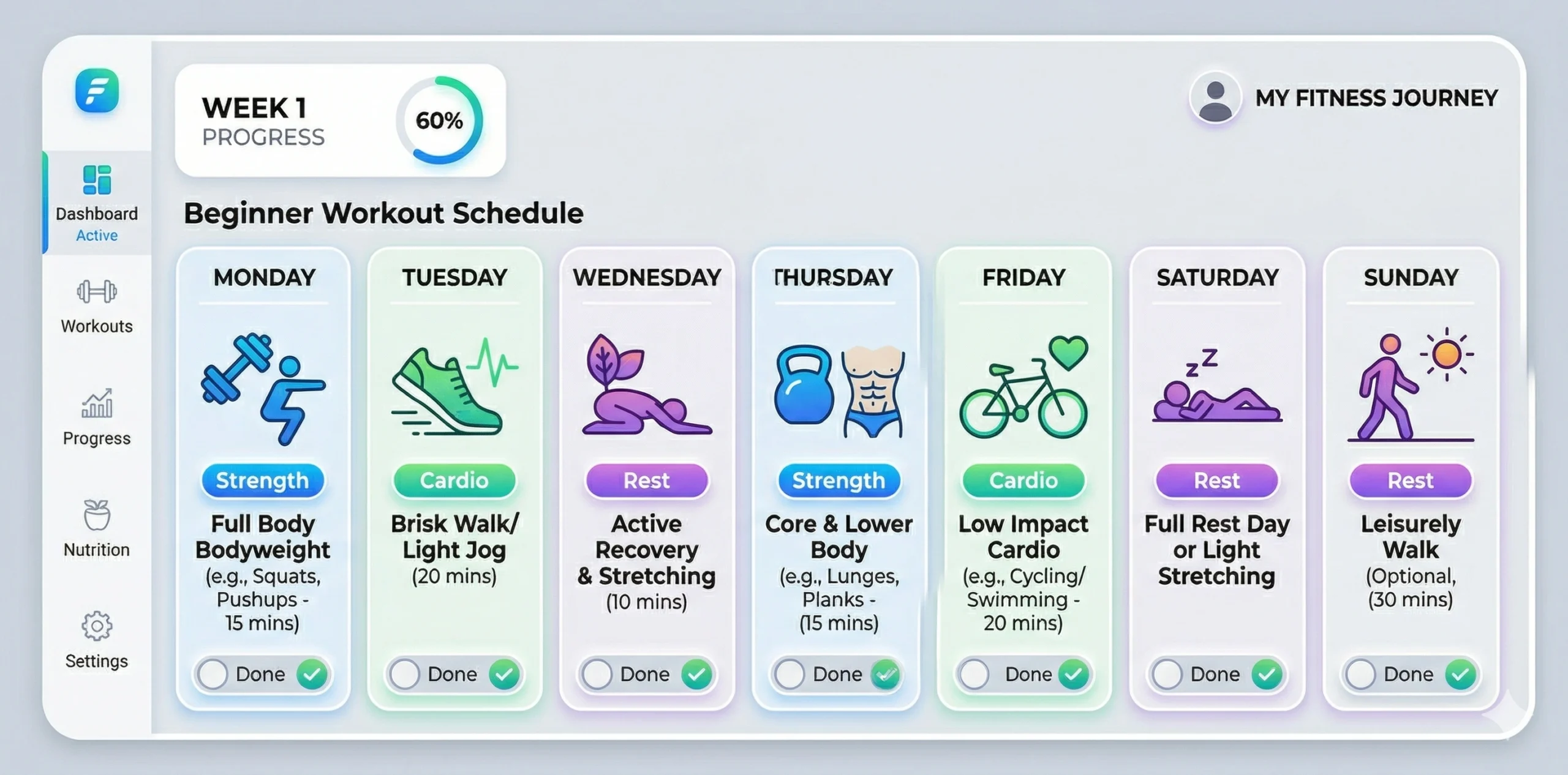
Having a plan turns random exercise into a real beginner fitness program. You don’t need anything complicated—just a clear schedule and a smart mix of activities.
Schedule Short, Manageable Sessions
Start with three sessions per week, each lasting 20–30 minutes. This is enough to build fitness without overwhelming your schedule. A 10-minute beginner workout done consistently beats a two-hour session done once a month. Consistency, not intensity, is the secret weapon of long-term fitness.
Mix Cardio and Strength Training
Alternate between cardio days (walking, jumping jacks, step-ups) and strength days (squats, push-ups, glute bridges). This balance helps you build both endurance and muscle, which are the twin pillars of a healthy active lifestyle. For a deeper dive into the value of lifting and resistance work, explore our full guide on strength training for beginners.
Prioritize Active Rest Days
Rest days don’t mean lying on the sofa all day (though sometimes that’s fine too). Active rest—like a 15-minute walk, light stretching, or gentle yoga—keeps blood flowing to your muscles and speeds up recovery. Aim for two active rest days per week alongside your three main workout days.
Sample 7-Day Beginner Workout Schedule
| Day | Activity | Duration |
| Monday | Cardio: Brisk Walk + Jumping Jacks | 20 min |
| Tuesday | Strength: Squats, Wall Push-Ups, Lunges | 20 min |
| Wednesday | Active Rest: Bird-Dog, Gentle Stretching | 15 min |
| Thursday | Cardio: Step-Ups + Calf Raises | 20 min |
| Friday | Strength: Glute Bridges, Planks, Overhead Press | 20 min |
| Saturday | Light Walk or Yoga | 15–30 min |
| Sunday | Full Rest Day | — |
Tips to Stay Consistent With a Busy Life
The biggest obstacle to any beginner workout routine isn’t ability—it’s consistency. Life gets busy, motivation dips, and suddenly a week has slipped by without any movement. Here’s how to stay on track.
Set Realistic Micro-Goals
Instead of saying ‘I want to lose 20 pounds,’ try ‘I will work out three times this week.’ Micro-goals are achievable and give you small wins to celebrate regularly. Each win builds momentum, and momentum builds habits. Write your goals down—even a sticky note on your fridge counts.
Use Habit Stacking
Attach your workout to something you already do. For example: ‘After I brew my morning coffee, I will do 10 minutes of beginner exercises.’ This technique—known as habit stacking—dramatically increases the chance of a new behavior sticking, because it rides the back of an existing routine.
Track Your Weekly Progress
Keep a simple workout log—a notebook, an app, or even a calendar with checkmarks. Tracking helps you see patterns, celebrate improvements, and stay accountable. After four weeks, looking back at how far you’ve come is one of the most motivating things you can do. It’s hard to quit when you can see your progress in writing.
| 🏆 Pro Tip |
| Research shows that people who track their workouts are significantly more likely to maintain a long-term fitness routine. Even the most basic log—date, exercise, how you felt—makes a real difference. |